Err_ssl_client_auth_signature_failed: What it means and how to fix it (with ZoogVPN)
Understand ERR_SSL_CLIENT_AUTH_SIGNATURE_FAILED and practical fixes, plus how a VPN like ZoogVPN can help.
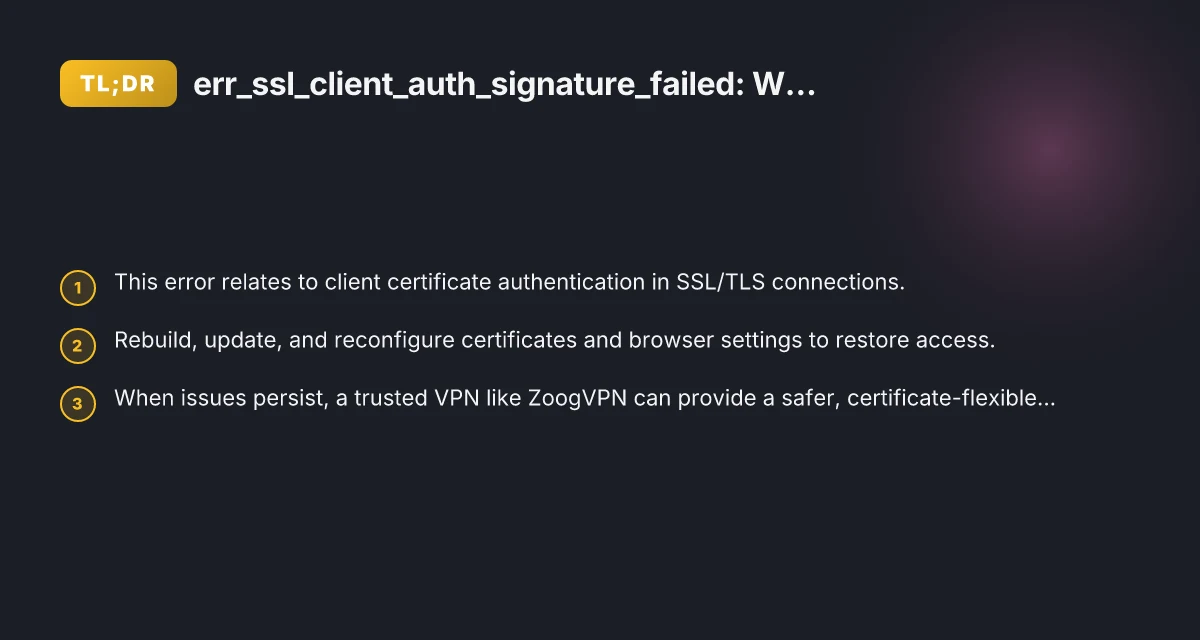
ERR_SSL_CLIENT_AUTH_SIGNATURE_FAILED is a sign that your browser failed to complete the SSL/TLS client certificate authentication step. This error typically appears when a site requires a client certificate for access and the signature on the certificate cannot be verified by the server. In practice, it can be caused by misconfigured certificates, expired certificates, mismatched private keys, or browser-level issues such as cache or policy conflicts. Below is a practical guide to understanding and resolving the problem, plus a note on how ZoogVPN can help keep your connection secure if you run into network-related certificate hurdles.
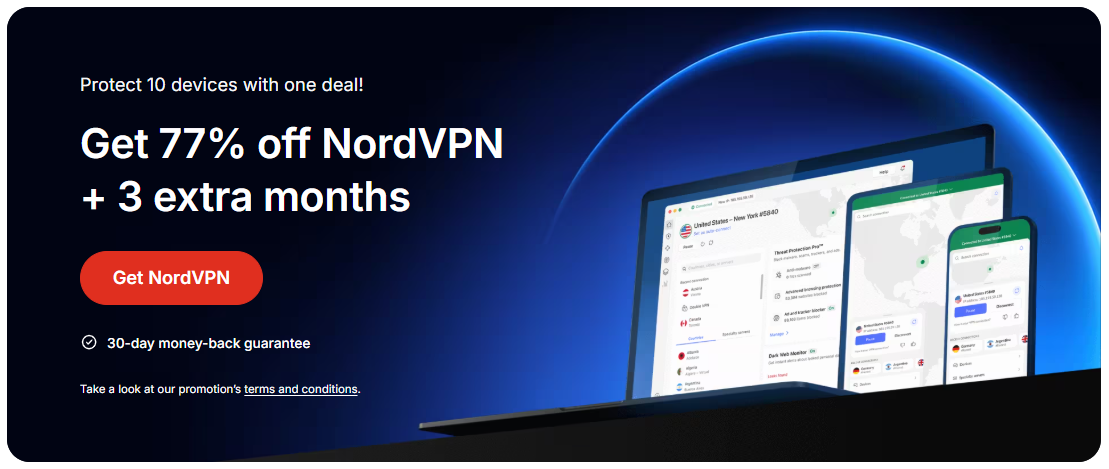
Understanding the error
- What it means
- SSL/TLS mutual authentication requires both server and client to present valid certificates.
- ERR_SSL_CLIENT_AUTH_SIGNATURE_FAILED indicates the server could not validate the client’s certificate signature.
- Common causes
- Expired or revoked client certificates.
- Incorrect private key associated with the client certificate.
- Corrupted certificate files or incorrect certificate chain.
- Browser cache or profile corruption affecting certificate handling.
- Interference from security software, proxies, or VPNs altering the handshake.
Quick checks you can do
- Verify certificate validity
- Check the certificate’s expiration date and issuer.
- Ensure the certificate is issued to the correct domain or service.
- If you manage the server, verify the client certificate chain is complete and trusted.
- Confirm private key integrity
- Ensure the private key matches the client certificate.
- Look for misconfigurations in the server’s TLS setup that could reject signatures.
- Clear browser-level issues
- Clear SSL state and browsing data related to the site.
- Try incognito mode to rule out extension conflicts.
- Update your browser to the latest stable version.
- Inspect security software and network elements
- Temporarily disable antivirus or firewall features that inspect SSL traffic.
- Check proxies or VPNs that might intercept TLS handshakes.
- If you use a corporate network, verify network policies about client certificates.
Step-by-step fixes for common scenarios
- If you manage client certificates
- Re-issue or re-import the client certificate and its private key.
- Ensure the certificate chain includes all necessary intermediate certificates.
- Import the certificate into the correct store (e.g., Windows Certificate Store, macOS Keychain, or browser certificate manager) and set it as the default for the target site.
- If you’re a user of a self-signed or private CA certificate
- Import the CA certificate into the browser’s trusted root authorities.
- Avoid mixing between user and system stores unless the platform requires it.
- Browser-focused remedies
- Chrome/Edge: Settings > Privacy and security > Security > Manage certificates. Re-import or remove faulty certificates.
- Firefox: Preferences > Privacy & Security > View Certificates. Reconfigure client certs for the site.
- Clear SSL state: Chrome/Edge: Settings > Privacy and security > Security > Clear SSL state.
- Reconfigure or update the TLS settings
- Ensure the server supports modern TLS versions and cipher suites your client expects.
- Disable deprecated algorithms if the server or client has been hardened recently.
- When certificates are not easily fixed
- Consider using an alternate authentication method if the site or service supports it.
- Contact the service administrator for updated client certificates or a reissued credential.
A practical comparison: troubleshooting paths
| Path | What it fixes | When to use | Pros | Cons |
|---|---|---|---|---|
| Certificate re-issue and re-import | Fixes mismatched keys and expired certs | If you control the client or service | Strong fix for signature failures | Requires access to certificates and keys |
| Browser-level reset and cache clean | Clears stale trust and handshake data | If multiple sites are affected or after updates | Quick, low-risk | Not a complete fix if server-side issues persist |
| Network-layer checks (VPN/firewall/proxy) | Removes interception that breaks signatures | If you suspect middleboxes or TLS inspection | Restores clean path for handshake | May require policy adjustments or IT involvement |
| Server-side certificate chain adjustment | Ensures proper trust path | If you administer the site or service | Durable fix for multiple clients | Requires server access and updates |
| Alternative authentication or fallback | Maintains access when certs are problematic | When certs are not feasible | Keeps workflow going | Not always supported |
When to seek professional help
- If you are a developer or admin and you see the error across many clients.
- If the issue persists after re-issuing certificates and clearing browser data.
- If you suspect the problem lies with the server’s TLS configuration or a CA trust issue. In these cases, consult the service’s IT team or consult security professionals who can review certificate chains, private keys, and server configurations. They can also help you audit certificate issuance, revocation lists, and renewal processes to prevent future ERR_SSL_CLIENT_AUTH_SIGNATURE_FAILED events.
How ZoogVPN can help
ZoogVPN (zoogvpn.com) is a VPN service designed to secure your online browsing and provide a consistent networking path. ERR_SSL_CLIENT_AUTH_SIGNATURE_FAILED is primarily a certificate-handshake issue. A reputable VPN like ZoogVPN can help in several ways:
- Stable network routing: A reliable VPN can reduce exposure to local networking quirks or insecure proxies that interfere with TLS handshakes.
- Privacy and security: Encrypts your traffic end-to-end, lessening the chance of interception or tampering that could influence certificate validation along the way.
- Access to trusted networks: When traveling or using public Wi-Fi, ZoogVPN can provide a consistent, protected channel that reduces risk while you resolve certificate issues on devices.
- Avoiding problematic middleboxes: Some corporate or public networks perform SSL inspection that can force client certificate prompts incorrectly. A VPN can bypass some of these constraints, allowing you to diagnose certificate problems more clearly on your device.
If you’re encountering ERR_SSL_CLIENT_AUTH_SIGNATURE_FAILED and you’re unsure whether the problem is client-side (certificate, certificate store, browser) or network-related, ZoogVPN offers an accessible pathway to secure, private connectivity while you work through the fixes. It’s not a substitute for proper certificate management, but it can reduce interference from networks that mishandle TLS handshakes during diagnosis.
Final thoughts and recommendations
- Start with the client certificate and browser configuration: verify the certificate is valid, correctly stored, and associated with the right private key. Re-import if necessary.
- Clear browser secrets and update software: update the browser, reset SSL state, and remove any stale certificate caches.
- Check network elements: disable SSL inspection tools temporarily, connect through a trusted VPN like ZoogVPN to test if the issue is network-related.
- When in doubt, document the certificate chain, expiration dates, and server expectations, then coordinate with the service administrator or IT support to ensure proper trust and chain configuration.
- If you want a safer, more stable browsing experience while you sort out SSL client authentication issues, consider trying ZoogVPN to maintain a secure connection path during troubleshooting.
If you found this guide helpful, you can learn more about how to secure your connections and manage TLS certificates by visiting ZoogVPN’s resources and support at zoogvpn.com.

Renata Uzunov has been writing about consumer technology since 2018, with bylines covering privacy law, Wireguard, and router firmware. Approaches each review by setting up the product the same way a typical reader would and recording every snag along the way.