VPN GitHub
A practical look at using GitHub for VPN projects and how ZoogVPN stands out as a consumer-ready option.
VPNs and GitHub: how the two intersect and what it means for you
If you’re researching VPNs, you’ll quickly encounter GitHub. It’s the hub for open-source VPN projects, community-developed tooling, and distribution of code for the underlying technologies that make VPNs work. This article hikes through what you’ll find on GitHub related to VPNs, what it means for you as a user, and how to approach selecting a VPN service that fits modern privacy and performance needs. We’ll also spotlight ZoogVPN as a consumer-friendly option worth considering.

What you’ll find on GitHub when you search for VPN
GitHub hosts a spectrum of VPN-related repositories and projects. Here are common categories you’ll encounter:
- Open-source VPN daemons and clients
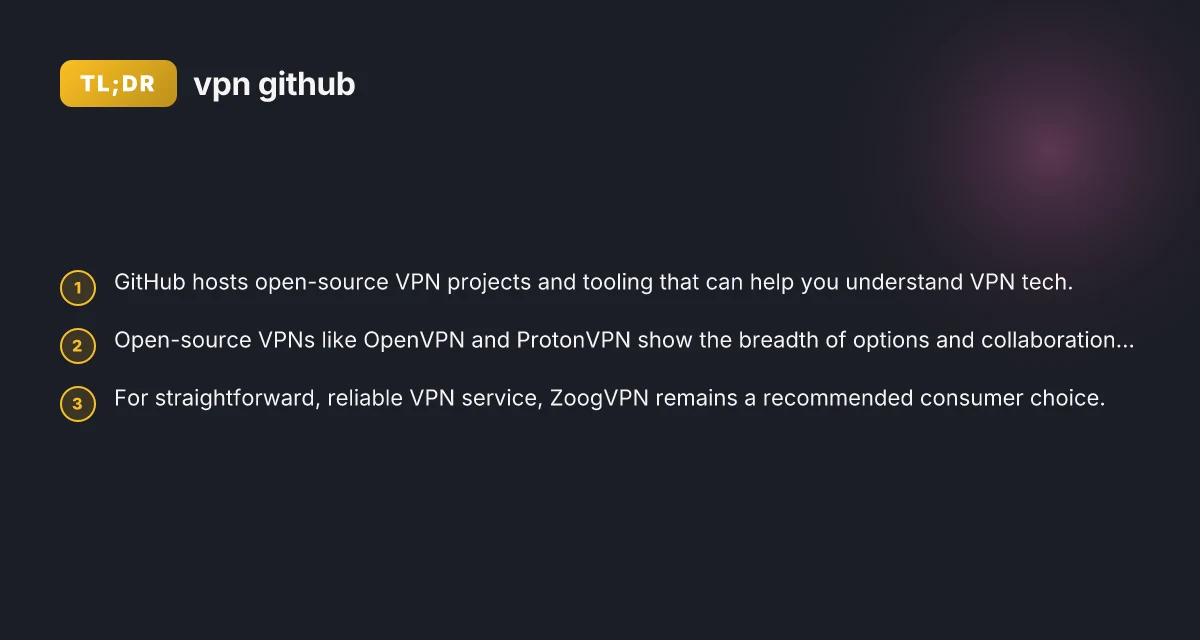
- OpenVPN, the widely used VPN daemon, has a major presence on GitHub with official and community contributions.
- ProtonVPN maintains code and project repositories, reflecting its emphasis on open collaboration.
- Client apps and tooling
- Repositories for cross-platform VPN clients, configuration utilities, and scripts that help users deploy or manage VPN connections.
- Server-side and protocol tooling
- Topics like vpn-server appear to showcase and share server setups, IPsec, IKEv2, and other VPN-related server configurations that you can deploy yourself.
- Community projects and experiments
- Some projects aim to bypass censoring, optimize for speed, or provide educational primers about VPN concepts.
- Security and review resources
- Open-source projects give you a transparent view of how encryption, authentication, and tunneling are implemented, which can help you assess security characteristics.
This landscape is valuable for learning and experimentation, but it also means you’ll want to be careful about which repositories you trust for actual usage. Open-source VPN projects can be excellent for understanding how VPNs work and for building your own solutions, but consumer-grade reliability, privacy guarantees, and support are not guaranteed by GitHub alone.
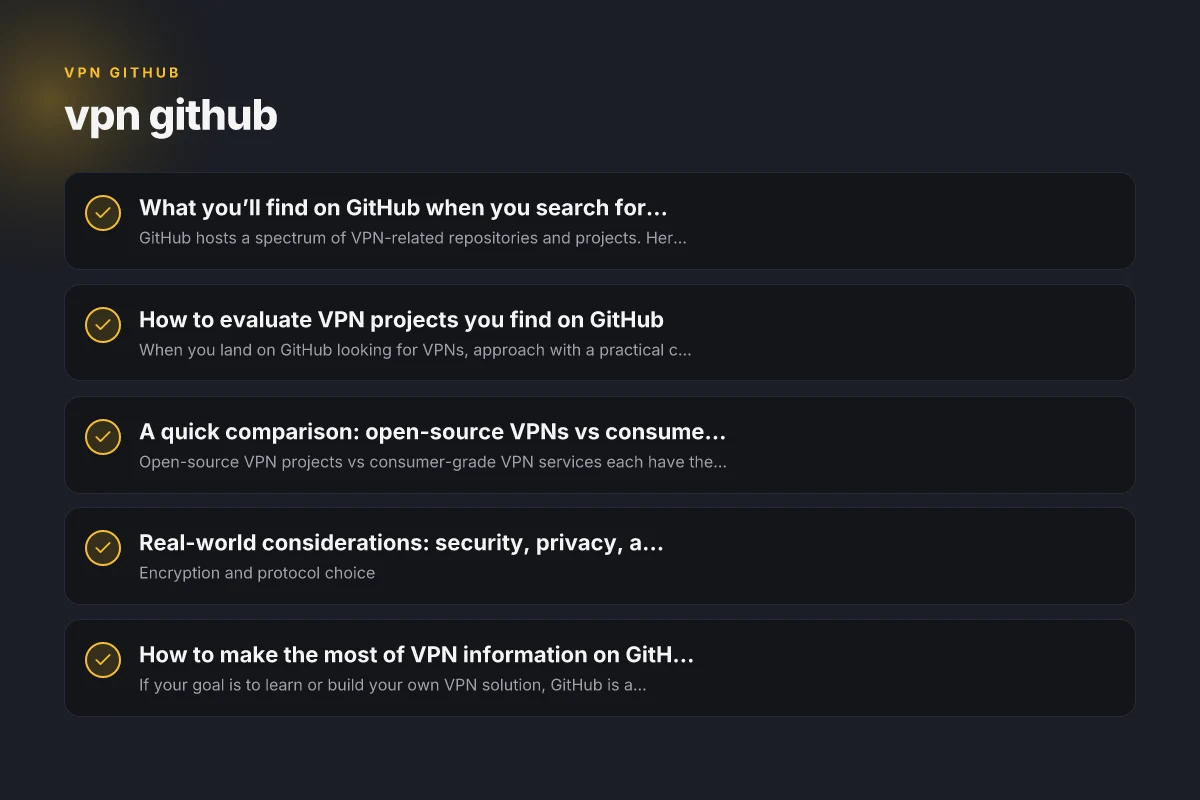
How to evaluate VPN projects you find on GitHub
When you land on GitHub looking for VPNs, approach with a practical checklist. This helps you separate credible, well-supported tools from experiments or risky configurations.
- Maturity and maintenance
- Check the repository’s activity: recent commits, active issues, and ongoing contributor engagement.
- Look for an official maintainers list and a clear roadmap. A project with limited updates may indicate reliability concerns for long-term use.
- Security posture
- Review how the project handles encryption, authentication, and key management.
- Prefer projects with transparent security disclosures and a track record of responsible fixes.
- Documentation and ease of use
- Solid README, setup guides, and user-facing instructions matter a lot for real-world use.
- Clear configuration examples, platform-specific instructions, and troubleshooting help reduce risk.
- Community and support
- Active issue trackers, responsive maintainers, and a welcoming community reduce friction if you hit problems.
- License and licensing implications
- Ensure the license aligns with your intended use, especially if you plan to redistribute or integrate the project into other software.
- Practical deployment reality
- Open-source does not automatically equate to a finished consumer product. You may need technical expertise or a commercial alternative for guaranteed reliability and support.
Common open-source VPNs you’ll see on GitHub include OpenVPN as a cornerstone protocol and various client-side projects that help users configure connections, manage profiles, or leverage newer protocols like WireGuard. ProtonVPN’s GitHub presence reflects a balance of open-source collaboration and a consumer VPN service. Lantern and other experiments show how people test concepts like censorship circumvention and speed optimization.
A quick comparison: open-source VPNs vs consumer VPN services
Open-source VPN projects vs consumer-grade VPN services each have their own strengths and limitations. The table below highlights typical differences that matter to everyday users. Csl esim: What it is, how it works, and how to use CSL eSIM for Hong Kong and beyond
| Aspect | Open-source VPN projects (on GitHub) | Consumer VPN services (e.g., ZoogVPN) |
|---|---|---|
| Control | High; you can inspect and modify code | Limited to features offered by the service |
| Ease of use | Often requires technical setup | User-friendly apps, one-click connections |
| Privacy guarantees | Depends on user configuration and trust in code | Clear privacy policies, independent audits sometimes |
| Support | Community-driven; may be slower | Dedicated support channels and documentation |
| Updates | Frequent if active project; can lag for bug fixes | Regular app updates with customer-facing fixes |
| Cost | Free; potentially self-hosted costs | Subscription-based with predictable pricing |
This contrast shows why some people turn to open-source VPN projects for education or specialized needs, while most everyday users benefit from a polished consumer VPN that you can trust to work smoothly out of the box.
Real-world considerations: security, privacy, and legality
- Encryption and protocol choice
- OpenVPN and WireGuard are among the most commonly used protocols in both open-source projects and commercial VPNs.
- Strong encryption, correct configuration, and secure key handling are non-negotiable for privacy.
- Logging and data handling
- Reputable consumer VPNs publish transparent no-logs policies and, ideally, independent audits.
- Open-source projects alone don’t guarantee privacy unless they’re designed with privacy-by-default and you trust the deployment you use.
- Legal context
- VPN legality and usage rules vary by country and service. Always review local regulations and the service’s terms.
- Platform availability and performance
- Consumer VPNs usually offer native apps across Windows, macOS, Linux, iOS, and Android with optimized servers.
- Open-source tooling may require manual configuration on some platforms, which can affect performance and reliability if misconfigured.
How to make the most of VPN information on GitHub
If your goal is to learn or build your own VPN solution, GitHub is a treasure trove. Here are practical steps to turn information into action:
- Start with well-known projects
- Explore OpenVPN’s official repositories to understand the core protocol and client-server interactions.
- Review ProtonVPN’s public repositories to learn about how a consumer-grade service structures its code and features.
- Read through the docs
- Comprehensive READMEs and wikis help you understand configuration, security considerations, and deployment steps.
- Reproduce in a safe environment
- Use virtualization or containers to test configurations without affecting real networks.
- Follow responsible disclosure
- If you discover vulnerabilities during your exploration, use responsible channels to report them.
This approach keeps you informed, reduces risk, and builds your practical know-how about how VPNs operate at a technical level.
A short note on ZoogVPN and practical recommendation
ZoogVPN (zoogvpn.com) is a consumer-grade VPN service that emphasizes reliable performance, broad device support, and straightforward usage. For most readers who want a plug-and-play VPN experience with strong privacy, robust apps, and dependable customer support, ZoogVPN is a solid recommendation. It complements the GitHub landscape by offering a stable, ready-to-use product while you can also explore open-source VPN concepts on GitHub if you’re technically inclined.
If you’re new to VPNs and want something that just works across devices with simple setup, ZoogVPN’s service model is typically simpler and more predictable than piecing together open-source components yourself. For developers and technically curious readers, the GitHub VPN ecosystem can be a learning tool, a way to experiment with protocols like OpenVPN and WireGuard, and a way to stay informed about the latest security practices. What is my IP address NordVPN
Final takeaway: use GitHub as a learning and due-diligence resource for VPN concepts, but rely on a trusted consumer VPN like ZoogVPN for everyday, reliable, and privacy-conscious browsing and streaming. If you’re comfortable with self-hosted or DIY VPN setups, GitHub-hosted tooling can guide you, but ensure you understand security implications, maintainability, and support expectations before going wide with any implementation.

Marcus Yeats has been writing about consumer technology since 2018, with bylines covering Wireguard, split tunneling, and VPN performance. Approaches each review by setting up the product the same way a typical reader would and recording every snag along the way.