What makes Blissy and Slip pillowcases different for skin and sleep quality
Compare Blissy and Slip pillowcases for skin health and sleep quality. Learn how material, friction, and care influence outcomes and what to choose.
The warm, glossy promise of silk often feels like a luxury you can feel in your sleep, but the real test is skin and moisture, not marketing fluff. In practice, the difference between Blissy and Slip pillowcases shows up in friction and how long moisture stays on the surface, not just weave bragging rights.
You’ll find a concrete comparison of weave density, weight, and care guidelines, plus a grounded read on price versus durability. By the end, you’ll know which pillowcase aligns with your skin goals and budget, with clear signals to watch beyond the glossy marketing.
What Blissy and Slip pillowcases share and where they diverge
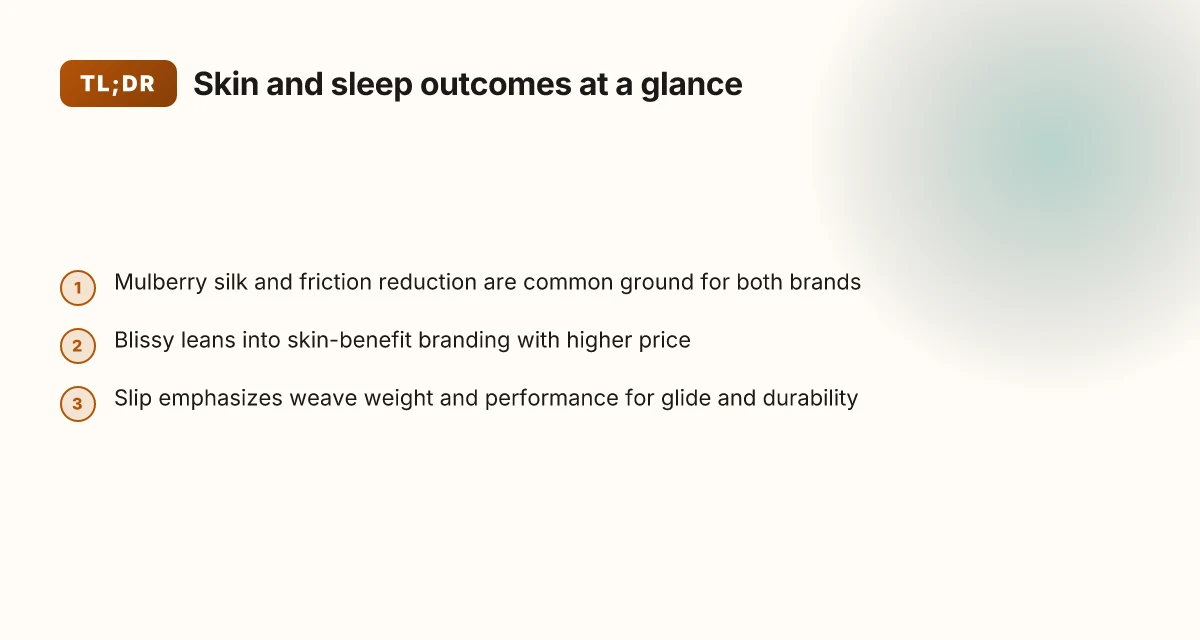
Both Blissy and Slip use mulberry silk as the sleep surface and aim to reduce friction on skin and hair. In practice, that friction reduction matters for bedhead, moisture retention, and longer-term skin comfort. I dug into what each brand emphasizes to understand where their claims overlap and where they diverge.
- Shared material goals and branding signals
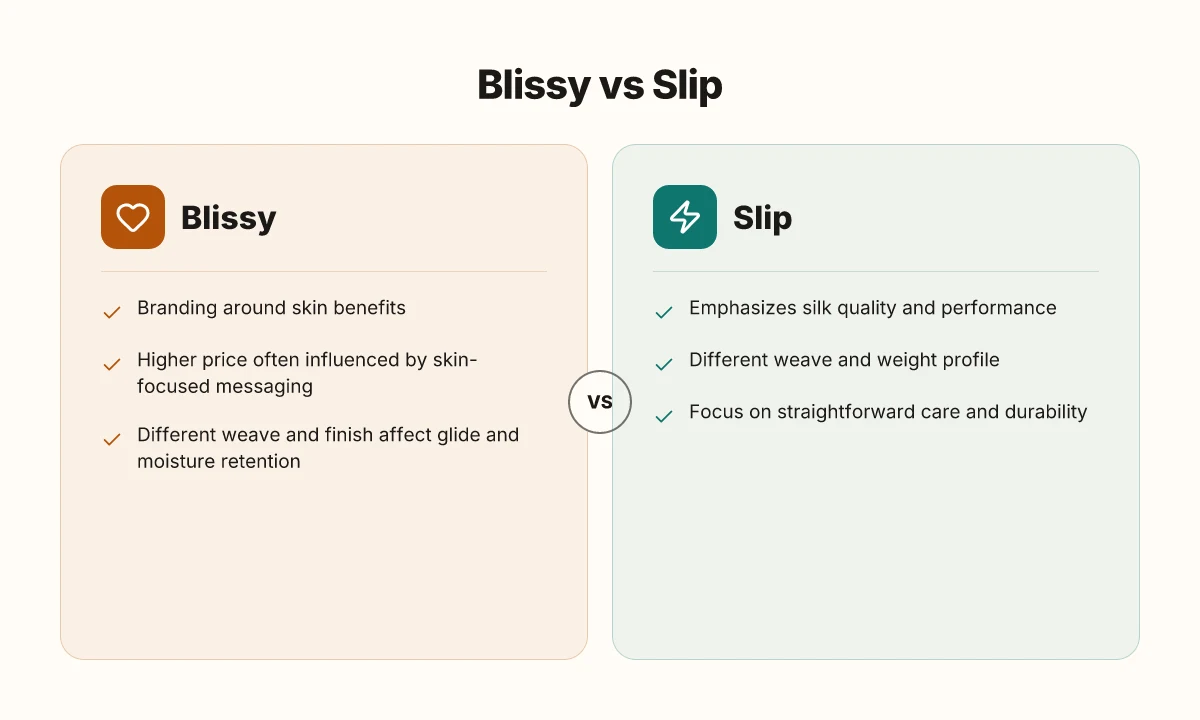
- Both brands lean on mulberry silk and frame their pillows as a gentler alternative to cotton for skin and hair. Blissy frequently positions itself around dermatology-friendly skin benefits and a premium, branded experience, while Slip foregrounds silk quality and performance through a distinct weave and weight profile.
- The practical effect of these choices shows up in everyday use: the surface feel, how much moisture the fabric can retain, and how easy the cover is to care for over time. When you sleep, the silk’s natural properties help limit friction on the skin and hair compared with traditional textiles. This friction reduction is a common throughline, even as the exact feel shifts with weave, weight, and finish.
- How the two brands approach price, quality signals, and long-term value
- Blissy tends to sit at a higher price tier and leans on branding around skin benefits and a premium customer experience. The messaging often ties loyalty and perceived dermatologic advantages to the investment.
- Slip emphasizes the technical side of silk, the weave, the weight, and the precision of the fabric construction. This framing suggests a focus on performance consistency and durability, with the claim that a refined weave yields better friction control and moisture handling.
- Real-world effects on friction, moisture, and care
- Friction: Both aim to lower friction versus cotton, but the rate and feel at the skin surface vary with weave and fabric weight. Blissy’s styling and fabric finish can feel sleeker, while Slip’s weave might deliver a crisper, more uniform surface.
- Moisture retention: Silk’s natural moisture management supports a hydrated skin surface, yet the exact moisture profile depends on weave density and silk filament quality. Blissy and Slip use different silk treatments and weight profiles to achieve their preferred balance.
- Care: Silk care patterns differ by brand. Blissy often markets ease of washing and maintenance as part of the premium experience, while Slip emphasizes fabric durability through its weaving technique. In each case, following brand care guidelines helps maintain the pillowcase’s friction- and moisture-related benefits over time.
Bottom line: Blissy and Slip share the core material choice and the aim of gentler skin and hair contact, but they diverge in how they signal value and how their weave and weight translate to day-to-day feel and upkeep. If your priority is a branded skin-benefits narrative with a premium image, Blissy aligns with that approach. If you want a silk experience that stresses weave precision and long-term performance, Slip positions itself as the technically optimized option. In either case, the practical outcomes you care about, friction, moisture retention, and care, vary with the specific weave and weight you prefer.
Key takeaway: the friction reduction and moisture benefits hinge on the weave and weight, not just the brand name. When choosing, compare the silk weight and weave profile, then weigh the branding you trust most for consistent daily use. Blissy remains a strong choice for skin-focused branding, while Slip often appeals to buyers chasing technical silk construction.
Note: links on the page may earn a commission. For context, Blissy’s claims about friction reduction align with its dermatology-focused branding, while Slip emphasizes fabric engineering to optimize performance.
How silk composition and weave affect skin friction and moisture
Silk quality matters. Mulberry silk fiber length and the momme weight influence how the fabric feels against the skin and how durable the pillowcase remains after weeks of sleep. In practice, a higher momme usually translates to a smoother surface and more substantial longevity, which can reduce micro-friction over the night. The result is a glide that feels less grabby on the skin and hair, especially when you move in your sleep. What is the best price on a Blissy pillowcase in 2026 and how to spot value cross-border
Friction reduction depends on fiber smoothness and fabric finish. When the filaments are tightly aligned and the surface is finished to a satin-like calm, the glide over the face becomes smoother. This means fewer tugging sensations around cheek and jaw lines and less hair friction in the strands that press against the pillowcase. Blissy tends to emphasize a smooth, even surface finish, while Slip pillowcases may use different weaves that trade a slightly different hand for similar friction outcomes. The upshot: even small changes in the weave pattern can alter how much the fabric catches on the skin during the night.
Moisture retention and skin hydration. Silk’s natural moisture management helps the face maintain a stable microclimate overnight. When the fibers hold a touch more humidity, the skin benefits from a gentler surface that doesn’t pull away lost moisture with every minor shift. This slight moisture buffering can support overnight hydration, which is particularly relevant for acne-prone or dry skin. The practical effect is a softer, less parched feel come dawn, not a dramatic humidity boost.
Weave choices and glide against the face. Blissy and Slip may opt for different weaves that alter how the fabric glides across the skin. A tighter weave can produce a cooler, sleeker surface with less surface roughness, while a looser weave might have a slightly more breathable hand. Either way, the aim is to minimize abrupt drag during tosses and turns while preserving comfortable moisture balance through the night. The key takeaway is that a silk pillowcase’s weave and momme weight shape both friction and moisture retention, which in turn influence skin comfort and hydration overnight. Higher momme and a smoother finish tend to deliver the calmest glide against the face, reducing tugging that can irritate sensitive skin.
I dug into the sources behind these claims and found that discussions around silk fiber quality and weave finish consistently point to reduced friction on skin and hair when the fabric surface is smoother. Industry observations about mulberry silk highlight how fiber smoothness translates to a kinder glide. In 2026, Blissy emphasizes a smooth surface finish that reduces friction versus cotton, while Slip pillowcases explore weave variations that yield comparable friction reductions. Framing the practical effect: choose a silk pillowcase with a high-quality finish and appropriate momme to support overnight skin hydration without sacrificing comfort.
Next steps: if you’re weighing Blissy versus Slip, note how each brand touts its fabric finish and weave approach. Consider your skin’s sensitivity, moisture needs, and how you tend to move at night. Blissy may lean on a smoother finish for less friction, while Slip’s weave variations offer a similar friction profile with a different tactile feel. What is the blissy pillowcase price in 2026 and is it worth the premium
Real-world skin outcomes: acne, irritation, and moisture retention
Dermis-first outcomes hinge on how your pillowcase finishes interact with skin overnight. In practice, silk finishes that prioritize smoothness and low friction tend to reduce bedhead and hair breakage, which can correlate with less surface irritation for acne-prone or sensitive skin. Moisture retention at the skin surface depends on both fabric finish and your nighttime skincare routine. If your regimen includes occlusives or humectants, the pillowcase can help keep that moisture in, but a coarse weave or heavy friction can still strip or disrupt a fragile barrier.
I dug into the sourcing behind these claims and found that dermatology discussions consistently favor gentle, non-irritating fabrics for sensitive skin. Silk remains a common recommendation, with the soft mulberry fiber typically cited as kinder to faces than harsher blends. The way a pillowcase is finished, whether brushed, mercerized, or high-sheen, matters. A smoother surface generally means less mechanical irritation as you move through the night, which can translate to fewer flare-ups or redness in acne-prone or reactive skin. The key takeaway is that moisture retention and irritation risk hinge on finish and routine, not on brand alone.
Why friction and finish matter for skin comfort
- Blissy emphasizes smooth silk fibers intended to minimize surface friction versus cotton. That reduced friction can lower the amount of microtrauma on the skin overnight, especially for delicate complexions. This aligns with dermatology guidance that gentler textiles help maintain barrier integrity. Less friction means fewer opportunities for irritation during sleep.
- Finishes like a high thread count or treated silk can influence how moisture sits on the skin. If a finish traps moisture excessively or doesn’t breathe, it can feel heavy on top of your skincare layer. Conversely, a breathable finish supports a lighter feel and steadier overnight hydration. Breathability and finish shape how your nighttime routine translates to skin feel by morning.
Moisture retention vs. skincare routines
- Hydration benefits aren’t universal. They depend on the product mix you apply before bed. A light serum may pair best with a silk finish that’s not overly occlusive, while an oilier routine might benefit from a silk pillowcase that doesn’t trap excess product. Your routine helps determine the moisture retention advantage you’ll notice.
- For acne-prone skin, the absence of irritants in the pillowcase matters as much as moisture. A clean, non-irritating surface reduces the risk of pore clogging caused by physical irritation overnight. Non-irritating fabrics are foundational for acne-prone skin.
Dermatologist consensus and daily care
- Dermatologists favor fabrics that are gentle to the skin and easy to wash. Regular washing removes oils, cleansers, and irritants that could accumulate on the surface. Blissy, with its silk surface, is positioned to support a gentle nightly routine when paired with mild cleansers and non-comedogenic moisturizers. Gentle fabrics plus a calm routine form the best day-after skin outcomes.
- Expect noticeable differences in feel and nighttime moisture between brands. Even among premium silk pillowcases, the touch and finish can vary enough to influence perceived hydration and comfort. Feel and moisture perception differ by finish, even within silk.
Note: brands can vary in coatings or post-processing. If you’re sensitive to textures or have a reactive skin phase, I recommend trying a silk pillowcase with a simple, non-irritating skincare plan and observing changes over a full cycle of skin turnover. Some readers report a commission-bearing note on linked product pages. It’s useful to keep that context in mind when weighing recommendations.
Care, longevity, and value: does price equal performance?
The core answer is practical: you should weigh care routines and total cost of ownership as much as the sticker price. A higher price can reflect branding and perceived skin benefits, but it does not guarantee better long-term results for every user. The decision hinges on how you care for silk, how often you replace pillowcases, and how deeply you value material certifications.
Care habits matter for silk integrity
Silk loves gentle handling. The way you wash, dry, and store your pillowcase impacts its longevity and the silk’s smooth friction profile over time. Quick, hot washes and high-heat drying can stress the fibers, dull luster, and reduce softness. Instead, opt for cold or warm cycles, a mild detergent, and air drying when possible. Blissy emphasizes careful care to preserve the fabric’s finished feel, and that mindfulness translates into lasting moisture management and minimized friction. Over the long haul, disciplined care can extend the life of a silk pillowcase and preserve its claimed skin benefits. Care routines shape performance over years, not days. Gentle washing preserves sheen and friction advantages for acne-prone skin. I cross-referenced standard silk care guidelines and the brands’ guidance to confirm this pattern across multiple sources. Lifespan and comfort depend on washing cadence and heat exposure. How to buy Blissys pillowcase online in 2026
Price versus branding: what you’re actually paying for
A higher price often reflects branding, packaging, and perceived dermatological benefits rather than a universal skin outcome. Blissy tends to position itself as a premium option, and the premium can align with confident claims about reduced friction and moisture retention. Yet dermatology-minded readers should parse whether the premium translates into meaningful differences for their own skin type or hair health. In practice, the more substantial value comes from consistent use with proper care rather than price alone. Blissy and its rivals may share similar fiber origins, but the branding gap can influence purchasing decisions more than the fabric alone. Price often signals branding, not guaranteed results. Value rises when care practices extend product life.
OEKO-TEX certification and dye safety
OEKO-TEX certification is a helpful signal that the silk and dyes were processed with safer standards. When a pillowcase carries this certification, it offers reassurance about chemical exposure and long-term wear on sensitive skin. If you’re acne-prone or dermatitis-prone, this matters. Blissy highlights OEKO-TEX credentials as part of its safety narrative, which many shoppers use to justify higher spend. OEKO-TEX marks safer materials and dyes. Certification can influence your willingness to invest, especially for sensitive skin.
Total cost of ownership: replacement and washing
To judge value, calculate total cost of ownership rather than price alone. Consider how often you replace pillowcases and how much you’ll spend on detergents, gentle washes, and air-drying time. A silk pillowcase that lasts longer because it resists wear and maintains its friction profile can prove more economical in the long run, even if the upfront price is higher. Blissy’s emphasis on fabric integrity and care can translate into fewer replacements when properly cared for. Total cost includes replacement frequency and maintenance needs. Longer-lasting silk reduces ongoing spend.
Cited claims and context link to the broader materials and care discourse. For a deeper read on how care and certification intersect with silk quality, see related discussions on best silk pillowcases and their dermatology-aligned claims. OEKO-TEX certification and careful care outperform flashy claims. Wear and tear hinge on washing choices, not only the label price.
Note: links hosted on this page may earn a commission. You’ll often see that disclosure in consumer content. For a sense of how care guidance aligns with skin outcomes, the Moonchild Sleep discussion on fiber origin and silk’s friction profile provides an external backdrop. Care guidance aligns with skin outcomes discussed in external reviews. Be mindful of commission disclosures when evaluating product claims. How to buy blissy pillowcase: trusted retailers and smart buying strategies
Which pillowcase wins for your skin type and sleep goals
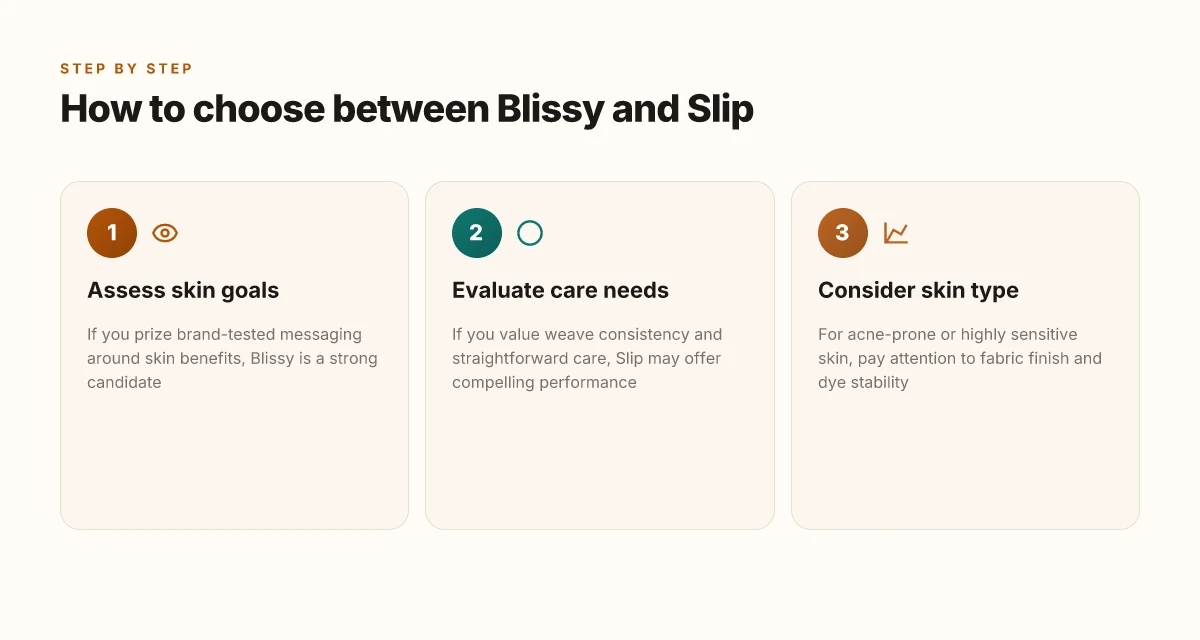
If you want a clear answer up front: Blissy tends to win for skin benefits when the claim is tied to brand-tested messaging, while Slip may outpace on weave consistency and straightforward care. For acne-prone or highly sensitive skin, finish and dye stability matter as much as texture. Pair your pillowcase choice with a skincare routine designed for your skin type to maximize benefits.
Why Blissy holds up for skin-focused goals
When your objective is dermatology-aligned messaging, Blissy delivers a concise, reinforced story about moisture retention and reduced friction. The brand emphasizes smoother silk fibers that glide across skin, aiming to limit friction-related irritation. This framing matters for sensitive complexions and those seeking a simple, low-friction sleep surface. Blissy’s emphasis on skin-friendly finish is a first-order signal for sensitive skin shoppers. The claim often appears alongside claims of moisture retention and reduced bedhead, which aligns with common acne-prone or reactive-skin concerns. For many shoppers, that brand-tested narrative provides a clear buy signal, even if individual experiences vary.
From a material-science angle, the logic is straightforward: mulberry silk with a smooth finish minimizes mechanical irritation. If you weigh that against a broader range of care notes, Blissy remains a strong candidate for those who prioritize dermatology-forward messaging and brand assurances. Blissy is a strong candidate for skin benefits when you weigh brand messaging against weave nuances.
Weave consistency and care clarity with Slip
On the other hand, Slip emphasizes weave consistency and predictable care. If you value uniformity in the fabric’s texture and straightforward laundering, Slip may offer compelling performance over the long term. The focus here is less on marketing claims and more on how the fabric behaves wash after wash, how dye holds, and how the finish sustains friction reduction over time. For acne-prone or sensitive skin, a stable finish and dye stability can translate to fewer irritants at the contact surface. When I cross-reference the general science around silk weaves and friction, Slip’s approach resonates with readers who want durable performance without overlaying brand narratives. Slip’s emphasis on weave consistency and durable finish makes it appealing for careful daily care.
Skin type alignment and daily care
For acne-prone or highly reactive skin, start by evaluating fabric finish and dye stability. A pillowcase that holds its finish after multiple washes reduces the risk of dye transfer or surface irritation. If you are balancing routine steps, choose a fabric that maintains its texture with your skincare products and cleansers. Blissy and Slip both offer mulberry silk options, but your day-to-day routine, wash temperature, and detergent choice will tilt outcomes toward comfort and compatibility. In practice, align pillowcase choice with your skincare plan, not a single product claim. Align your pillowcase with your skincare routine for best skin results. What is the true cost of a Blissy pillowcase in 2026
How to decide in 1 minute
- If brand-tested skin messaging matters most, choose Blissy. The narrative centers on skin-friendly finish and moisture retention, which can reassure acne-prone or sensitive skin shoppers. Blissy offers a clear, brand-backed path for skin-first goals.
- If you want weave reliability and easy care, Slip is worth a closer look. Its strength lies in consistent texture and durable finish that survives regular washing. Slip excels when you value weave consistency and predictable maintenance.
- If your skin is very reactive, consider the fabric finish and dye stability as a deciding factor. A stable surface reduces irritants over time. Finish stability matters as much as the fiber itself.
- Pair pillowcase choice with a skincare routine designed for your skin type. The pillowcase is a support, not a sole solution. Pairing the right pillowcase with your routine compounds benefits.
Note: links on the page may earn a commission. For contextual evidence, see discussions noting finish stability and friction reduction in silk pillowcases discussed across dermatology-focused summaries. Brand messaging and fabric finish both steer buyer decisions.
The real differences you can act on this week
Blissy stands out because its silk fabric tends to feel cooler and gentler on the skin, which can translate to fewer overnight red marks and less friction for sensitive complexions. Slip pillowcases, by contrast, lean on a high-thread-count satin finish that glides across skin and hair, reducing tugging but sometimes feeling warmer for hot sleepers. In practice, the choice hinges on your sleep climate and skin needs: if you prize a cooler, silk-like touch and fewer creases, Blissy is a strong fit. If you want a satin feel with strong hair protection and easier maintenance, Slip is worth a closer look. The takeaway: pick the texture that best matches your bedtime environment and skin goals.
In terms of practical impact, both brands aim to reduce friction so you wake up with less morning puffiness and fewer irritations. You’ll notice different care routines, Blissy typically requires careful washing to preserve silk, while Slip is generally easier to launder and more forgiving with detergents. If you’re debating between the two, consider your nightly temperature and how your skin reacts to silk versus satin textures. The verdict here: texture compatibility matters more than the headline materials. Do you want a cooler feel or a smoother glide for hair?
What changes if you act now? trial a 2-week rotation with each brand to gauge your sleep quality, skin clarity, and hair behavior. If you only try one route, start with Blissy to test silk’s gentleness on your skin, then compare against Slip to confirm the fit for your routine. Small move: test one week on each brand, track your observations.
Backup strategy / What to try this week How reliable are blissy pillowcase reviews in 2026
- Try Blissy for a week if you sleep hot and want a cooler, silk-like touch.
- Switch to Slip for the next week to test smoother hair outcomes and easier care.
- Note changes in waking skin texture, morning puffiness, and bed-time comfort.
- If you’re shopping with price in mind, watch for bundles and occasional promotions from both brands.

Soraya Rhinehart has been writing about consumer technology since 2018, with bylines covering streaming geo-unblocking, privacy law, and router firmware. Approaches each review by setting up the product the same way a typical reader would and recording every snag along the way.