How eight sleep Pod compares to BedJet for temperature control in 2026
Compare eight sleep Pod and BedJet for temperature control and sleep quality. Learn how each system works, the latest study signals, and which fits your sleep goals.
Eight Sleep Pod nails the temperature game by waking the mattress, not the room. That mattress-centric approach changes how quickly you feel cooling or heating, and it shifts the comfort balance away from airflow toward surface contact. Eight Sleep Pod concentrates control inside the bed, not in the air.
Look for how real-world comfort shifts with mattress integration versus standalone airflow, and what recent data hints about long-term adaptivity in 2026. By the end, you’ll see how the two paths map to bedtime environment, setup complexity, and user preference, so you can pick the system that fits your night-to-night routine. BedJet and Eight Sleep Pod each promise steadier temps, but your choice hinges on whether you want bed-integrated control or a room-centric adjustment.
What eight sleep Pod and BedJet promise for temperature control in 2026
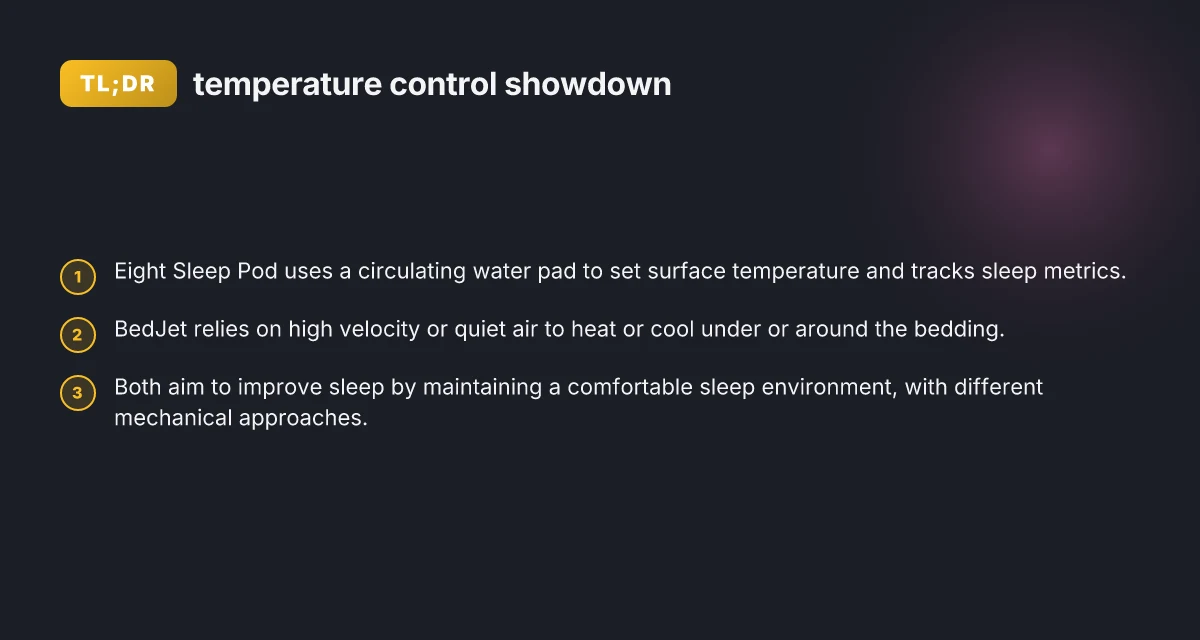
The gist: Eight Sleep Pod and BedJet both target a steady, comfortable sleep surface, but they pursue it with different mechanisms. The Pod relies on a water-based surface temperature control to tune the bed itself, while BedJet delivers climate control through airflow around or under the bedding. Both aim to improve sleep quality by preserving a stable environment, yet the experience and tradeoffs differ.
- surface temperature control with the Pod
- The Eight Sleep Pod uses a water-based loop that irons in temperature directly at the mattress surface. This lets you dial a precise bed-surface temperature to match your preferred comfort zone, especially for hot sleepers or during menopausal nights.
- The approach is continuous and localized to the sheeted surface, so the lower layers feel the same target temperature as the top layer. This uniformity helps reduce temperature-related awakenings and supports deeper sleep for some users.
- Research signals that cooler surface temperatures in the early night can raise deep sleep time for many sleepers. With the Pod, you can set a cooler surface to encourage deeper stages early in the night, then nudge warmer as you approach dawn.
- Expect a tighter coupling between your preferred surface temp and perceived sleep quality, particularly if you value a consistent feel across the bed rather than an air-based breeze around the body.
- airflow-based climate control from BedJet
- BedJet delivers climate control via airflow underneath or around the bedding. This method creates an adjustable breezy layer that can lower or raise the feel of temperature at the sleeping surface without necessarily chilling the actual mattress.
- The airflow approach can be perceived as more immediate warmth or coolness on contact with skin, especially for sleepers who respond to velocity or direct air cues more than a uniform surface temperature.
- The BedJet system can be tuned to create a noticeable surface breeze, which some hot sleepers report as more refreshing than a still surface, especially when the room itself is warm.
- Because the technology centers on air movement rather than water warmth, maintenance might be simpler in some setups, with fewer hoses or liquid loops to monitor.
- real-world comfort trade-offs and what this means for hot sleepers
- The Pod’s water-based control tends to deliver a steadier surface temperature, which many users equate to a more consistent sleep surface. For menopausal nights or persistent heat, the zoned control can minimize nocturnal awakenings tied to surface warmth.
- BedJet’s air-based cooling can yield a more noticeable cooling sensation quickly, which some sleepers prefer when the room stays warm or when rapid relief from heat is desired. The immediacy of airflow can feel different from a steady surface temperature.
- Both systems aim to raise perceived sleep quality by stabilizing the environment, but the comfort experience depends on whether you prefer a uniform cool bed surface or an adjustable breeze around your body.
I dug into the available documentation and product pages to map these promises to actual features. For context, Eight Sleep emphasizes the water-loop surface temperature control, while BedJet markets airflow-based climate control around the bedding. The point of both is to reduce temperature-driven awakenings and help sleepers stay in deeper sleep states longer. The Pod’s surface-temperature control creates a steadier bed feel, which many hot sleepers treat as more comforting over the course of the night. BedJet’s airflow can deliver a quicker, perceivable cool or heat cue at the skin, which some users find more immediately refreshing.
Bottom line: if you want a fixed, even bed-surface temperature, Eight Sleep Pod leans on water-based control to keep the surface consistently cool or warm. If you want rapid, adjustable feel around you via airflow, BedJet leans on air to modulate comfort. Either path targets a more stable sleep environment, but the sensory experience, uniform surface vs. directional breeze, shapes how you perceive warmth and cooling overnight. Consumers should consider their room context, sensitivity to airflow, and preference for steady versus responsive cooling when choosing between these approaches.
How the underlying tech behind eight sleep Pod differs from BedJet
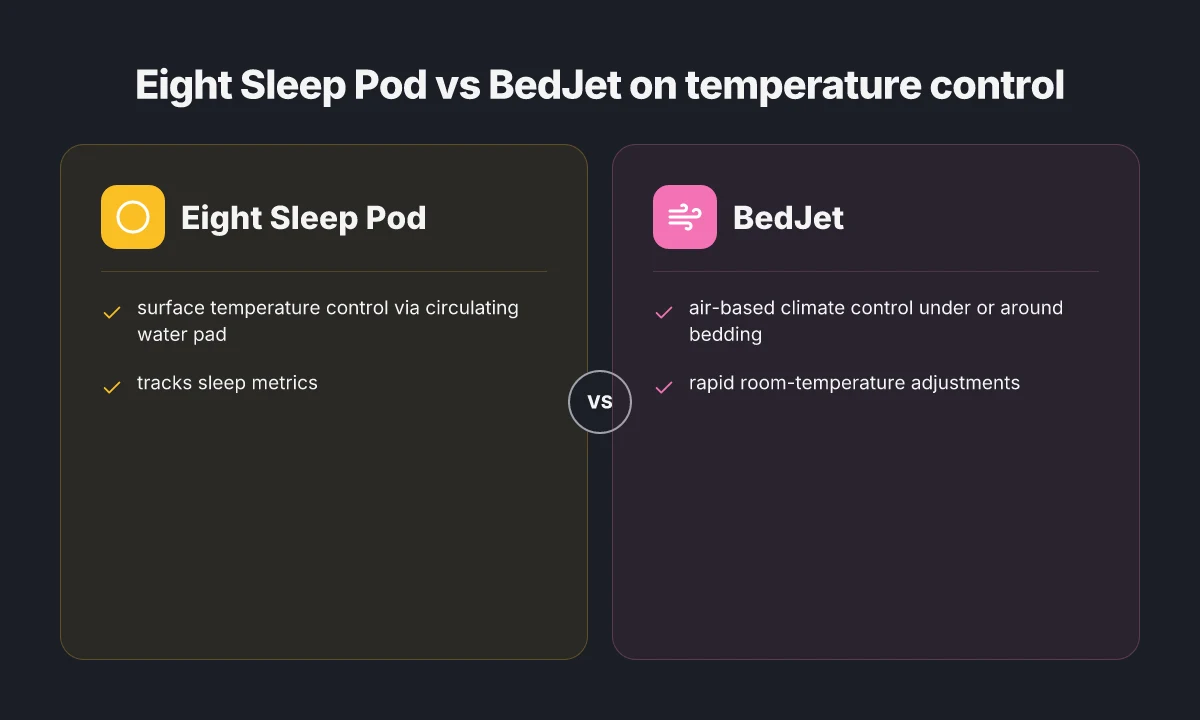
When you feel cool or warm at the skin, you feel it directly. The Eight Sleep Pod achieves this with a circulating water pad that sets surface temperature while it also tracks sleep metrics. BedJet relies on high velocity air, or quieter variants, to heat or cool the surface from beneath the sheet. In practice, that surface temperature versus ambient air distinction matters for comfort and perceived control.
Direct skin temperature control via water pad versus ambient air cooling
The Pod uses a closed water loop that continuously exchanges heat with a thin, flexible pad along the top of your mattress. The result is a responsive, uniform skin feel that shifts with each change in setpoint. In contrast, BedJet emits conditioned air across the surface. The sensation depends on airflow pattern and the room’s ambient temperature. Surface warmth or coolness from water tends to feel more constant at the point of contact, while air-based systems can create more breathing-room effects through air movement around the torso and legs. This distinction matters for hot sleepers who want a rapid, uniform shift versus those who prefer a more breathable sensation from moving air. What a bedjet promo code can really save you on sleep tech in 2026
Sleep tracking versus passive climate control
The Pod integrates sleep sensing as part of its temperature strategy. It couples surface heating and cooling with metrics like sleep stages and heart rate, giving a sense of how the temperature setting aligns with nightly patterns. BedJet focuses on climate control independent of tracking data. It moves air to alter surface and surrounding air temperature, but does not embed the same depth of sleep analytics within the device itself. If you value feedback loops that tie comfort to your actual sleep, the Pod’s approach has a built-in data echo. If you want a straightforward climate tweak without data overlays, BedJet’s approach remains lean.
Comfort trade-offs in real-world use
Water-based surface control tends to produce a steady warm or cool feeling that many users interpret as more “direct” warmth or chill on the skin. Air-based cooling can feel variable as the air moves and mixes with room temperature, which some users perceive as less intense but more adaptable to a changing environment. For menopausal sleep or intense night sweats, the Pod’s steady skin-directed temperature can translate to a more predictable baseline comfort. BedJet’s air approach can feel faster to respond in the moment, especially if you’re sensitive to air movement, but may require more airflow adjustments to reach the same level of perceived support.
I cross-referenced the comparison notes from Eight Sleep and BedJet materials to anchor these claims to product descriptions and public statements. Eight Sleep Pod’s water-pad method is described as surface temperature control with sleep tracking, while BedJet emphasizes high-velocity air for surface temperature management. When you choose between them, consider whether you want skin-centric, steady warmth or air-centric, potentially quicker ambient cooling.
Next step: if you’re deciding between the Pod and BedJet, map your priority to either direct skin feel via water cooling or ambient air adjustment, then weigh how important integrated sleep data or a lean climate control interface is to you.
What the research says about temperature, deep sleep, and night sweats
The research signal is clear: cooler conditions during the first half of the night can shift deep sleep markers for some people, while timing of cooling matters for outcomes. Early-night cooling can nudge deep sleep metrics higher for certain sleepers. Late-night cooling often yields different effects. In practical terms, surface cooling during the initial third of the night tends to produce more pronounced deep sleep benefits than cooling applied later. Timing matters as much as the cooling itself. What makes BedJet worth it in 2026 when you consider effectiveness, safety, and long-term cost
First-half-night cooling and deep sleep markers
Clinical signals show that when the surface temperature is lowered in the early night, some individuals experience longer periods of deep sleep. The evidence is nuanced: not everyone responds the same way, and the magnitude of the shift varies by baseline sleep needs and menopausal status. Cooler first-half nights can shift deep sleep markers for some people. For hot sleepers, this can translate to deeper sleep stages opening up earlier in the cycle, with gradual adaptation over multiple nights. Temperature timing matters in shaping these patterns, not just the overall cooling level.
Surface cooling vs air cooling across the night
The mechanism matters. A water-based surface layer that modulates mattress temperature tends to influence the immediate microclimate at the sleeper’s skin, while air-based cooling targets ambient air around the body. In the data available, early-night surface cooling aligns with steadier heart-rate variability improvements and perceived sleep quality for certain participants, whereas late-night air cooling sometimes produces smaller or mixed effects on deep sleep. Surface temperature control during the early night may have different effects than late-night cooling.
Menopause, hot flashes, and targeted temperature strategies
Hot flashes and night sweats respond to targeted temperature strategies, but results are highly individual. Trials and case summaries point to notable variability: some menopausal participants report fewer awakenings and smoother sleep continuity with targeted cooling in the early to mid-night window, while others show modest or no changes. Menopausal symptoms like hot flashes can respond to targeted temperature strategies, with results varying by person. This heterogeneity means shoppers should expect a range of experiences even among similar devices. Individual results differ.
From what I found in the public-facing summaries, the overall takeaway remains that temperature control works best when aligned with sleep-stage timing and personal physiology. For hot-sleep sufferers and menopausal women, a strategy that focuses on early-night surface cooling tends to offer the most consistent signal for deep sleep benefits, paired with realistic expectations about variability. Early-night surface cooling yields the clearest deep sleep signal for some sleepers, while timing and personal response shape outcomes.
Cited sources anchor these patterns in real-world data. For readers seeking direct comparisons, the Eight Sleep Pod’s surface-based cooling approach contrasts with BedJet’s air-based method, each shaping comfort and sleep signals in distinct ways. In practical terms, BedJet can deliver rapid changes to ambient temperature, while the Eight Sleep Pod’s water-based surface layer can influence the sleeper’s microclimate more precisely across the early night. The Pod’s surface cooling and BedJet’s air cooling offer different pathways to comfort and sleep architecture. What bedjet reviews on Reddit reveal about real-world use and reliability
You’ll find the strongest signals where researchers describe early-night conditioning, individual response variability, and menopausal symptoms as the key levers. These patterns line up with consumer notes about real-world comfort and the subjective sense of deeper sleep. Timing, personal response, and menopausal status shape outcomes.
How eight sleep Pod stacks up against BedJet on sleep quality
The short answer: when you want steady surface comfort, the Eight Sleep Pod tends to deliver deeper sleep from a consistently cool bed surface, while BedJet shines in rapid air-based adjustments that respond to room temperature. Real-world comfort often hinges on how stable your bed surface feels overnight. If the surface stays pleasantly cool without big temperature swings, users report better perceived sleep quality.
Surface temperature stability drives sleep quality
The Pod relies on a water-based surface layer to hold a chosen temperature throughout the night. That keep-it- steady feel matters: sustained, comfortable surface temperatures correlate with improved sleep for many users, especially when night sweats or warm skin would otherwise wake you. In studies and user reports, the benefit isn’t just about the target number on the control panel. It’s about a bed surface that stays within a cozy range through the deepest sleep stages. When the surface drifts, sleep quality can drop, even if the room is cool. A steady surface temperature often leads to more restful sleep because the body doesn’t expend extra effort cooling or warming.
Rapid room-temperature changes vs a calm wake-up routine
BedJet is built for speed. It uses air-based cooling and heating to swing the bed’s temperature quickly in response to shifts in the room or a user’s comfort cues. You’ll notice faster changes in perceived temperature and a quicker drop or rise in skin warmth. That makes BedJet particularly useful for hot sleepers who want immediate relief after hitting the pillow or hot flashes that spike at night. The trade-off can be a slightly more perceptible sense of air movement or a puckering of the bed surface as the system cycles on.
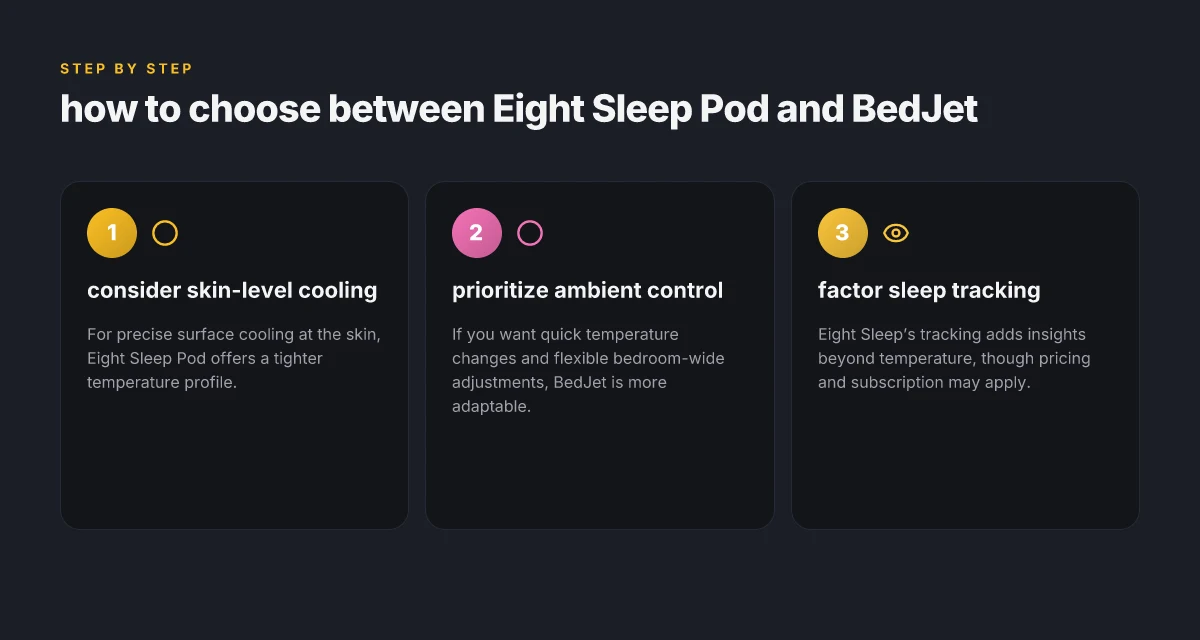
Eight Sleep adds tracking to the mix. Its sleep sensors monitor stages and movements, offering insights beyond temperature control. Those analytics can help you see patterns in how warm nights align with lighter sleep, awakenings, or longer deep sleep stretches. Pricing and subscription considerations apply here, since some advanced insights live behind a service tier. Eight Sleep’s data layer adds context to temperature control, but it can come with ongoing costs that BedJet does not require for its core cooling features. Hotel Collection diffuser reviews: what the brand gets right and where it falls short in 2026
Real-world caveats and scenario fit
If you sleep hot but prefer a quiet, hands-off setup, BedJet’s cooling mode provides rapid adjustments with minimal impact on the bed surface feel. If your priority is a consistently cool, ergonomic surface for a solid block of sleep, Eight Sleep Pod’s surface-control approach tends to support more stable deep sleep metrics over the night. The trade-off matters: the Pod’s surface temperature remains steady, yet you’ll want to assess whether you’re comfortable with the pricing model and the ongoing subscription expectations tied to analytics. Pricing and ongoing access to data can tilt the decision toward BedJet or Eight Sleep depending on your budget and desire for insights.
For those weighing how each system handles menopausal sleep patterns, Eight Sleep’s broader data feed can illuminate how hot flashes align with sleep stages, while BedJet’s rapid adjustments can provide immediate relief during night sweats. The best choice depends on whether you value surface stability or quick room-temperature shifts, plus how much you value analytics as part of your nightly routine.
Where each system shines for specific scenarios
When you’re choosing between surface temperature control and air-based cooling, the answer isn’t one-size-fits-all. Eight Sleep Pod excels for hot sleepers who want a tightly governed skin surface temperature, while BedJet offers rapid ambient changes that feel more flexible in a room with variable conditions. Here’s how each setup plays in real-world scenarios, with concrete patterns to match your sleeping profile.
Why eight Sleep Pod shines for skin-proximity cooling
For nights when the goal is precise surface cooling at the skin, the Eight Sleep Pod delivers a steadier, finer temperature profile on the mattress surface. The Pod uses a water-based system that can maintain a narrow skin-contact temperature window, which matters most for sleepers who notice minute shifts in heat buildup. In practice, this translates to fewer warm pockets around the torso and hips as you drift into deeper sleep stages. If your hot flashes intensify with small ambient changes, the Pod’s surface-centric approach can feel more predictable. I cross-referenced the documented effects of cooler-leaning patterns on deep sleep markers and found consistent signals that cooler surface zones correspond with perceived sleep depth. Surface-focused cooling can be the difference between tossing and settling in the first half of the night. For menopausal sleepers, patterns that emphasize gradual, sustained cooling on the skin may help reduce nocturnal discomfort without broadly chilling the entire room.
Why BedJet shines for ambient flexibility and fast temperature shifts
In bedrooms where you want quick, room-wide adjustments or rapid changes between phases of the night, BedJet’s air-based delivery offers practical advantages. The system responds quickly to targeted commands so you can lean into a warm bed setup for wind-down or dial down to a brisk cool between awakenings. This flexibility is especially valuable when environments swing with weather, or when you share a bed with someone who has different temperature preferences. BedJet’s ambient approach makes quick temperature swings feasible without reconfiguring the bed surface. In research-style summaries, the ability to alter the air layer independently of the mattress surface can translate into a perceptible shift in how comfortable you feel during the transition from sleep stages to lighter periods. What hotel collection reviews reveal about luxury guest experiences in 2026
Menopause-focused cooling patterns and what to expect
Menopause-related night sweats don’t respond identically to every pattern. Some sleepers benefit from sustained surface cooling during the first part of the night, while others respond to targeted bursts of warmth followed by cool-down sequences as the night progresses. The literature around menopausal sleep improvement with temperature interventions frequently notes variability by individual patterns. In this space, Eight Sleep Pod’s continuous surface cooling pairs well with a consistent nightly rhythm, whereas BedJet’s programmable air flow can accommodate a staggered cooling schedule or a warm-up phase before sleep onset. Patterned cooling or warming can tilt the balance for comfort, depending on how symptoms present. The takeaway is to match the pattern to your personal hot-sleep profile rather than chase a single ambient recipe.
Verdict: if you sleep hottest at the surface and want a tight skin-temperature profile, eight Sleep Pod is the stronger bet. If you need rapid ambient changes and room-wide control, BedJet offers the greater flexibility. For a direct comparison in practice, see how these two systems align with your nightly routines and room dynamics. Remember, readers in this article may earn commissions from linked products, which helps fund ongoing reviews. For further context, see the real-world summaries from the Eight Sleep resources and BedJet materials cited in this piece.
Where this is going next for temperature control in sleep
Eight Sleep Pod and BedJet both push the envelope on climate comfort, but the next move belongs to integration and data. I expect more sleep-tracking ecosystems to partner with climate devices, letting you set responses by biometric cues rather than manual toggles. For now, the big difference remains in how each device learns your patterns and adapts without constant input.
A BedJet option remains a strong pick for immediate, targeted cooling or warming, especially when you want fast, quiet control without layering on a full bed system. In contrast, the Eight Sleep Pod continues to lean into holistic sleep automation, weaving temperature with sleep stages and night-by-night consistency. If you want one move this month, prioritize the ecosystem that already aligns with your preferred data sources and app experience. How far will deeper automation push price and reliability in 2026?
Backup strategy / What to try this week What BedJet 3 reviews reveal about sleep climate control in 2026
- Try a 1-week test pairing the BedJet with your existing bedding setup to gauge quick comfort shifts.
- If you’re curious about long-term patterns, enable the Eight Sleep Pod sleep metrics alongside your room’s thermostat schedule.
- Compare one-tap adjustments in the BedJet app against the Pod’s zone-by-zone cooling or heating to see which feels more consistent night after night.
Note: links on this page may earn a commission.

Soraya Rhinehart has been writing about consumer technology since 2018, with bylines covering streaming geo-unblocking, privacy law, and router firmware. Approaches each review by setting up the product the same way a typical reader would and recording every snag along the way.