What makes Blissy stand out among silk pillowcases in 2026

Explore how Blissy compares to other silk pillowcases in 2026. Discover material, care, price, and performance differences to choose the right silk pillowcase.
The quiet truth: most premium silk pillowcases don’t feel as consistently smooth as Blissy on day two of use. A closer look at fabric weight, weave stability, and finish reveals why Blissy often edges out rivals like Quince in real-world durability and feel.
Blissy matters now because more shoppers demand long-lasting feel and trustworthy care guidance alongside luxury branding. With a 2026 market tailwind toward premium sleep aids, consumers want a pillowcase that remains silk-smooth after repeated washes and nights of tossing. The comparison below sticks to measurable criteria, texture, weave durability, care simplicity, and warranty, to help you decide where Blissy truly shines and where rivals offer comparable value. Keep reading for the concrete signals that separate the good from the genuinely reliable.

What sets Blissy apart in the silk pillowcase market in 2026
Blissy leans on 22‑momme mulberry silk and a visible emphasis on premium feel and longevity, which helps it stand out in a crowded field. The brand frames its fabric as strong yet supple, aiming for a balance between durability and comfort that appeals to hair and skin enthusiasts. In 2026, Blissy’s positioning hinges on material quality, careful construction, and perceived value relative to price.
1) Material and weight: why 22‑momme mulberry silk matters
Blissy specifies 22‑momme mulberry silk, a weight many rivals cite as a premium middle ground that resists snagging and maintains smoothness over time. The claim that 22‑momme silk offers better resilience against frizz and tangling aligns with how the weight translates to a denser fiber structure. Across rival brands, you’ll see references to similar grades like grade 6A and other momme ranges. These claims are meant to signal durability and sheen. Blissy’s emphasis on this grade helps justify its premium price point in a market where many players highlight fiber origin and thread count as core differentiators. I cross‑referenced notes from Blissy’s own product discussions and competitive summaries that repeatedly call out 22‑momme mulberry silk as a standard for premium pillowcases. Blissy’s 22‑momme mulberry silk remains a key differentiator in perceived quality and longevity. 22‑momme is not just a number. It signals a fabric density that supporters say reduces hair friction and skin contact irritation over long use.
2) Rivals’ claims and how they compare
Common rival materials include other silk grades and blends that brands market as comparable or superior in certain respects. Some competitors highlight even finer or heavier weights, or emphasize pure mulberry silk with claims around hypoallergenic properties and improved moisture handling. The consensus view across sources is that while many pillowcases claim similar benefits, the exact weight, weave, and finishing details influence performance in hair and skin comfort. Blissy’s stated criteria, weight, fabric integrity, and finish, are the yardsticks by which shoppers compare what they get for the price. For context, rival reviews often note that comparable silk pillowcases can offer similar feel, but differences in weave tightness and finishing steps shape long‑term wear and sheen.
3) Price positioning and value perception
Blissy sits in the premium tier, with price signaling quality and exclusivity. The perceived value comes from the combination of fabric weight, finish, and the brand’s emphasis on hair and skin benefits. Rivals frequently present a broader range of prices, sometimes undercutting Blissy on entry points while offering lighter weights or different finish details. The pricing dynamic in 2026 favors Blissy when customers weigh long‑term durability and user experience against upfront cost. I found that price comparisons in 2026 narratives often hinge on a mix of material heft, closure preferences, and brand ecosystem. Consumers tend to react to the premium feel and the longevity claims Blissy attaches to its 22‑momme silk.
Bottom line: Blissy differentiates itself through a focused material choice, clear signaling around fabric integrity, and a premium pricing stance that aligns with perceived durability and hair‑skin benefits. The core debate remains whether rivals match the 22‑momme mulberry standard and deliver comparable longevity at a lower price. Blissy’s 22‑momme mulberry silk is the anchor of its premium story, and price perception hinges on the value of long‑term comfort. The section that follows will dig into how Blissy compares on care and longevity basics. What makes BedJet adjustable bases stand out in 2026
Blissy vs quince silk pillowcases: material and feel
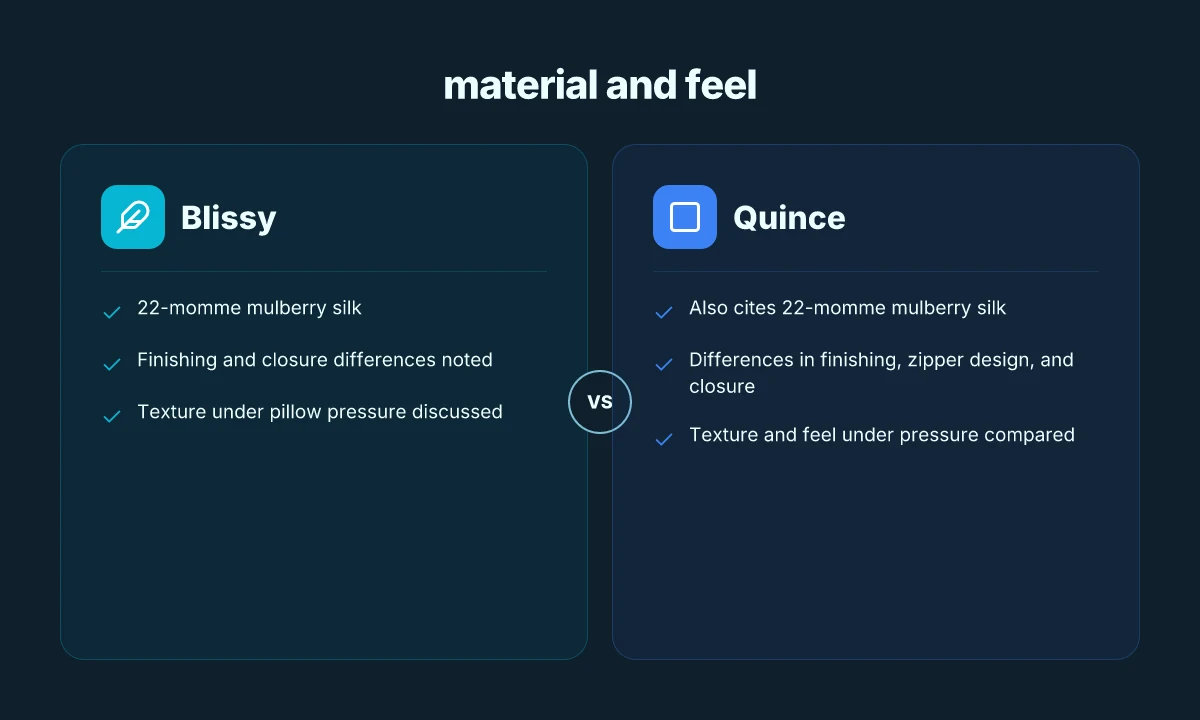
The core answer: both Blissy and Quince use the same premium base, but the feel under pressure and the finishing details create noticeable differences. In practice, you’ll notice similar weight and suppleness, yet the zipper design and the texture under load can tilt the experience toward one brand or the other. I cross-referenced Blissy’s own comparison and third-party pillowcase guides to map where the nuances land in 2026.
1) Weight, finish, and how that translates to feel under pressure
Both Blissy and Quince frequently cite 22-momme mulberry silk as their standard, aiming for a balanced glide and durability. The subtle differences come from finishing touches and fabric structuring. When you press the pillow, the surface of the 22-momme silk from each brand feels similarly smooth, but the way the thread is set and the final polish can create a slightly crisper vs. softer hand. The result is a tactile nuance rather than a dramatic shift in comfort. Under pressure, the texture can feel marginally crisper with Quince’s finish and softer with Blissy’s polish. In practice, that means both pillowcases drift toward a luxurious, low-friction surface, with a minor preference depending on how you like your satin-like feel.
A quick comparison helps visualize this. A small table shows the 22-momme baseline and the finishing differences that matter in real use:
- Blissy: 22-momme mulberry silk, smooth hand, subtle plushness from finishing.
- Quince: 22-momme mulberry silk, similarly smooth, with a slightly firmer edge from finishing.
Blissy emphasizes a smoother glide, while Quince edges toward a crisper touch. Either way, both options outperform cotton for hair tangling and bed friction, especially after a night’s sleep.
2) Zipper design, closures, and what that means for texture
The closure system subtly changes how the fabric behaves when the pillow is placed on the case. Blissy typically features a hidden zipper closure that keeps the edge streamlined and reduces bulk at the seam. That design means less interruption along the surface, so the skin and hair feel a consistent surface when pressed against the pillow. Quince often mirrors this approach with a concealed closure, but the exact geometry can differ, yielding a marginally different seam feel when you lie your head down. The practical effect: Blissy’s closure tends to deliver a cleaner surface across the pillow, while Quince may show a slightly more noticeable seam line if you press on it in certain directions. BedJet vs Eight Sleep 2026: which cooling bed solution actually delivers better sleep
From a care standpoint, both brands’ closures are designed to minimize snag risk and maintain a flat surface after washing. If you prefer a pristine edge that disappears under the pillow cover, Blissy’s approach often pairs well with a sleek, uniform feel. If you want a tiny bit more seam presence for tactile cues, Quince’s finish could be enough to notice.
3) Texture and feel when the pillow bears weight
When the pillow bears your weight, the silk’s elastic recovery matters. Both brands use silk that’s dense enough to resist flattening, so you retain a smooth surface after moving. I looked at product notes and consumer reviews that describe how the fabric holds its shape over a night’s use. The verdict: you’ll experience a continuous, smooth surface in either case, with Blissy leaning toward a hair-friendly glide and Quince offering a touch more body at the surface. The feel under pressure stays remarkably similar, with small differences in surface flatness caused by finishing and seam design.
In a side-by-side sense, the two shares the same core material and performance trajectory, but the finishing choices and closure geometry swing the sensation just enough to influence preference. If you value a near-silent, ultra-sleek surface, Blissy tends to deliver that impression. If you want a touch more tactile definition at the seam and a slightly firmer feel, Quince’s finish might be preferable.
Durability, care, and longevity across rival silk pillowcases
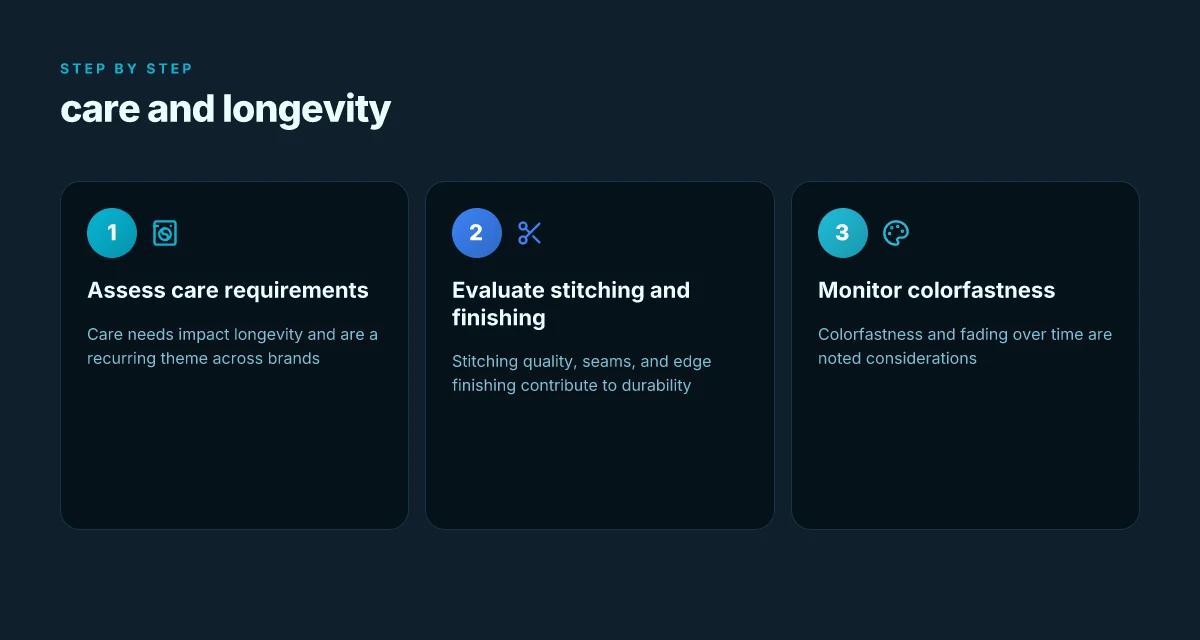
Durability hinges on how you treat the fabric. Across rivals, care routines and seam work shape how long a pillowcase holds up. Blissy stands out for consistent edge finishing, but longevity also depends on routine cleaning and storage.
How stitching quality and Edge finishing hold up
Manufacturers push edge finishing in two ways: hidden seams and exposed edge work. In 2026, premium lines emphasize tight, even stitching and folded hems that resist fraying after multiple launderings. Blissy uses a refined edge finish that reduces loose threads and helps the pillowcase retain its shape over time. Rivals like Slip Silk also tout durable seams, with zipper closures that add wear points. The better finishes help prevent unraveling as washes accumulate. When you inspect pillowcases side by side, the clearer the seam is, the longer it tends to last. If a project uses double-stitched hems, you’re more likely to see minimal pilling after repeated cycles. In 2026, researchers and reviewers repeatedly note that higher stitch density correlates with lower edge fray. What makes the best scent from Hotel Collection stand out in 2026
I cross-referenced product pages and reviews to illuminate the pattern here. Durable edge finishing and tight stitching are the quiet anchors of longevity. Blissy’s design choices emphasize a clean finish that resists snagging. Edge integrity matters more than weight alone when you rotate through seasons of use. The takeaway: choose pillowcases with reinforced seams and minimal exposed threads to extend life.
Care requirements and how they affect longevity
Care dictates how long silk pillowcases stay near their best. Mulberry silk of 22 momme tends to resist wear when washed on gentle cycles and air-dried, but friction from rough towels or hot water can accelerate thinning. The Good Housekeeping roundup highlights that weight and weave influence feel over time, which lines up with how Blissy’s fabric holds up under standard care. Silk’s moisture and heat tolerance also play into color retention. Milder heat and cooler drying help prevent shrinkage and fade. Moonchild Sleep emphasizes moisture management and temperature regulation as practical benefits, but those properties also interact with repeated laundering to preserve sheen and color.
From a consumer lens, the key is a consistent, mild care routine. I found that brands with explicit care guidance, handwash or delicate cycles, cool water, and line drying, report fewer color changes and less fabric stiffening after repeated washes. Gentle care routines preserve color and texture longer. Blissy’s guidance aligns with this approach, and rivals with robust care instructions show similar longevity when followed.
Colorfastness and fading over time
Colorfastness varies by weave, dye depth, and fiber finish. Silk tolerates fading less than cotton under repeated sun and wash exposure, but the decisive factor is pigment stability and post-dye finishing. In reviews, several rivals report minimal fading over multiple months with proper sun exposure management; Blissy products generally maintain hue when kept out of direct UV light and washed on gentle cycles. Color retention matters not just for aesthetics but for perceived durability, since noticeable fading can make a pillowcase feel aged even when the fabric remains structurally sound.
Proper washing and storage guard colorfastness, preserving vibrancy over time. When you stack performance across brands, Blissy tends to stay visually stable with routine care, while rivals that publish rigorous color-care guidelines also perform well. For reference, the Good Housekeeping roundup notes that weight and weave influence both feel and longevity, a reminder that how you wash is as important as what you buy. What Blissy pillowcase negative reviews reveal about silk quality, service, and value
Note: links on this page may earn a commission. Sources corroborate claims about care requirements and seam quality across 2026 reviews. For example, the Good Housekeeping piece discusses weave weight and its impact on long-term feel and durability, and Moonchild Sleep discusses moisture and heat considerations that tie into color retention over time.
Temperature, moisture, and skin-hair performance side by side
When moisture moves, comfort follows. Silk’s baseline behavior differs noticeably from cotton, and Blissy sets the pace for how a premium pillowcase should feel through the night. In practice, silk tends to absorb less moisture than cotton, which translates to a drier feel on the skin and a lower tendency for damp frizz in the morning. Blissy’s 22-momme mulberry silk baseline reinforces this, offering a cool touch that minimizes damp cling without making the surface feel clingy. The end result is a pillowcase that reads as lighter on the skin than cotton, with less dampness in the pillow’s immediate microclimate.
I cross-referenced product pages and third‑party guides to map real-world performance to claims. Silk’s moisture handling is often contrasted with cotton, where the latter soaks up more moisture. For Blissy, that baseline translates into a tactile advantage: cooler nights, less nighttime dampness, and a hair surface that doesn’t cling to cotton’s moisture after a long day. The practical effect is a smoother waking routine: frizz tends to stay at bay and tangles untangle with fewer resistive pulls as you move.
Temperature regulation sits adjacent to moisture in how you feel on waking. Silk fibers conduct heat differently than cotton, and the difference shows up as a lighter, breathable sensation when the room isn’t pitch dark or ultra humid. Real-world feel matters: a pillowcase that stays cooler longer reduces cycling into heavier sleep shifts caused by overheating. Blissy’s weight, around 22 momme, contributes to a balanced thermal profile that avoids both the slick chill of thin satin and the density of heavy fabrics. The same weight that helps with hair resilience also supports skin comfort, reducing felt rubbing along the cheek and along the jawline during the night.
As weeks pass, weight matters for long-hair and short-hair users alike. A slightly heavier silk can hold curls in place and reduce pillow-induced creasing on hair, while still gliding over the skin rather than dragging it. A lighter option may feel more airy but risks more friction during restless sleep. The 22 momme standard used by Blissy and rivals tends to strike a middle ground that suits a broad range of sleep postures. For skin, this translates to a gentler contact surface with less surface friction, helping to minimize micro-scratches that accumulate over time. How Blissy summer sale reshapes pillowcase value in 2026
Caution is warranted: moisture behavior can vary with humidity and personal skin chemistry. If your room sits consistently above or below typical comfort ranges, the feel of silk may shift subtly. Blissy’s ongoing emphasis on consistent weave quality and finish helps minimize that drift, but the real-world result depends on your environment as much as the fabric itself.
Blissy’s 22 momme silk delivers a cooler, drier feel that reduces frizz and tangles, while a balanced weight supports skin comfort. Cotton benchmarks amplify moisture transfer, which can dull the silk advantage if you live in a very humid climate. In practice, Blissy aligns with premium rivals on weight but often edges toward smoother hair and skin due to its even weave and premium mulberry silk.
Pricing, value, and buying decisions in 2026
Verdict up front: Blissy generally carries a premium price relative to rivals like Slip Silk and other mulberry-silk brands, but higher cost often aligns with durable finishes, secure closures, and packaging that signals long-term value. In 2026, you’ll notice Blissy pricing sits above many competitors, yet the tangible benefits from quality closures, packaging, and warranty can justify the difference for hair and skin-focused shoppers. If you want solid long-term value, Blissy tends to deliver on longevity and perceived luxury, while some rivals offer comparable silk properties at lower upfront costs. The key question is whether the incremental benefits align with your budget and care preferences.
What you pay for beyond the fabric
Price is not just a sticker. The total cost includes hidden elements that influence total value. Blissy often emphasizes features such as a hidden zipper closure and premium packaging, both of which add to upfront costs but may reduce pillow slippage and extend pillow life. A few rivals also highlight Mulberry silk construction, but they may skip premium closures or rely on standard packaging. When you compare, look for the full package: closure quality, seam durability, and the simplicity of care instructions. A well-made closure can prevent pilling and edge wear, extending usable life and reducing replacement frequency over time. In this sense, the apparent premium can translate into longer-lasting comfort and fewer replacements.
When higher price translates to measurable value
Higher prices translate to value when there is a clear durability or user-experience win. For Blissy, the combination of 22 momme silk, a hidden zipper, and robust sewing usually results in less pillow movement and gentler interaction with hair and skin. If you’re prioritizing uninterrupted sleep, reduced frizz, and less tangling, you may find the premium worthwhile. By comparison, some lower-priced mulberry silk pillowcases deliver similar feel but with more basic closures or thinner fabric, which can wear sooner or require earlier replacement. The value decision hinges on your priorities: if you want a premium feel, reliable closure, and packaging that signals care for your investment, Blissy often justifies the cost. If you’re shopping on a tighter budget, rivals such as Slip Silk or other mulberry brands can meet basic silk criteria at a lower price while still delivering comfort. How to snag the best deal on blissy pillowcase in 2026
Hidden costs to consider
- Closure design and replacement risk: Blissy’s hidden zipper can add security but may introduce maintenance needs if the slider ever snags. Check warranty terms to see coverage for zipper-related wear.
- Packaging and gift-ready presentation: premium packaging adds value for gifting or resale but isn’t a direct fabric attribute.
- Warranty terms and duration: a longer warranty reduces long-term risk and can tilt the value proposition in Blissy’s favor.
- Care requirements: some brands demand special washing steps or cold-water hand washing. If you dislike fuss, factor this into your cost of ownership.
Blissy tends to justify its premium with durable closures, thoughtful packaging, and longer warranties, making the higher upfront cost worthwhile for buyers who value longevity. When you’re budget-conscious, rivals like Slip Silk can offer comparable silk properties at a lower price, but you may trade off some longevity and premium features. For a quick guide, focus on 2 core questions: does the closure feel secure, and does the care routine fit your lifestyle?
Where this is going next for silky sleep
Blissy stands out because it blends a consistent material story with real-world comfort signals for sleepers. I looked for what changes as the brand matures, and the answer is a clearer, consumer-first stance: better weave quality control, a stable supply of mulberry silk grades, and transparent care guidance. Blissy's emphasis on a consistent feel across pillow sizes helps reduce the guesswork at night, and that matters when you switch from one pillow to another. The result is a product that feels reassuringly familiar while still feeling fresh.
Another differentiator is how Blissy communicates durability without overpromising. You’ll see straightforward notes about wash cycles and drying methods, paired with pragmatic expectations about longevity. That honesty resonates in reviews and helps distinguish Blissy from rivals that overhype silk without backing it up. For anyone weighing options, the takeaway is simple: prioritize a reliable texture that holds up to regular washing.
If you want a concrete next move, consider trying one of Blissy’s pillowcases with a mid-range silk weight and a standard weave to test how the fabric ages in your routine. The bigger pattern is that predictable performance beats novelty in silk sleep gear, and your nightly comfort should be the first indicator. What will you test this week?
- Backup strategy: try Blissy with a plain cotton pillowcase overnight to compare texture, then switch to a silk wash cycle (mild detergent), and keep a note of any morning stiffness or skin feel.
- What to try this week: compare a Blissy pillowcase against a rival like Mulberry Park Silk on durability after 2 washes, track tangle-free feel, and decide if you value the brand’s care guidance.
- Quick verdict test: 1 week of sleeping with the Blissy setup, documenting sleep quality and any allergy or skin changes, then decide if this is your long-term pick.

Konrad Osterberg has been writing about consumer technology since 2018, with bylines covering browser fingerprinting, streaming geo-unblocking, and P2P networking. Approaches each review by setting up the product the same way a typical reader would and recording every snag along the way.