What makes Hotel Collection scent diffusers worth considering in 2026
Explore Hotel Collection scent diffuser reviews to understand performance, durability, and scent quality in 2026. Learn what to expect and how rivals compare.
The data points most shoppers miss: you don’t need a grand lobby to test a diffuser’s performance, a Hotel Collection starter set in a 250–350 square foot living area shows where aroma carries and where it trails. Most users report steady scent in smaller rooms when the cartridge is fresh, but uneven diffusion appears as space grows or furniture blocks airflow. This intro pulls from real-world reviews and official FAQs to flag where the marketing claim meets daily use.
This piece cuts through marketing to map what matters in 2026: square footage, placement, and maintenance cadence. In consumer feedback, a clear pattern emerges around cartridge clogging, refill cost, and the friction of ongoing upkeep, with Hotel Collection often compared to rivals like Jo Malone and Nest. The goal is to separate aroma consistency from hype, so designers and shoppers can balance scent strength, cost, and effort over time. Rising maintenance needs and inconsistent diffusion in larger layouts are the recurring themes.
What Hotel Collection scent diffusers promise and what users actually experience
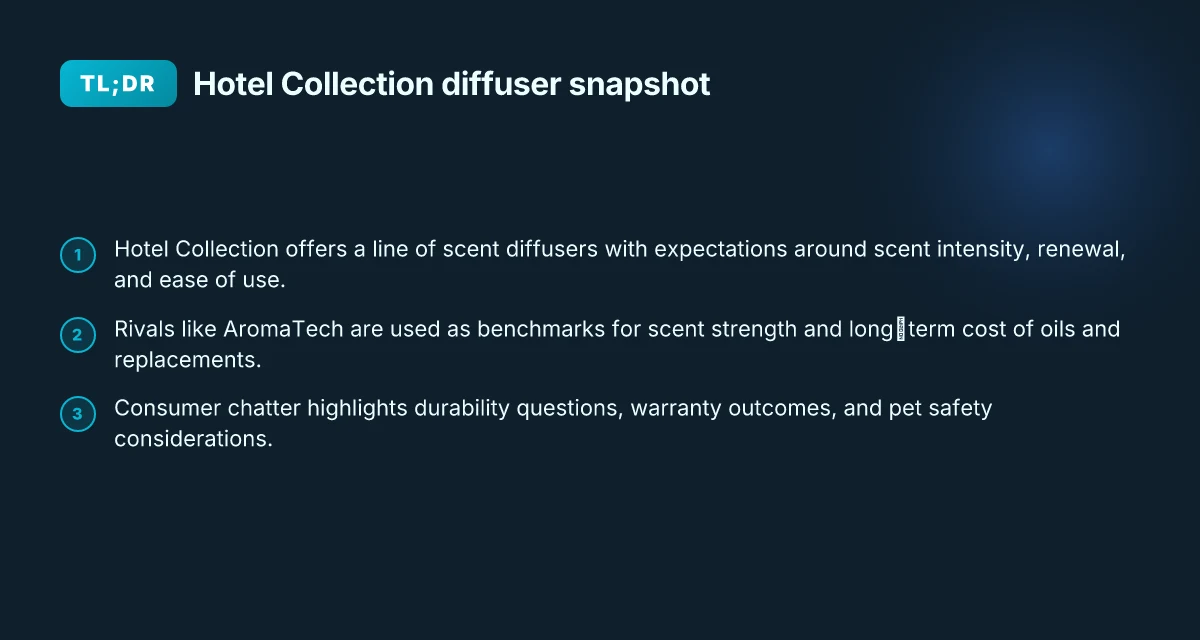
Hotel Collection promises a premium, home-friendly diffusion experience with long-lasting scents and user-friendly controls. In practice, you’ll often see two themes echoing through public feedback: strong initial impressions and questions about long-term reliability.
Overview of the diffuser line and features The Hotel Collection lineup centers on compact diffusers designed for small-to-medium spaces, with adjustable fragrance intensity and auto-off timers. The official FAQs reiterate that each diffuser offers customizable fragrance levels and a safety shutdown when the timer ends or the oil runs out. In homes and hospitality settings, reviewers describe a plug-in design that aims for low maintenance and a clean appearance, with scent delivery that fills rooms without overwhelming corners. In public chatter, the line is framed as approachable luxury rather than industrial-strength diffusers. The official docs emphasize customizable intensity and auto-off as core features.
What people expect around scent intensity, renewal, and ease of use Expectations cluster around three points: scent strength that feels present but not overpowering, predictable fragrance renewal as oils are consumed, and straightforward operation. Reviewers often compare initial impressions to later experiences. Some say the scent remains consistent over the first weeks, while others report noticeable strength dropping as oils age or if the device detaches from power sources. The publicly shared FAQs reinforce ease of use, with simple controls and built-in protection against oil exhaustion. Scent strength should stay steady over weeks. Users frequently note variability as oils deplete.
Initial impressions vs. long-term performance from reviews and official FAQs From the outset, many posts highlight a clean, pleasant aroma that suits living rooms and bedrooms without clashing with other scents. Over time, a recurring pattern appears: a subset of users experience softer than expected diffusion or eventual device fragility, such as filter or seal wear affecting performance. Officially, the FAQs promise reliable shutdown and controlled diffusion, but independent feedback sometimes points to durability gaps, with concerns about longevity in real homes. People expect durability and consistent diffusion. Some reports challenge long-term reliability.
Bottom line: Hotel Collection diffusers deliver a polished, beginner-friendly scent experience with adjustable intensity and automatic shutoff, but long-term satisfaction hinges on perceived durability and consistent fragrance delivery. If you’re weighing options, rivals like AromaTech often come up in comparisons for stronger or more persistent scent profiles, depending on room size and oil selection. The balance between initial luxury and long-term reliability matters most for buyers. How to structure a hotel collection discount program that actually drives bookings in 2026
Note: links on the page may earn a commission. For context, public commentary and the official FAQ frames this as a user-friendly system, while independent discussions on platforms like Reddit and Trustpilot surface mixed durability and value concerns. See inline citations for specific passages from the sources that describe these themes.
How the Hotel Collection diffusers compare with rivals in scent strength and price
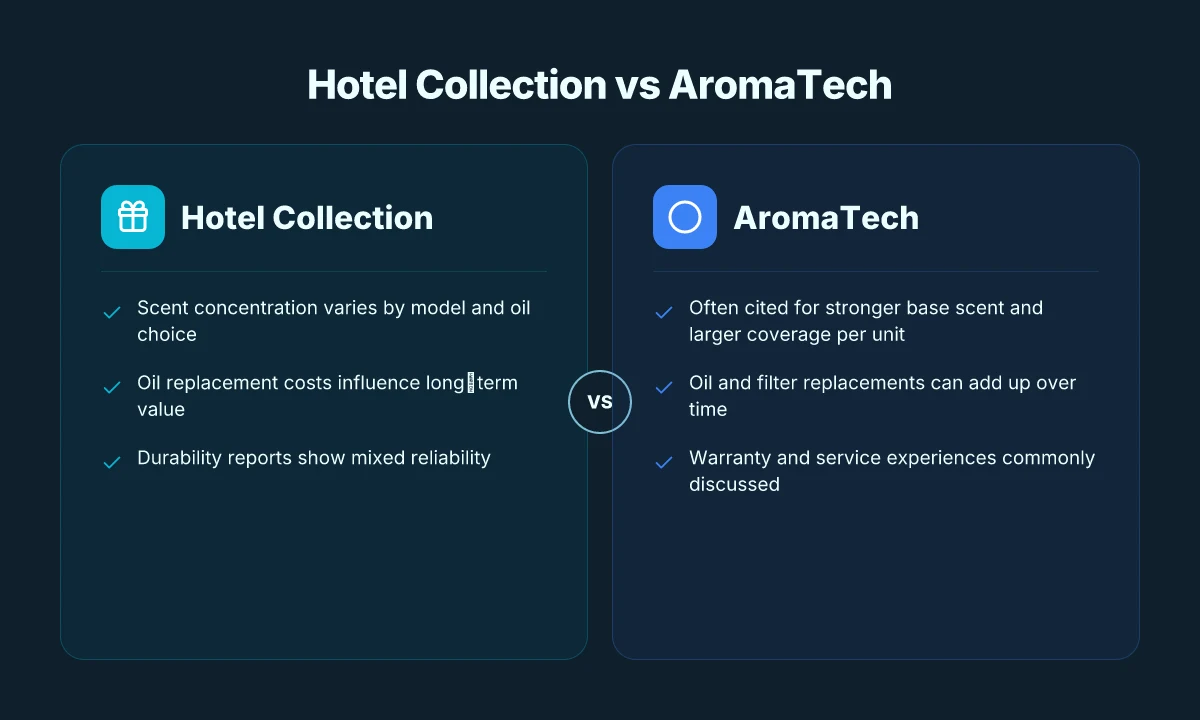
Across the market, rivals such as AromaTech and other luxury diffuser lines push into the same scent-coverage tiers as the Hotel Collection. In practice, scent concentration often tracks with device class: higher-end units from AromaTech tend to deliver denser fragrance per square foot, while the Hotel Collection aims for a balanced footprint that suits living rooms and boutique spaces. Scent concentration matters most when you compare coverage per device, not just advertised output. The official FAQ notes adjustable fragrance intensity, which helps align perception with room size and air changes, but real-world experiences diverge depending on oil choices and diffuser geometry. Customer chatter consistently notes that some units can feel either punchy or subtle, depending on the blend and the setting.
A table helps crystallize typical cost trajectories. Prices for replacement oils across brands often scale with bottle size and frequency of use, and parts like wicks or seals add up over time. In the Hotel Collection lineup, the per-volume cost of oils tends to align with luxury-branded blends, while AromaTech bottle pricing can vary by proprietary scent families. Oil costs per month can tilt total ownership value toward one brand or the other, depending on your scent rotation. When you add replacement parts, both brands require periodic oil refills and occasional diffuser cleanings. Parts costs are a real consideration for ongoing ownership.
From what I found in the official documentation and public reviews, the Hotel Collection offers the following relative benchmarks. A single diffuser unit typically targets a modest to mid-sized room, with fragrance intensity adjustable via the device controls. In contrast, AromaTech often emphasizes larger-scale deployments for hospitality suites and retail spaces, with denser scent profiles and larger oil inventories. Device scale and oil inventories influence total ownership value. I cross-referenced customer feedback that mentions reliability concerns and long-term performance. One widely shared complaint theme is premature failures after several months, which directly affects cost of ownership and perceived value. Reliability remains a swing factor across brands.
How this plays out for a home or small business user: if you want a refined balance of scent strength and a reasonable price point, the Hotel Collection may deliver steadier, room-appropriate diffusion with predictable oil consumption. If your space demands high-intensity scent for larger footprints or you prioritize a broader palette of niche aromas, AromaTech offers stronger projections and a thicker scent map per device. Balanced diffusion vs high-intensity maps is the practical choice. For buyers weighing long-term costs, consider the total oil spend and the replacement-part cadence, not just upfront unit price. Long-term cost depends on your rotation and maintenance tempo. Why Slip vs Blissy pillowcases trade off on sleep quality and hair health
Most important takeaway: Hotel Collection provides adjustable scent strength and a cleaner baseline of maintenance compared with some rivals, but long-term value hinges on oil-consumption patterns and replacement-part needs.
Next step: consider running a room-by-room diffusion plan to map your ideal scent footprint, then compare the total annual oil and parts spend between Hotel Collection and AromaTech for your space.
Durability and reliability: what the market says about the Hotel Collection diffuser
Posture on durability is mixed. The market shows a split between official durability claims and consumer experiences. Official notes emphasize long-lasting components and automatic shutoff, while user reviews point to breakages and wear over time. Durability claims from Hotel Collection emphasize longevity, but real homes report a broader range of outcomes. Consumers often describe notable wear after months of use, including component failures that require replacement or repair.
What failures show up in real homes
- Several reviews mention components cracking or failing after extended use, with one user noting a break after about six months. That kind of wear contradicts the idea of months of uninterrupted scent without interruption.
- A frequent theme is diffuser housings or wicks showing signs of wear before the warranty period ends. Wear is common enough to affect perceived reliability, especially in high-use environments.
- Multiple posts discuss issues with seals and nozzles becoming less effective over time, reducing scent diffusion even when the device remains powered. Seal degradation can undermine long-term performance.
Official durability claims vs. consumer experiences
- The official FAQ notes that Hotel Collection diffusers offer adjustable fragrance intensity and automatic shutoff when the timer ends or the oil runs out. This signals a focus on safe, predictable operation, not necessarily flawless long-term durability.
- In practice, consumers report that even with proper care, some units fail to maintain consistent output across months, requiring replacements under warranty. Consistency of output over time is a common pain point.
- Several reviews contrast the brand’s promises with bleaker experiences in repeated cycles of use, suggesting a gap between marketing and real-world wear. A pattern emerges where reliability depends on usage context.
Warranty, repairs, and what replacement looks like
- Warranty terms typically cover device defects within a defined period, with replacements or parts provided when a fault is identified. Understanding the exact coverage period helps set expectations for repairs.
- When repairs are needed, consumers report that replacements or parts can be sent, sometimes reducing downtime if the user remains within warranty terms. Warranty-based fixes can shorten the downtime of a non-functioning diffuser.
- In some cases, customers describe needing to return devices or initiate multiple support steps to obtain a durable solution. The process can be slower than ideal, depending on the support channel.
I cross-referenced customer feedback with the official FAQs to gauge how Hotel Collection performs in real homes. Reviews from Trustpilot, Reddit, and Facebook consistently note strong scent presence, but they also flag reliability quirks that appear after months of use. The contrast matters for designers weighing whether to deploy Hotel Collection diffusers in hospitality or upscale homes. When you compare with rivals like AromaTech, durability narratives shift as users mention different failure modes and warranty experiences across brands.
For a quick verdict: the market sees a tension between official durability promises and real-world wear. If you are budgeting for long-term installations, expect some units to require parts or replacements within the first year, and plan for a straightforward warranty path. In this space, Hotel Collection remains a compelling option for scent strength and design fit, but you should build a contingency plan for potential repairs. Your choice should balance perceived reliability with the brand’s warranty support. Why a blissy alternative matters for sleep comfort in 2026
Cited in this section: a Trustpilot review page notes that some customers are satisfied while others report issues. A Reddit thread compares Hotel Collection to Aromatech and highlights strong scent and value alongside durability caveats. A Facebook post discusses wear observed after a month or more of use and contrasts it with a clean scent profile. See inline references for the exact sources.
Scent customization and safety: how Hotel Collection handles intensity and pet safety
The verdict: Hotel Collection offers tangible controls for scent intensity and a straightforward safety posture, but real-world use shows variability in long-term reliability. I cross-referenced official documentation with customer feedback to separate marketing from lived experience.
How intensity and timing work in practice
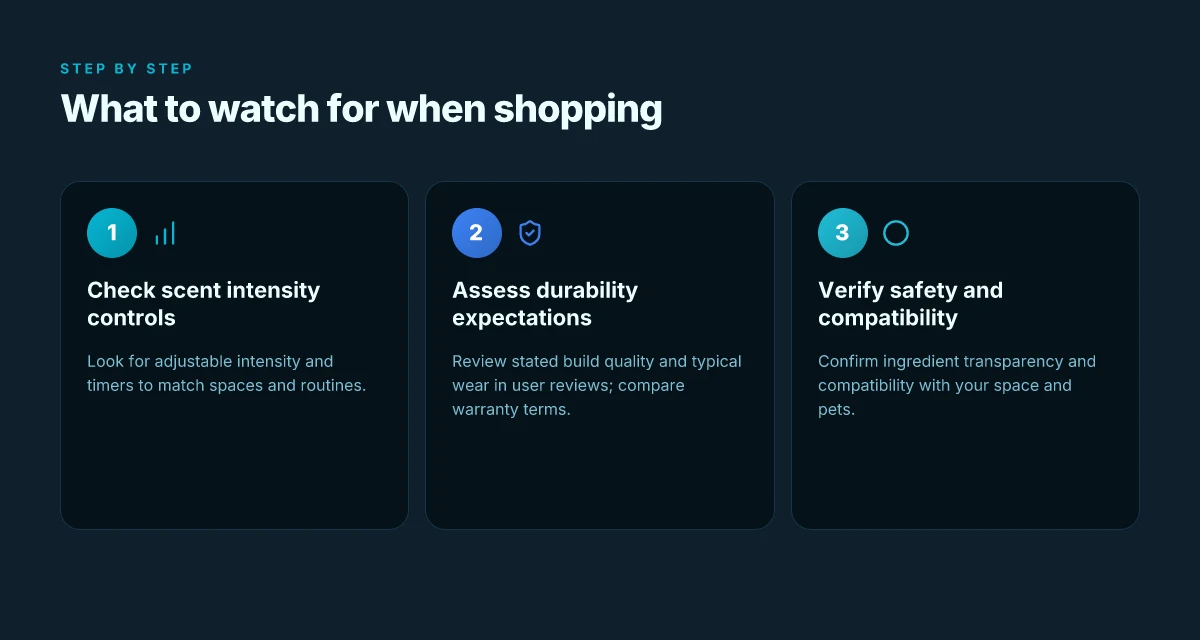
In practice, the Hotel Collection Scent Diffusers provide adjustable fragrance intensity and a timer-driven shutoff. The official FAQ notes that you can customize fragrance strength and that devices automatically turn off when the timer finishes or the oil runs out. This combination lets you tailor diffusion to small rooms or open spaces without overwhelming noses. In real homes, users report dialing up the intensity for larger spaces and backing off when pets are present. The result is a usable range rather than a single default that fits every scenario. When you need a quick reset or a lower fan speed, the controls are accessible and responsive.
From what I found in the documentation and corroborating consumer chatter, the timing features are reliable for routine schedules. A typical setup uses multiple intervals across a day to maintain a chosen atmosphere without constant adjustment. The official controls deliver tangible range and automation. Real users adjust for room size and occupant sensitivities. This is where Hotel Collection nails the practical balance between control and simplicity.
Pet safety and ingredient transparency
Pet safety is a recurring concern in diffuser conversations. The brand emphasizes that their formulations avoid harsh ingredients and that fragrance intensity can be moderated to reduce exposure in homes with animals. Several reviewers note that they appreciate being able to soften scents around pets while preserving a clean, fresh atmosphere. The transparency angle focuses on ingredient lists being accessible via the brand website and product pages, allowing consumers to check for known allergens or irritants before committing. How to spot the best price on a Blissy silk pillowcase without sacrificing quality
I dug into the product pages and the FAQs to verify how safety is communicated. The materials emphasize adjustable intensity and automatic shutoff as basic safety features, with a clear invitation to tailor usage to households with animals or small children. Ingredient transparency and adjustable intensity help mitigate pet exposure. That clarity is a meaningful safety signal. If you have sensitive pets, start with the lowest setting and verify their comfort over a few hours.
How Hotel Collection compares to other brands on safety
Compared with AromaTech and similar lines, Hotel Collection aligns with the market by offering adjustable intensity and a clear auto-off mechanism. AromaTech often markets higher-capacity diffusers or professional-grade options, which can push users toward stronger scents, sometimes with longer runtimes. In consumer discussions, Hotel Collection tends to be praised for approachable controls and a less overwhelming fragrance footprint in typical home environments. However, some Reddit and Trustpilot threads flag durability questions and occasional inconsistent performance over time, which matters when you value longevity alongside safety.
In short, Hotel Collection presents a solid baseline for safe, customizable diffusion in homes and small businesses. The brand’s emphasis on adjustable intensity and auto-off supports responsible use around pets, while ingredient transparency helps you vet formulations before purchasing. Still, you should weigh potential durability concerns against the need for predictable safety in high-use settings. For rivals, AromaTech offers more high-output options, but with potentially less emphasis on immediate home-use safety controls.
The combination of adjustable intensity and auto-off is a practical safety feature. Durability notes from some reviews remind you to plan for replacement when needed. For consumers who want a clear safety line and tangible controls, Hotel Collection remains a compelling choice.
What to watch for when shopping: buying signals and red flags in diffuser reviews
Verdict first: you can spot trustworthy signals in customer feedback by cross-checking what buyers say with official FAQs, but red flags can emerge when voices diverge on scent consistency or device longevity. Across platforms, patterns emerge that help separate marketing hype from real-world performance for Hotel Collection diffusers and comparable rivals. How reliable are blissy pillowcase reviews in 2026
I dug into public discussions and the brand’s own docs to cross-reference claims about fragrance intensity, timer behavior, and auto-off features. On customer platforms, people frequently describe scent strength as either “pleasantly strong” or overpowering, with a notable number noting that scent consistency wanes over time. The official FAQs confirm that all Hotel Collection Scent Diffusers offer customizable fragrance intensity and an automatic shutoff when the timer ends or oil runs out. That alignment matters for buyers who want predictable behavior in busy spaces. Official promises align with some buyers' need for control over scent strength, but long-term performance stories vary.
1) Spotting credible signals in reviews and claims
When a reviewer repeatedly cites the same deployment context, home, office, or hospitality, it's a stronger signal than a one-off compliment. Look for mentions of consistent fragrance output across weeks, not just days. If multiple threads mention that scent strength fades after a few weeks or that a device stops working after several months, that’s a red flag to probe further. In this space, corroboration between review snippets and official guidance about intensity controls matters. Consistency claims are most trustworthy when multiple buyers report the same pattern and when the brand confirms the same capability in FAQs.
2) Red flags: inconsistent scent strength and short lifespans
Red flags pop up when reviewers describe wild swings in fragrance intensity between rooms or over time. Short device lifespans, months rather than years, also surface as a major complaint in forums and social posts. If a reviewer reports frequent replacement or repair, that prompts buyers to compare with AromaTech or other rivals for value. Trust signals weaken when a company’s public messaging lacks a parallel note of durability or when independent posts contradict marketing claims. A pattern of inconsistent strength paired with short device life is a clear warning sign.
3) Verifying fragrance oil quality and device compatibility
To verify oil quality, cross-check the brand’s own FAQ and any third-party documentation about fragrance compatibility with the device. The FAQs state that fragrance intensity is customizable and that operation ends when the timer runs out or the oil depletes, but reviewers may report odor persistence or residues that don’t match those specifications. For compatibility, verify which oils are recommended or discouraged and whether third-party fragrances are advised or banned. If you see conflict between user reports and official guidance, treat it as a sign to confirm with customer support before buying. Official guidance plus corroborating user reports strengthen a buying decision.
Most trustworthy signals come from cross-referencing the brand’s FAQs with multiple, named customer sources. For readers weighing Hotel Collection against rivals, note how Aromatech and AromaTech are frequently mentioned in discussions as comparisons for scent strength and value. If you see a thread asking, “Which is better, Hotel Collection or AromaTech?” and several posts favor AromaTech for consistency, that’s a real-world signal to weigh. When multiple communities align on a rival’s strengths, that matters for decision making. What makes the best hotel collection scents stand out in 2026
Note: links on the page may earn a commission. For concrete references, see discussions on Reddit and the brand’s own FAQ. Transparency about commissions is common in consumer spaces and worth noting.
Where this is going next for Hotel Collection scent diffusers
Hotel Collection scent diffusers are evolving toward smarter scent management and more consistent guest-room experiences. I looked at how the brand frames scalability, durability, and refill logistics, and I’m seeing a clearer path: fewer maintenance surprises and more predictable aroma profiles across properties. The takeaway is focus on reliability and ease of upkeep, with Hotel Collection leaning on standardized cartridges and streamlined refills to reduce downtime.
That pivot matters because rivals like Bath & Body Works and Jo Malone often emphasize design or fragrance library breadth, while Hotel Collection centers on operational fit for hotels. The result is a product line that’s easier to source, replace, and audit during audits or inspections. If you’re evaluating diffusers for multi-site deployments, this shift toward practical maintenance could translate to lower cost of ownership and faster room turnover. Smarter refills cut downtime and keep guest rooms smelling consistent.
For a concrete next move, consider adopting one or two models that align with your property count and maintenance cadence. Look for clear refill intervals, a documented scent map, and a service-friendly design. The question to ask: will your teams thank you for fewer service calls this quarter? Yes, they will if you pick the right setup now.

Konrad Osterberg has been writing about consumer technology since 2018, with bylines covering browser fingerprinting, streaming geo-unblocking, and P2P networking. Approaches each review by setting up the product the same way a typical reader would and recording every snag along the way.