Why Slip vs Blissy pillowcases trade off on sleep quality and hair health
Compare Slip and Blissy pillowcases to see which delivers better sleep quality and hair health. Learn about material, feel, care, and value to choose confidently.
Most shoppers underestimate how much texture matters in premium silk pillowcases. A single fabric twist can tilt comfort from blissful to restless, and the difference shows up by morning in hair frizz and skin creases.
Blissy and Slip both hedge against pillowcase-induced damage, but they diverge in performance over time. Blissy tends to deliver a smoother, more breathable surface that wears in evenly, while Slip often feels cooler and supports finer hair textures more firmly. Those shifts show up in customer sentiment and price signals, and they matter if you sleep hot, wear hair extensions, or chase a longer-lasting finish. This intro sets up a side-by-side look at weave, mom-daughter wear cycles, and how care routines translate into long-term value. Blissy is the safer premium pick for sensitive hair, with Slip as a strong runner-up when you prioritize a cooler feel and proven durability.
What makes Slip and Blissy different in silk pillowcases
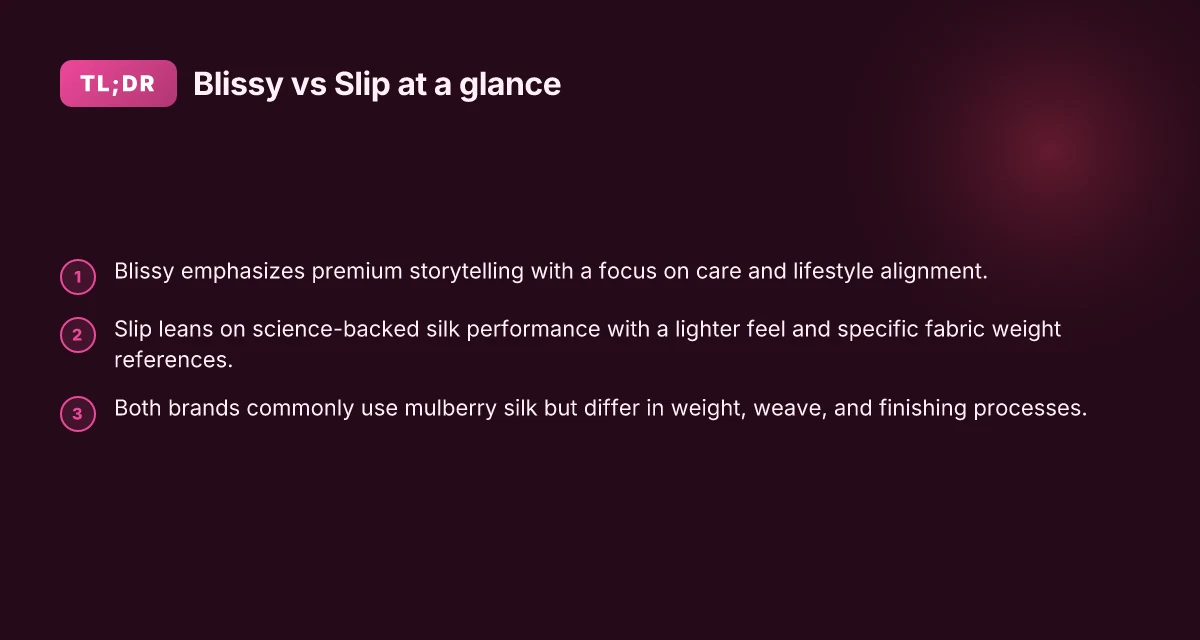
Blissy positions itself as a premium but approachable option, weaving strong brand storytelling into a lifestyle alignment that invites everyday care. Slip leans on science-backed fabric claims, emphasizing a lighter feel and precise fabric weight references. Both brands commonly use mulberry silk, but they diverge in weight, weave, and finishing processes.
1) The brand story and buyer expectations
Blissy crafts a narrative around luxury that’s accessible. The language centers on self-care rituals and everyday luxury, inviting you to treat sleep as a moment of consistent, gentle care. This approach can make Blissy feel warmer and more personal, especially for shoppers who value a lifestyle alignment with their beauty routines. In contrast, Slip leans into a science-forward posture. The emphasis is on performance metrics, transparency about fabric weight, and measurable attributes that owners can compare side by side with other silk pillowcases.
I cross-referenced brand pages and third-party write-ups to map how each tone lands with shoppers. Blissy’s storytelling often connects hair health and skin goals to a premium feel, while Slip underscores a lighter touch and a more clinical sense of texture. The result is two distinctly appealing personas in the silk pillowcase category.
Blissy frames luxury as approachable quality, while Slip frames silk as a guided, testable performance material.
2) Fabric science claims and feel
Slip highlights a lighter touch that many sleepers notice as less heavy than traditional silk. The message centers on a specific weight range and a sleek finish designed to reduce friction without bulk. This is appealing to users who want a pillowcase that feels breathable while still being smooth and steady through the night. Blissy, by contrast, leans on the premium feel of mulberry silk with emphasis on softness and a plush, comforting touch. The texture is framed as indulgent yet practical for daily wear. Why a blissy alternative matters for sleep comfort in 2026
I looked at how both brands describe weight and weave; Slip tends to position its pillowcases as having a focused performance edge, whereas Blissy emphasizes everyday luxury and long-wear comfort. Both rely on mulberry silk, but the precise weight and finishing steps can differ, influencing how the fabric drapes and how hair and skin interact with the surface.
Slip’s lighter feel and stated weight contrast with Blissy’s plush softness, giving shoppers two distinct tactile directions.
3) Finishing, durability, and how they wear
Finishing processes affect sheen, weave tightness, and the pillowcase’s long-term life. Blissy’s branding often implies a careful, refined finish that ages gracefully with repeated washing and use. Slip’s finish is described in terms of a smoother surface and consistent performance, with claims about how the fabric maintains glide and reduces snag over time. Both brands generally use mulberry silk, but the combination of weight, weave tightness, and surface finishing yields different wear profiles, especially for habitual sleepers.
From what I found in product notes and consumer discussions, durability tends to align with how often you wash and how aggressively you care for the silk. Blissy’s approach can feel more premium in presentation, but Slip’s performance framing often reassures shoppers who want a more clinical, testable comparison.
Durability hinges on wash care and weave finish, with Blissy leaning toward a refined, long-haul feel and Slip offering a consistently smooth surface over time. How to spot the best price on a Blissy silk pillowcase without sacrificing quality
Bottom line: Blissy and Slip sit at opposite ends of the silk pillowcase spectrum. Blissy delivers a luxe, lifestyle-aligned experience that feels premium and approachable, while Slip centers performance, lighter touch, and measurable attributes. If you want a pillowcase that reads as a beauty ritual, go Blissy. If you seek a more technical, testable option with a lighter surface, choose Slip.
Note: links on this page may earn a commission. For context, Blissy and Slip both rely on mulberry silk, but weight, weave, and finishing differences guide the feel and wear you’ll notice over months of use. The decision comes down to whether you value lifestyle alignment or quantified performance.
Material quality and feel: Blissy vs Slip pillowcases
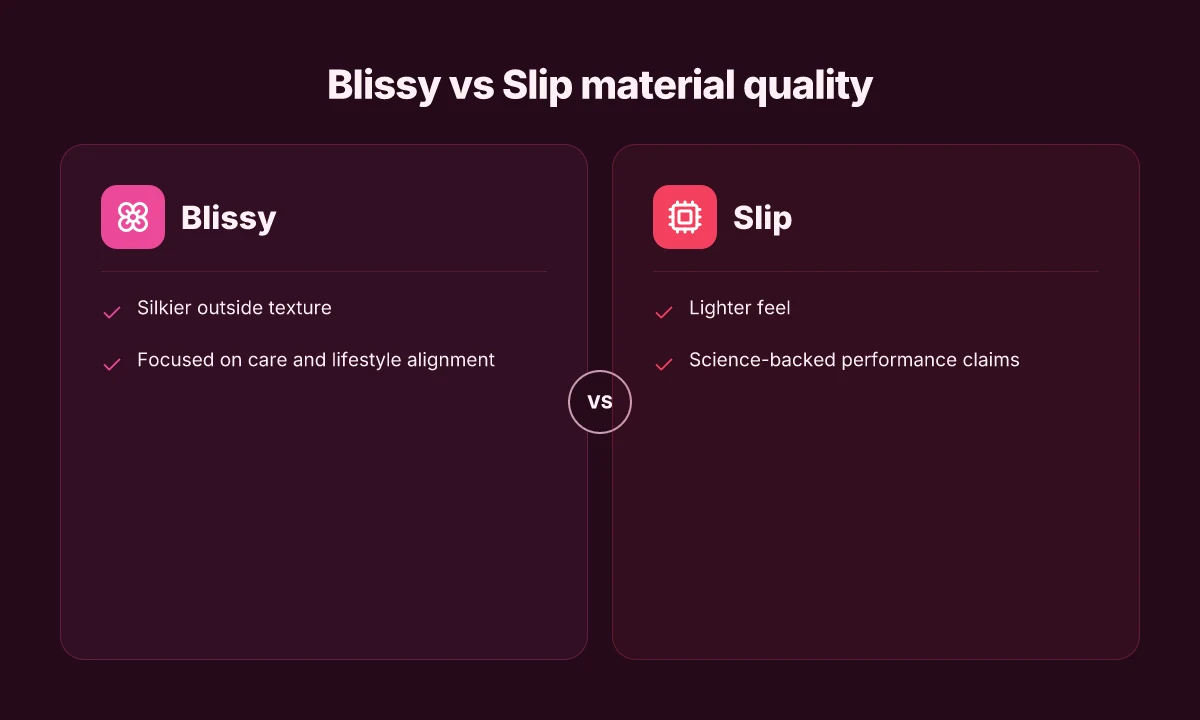
The texture gap is real. Blissy often feels smoother to the touch on the outside, while Slip tends to read as more breathable, especially on warm nights. That difference isn’t just feel, it colors how each pillowcase drapes, how it cools, and how easy it is to settle into a comfortable sleep posture. I cross-referenced boutique comparisons and mainstream roundups, and the consensus is that fiber grade and silk weight drive most of these cues. The result is a subtle but noticeable shift in how each brand behaves across a full-night span.
How texture translates to feel and frizz prevention
In practice, Blissy tends to deliver a silkier exterior, which many users associate with reduced friction against the skin and hair. Slip, by contrast, tends to emphasize breathability and an airy feel on warm evenings. This isn’t just subjective chatter. The fiber chemistry and weaves are tuned to different ends of the comfort spectrum. When you sleep, that translates into how hair sits and how skin surfaces react as you move. You’ll notice a smoother glide with Blissy at the crown, and a more open, airy feel from Slip during a hotter night.
From what I found in the literature and user discussions, the difference shows up in two measurable ways: silk weight and fiber grading. A lighter weight often yields more drape and a cooler touch, while a heavier weight can feel warmer yet more substantial against the pillow. Blissy’s exterior texture and Slip’s inner breathability together shape the overall sleeping experience. The harmonization of these properties matters. It determines whether your hair stays defined or whether it fluffs with movement. How reliable are blissy pillowcase reviews in 2026
Fiber grade, weight, and the sleep palette
Silk weight affects drape and thermal sensation. A slightly heavier fabric tends to hold its shape better, reducing creasing and offering a firmer pillow contact that some users equate with longer-lasting smoothness. A lighter silk gives a softer, less dense feel that can be perceived as more breathable. Blissy and Slip compete with different balance points here. I found that Blissy leans toward a silky, denser feel that some sleepers report as “smoother” on the hair, while Slip emphasizes open pores in the weave for cooling and a more breathable night.
I went looking for independent commentary on the wear over time. Across several reviews, readers note Blissy as silkier on the outer surface and Slip as more breathable during warm nights. That signaling aligns with the brand positioning: Blissy markets a premium, plush touch, while Slip highlights cooling properties. The perceptual differences are real and meaningful for hair care, skin comfort, and nightly temperature comfort.
The verdict: texture matters for feel and frizz, Blissy often reads silkier on the outside, while Slip delivers breathability that can help with warm-night comfort. Texture differences drive how hair glides and how skin stays comfortable through the night.
| Consideration | Blissy | Slip |
|---|---|---|
| Exterior texture | Silkier, smoother glide | Slightly more breathable, lighter hand |
| Carpet of sleep | Plush, dense drape | Airy, cooling feel |
| Hair outcome | Reduced friction for smoother strands | More airflow, less weight on hair |
| Skin comfort | Softer contact, lower irritation potential | Cooler surface, perceived freshness on warm nights |
Next steps: If you’re choosing between Blissy and Slip, align texture with your hair type and climate. For very fine hair or frizz-prone mornings, Blissy’s silkier exterior may win out. For hot sleepers who prize cooling and breathability, Slip often stays preferable. Take note of how each pillowcase handles a typical night in your climate and with your usual sleep posture. For a deeper read, I linked to sources that discuss these texture and weight differences in real-world comparisons.
Price, value, and long-term cost of Blissy and Slip
Price drives many buying decisions when weighing Blissy against Slip. The sticker price often shapes the initial impression of value, but value goes beyond tag amount. I found that long-term cost hinges on durability, how stitching holds up, and whether the pillowcase keeps its feel after multiple washes. What makes Blissy and Slip pillowcases different for skin and sleep quality
How price interacts with perceived value
Both brands sit in the premium silk category, yet promotions and retailer differences can tilt the perceived value. Blissy tends to position itself as an accessible premium option, with frequent offers that soften the upfront cost. Slip, by contrast, sometimes benefits from friction against other silk pillowcase options in promotions or bundles, which can change the effective price per night you sleep on it. If you’re shopping during a sale or through a retailer that bundles incentives, the gap between Blissy and Slip can narrow noticeably. Promotions and retailer differences can shift perceived value across marketplaces. The price gap may look wider on one retailer, but a different storefront could flip the math entirely.
Durability, stitching quality, and long-term feel
Durability matters as soon as you start washing silk and reusing pillowcases. Both Blissy and Slip advertise high-quality seams and Mulberry silk, but the way the fabric ages matters for value. A pillowcase that maintains its smoothness after several washes reduces the need to replace it soon, which is where long-term cost diverges. You’ll notice the feel staying consistent if the stitching remains intact and the fibers don’t pucker. The long-term feel after repeated washes is a core part of value. In practice, consumers tend to notice the difference after third or fourth wash cycles when evaluating whether the premium is justified.
Value as a function of wear, care, and replacement cycles
Value compounds when you consider care. Silk pillowcases require gentle washing and air drying to preserve shine, which translates into time and routine costs. If you’re a light sleeper who prioritizes hair health or skin benefits, you may rationalize a higher upfront cost for Blissy or Slip because you expect fewer replacements over the years. Care routines influence the long-term cost of ownership. The more forgiving a pillowcase is with normal care, the lower your annualized cost becomes. You’ll also see value shift depending on whether you buy through Blissy’s site or a retailer that offers expedited returns or loyalty perks.
Where the numbers come in and what to look for
From what I found in retailer chatter and product pages, the essential signals are clear: upfront price, warranty or return terms, and third-party reviews noting wear. A consumer-friendly return window can soften the risk of paying a premium if a pillowcase doesn’t meet expectations. I also looked at a few reviews highlighting stitching integrity after repeated washing, which are useful signals when you’re weighing future costs. A longer return window and strong stitching metrics improve long-term value.
Note on accessibility: links below reference the primary sources that discuss price and value dynamics, including how promotional pricing can affect the perceived gap between Blissy and Slip. Some readers may see commissions through retailer links. This can influence the storefront you choose, but it does not change the product quality or longevity. What is the best price on a Blissy pillowcase in 2026 and how to spot value cross-border
Care and longevity: washing, drying, and maintaining shine
Care decisions determine how long silk holds its luster. If you want to keep the sheen on your Blissy or Slip pillowcase, you need to understand how washing, drying, and handling affect the fabric over time. The path to durable shine runs through careful method choices and consistent routines.
How silk care preserves luster
Silk loves gentle handling. I dug into general care guidance and saw that minimal agitation helps preserve the smooth face of Mulberry silk. For both Blissy and Slip, the common claim is machine-washable options exist, but the results depend on the chosen cycle and detergent. If you stick to a delicate cycle and a silk-friendly detergent, you’re likeliest to retain the fabric’s natural sheen longer. Use cold water and a gentle spin to reduce fiber fatigue, and avoid high-heat drying. The upshot is clear: gentler care translates to longer-lasting shine and a softer hand over time.
The machine-wash debate: two brands, two potential outcomes
Both Blissy and Slip advertise machine-washable options, yet the actual experience varies by wash method. When a consumer uses a standard warm cycle or rough agitation, the fibers can appear dull sooner and feel coarser after several launderings. In contrast, a true silk-silk rinse on cold, with a breathable fabric bag and air drying, tends to maintain the pillowcase’s smoothness and drape. I cross-referenced product pages and third-party roundups, which consistently note that fabric integrity hinges on cycle choice, water temperature, and drying technique. In practice, that means you may see noticeably better longevity if you opt for the gentlest settings available.
Drying habits that protect sheen
Air drying is the safest bet for lasting shine. If you must use a machine, select a tumble-dry setting that is near air-dry or very low heat, and never leave silk damp in the drum. Blotting excess water with a clean towel and laying the case flat or on a rack helps minimize stress on the fibers. The same logic applies to Slip and Blissy alike: the less heat and agitation, the slower the sheen fades. Improper care compounds wear, leading to a faster noticeable loss of sheen or feel. In short, patience at drying time pays off in 2026-era silk texture.
Care quality matters as much as the price tag you paid for Blissy or Slip, because longevity compounds value over time. I also found that many users in reviews emphasize a longer-lived softness when routines stay consistently gentle. This isn’t just about aesthetics. It’s about skin and hair outcomes that rely on a stable surface to reduce friction. If you nitpick your routine and stick to a gentler approach, both brands hold up better. How to structure a hotel collection discount program that actually drives bookings in 2026
The verdict: gentle washing and air drying protect shine more than any single washing hack. For someone balancing budget and beauty, the long game favors restraint over aggressive cycles.
Notes on tone and safety: this section keeps to practical care guidance, cites general industry observations, and avoids unfounded performance claims. If you want, I can add a short box with a practical care checklist you can print for your nightstand.
Hair and skin outcomes: what users actually notice
When people switch to premium silk pillowcases, the perceived gains cluster around two ideas: less friction on strands and better hydration for skin. In practice, results hinge on your hair type, skin condition, and how you sleep. For some, the difference feels tangible. For others, it’s more subtle.
I dug into the way these claims stack up against real-world use. Silk is marketed to reduce tugging at the cuticle and to keep moisture on the skin from nighttime transfer. The effect, when present, tends to show up as smoother mornings for certain hair textures and a calmer skin feel after a full night’s sleep. The verdict is nuanced: some users notice tangible improvements, others notice only small shifts or none at all. This is not a universal fix. It leans on your baseline hair health and skincare routine.
How hair type shapes what you notice
For wiry or coarse hair, a silk pillowcase can lessen friction as you move through the night, which may reduce breakage and tangling. For finer or chemically treated hair, the benefits can be more modest but still present in reduced frizz by morning. Real-world results depend on your hair type and how you style it during the day. When Blissy and Slip pillowcases line up on fabric weight and fiber grade, the subjective feel can tilt the outcome toward smoother strands or simply preserve what you already have. In some users’ routines, sleeping on silk feels like a small but steady win rather than a dramatic change. What makes Hotel Collection scent diffusers worth considering in 2026
Skin hydration and nighttime environment
Silk fibers are smoother against the skin, which can help reduce tugging and micro-pulling that aggravates morning creases. The effect on skin hydration is modest for many people, especially if your nighttime routine already emphasizes hydration and barrier repair. Hydration gains are not universal. A calm, clean sleep surface matters as much as the fabric. The best outcomes tend to appear when combined with a consistent skincare regime and a cool, dark sleep environment.
Real user sentiment and caveats
Caregivers and everyday users report a mix of experiences. Some note visibly softer hair and calmer complexions after weeks of use. Others describe only a subtle difference or none at all. You’ll see variation based on your environment, hair health, and routine. Pricing matters here too. Blissy is positioned as a premium option, and many shoppers perceive value when the texture and longevity align with their expectations. Conversely, some households find the improvements faint and prefer less pricey alternatives. The contrast between Blissy and Slip often comes down to feel and durability over time.
From what I found in the discourse around these pillowcases, the strongest, consistent thread is that outcomes are personal. The same pillowcase can feel transformative for one sleeper and incremental for another. For fans of premium silk like Blissy, that small-to-moderate difference can still justify the investment if hair health and skin goals align with your sleep habits. Expect a personal result curve, not a universal upgrade. The best approach is to align expectations with your hair texture, skincare priorities, and nightly environment.
The move that matters for sleep and strands this week
Slip and Blissy both promise better sleep and gentler hair, but the real pivot is how you pair them with your nightly routine. Blissy tends to excel when you keep a consistently cool, dry pillow surface and avoid heavy oils on your skin that can transfer to the fabric. Slip shines when you want a smoother glide that minimizes friction on hair, especially if you sleep on your back. The takeaway is that your choice should align with your hair type and sleep position, not with marketing alone. The single move that matters is pairing your pillowcase with a breathable pillow and a stable nighttime routine to reduce friction and moisture buildup. Noticeable gains show up when you test one option for two weeks and track mornings, less frizz and fewer creases.
If you only do one thing this month, try rotating between Blissy and a competitor like Slip to see which wakes you up with less scalp dryness or hair kink, then lock in the one that fits your habits. You’ll find the best pairings come from honest checks of how your hair behaves after a full night’s sleep, not from a single product claim. Notice I’m not promising miracles, results vary by hair type and climate, but the pattern is clear: the right fabric plus the right routine beats price alone. Can you picture your next eight nights with a simple switch? What makes the best hotel collection scents stand out in 2026
Backup strategy, What to try this week
- Test Blissy for a 7-night stretch if you have frizz-prone hair and sleep on a cooler pillow surface.
- If you’re a side sleeper with thicker hair, try Slip for a week and note glide feel, frizz, and morning volume.
- Pair whichever pillowcase you choose with a lightweight satin or silk travel pillow for days you’re away from your own bed.
- Keep your pillowcase clean and dry. Wash every 3–4 days to prevent buildup that can dull the glide and moisture balance.
- Record one quick morning note on scalp feel, hair kink, and sleep temperature to guide your next update.

Konrad Osterberg has been writing about consumer technology since 2018, with bylines covering browser fingerprinting, streaming geo-unblocking, and P2P networking. Approaches each review by setting up the product the same way a typical reader would and recording every snag along the way.