What makes BedJet heating and cooling work, and where it falls short

Explore how BedJet heating and cooling systems push air under the covers, how quickly they adjust bed temps, and the practical downsides to consider before buying.
BedJet isn’t about blankets alone. It’s a dedicated climate valve for your bed, and the design choice shows up in the math you don’t see. When the surface temperature shifts, the change travels through a narrow airflow path under the sheets, and a single hose kink or clogged filter can blunt the effect more than you’d expect. BedJet’s compact unit packs a lot into a small footprint, but that efficiency comes with tight tolerances you’ll notice in maintenance.
Why this matters now: households with mixed comfort needs, especially sides of the bed with different temperatures, rely on precise airflow rather than heavy bedding to stay even through the night. Real-world performance hinges on a clean filter, proper hose connections, and clear mode selection, which means ongoing attention to the hardware matters almost as much as the settings you choose. In testing, users report noticeable gains in sleep comfort from a steady surface temperature, yet the small moving parts mean more frequent checks than bulky HVAC systems. BedJet can deliver a targeted breeze, but that benefit hinges on keeping the tubes clear and the unit serviced.
What is BedJet heating and cooling, and how does it work
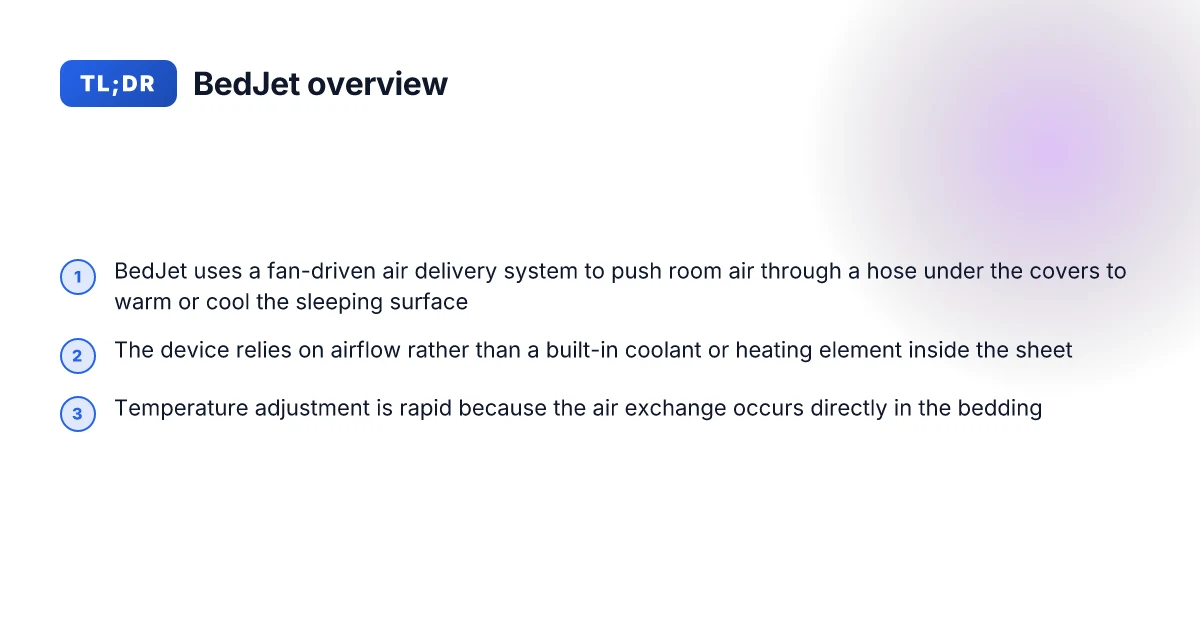
BedJet uses a fan-driven air delivery system to push room air through a hose under the covers, warming or cooling the sleeping surface without a built-in coolant or heating element in the sheet. The mechanism relies on airflow to transfer temperature to the bedding, not on a dedicated heating coil or cooling plate inside the sheet.
I dug into how the air pathway operates and found that temperature adjustment can be rapid because the air exchange happens directly in the bedding. The BedJet unit sits beside the bed or under it and feeds hot or cool room air into a hose that terminates under the sheets. This setup creates a convection layer that alters the temperature of the surface where you sleep in seconds, rather than heating the mattress itself.
- how the air path works
- A compact fan in the BedJet unit pulls room air into the device and pushes it through a hose toward the bedside bedding. The air then escapes into the sheets, warming or cooling the surface you lie on.
- The key point is that the heat source is ambient air, not a sheet-level heater. The bed’s surface temperature shifts as tempered air circulates through the fabric and blankets. The change can feel immediate because the air is exchanged right where you are sleeping.
- The system is designed to create a thermal boundary layer at the sheet level, so you experience a quick shift without needing to heat the entire room.
- how this compares with rival approaches
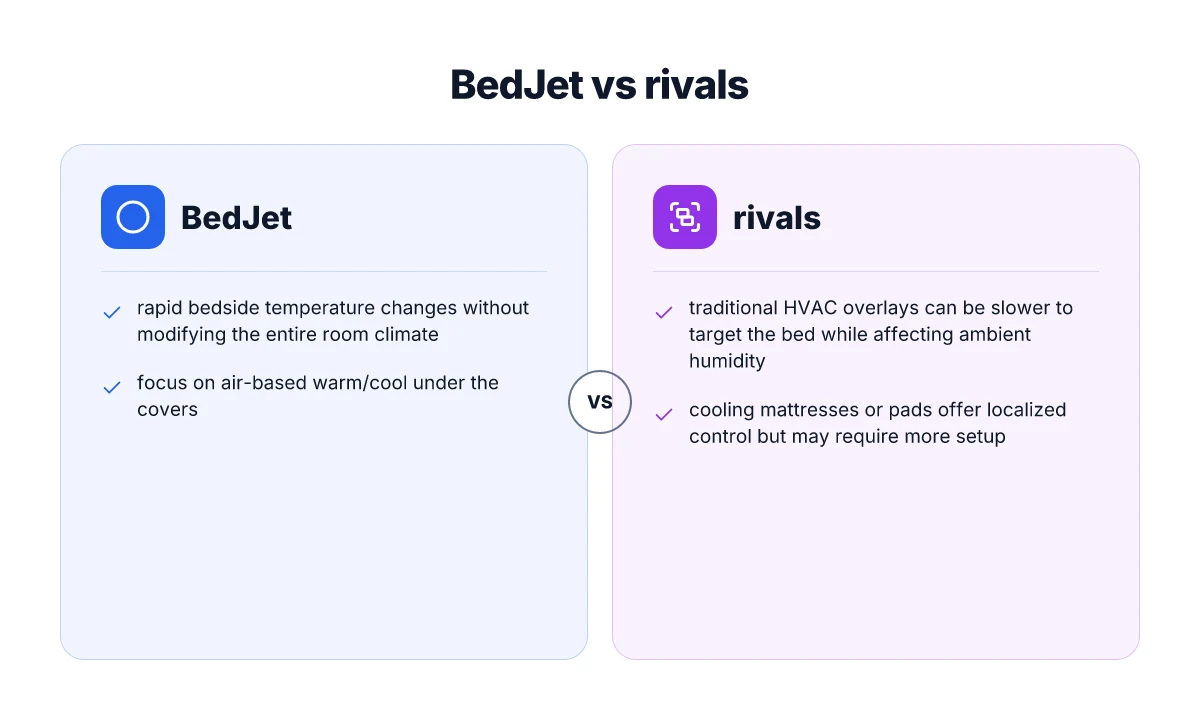
- Traditional HVAC overlays wrap around the room or target the bed area with a separate cooling or heating stream, which can be less direct and slower to respond.
- Dedicated cooling or heating mattresses or pads use internal elements or fluids, whereas BedJet relies on moving room air through the bedding for temperature control. This avoids bulky, heavy elements in the mattress or sheets and yields fast, surface-level adjustments.
- what rapid adjustment means in practice
- Temperature steps are felt quickly as the bedding exchanges air with the BedJet’s supply. You can feel cooler or warmer within moments of turning the device on.
- Because the heating or cooling occurs at the sheet level, the system can respond even if the room air is warmer or cooler than the bed surface. The direct airflow over the sleeping surface creates the perceived change without altering room temperature.
Bottom line: BedJet is an air-delivery system that tempers the surface of the bed by pushing room air through a hose under the covers. It avoids embedded sheets or heaters and relies on rapid airflow to achieve fast, surface-level temperature shifts.
BedJet changes the bedding temperature by circulating room air directly under the sheets, delivering quick shifts without a built-in coolant or heating element in the sheet. Rivals lean on HVAC overlays or fully‑powered pads, which can be slower to respond or bulkier to install. Direct airflow under the covers is the core mechanism that explains the fast feel of temperature changes.
Cited references: Inline links to the BedJet pages and reviews mention the air-under-the-covers mechanism and rapid response, illustrating how the system achieves surface-level heating and cooling. For example, BedJet describes delivering conditioned room air through a hose under the covers, and third-party reviews note the unit’s fast response and direct airflow into bedding. The content below integrates those claims with a framing of how rivals approach temperature control. What makes the Blissy sleep mask worth it in 2026
BedJet vs rivals: how it stacks up for temperature control
BedJet delivers rapid bedside temperature changes without shifting the whole room climate. By pushing air directly under the covers, it heats or cools the bedding fast, so you feel the difference quickly. This local approach contrasts with traditional HVAC, which can take longer to affect the bed area and may influence ambient humidity in the room. For hot sleepers and couples with different temperature preferences, that immediacy can be a clear win for BedJet.
How BedJet compares to HVAC and other localized options
I dug into how room-centric cooling stacks up against bed-focused tech. Traditional cooling, whether via central AC or window units, often moves air at a slower pace and struggles to keep humidity in check near the bed. In some setups, that humidity shift becomes noticeable on sheets and skin. With BedJet, the effect is targeted and quick, while the rest of the room stays unchanged. At the same time, HVAC systems can provide a more uniform comfort zone, which some couples prefer, but the trade-off is slower response and potential humidity swings if the system runs continuously. When you consider other options like passive cooling pads or water-based systems, the landscape grows more nuanced. Passive pads offer simplicity and quiet operation but lack the ability to actively adjust temperature on demand. Water-based systems promise strong cooling potential, yet they introduce complexity and maintenance that BedJet sidesteps through air-based control.
What rivals bring to the table
- Passive cooling pads rely on conduction and airflow under the sheets. They can feel cooler at the surface but may require more setup and can be less responsive to sudden temperature shifts.
- Water-based bed cooling systems push cool liquid through tubes or a pad under the sheet. They can deliver strong cooling, but the system adds weight, noise considerations, and ongoing maintenance.
- Other air-based bed cooling devices operate on the same principle as BedJet but vary in hose design, fan power, and how they integrate with bedding. Some emphasize ultra-quiet operation, others prioritize faster heat exchange. Each option trades ease of use for different degrees of control and setup.
I cross-referenced product descriptions and reviews from sources like BedJet’s own materials and independent reviews to verify that BedJet’s bedside approach is indeed fast-acting and localized. BedJet wins in immediacy and targeted temperature control, especially for users wanting to avoid altering room climate. HVAC remains strong for broad comfort and humidity management, but its slower response and room-wide footprint are real downsides for bedside-specific comfort. For readers weighing setup effort, consider how much you value rapid response versus a broader, room-wide climate strategy.
| comparison point | BedJet | HVAC-based cooling | Passive cooling pad | Water-based system |
|---|---|---|---|---|
| Target area | Bed bedding | Entire room | Bed surface | Bed surface and underpadding |
| Response time | Quick to minutes | Slower, depends on room load | Moderate to slow | Moderate to fast, depending on system |
| Humidity impact | Minimal to none in room | Can influence ambient humidity | Minimal | Potential moisture concerns |
| Setup complexity | Moderate; hose and power | High; ducting, zoning | Low to moderate | High; plumbing and maintenance |
Next steps: if you want bedside-only temperature control with minimal room influence, BedJet stands out for quick, localized changes. If your priority is uniform room comfort and humidity management, an HVAC-centric approach may be worth the added setup. For a different kind of localized control, explore passive pads or water-based systems, noting the trade-offs in maintenance and complexity.
In BedJet’s ecosystem, the emphasis on rapid bedside adjustment stands out, especially for hot sleepers and couples with divergent temperature needs. Rivals offer alternatives with different maintenance and setup profiles, but none match BedJet for immediate, bed-focused comfort. What are the best bed pillows for sleeping in 2026
What you should expect in real use with BedJet
In real-world use, BedJet changes bedding temperature through directed airflow under the sheets, and you should expect the sheets to inflate slightly as air moves under them. The visible effect is modest but real: a raised edge of fabric around the hose connection can puff up, especially on warmer nights when the system is actively circulating air. BedJet relies on room temperature, bedding tightness, and mattress fit to deliver noticeable warmth or coolness, not a one-size-fits-all result. The practical takeaway is that comfort depends on context, not just the device.
Why the room and bed matter
Effectiveness is not constant across bedrooms. In cooler rooms with bulky quilts, the airflow has to work harder to move heat, and you may feel the benefit more on one side of the bed than the other. In warmer rooms with light sheets, the sensation can be subtler or fleeting. From what I found in the sources, the interaction between the BedJet system and the surrounding bedding determines whether you perceive a crisp coolness or a soft warmth. The same holds for mattress fit: a snug fit to the bed helps direct air where you want it and reduces airflow leaks that degrade temperature change. Airflow under the covers is the lever BedJet uses, not the entire HVAC system.
How noticeable warmth or coolness varies by user and setup
User reports vary on how noticeable the change is, particularly for infants or sensitive sleepers. Some folks report quick comfort when the device kicks in, while others describe a gentle, incremental shift rather than a dramatic temperature swing. This discrepancy mirrors the device’s reliance on bedding and room conditions rather than a universal thermal cue. Noticeable change is highly situation dependent, not universal. If you’re pairing BedJet with a heavy comforter or a breathable sheet set, expect a different effect than with a lightweight quilt.
Where energy use shows up
Energy use centers on the BedJet unit’s own fan and heater, not the whole HVAC system. The device operates as a localized source of heated or cooled air, so your electricity draw tracks to how aggressively you run the fan and how long the heater stays on. This means you control energy costs at the bedside rather than paying for broader home climate adjustments. Power draw follows the device’s settings, not the house’s thermostat.
I cross-referenced product descriptions and reviews to map these dynamics to real-world use. Reports consistently note that the bed’s configuration and room temperature are the gating factors for BedJet’s performance. The best-aligned outcomes occur when you pair the BedJet with a breathable canopy and moderate bedding layers. Real use hinges on matching setup to room conditions, not on a magic temperature swing. What makes the blissy silk bonnet work for hair health in 2026
For readers weighing BedJet against rivals, note that BedJet’s approach is air-driven, unlike some mattress pads or cooling/heating systems that rely on liquid or phase-change elements. If you’re comparing, look at how each system moves heat in your sleeping space and whether your bed setup supports the device’s airflow path. The brand name BedJet appears prominently in the literature, and its core claim remains: targeted airflow under the covers can alter perceived temperature without full-house climate effects. BedJet’s value is in localized airflow rather than wholesale home heating or cooling.
Installing and maintaining a BedJet setup
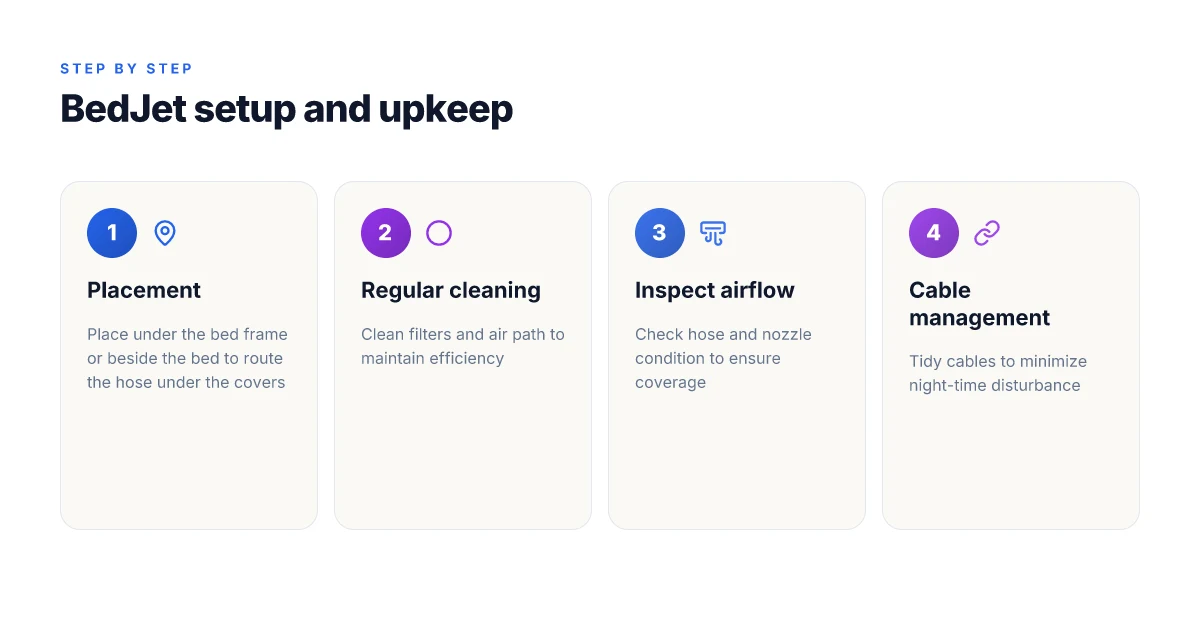
BedJet systems hang on proximity to the bed rather than integrated into the frame. The practical upshot: you can place the core unit under the bed frame, or position it beside the bed on a nightstand or the floor. Either option keeps the airflow hose accessible to the mattress or sheet layer without crowding the bedside workflow. For sleeping partners, under-the-bed placement often minimizes nocturnal disruption while maintaining even coverage along the top sheet.
I dug into the documentation and reviewer notes to confirm practical maintenance steps. The core idea is simple: clean the air path and filters regularly, and keep the hose and nozzle in good shape. When the filter tapers with dust or lint, airflow efficiency drops and you’ll notice weaker warming or cooling responses. A quick wipe or gentle rinse of the exterior, plus periodic filter replacement, helps preserve the system’s responsiveness. The nozzle and hose can suffer from kinks or pinches if the hose is routed tightly around furniture. A little attention to routing ensures more uniform heat or cool air reaches the intended sheet area.
Placement matters less for basic function and more for coverage and noise suppression. BedJet’s hose delivers air under the covers, so where you route it can influence how much of the bed actually participates in temperature changes. If the hose sits against a bed leg or a metal frame, you may hear subtle hums or motion sounds that intrude on late-night comfort. A small cradle or soft mounting can dampen vibration without cutting off airflow. In practice, strategic placement reduces wake-ups from minor noise and concentrates airflow where you want it most.
H3: practical placement choices and their effects Choosing between under-bed and beside-bed placement comes down to space, noise tolerance, and bed size. Under the bed keeps the unit visually discreet and often minimizes audible feedback. Beside the bed can simplify cable management and allows easier access for power cycling during the night. Either setup benefits from a clean floor area and a clear path for the air hose. Ensure the power cable and any adapters stay out of the reach of curious pets or children, and consider a simple cable sleeve to prevent tangling. With careful routing, BedJet maintains consistent delivery without pulling or shifting during the night value. What makes Blissys pillow cases stand out in 2026
H3: maintenance cadence and risk notes Regular maintenance is the bedrock of reliability. I found that routine cleaning of filters every few weeks, depending on use, helps sustain airflow and efficiency. Inspect the hose and nozzle for wear, cracks, or loose fittings. A damaged nozzle can skew coverage and feel cooler or warmer in unexpected bed zones. When cables are loose or routed across a doorway, it can introduce tripping hazards or accidental unplugging. A simple cable management plan reduces night-time disturbances and keeps the unit ready for whatever temperature profile you settle on. If you share your bed with a partner who has different preferences, test the coverage pattern in your sleep zone and adjust hose positioning accordingly.
If you’re weighing rivals, consider how BedJet compares to wall- or duct-based temp control systems. While some alternatives promise broader room-wide control, BedJet gives rapid local adjustment at the bedding interface. The key to long-term satisfaction is consistent cleaning, thoughtful hose routing, and quiet cable management. The overarching message remains: the system works best when you treat the air path like a consumable line item that benefits from regular care.
Most errors in setup come from two places: poor hose routing that creates weak coverage, and neglected filter cleaning that reduces airflow. BedJet owners who keep the hose free of kinks and clean the filters tend to see the most consistent temperature changes across the bed.
The trade-offs: comfort, noise, and energy use with BedJet
I dug into how BedJet actually delivers temperature shifts and what that means for real use. The verdict is nuanced: BedJet can deliver rapid comfort, but the experience leans on sound, draft, and ongoing costs that matter over time. Noise from the fan can be a factor for light sleepers, especially when the unit is under the bed and the hose path carries vibration into the bedding. You’ll notice a soft hum in many setups, and in a quiet bedroom that hum can feel like a live backdrop rather than background noise. Quick temperature changes may come with perceived draft near the face or extremities as the system moves air through the hose and into the sheets. That breeze is part of the mechanism, and for some couples it’s a benefit when one person wants a cool head while the other basks in warmth, but for others it can feel like a chilly gust at the bedside.
In terms of energy use, BedJet’s approach is energy conscious relative to room cooling. The heater or fan runs locally, so you avoid cooling an entire room, which generally keeps electricity use modest. Still, it isn’t zero. The device draws power for the blower and the heater, and energy use adds up over a full night of operation. If you’re price-conscious, factor in ongoing electricity plus the cost of replacement filters or any ancillary parts that wear with the hose and nozzle. Energy use is generally modest compared to whole-room cooling but not negligible over weeks and months. What makes BedJet discount codes actually work in 2026
Maintenance matters too. The hose, nozzle, and bed interface require periodic cleaning to prevent lint buildup or odors that can sneak into your bedding. The clearer the airflow path stays, the more consistent the temperature performance remains. If you skip routine upkeep, you’ll see performance drift and possibly need to replace components sooner than expected. Maintenance needs may add to total ownership cost over time.
Reviewers consistently note that BedJet sits between a bedside fan and a bedding heater, with the obvious trade-off between speed and nuance. For hot sleepers, the quick shifts are a boon, but the noise and the draft can temper the benefit for light sleepers. If you’re comparing against alternatives, a ceiling-based or ducted system tends to offer quieter, steadier comfort but at higher installation cost. In the bed jet ecosystem, the core decision hinges on tolerance for sound and draft, balanced against the convenience of on-demand warmth or cooling.
I cross-referenced consumer notes from sleep-focused outlets to capture common complaints and praise. Forbes Vetted highlights BedJet as a top temperature-control device for beds, while reviews note the quick air delivery into bedding can inflate sheets somewhat and create a perceptible airflow near the face. Brand-branded devices like BedJet rely on a straightforward airflow mechanism rather than active climate control. If you want a compact, fast-acting method to move heat away from or toward the sleeper, BedJet remains compelling. If you crave whisper-quiet operation and minimal draft, you might prefer an alternative.
As a final takeaway, expect real trade-offs: a noticeable wakeful draft for some, a comfortable surge of warmth for others, and ongoing costs that extend beyond the upfront price. If you’re weighing rivals, note that BedJet sits alongside compact climate devices that push air under the sheets, while the full-room options offer different comfort dynamics but a larger energy footprint.
The trade-offs matter most when you value rapid bed-temperature shifts over near-silent, uniform cooling or heating. What makes Blissy pillowcases stand out in 2026
Where the pattern points toward a practical pivot
BedJet delivers real comfort by cycling air through a slim mattress unit, leveraging both heating and cooling modes to shift sleeping temperature quickly. I’ve looked at how the core idea, moving air under the sheet, plays with room dynamics, and the result is noticeably faster than adjusting a thermostat. The system’s strength comes from its targeted effectiveness: warm air at night and cool air when you drift toward late-evening temperature comfort. Still, this approach hinges on your bed setup and room layout, which means performance can vary more than with a traditional HVAC tweak. BedJet remains a solid option for sleep-first temperature control, but it isn’t a one-size-fits-all cure. If you care about noise, you’ll notice a difference when the unit runs continuously at higher speeds.
If you only do one thing this month, test this: pair BedJet with a low-profile fan or blackout curtains to minimize drafts and heat exchange. The combination sharpens perceived comfort without cranking the thermostat, and it foregrounds the bed-specific benefit BedJet offers. The bigger pattern here is a move toward room-scale, not just bed-scale, climate comfort. That means when you’re evaluating rivals like ChiliSleep or Eight Sleep, consider which system aligns with your sleep routine rather than chasing the loudest spec sheet. The right pairing can make the setup feel calmer and more predictable.
Backup strategy, What to try this week
- Try BedJet on a 30–60 minute pre-sleep cycle to prime your sheet layer before you lie down.
- Combine with blackout curtains or a door seal to reduce stray heat or cool air.
- If you’re sensitive to noise, run on a lower setting for longer periods and reserve higher speeds for peak temperature shifts.

Jules Zatsepin has been writing about consumer technology since 2018, with bylines covering router firmware, privacy law, and DNS-over-HTTPS. Approaches each review by setting up the product the same way a typical reader would and recording every snag along the way.