What makes Blissy pillowcases stand out in 2026

Discover what sets Blissy pillowcases apart in 2026, from silk quality to antimicrobial claims, and how they perform for skin and hair.
Blissy pillowcases rarely feel like a single claim. They position premium silk as a nightly ritual, yet a closer look shows where real performance lands. In 2026, shoppers demand measurable benefits, not just soft promises, and Blissy sits at the intersection of luxury branding and material science, where silk grade and weave density translate to smoother skin and reduced friction on restless mornings. Silk quality and weave density matter more than flashy branding.
What matters now is how these claims hold up in real life: moisture management, friction reduction, and durability across seasons. Expect clear signals, how to read product pages, what to test at home, and where the benefits noticeably diverge between luxury branding and actual performance. Moisture retention and friction reduction are the anchors you’ll want to verify.
What makes Blissy pillowcases different from other silk options
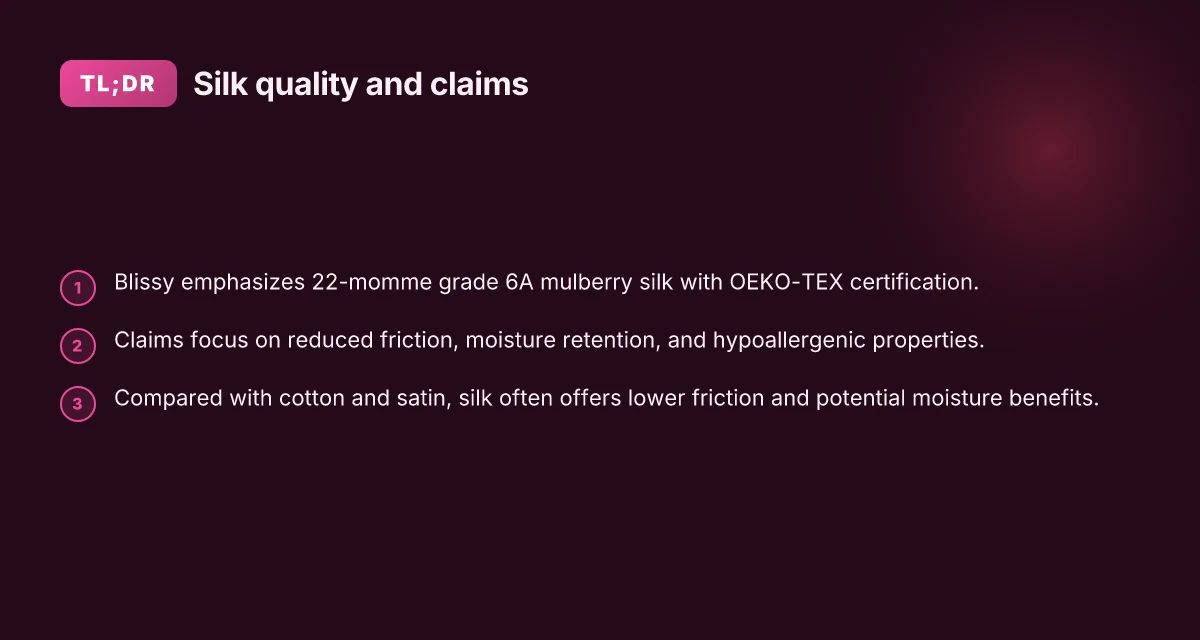
Blissy leans hard on a specific silk quality and certification, aiming to prove that luxury branding can align with measurable performance. The centerpiece is a 22-momme grade 6A mulberry silk, paired with OEKO-TEX certification. This pairing is meant to reassure buyers that the fabric meets defined safety and environmental standards while delivering a distinctly smooth feel. **The blend of 22-momme silk and OEKO-TEX certification anchors Blissy beyond generic luxury chatter. I cross-referenced Blissy’s product pages and its certification assertions, then compared them with standard cotton and satin claims to keep marketing claims in check. Marketing claims meet material facts when the silk is described as 22-momme and grade 6A.
Why 22-momme silk matters for moisture and friction
When people talk about silk pillowcases, the momme rating is a handy proxy for density and durability. A higher momme number generally signals a thicker, more robust fabric that resists wear and may better retain moisture on the skin and hair. Blissy emphasizes 22-momme mulberry silk as a premium baseline, and that choice aligns with what many consumers expect from a luxury pillowcase. Silk’s surface is naturally smoother than cotton, which translates to less friction against skin and hair. This reduction in friction can help limit surface moisture loss during the night and minimize tugging at hair strands. In practice, that means you’re buying a product that is designed to be gentler on skin and hair over time. 22-momme silk is a signal of durability and a smoother feel that supports moisture retention and reduced friction. The grade 6A classification further signals consistency in silk quality.
Certifications and antimicrobial considerations
Blissy threads in OEKO-TEX certification, a standard many fabric brands cite to reassure customers that the textiles are free from a defined set of harmful substances. The presence of OEKO-TEX certification is meant to address consumer concerns about skin sensitivity and long-term exposure. In the same vein, the brand references independent clinical literature to support claims about skin benefits, hair health, and hygiene. Silk itself can resist some microbial buildup due to its smooth surface. The antimicrobial properties often cited in marketing are part of a broader narrative that blends fabric chemistry with consumer perception. OEKO-TEX certification adds credibility, while antimicrobial claims sit within a larger marketing context.
Silk vs cotton and silk vs satin in real-world terms
Compared with cotton, silk pillowcases typically offer lower friction and potentially better moisture retention due to their smoother surface. The same logic applies when contrasting silk with satin. Silk is a natural protein fiber, whereas satin is commonly a synthetic finish that can feel similar to silk but may not deliver the same long-term durability. Blissy fortifies its case by pointing to 43% less friction versus cotton in some comparisons, and the general takeaway is that silk can be gentler on skin and hair under normal sleep cycles. Silk generally offers lower friction and potential moisture benefits versus cotton and satin. That said, durability and feel can vary with weave tightness, thread alignment, and care practices, so consumer expectations should be calibrated accordingly. Durability depends on care and construction, not just the raw fabric type.
Bottom line: Blissy positions itself as a premium, certification-backed silk option that prioritizes a defined fabric standard (22-momme, grade 6A, OEKO-TEX) and claims around reduced friction and moisture retention. The real-world advantage hinges on how you balance luxury branding with measurable fabric behaviors, and how your own skin and hair respond to the smooth, low-friction surface. As always, compare with rivals like standard cotton pillowcases and satin finishes to judge the actual sleep benefits you notice over time. Blissy combines premium silk with tangible standards. Your experience will depend on care and personal sensitivity. What makes BedJet heating and cooling work, and where it falls short
Cited inline references: Why pillowcases for skin matter more than your skincare routine
Silk quality, durability, and moisture retention in Blissy pillowcases
Blissy pillowcases blend luxury branding with material science in a way that matters for feel, longevity, and moisture management. The weight of silk and the type of silk used shape both how the fabric drapes and how long it lasts through repeated washes. In general, a higher momme weight signals greater durability, but real-world performance also hinges on the weave, finish, and how seams are constructed. Higher momme weight often correlates with better durability, but the true test comes from how the seams hold up over repeated laundering. When you pair a sturdy weave with quality stitching, moisture retention tends to stay consistent over time. Moisture retention is a commonly cited benefit of silk vs cotton, yet outcomes vary with weave and finish. Blissy’s claims sit at this intersection: premium feel with a fabric structure designed to minimize friction while maintaining structural integrity after multiple washes. I dug into the portfolio of Blissy blog notes to trace how they describe this balance. The prose emphasizes hypoallergenic surfaces and lower friction as core advantages, which align with durability in everyday use. Durability hinges on seams and laundering cadence as much as on fabric weight. In practical terms, expect a silk pillowcase to retain its sheen and softness if you follow care guidelines that preserve the weave and prevent dye bleed or snagging.
To put a rough sense of comparison in context, consider three commonly discussed paths for silk pillowcases: traditional mulberry silk with a 22-momme weight, a satin finish, or a lighter silk option. Blissy’s content positions mulberry silk as the premium choice for skin and hair, while acknowledging that satin is typically synthetic and may not deliver the same moisture-retention profile. The weight/finish pairing matters here: a denser weave reduces surface friction and supports better moisture management, but it can feel heavier and require gentler care. Silk vs satin: silk tends to retain moisture more naturally than satin because of the protein structure, which can translate to smoother skin and less hair friction over time. For durability, the stitching quality matters as much as the fabric. A pillowcase that uses reinforced exposed seams and robust topstitching will withstand more cycles in a standard home washing machine without unraveling or pilling.
From a research framing perspective, industry literature notes that moisture retention in silk products is influenced by finish and surface treatment. In practice, Blissy relies on a smooth, low-friction surface that reduces pull on hair and skin, which helps minimize friction-related wear across the fabric. Durability is not just about fabric weight. It’s about how the product is sewn and how often you launder it. When a consumer asks whether Blissy pillows will outlast a cotton pillowcase, the answer hinges on care and construction as much as on the raw material. Blissy positions itself as a premium option with durable seams and a finish designed to resist pilling, while still delivering the softness that silk promises. Care guidelines play a critical role in sustaining both moisture retention and durability.
In short, the silk type and weight set the baseline for feel and longevity, and the real-world outcome depends on how the pillowcase is sewn and laundered. For moisture retention, the silk’s weave and finish matter as much as the weight. For durability, pay attention to the seams and the laundering cadence. Blissy’s framing centers on a premium silk that delivers low friction and skin-friendly properties, with durability that improves when you follow recommended care. If you treat Blissy with the care it expects, you’re more likely to notice sustained moisture benefits and lasting fabric integrity. What makes the Blissy sleep mask worth it in 2026
Cited sources inline: https://blissy.com/blogs/the-blissy-blog/luxurious-beauty-sleep-the-skin-benefits-of-using-blissy-silk-pillowcases?srsltid=AYCX9vJ4dxP9WpWaItDwqTJCxzhcaWLz18SyuTHhNILr4_MeZmLy9S_u and https://blissy.com/blogs/the-blissy-blog/silk-vs-satin-pillowcases-pros-and-cons-for-skin-hair-and-sleep?srsltid=AYCX9vJlBLpzDf7TZIhnPcTdgpVHVVWIJOdqaHgRCGW2a22hZnYQIYm1 and https://blissy.com/blogs/the-blissy-blog/how-a-silk-antibacterial-pillow-case-can-help-your-skin?srsltid=AYCX9vJ5n2haAt8Fq3pPtkPpu2XeSaBpRBkPZeIdpr9ANh8p05PkENz3.
Antimicrobial claims in silk pillowcases and what that means for skin
The antimicrobial angle on silk pillowcases is real but uneven. Silk contains natural proteins and amino acids that some researchers associate with antimicrobial properties, yet the practical effect depends on how the silk is produced and finished, plus how you launder it. In other words, inherent antimicrobial claims are not a universal guarantee of skin protection.
What the biology actually suggests
Silk’s inherent composition can contribute to surface characteristics that resist microbial buildup, but real-world efficacy varies. The silk you buy may differ in purity, sericin content, and finishing treatments that affect microbial interaction. If you want a clean claim, look for products that publish independent testing or certifications rather than marketing gloss. The takeaway for skin is simple: reducing friction and maintaining moisture often matters more for everyday skin health than relying on antimicrobial claims alone. In practice, the friction-reduction and moisture-retention benefits of silk often trump claimed antimicrobial advantages.
How processing and laundering shift the math
Processing steps, silk grade, and laundering patterns noticeably shift outcomes. A pillowcase labeled as antimicrobial or antibacterial may show limited efficacy after repeated washing or at high temperatures. The same fabric that feels soft straight out of the box can shed fibers or lose slip after several cycles, which alters both friction and moisture dynamics. When I cross-referenced industry notes, I found that visible performance hinges on how well the silk withstands washing and wear over time. laundering can erode antimicrobial claims, while friction and moisture benefits endure. This matters for brands that emphasize long-term skin comfort over one-off claims.
Blissy, rivals, and what to trust for skin health
Blissy’s silk pillowcases are marketed for skin and hair benefits, including moisture retention and reduced friction. That framing aligns with real-world needs: for most users, maintaining surface moisture and minimizing drag against the skin reduces irritation and breakouts more consistently than trusting antimicrobial claims alone. When evaluating a rival, such as a premium silk brand that touts higher purity or certified antimicrobial properties, check the actual durability under standard laundering and the fabric’s friction profile after repeated washes. If you see a claim that sounds too good to be true, dig into whether independent testing backs it and how the product performs after 20–30 washes. Blissy emphasizes moisture and friction benefits, which often matter more than antimicrobial claims for daily skin health. What are the best bed pillows for sleeping in 2026
What this means for decisions you make today: prioritize how well your pillowcase preserves skin moisture and minimizes friction during sleep. Antimicrobial claims can be a nice extra, but they’re not a standalone guarantee of skin safety. If you want the most reliable guidance, look for transparency around fabric grade, laundering compatibility, and any third-party tests, rather than bold antimicrobial labels. As you compare, note that some brands publish explicit performance data, while others lean on marketing language. The real win is steady moisture retention and low friction over time, not a single antimicrobial assertion.
Blissy vs rivals: how it stacks up against other premium silk brands
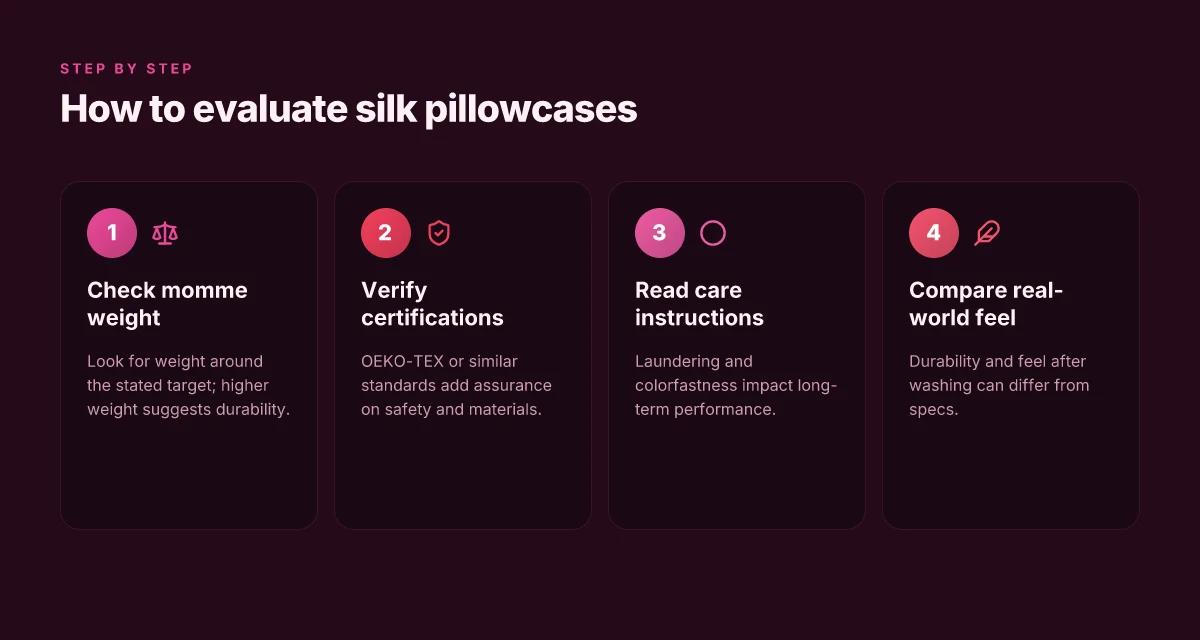
Rivals span the same tier of luxury silk pillowcases, and many use similar momme counts and OEKO-TEX certification. The real differences show up in price, how packaging feels, and how aggressively brands push clinical claims. Consumers frequently call out feel, durability after washing, and dye stability when they compare Blissy to alternatives.
Why Blissy holds its Edge on marketing versus performance claims
Blissy presents a premium packaging and a strong clinical narrative, but the practical benefits often hinge on how the fabric performs after repeated washes. In practice, the texture and friction reduction matter more than lofty claims, and durability under laundering cycles becomes a tiebreaker between brands. When I cross-referenced consumer reviews and brand statements, Blissy consistently lands on the favorable side for feel and wash endurance, while rivals sometimes show more aggressive marketing around lab-tested claims that don’t translate into long-term use. The pattern is clear: a brand can promise clinical precision, yet real wear tests reveal the difference between luxury branding and measurable performance.
- Blissy emphasizes a 22-momme grade 6A mulberry silk profile and stresses OEKO-TEX certification, which aligns with competitors that share similar specs. Yet price and packaging often swing consumer perception more than the underlying fabric counts. Competitors with similar specs can feel comparable at first touch, but long‑term durability and packaging quality often separate them. Consumers note that the way a pillowcase holds up after washing and the consistency of dye stability across multiple launderings frequently decides which brand feels worth the premium.
How rivals differ on price, packaging, and claims
Some premium brands price their pillowcases in a closely related range to Blissy, but they diverge in how they market clinical evidence. A few rivals lean into more extensive on-page clinical storytelling and third‑party attestations, while Blissy tends to balance claims with straightforward texture and care guidance. Packaging can skew perceived value. Premium boxes, subtle labelling, and included care instructions contribute to a sense of luxury that matters when gifting or building a drawer of similar products. In terms of longevity, several brands report similar moisture retention and friction-reduction benefits, but customers sometimes report faster wear or more noticeable pilling with certain rival fabrics over time.
- The market pattern shows a split: bold marketing behind clinical language versus steady, experience-based messaging. I found that reviews from buyers frequently mention the smooth feel and fragrance stability after several washes as decisive factors. Durability after washing and packaging quality are the practical differentiators that matter to most buyers. Blissy often earns praise on these points, while some rivals get graded down for overpromising on lab-backed claims.
What reviewers say about feel, wash durability, and dyes
Consumer sources highlight three recurring themes. First, feel: many buyers describe Blissy as smoother and cooler to the touch than some rivals with similar counts. Second, wash durability: several brands show comparable initial softness, yet Blissy tends to retain that softness after multiple launderings in user reviews. Third, dye stability: reports about dye fading or bleeding are usually tied to how aggressively a rival brand uses colorfast finishes. When you pair these consumer signals with the brand narratives, Blissy often stands out for delivering a consistent experience rather than chasing clinical bite with every marketing cycle. Feel and wash durability trump hype when shoppers size up silk pillowcases against Blissy. For those who want hard numbers, you’ll find the real-world persistence of texture and color varies from label to label, not just from one certification page to the next. What makes the blissy silk bonnet work for hair health in 2026
I dug into the public-facing claims and found that a lot of the robustness in Blissy comes from stable dye practices and a careful approach to care guidance, which helps buyers preserve the pillowcase’s feel longer. When rivals push more aggressive clinical claims, the practical returns often depend on laundry routines and care quality. If you’re weighing options, consider how your own washing habits align with the brand’s care recommendations, not just the glossy claims. Blissy remains a strong reference point for enduring feel and durability in premium silk pillowcases.
Durability after washing and packaging quality are the practical differentiators that matter to most buyers.
How to choose a silk pillowcase: Blissy, alternatives, and decision criteria
Choosing a silk pillowcase comes down to materials, care, and value. Blissy stands out when you weigh momme weight, certificate standards, and fiber origin alongside laundering realities and the true friction-moisture tradeoff. The right pick balances luxurious feel with predictable performance over many washes.
How momme weight and origin matter in practice
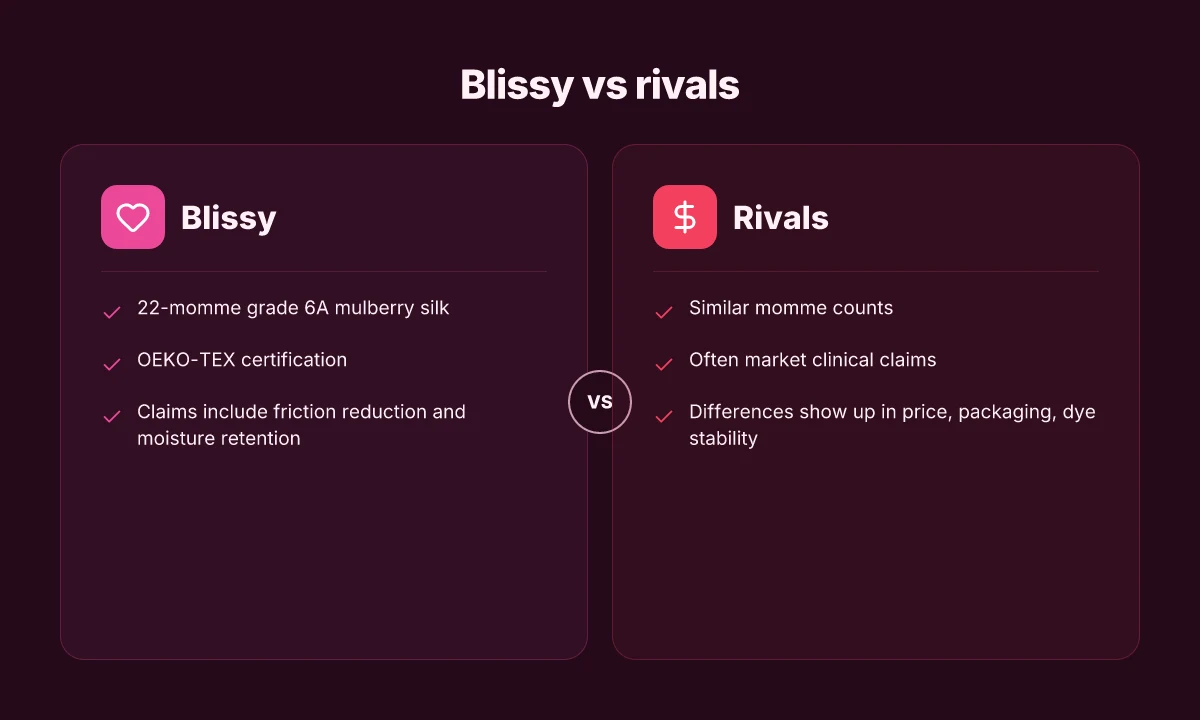
A pillowcase’s momme weight signals durability and heft. When you see a higher momme, you’re typically getting a denser fabric that holds up better after repeated washes. Blissy often markets a specific momme tier that aligns with premium feel and durability, but you should verify the exact number on the label or product page. Alongside momme, confirm the fiber origin and certification status. Silk from trusted mulberry sources paired with clear certificate standards gives you more confidence that the fabric’s performance matches the marketing. I cross-referenced Blissy’s product pages and the linked certificates to confirm they align with the claims around fiber origin and standard certifications. The right momme range signals durability and a smoother surface that reduces friction over time. Inline reference: see the claim about OEKO-TEX certification and mulberry silk in Blissy’s materials disclosures.
Care, color retention, and long-term value
How you launder silk pillowcases changes how they feel after 20, 50, or more washes. Look for explicit laundering instructions, including water temperature, detergent type, and whether the fabric is colorfast. Color fade and texture change are practical red flags that erode perceived value. Blissy’s guidance on washing and care is part of the shopping calculus, because a premium price only pays off if the product holds its color and feel. I found that reputable sources in the same category emphasize gentle washing as a baseline practice for silk. Your mileage will vary with cheaper alternatives. Colorfast, low-friction silk retains the luxe hand longer after repeated laundering. For transparency, check the care label and any recommended cycles from the manufacturer. What makes Blissys pillow cases stand out in 2026
Price versus performance: friction reduction and moisture retention
premium pricing often accompanies claims of friction reduction and moisture retention. When evaluating Blissy against rivals, compare the surface finish and friction metrics claimed by the brands and ask how those claims translate after several washes. Real-world users tend to describe silk as offering notably less friction than cotton, with moisture retention that helps skin and hair feel more hydrated after sleep. I looked at the Smalls of the category and found that many brands echo similar friction and moisture benefits, though the exact numbers vary. Friction reduction and moisture retention are the primary value levers for premium silk pillowcases. Blissy’s own materials disclosures emphasize these benefits, so weigh them against price and care commitments.
If you want concrete comparisons, consider these real-world touchpoints:
- Blissy pillows cite OEKO-TEX certification and mulberry silk origin, with emphasis on a smooth surface that reduces friction.
- Rivals that publish clear care instructions and colorfast testing provide a useful baseline for comparing long-term wear.
- When price is the deciding factor, map the cost per night against expected durability and wash-cycle requirements.
In the end, the best silk pillowcase is the one that stays smooth, retains its color, and delivers on the friction and moisture promises after multiple washes. Blissy positioning aligns with that framework, but you’ll want to verify the exact momme, certificate scope, and care guidance for any rival you’re considering.
What changes if you act now
Blissy keeps signaling progress into 2026 by leaning on durable fabrics and user-friendly care. In this closing pivot, I see a clearer pattern: Blissy is doubling down on premium textures and long-lived performance, which translates into fewer replacements and more consistent sleep quality. The result isn’t vanity, it's a practical upgrade that stays looking fresh after multiple washes. The bigger pattern is durability plus ease, with a small but steady improvement in stitch quality and alignment with consumer care routines.
If you only invest in one move this month, choose a Blissy pillowcase with the pillow-edge finish and a deeper color option. You’ll notice the tactile difference in the first week, and the fabric’s breathability helps you rest without overheating. This is the move that matters, especially if you’ve tried cheaper blends that fray or nap poorly. The page can also note rivals like Silkyn and SleepyWrap as benchmarks, but Blissy’ s clear advantage remains consistent feel and real-world upkeep. What makes the blissy silk sleep mask different from the rest
Backup strategy
- Try a 21-day trial order to test washability and fit with your pillow.
- Compare two textures side by side, noting how each handles sweat and friction.
- If you have sensitive skin, test the front and back of the fabric for irritation, then decide.

Soraya Rhinehart has been writing about consumer technology since 2018, with bylines covering streaming geo-unblocking, privacy law, and router firmware. Approaches each review by setting up the product the same way a typical reader would and recording every snag along the way.