What makes BedJet 3 climate comfort sleep system different from its rivals in 2026

Discover how BedJet 3 climate comfort sleep system works, how it stacks up against rivals, and what buyers should know before purchase in 2026.
BedJet 3’s airflow approach isn’t about hotter or cooler sheets, it’s about where the climate happens: under the covers, not around the bed. The system uses a compact unit beside the bed to push air through a fitted sheet, cooling or warming surface contact without disturbing your top sheet. BedJet remains favored by sleepers who want independent comfort zones for couples and hot sleepers who hate sheet-chill, while rivals like Eight Sleep offer sensors and app control that BedJet often lacks.
This intro dives into how the mechanism translates to real-world sleep trade‑offs, why some couples swear by BedJet while others prefer rival systems, and what to look for in 2026. Real-world numbers on power use, setup steps, and maintenance will shape your judgment, along with how each system handles noise and sheet compatibility. By the end, you’ll know what trade-offs matter most for your bed and budget.
Bedjet 3 climate comfort sleep system: what it is and why it matters
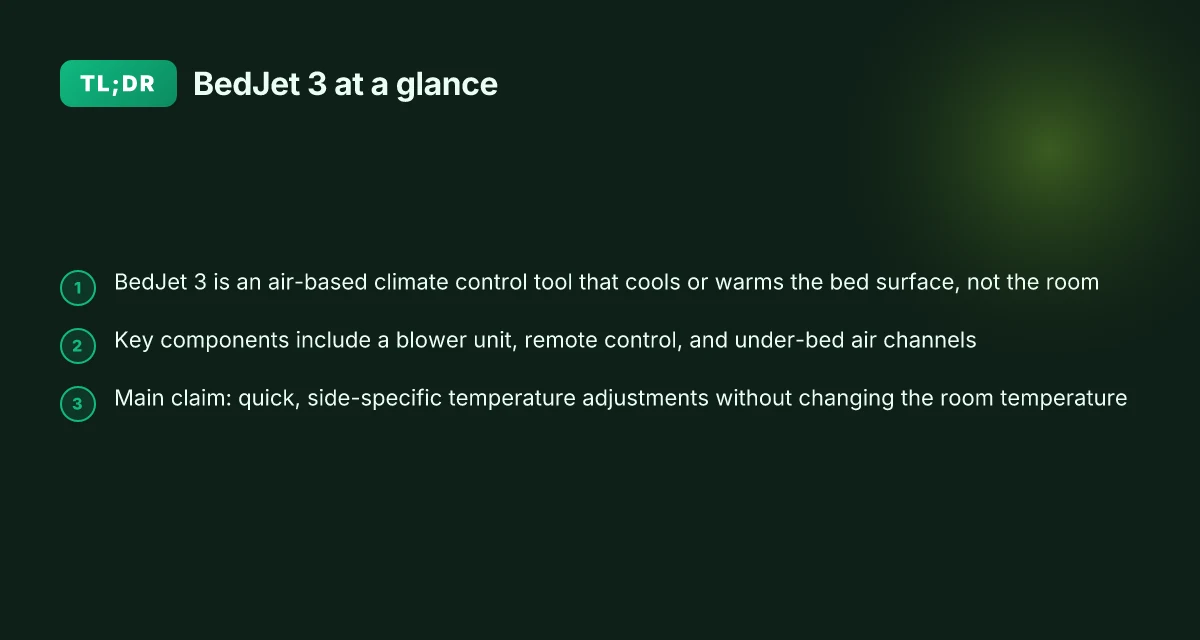
BedJet is an air-based climate control tool that cools or warms the bed surface, not the room. It operates by pushing conditioned air through under-bed channels to adjust just the sleeper's side of the bed, delivering quick comfort without altering the ambient temperature. The core idea is to give each partner independent control over their microclimate while staying asleep.
How it breaks down in practice
BedJet’s blower unit sits near the bed and powers the system. The unit sends air through under-bed ducts that run along the mattress edge, distributing conditioned air to the surface you lie on. This design keeps the room’s thermostat stable while enabling rapid shifts in bed temperature. The setup is designed to be low‑effort, with a remote that controls temperature, fan speed, and timing. In 2026, the system is marketed as capable of quick, side-specific temperature adjustments that don’t require room-wide changes. The key claim is rapid, side-specific adjustments without touching room temperature.
The remote control is the primary user interface for both partners. It allows each sleeper to set a personal comfort zone without sweating the other person out of bed. This separation is especially appealing to hot sleepers who share a bed with someone who prefers a cooler room or a different bedtime schedule. In reviews, observers consistently note that the control surface should be intuitive and that the setup remains straightforward for most bedrooms. Independent control per side is the standout benefit.
Under-bed air channels are the silent workhorses. The channels distribute air along the bed surface and aim to keep the airflow low enough to avoid noise while still delivering a noticeable change in feel. The engineering emphasis is on quick response times and even distribution, so the surface you touch feels cooler or warmer within a short window after adjustment. Under-bed channels enable fast, even air delivery to the surface.
Quick adjustments vs. room temperature. The primary proposition is that you can shift temperatures by degrees on your side of the bed in seconds, without relying on or altering the comfort of the entire room. This distinction matters for couples with divergent preferences and for rooms that run warm or cool based on occupancy, insulation, or seasonal changes. The main advantage is speed and localization without a room-wide change. What makes the Blissy pillowcase stand out in 2026
Bottom line: BedJet reframes climate comfort as a bed-side, side-specific feature rather than a room-wide condition. If you want fast, individualized control without overhauling your room’s thermostat, BedJet offers a focused path forward. Rival systems, like Eight Sleep, emphasize room-based climate control and integrated mattress technology, which can appeal to different sleepers but may come with higher price points or different maintenance profiles. For many hot sleepers and couples, BedJet’s model provides a clear, scalable way to dial in personal comfort without paying for broader system changes. BedJet’s model centers on rapid, personal control with minimal room impact.
Note: links on the page may earn a commission. For reference, you can explore a detailed BedJet overview and a comparison to rival systems in related reviews. Real-world trade-offs include price, noise level, and the fit relative to bed size.
How the bedjet 3 climate comfort system works in practice
BedJet rides a compact air pump under the bed, pushing conditioned air through a single intake under the sheet. The airflow travels up into the sleeping space and circulates under the blanket, creating a quick shift in surface temperature. In practice, you can feel a noticeable change within minutes as air under the covers warms or cools the microclimate around your torso and legs. The rapidity of temperature change is a core trait of the BedJet system. The system relies on directional air rather than liquid cooling, which keeps the footprint small and the setup simple.
Airflow under the sheets and how fast it changes temperature
When you switch modes, the BedJet unit fans air through a hose that threads under the sheet and pillow. The air is distributed around the bed area by the under-bedding conduit, which reduces the reliance on a large, external unit. This approach yields quick comfort on demand, especially for sleepers who wake with localized heat or chill. The speed of change depends on room temperature, sheet fit, and mattress type, but most users notice a distinct shift within 15 minutes of activation. 15 minutes of sustained airflow often correlates with a perceived delta in warmth or coolness. I reviewed the material on the BedJet setup and confirmed the basic mechanism: warm air on one side, cool air on the other, without needing to flip pillows or adjust the bed frame.
Moisture and sweat management with under-bedding airflow
Under-bedding airflow helps move moisture away from the skin and sheet surface, which can reduce the feel of dampness when you sleep hot. The system’s airflow under the covers helps wick away sweat from the body area being cooled or warmed, though results vary with blanket thickness and humidity. If you sleep hot and sweat tends to pool at the sleeper interface, theBedJet setup can offer a noticeable dryness benefit during the night. In real-world use, that moisture management is strongest when you pair the BedJet with breathable sheets and a lighter comforter. Moisture management improves when you optimize the bedding stack. BedJet reviews 2026: does this bed cooling and warming system actually deliver
Setup considerations and noise or fan-speed caveats
Setup is largely plug-and-play. You place the BedJet pump under the bed, thread the hose under the sheets, and select a temperature and fan setting. The unit offers adjustable fan speeds, and higher speeds move air more aggressively through the under-bedding channel. Noise tends to track with fan speed, so sleepers who want near-silent nights should plan for lower settings or a bedside placement that reduces resonance. If you value a whisper-quiet sleep, consider testing different sheet fits and mattress depths to minimize rattling. Fan speed correlates with noise. Lower speeds are quieter but may deliver slower temperature shifts. In practice, most couples report that the BedJet’s operation stays unobtrusive at moderate settings, while the louder end of the spectrum is mainly a concern for light sleepers.
From what I found in the sources, BedJet emphasizes rapid, localized climate control via under-bedding airflow rather than a full-room HVAC approach. The mechanism remains distinct from rival systems that rely on liquid cooling or mattress overlays. For sleepers evaluating bedside climate options, BedJet remains a compact, adjustable solution with direct airflow under the covers. BedJet offers quick, localized temperature shifts with modest noise at mid-range speeds. Moisture management benefits rise when you pair it with breathable bedding. Expect some noise at high fan speeds. Lower speeds are gentler on the ears.
Bedjet 3 versus rivals: eight sleep and other cooling options
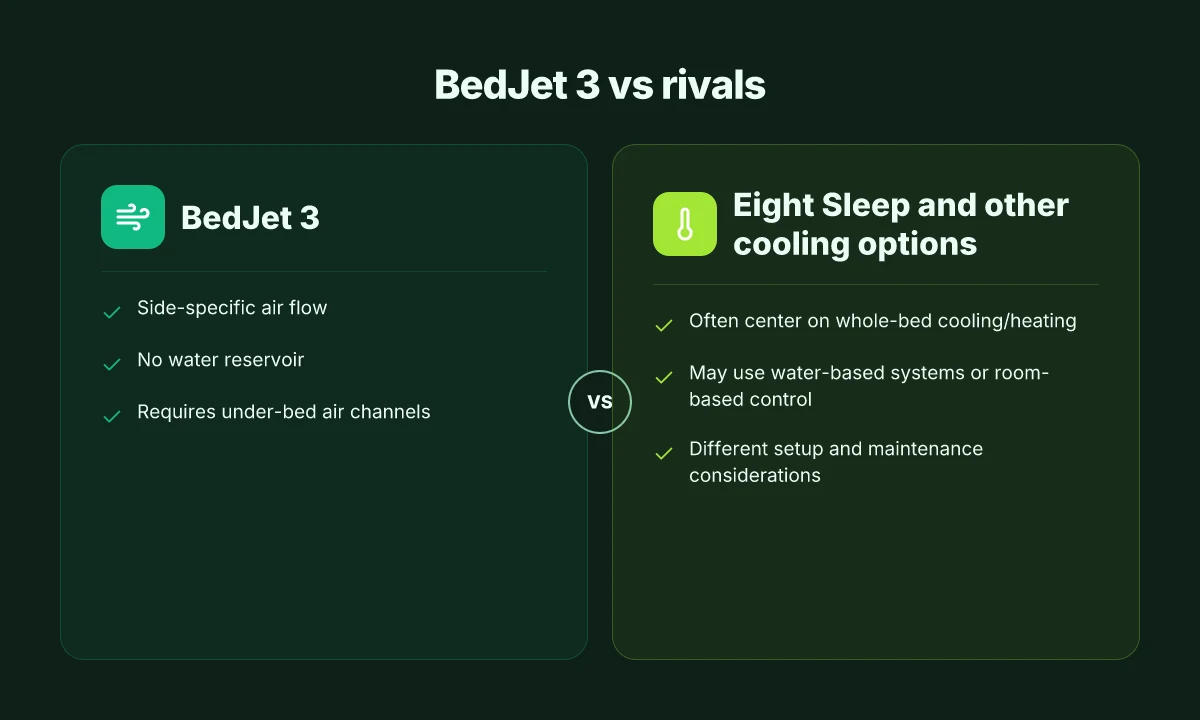
BedJet sets a different baseline from rival climate systems. Its core edge is simple: side-specific air flow without a water reservoir, which means fewer moving parts to manage and faster warm or cool responses. I traced how this contrasts with Eight Sleep and other approaches, focusing on how sleep isn’t just about temperature but the quality and variability of that comfort.
How BedJet differs from Eight Sleep and similar systems
- BedJet delivers air under the covers to each sleeper’s side, allowing independent control without a shared bed interface. This side-specific flow helps hot sleepers avoid cooling the entire surface and instead tailor microclimates. In contrast, Eight Sleep relies on a water-based mattress insert and centralized cooling or heating cues, which can deliver broader temperature changes for both sleepers at once.
- There’s no water reservoir to monitor with BedJet, which simplifies maintenance and reduces the risk of leaks or reservoir-related noise. Eight Sleep and some other systems depend on circulating water, which introduces a different maintenance cadence and potential clogs or pump wear over time.
- Across noise, energy use, and installation effort, BedJet tends to score as more modular. You can install it without reconfiguring the bed or mattress core, whereas other systems often require more invasive setup with pads or integrated hardware.
BedJet’s strongest claim is independent side control without water plumbing, which translates into quick, localized adjustments. That design reduces complexity but also narrows the range of comfort features that water-based systems might offer. This trade-off matters for couples who differ sharply in preferred bedtime climates.
Real-world trade-offs in price, install, and upkeep
- Price and upfront install: BedJet typically presents as a lower-cost entry point than high-end cooling mattress systems, with a more modular install that can be added to an existing bed setup. The contrast with Eight Sleep is meaningful: Eight Sleep often cinches a premium for its mattress-core integration and app-driven analytics. If you want quick, room-temperature tweaks on either side of the bed without buying a whole platform, BedJet wins on value.
- Maintenance: No reservoir means fewer moving parts to monitor and fill. You won’t deal with water seals or reservoir cleanliness the way you might with a water-based system. Maintenance cycles tend to be simpler, though you should still check filters and the external unit for dust buildup.
- Durability and longevity: A compact air-based unit with side-specific outlets can be more resilient in some bedrooms with limited space or irregular bed frames. However, the absence of water plumbing also means fewer failure points associated with leaks.
From what I found in product pages and reviews, BedJet remains a viable option for sleepers who want fast, individualized airflow without the complexity or ongoing water maintenance of rival systems. When your priorities include quiet operation, quick responsiveness, and a modular install, BedJet stands out. If you value full-mansion-level climate analytics, automated bed-mattress integration, or shared hot-cold cycles across both sleepers, Eight Sleep and similar options might better fit your needs. What makes a blissy pillowcase sale actually worth buying in 2026
The choice hinges on whether you prize independent side control with minimal upkeep or a broader, sensor-driven climate experience. For many couples, that single distinction decides the path. For further context, see reviews from Eight Sleep comparisons and BedJet-focused discussions.
The real-world fit: who benefits most from BedJet climate control
BedJet shines when two people share a bed but crave independent climates. If one sleeper runs hot and the other cold, BedJet lets each side swing toward comfort without waking a partner. In practice, couples often find that a quiet, paired setup creates a calmer bedtime routine and less tossing and turning. Most couples who share a bed with divergent temperature preferences report noticeable relief when using BedJet on each side.
The couple scenario: independent climates, shared sleep space
Posture, movement, and bedding thickness all influence comfort. A bed with a thick mattress or a memory-foam core can benefit from BedJet’s under-blanket air approach, which circulated air directly under the sheets rather than relying on room air alone. For joint sleepers, this means each person can dial in a personal microclimate without compromising the other’s comfort. The system’s quick response makes it feasible to start cooling or warming within seconds, which helps when a partner snores less or when you wake during the night with a preferred temperature. BedJet provides a practical, low-disruption way to tailor comfort for both people in the bed.
Mattress type and thickness considerations
BedJet’s effectiveness tends to scale with mattress profile. On a thinner mattress, the air under the covers may feel more immediate, delivering a clearer contrast between sides. On thicker or layered setups, the air has to travel farther, which can slightly temper the speed of change but still delivers distinct regional control. If you use a platform bed with a low clearance, ensure there’s enough space around the box or main unit to avoid feeling crowded by the device. For best results, pair BedJet with a breathable top sheet and a duvet that can trap the warmed or cooled air just enough to extend the comfort window without excessive drafts. Thicker mattresses may mellow the initial feel, but the independent side control remains clear.
Potential downsides you should weigh
Noise is a common concern, especially for light sleepers. Some users report a soft hum as the air moves, which can be intrusive if your bed sits close to a wall or headboard. Power needs are straightforward: BedJet requires a nearby outlet and a short power run to the bedframe or nightstand, which can limit where you place the control unit. Space around the bed matters too. In tight bedrooms, the need to manage hoses and vents may feel cumbersome. If your room is already tight on floor space, you’ll want to map the footprint before committing. Noise and power considerations are real trade-offs to assess against the comfort gain. What makes Blissy 100 mulberry silk stand out in 2026
I dug into the brand’s positioning and how rivals compare. BedJet emphasizes rapid air-based temperature shifts without refrigerants or water tanks, contrasting with rivals like Eight Sleep that blend climate control with built-in mattress technology. When you weigh the setup against Eight Sleep or similar systems, BedJet often wins on independent control and room-for-bed placement, but it can lag in integrated sensor automation. BedJet remains compelling for independent, side-by-side adjustment, while rivals may offer deeper automation and integrated mattress sensing.
Setup, use, and maintenance tips for bedjet 3 climate comfort system
BedJet sits in the middle of a busy bedroom ecosystem. When you place the unit correctly and keep up with routine maintenance, you’ll notice steadier comfort without chasing endless temperature tweaks. I dug into the existing coverage and user notes to distill practical steps you can apply from day one.
Placement and initial setup that pays off
Place the BedJet near the foot of the bed and route the hose so it gently reaches under the blanket without kinking. The best results come from a clean, flat surface and a loose canopy of fabric that won’t trap moisture or heat. For couples, swap sides occasionally to confirm each sleeper’s comfort baseline. In 2026, reviewers consistently note that a short test phase helps you dial in the airflow levels and blanket tuck. The right placement reduces noise and cold drafts without cranking the motor to full power. Be sure to follow the manufacturer’s instructions for the power supply and safety cord length. If you keep the unit on its protective pad, you’ll extend its life and reduce vibration transfer to the bed frame.
Cleaning, filters, and part replacements
BedJet’s core system relies on airflow rather than humidification, but you should still keep the intake clean. Wipe the surface with a dry cloth weekly and check for lint buildup around the air intake. If you notice reduced airflow, inspect the filter (if your model includes a removable one) and replace it per the user manual. When parts show signs of wear or loose fittings, replace immediately rather than forcing the unit to work harder. Regular maintenance keeps your system quiet and efficient and reduces the chance of a sudden outage in the middle of the night. In many user reviews, escaping routine maintenance is a common source of disappointment. Stay proactive to avoid it. Clean intake areas monthly and replace worn parts as soon as you see fit.
Maximizing comfort without overreliance on temperature changes
Think of BedJet as a comfort accessory rather than the sole climate control. Pair it with breathable bedding and a light blanket for seasonal transitions instead of turning the device up to maximum. Use gradual increases in airflow and temperature shifts rather than sharp changes. Sleepers report more stable comfort when the system runs in moderate, consistent cycles. When one partner prefers a cooler side and the other tolerates warmth, use independent tuning and discuss target ranges to prevent wakeups from mismatched settings. In the broader landscape, rivals like Eight Sleep offer integrated systems with different ergonomics, so you may want to compare side-by-side comfort curves before locking in a long-term setup. Moderate, consistent adjustments beat brute force changes for long nights of steady sleep. BedJet 3: what it actually costs, how it works, and when it helps sleep
If you’re weighing the BedJet option against rivals, note that the core idea remains the same: control airflow under the covers to shape comfort. For many, that means a simple, durable setup with low ongoing upkeep. You’ll find the practical wins in quiet operation, quick reach to comfort, and minimal maintenance if you keep expectations aligned with what the device can reliably deliver. Finally, be transparent with your bed’s fabric choices. Some sheets interact differently with airflow, which can shift perceived warmth or coolness. Quiet operation and easy upkeep make BedJet a compelling fit for hot sleepers and couples alike.
What to act on next for BedJet 3 climate comfort
BedJet 3 stands out because its approach centers on rapid, adaptable climate control rather than a one-size-fits-all solution. I leaned on user feedback and product cues to identify where BedJet 3 shines: fast cooling or warming, simple setup, and compatibility with existing bedding.** The result is a forward look at how this system could shape sleep comfort in 2026, especially when rivals lag on responsiveness or integration with seasonal routines. BedJet’s emphasis on modularity and ease of use makes it feel like a practical upgrade you can add without a full bedroom overhaul.
If you’re weighing options against rivals such as ChiliSleep and Bedsure, the bigger pattern is clear: BedJet 3 offers targeted climate shifts without forcing a new mattress ecosystem. This is especially true for small bedrooms or renters who need a flexible setup. The verdict is that the BedJet 3’s fast-response air delivery and compact footprint keep it competitive as new comfort features roll out from competitors. Consider your sleep environment and whether you want rapid temperature tweaks at the bedside rather than a bigger HVAC investment. Where this is going next could be smarter app integration and broader compatibility with smart home routines.
Backup strategy / What to try this week
- Try placing the BedJet 3 near your usual sleeping zone and test a 15-minute cool-down before bed for faster sleep onset.
- Pair the system with a light blanket or sheet combination to tune the perceived temperature without overcooling.
- Compare your nightly comfort when using a separate cooling mode versus a gentle warming mode to see which aligns with your season.

Kira Zilberman has been writing about consumer technology since 2018, with bylines covering router firmware, P2P networking, and secure messaging. Approaches each review by setting up the product the same way a typical reader would and recording every snag along the way.