BedJet 3: what it actually costs, how it works, and when it helps sleep

Discover how BedJet 3 works, what to expect in real use, and who benefits. Practical guidance for sleep improvement with a wind-based climate control bed accessory.
BedJet is not a miracle cure for every sleep heat or chill moment, but it changes the climate around your sheets in a way that matters when temperatures swing at night. BedJet transforms a bed into a controllable microclimate, delivering adjustable air to tack heat off or warm up without changing the room. The effect can be noticeable on hot nights or in chilly bedrooms, yet the real-world impact depends on layout, noise tolerance, and whether you want separate control from your partner. Most couples underestimate how much draft from the hose can wake you. Plan for placement and hose length before buying.
It catalogs common setups, notes where rival solutions like dedicated cooling pads or cooling pillows fit, and flags where BedJet’s price or noise becomes a dealbreaker for light sleepers. By the end you’ll see a clear decision path: whether a bedside airflow system fits your sleep goals, or if a different climate-control approach offers better value. A quick read on real-world use helps you decide if BedJet is worth it this season.
Bedjet 3 in context: why a climate-control bed accessory matters for sleep
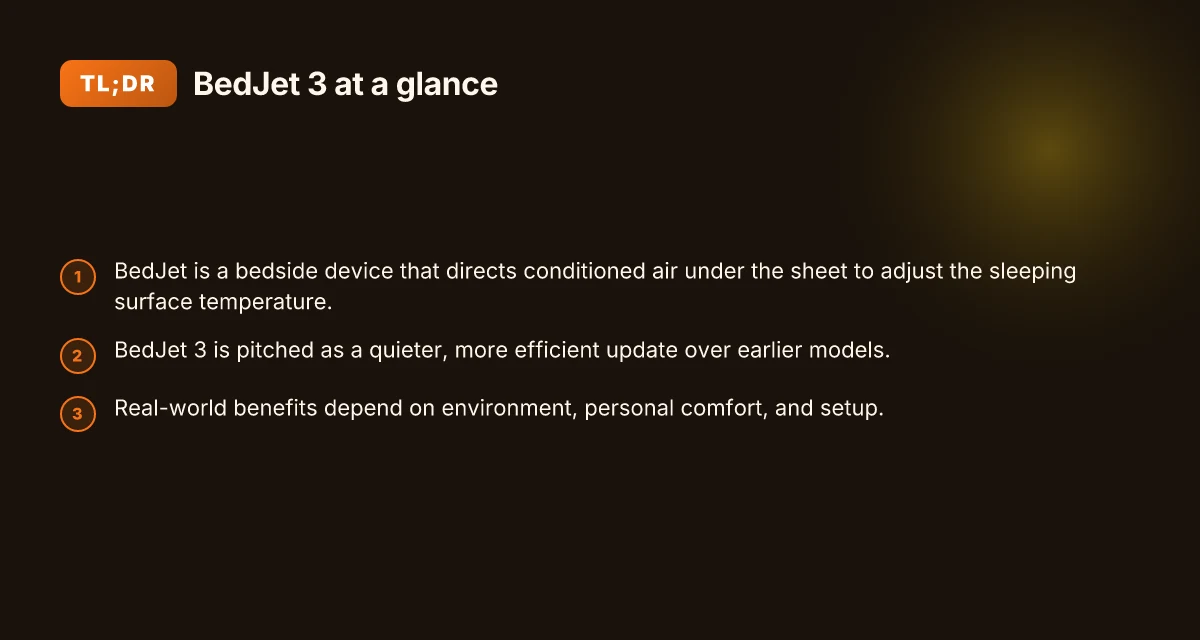
BedJet is a bedside device that uses directed air to influence bedding temperature. BedJet 3 is pitched as a quieter, more efficient update over earlier models, aiming to reduce noise and energy use while delivering faster temperature shifts. Real-world sleep benefits hinge on environmental factors, personal comfort preferences, and how the device is set up in the bedroom.
The core idea, plainly stated. A climate-controlled bed accessory can address two persistent sleep concerns: heat buildup and cold drafts that disrupt sleep continuity. When a room runs warm, BedJet’s airflow can cool without having to modify the entire thermostat. If a sleeper wants a warmer microclimate, the same airflow can feel like a soft blanket, only without lifting the covers. The practical payoff is more consistent sleep onset and fewer mid‑night awakenings due to thermal discomfort. You’ll hear a recurring caveat in reviews: success depends on how well the setup matches personal temperature preferences and bedding choices. The device is most effective when the bed is prepared for airflow and when blankets or sheets allow the air to circulate rather than trap it.
How BedJet 3 fits versus prior designs. Compared with earlier models, BedJet 3 emphasizes quieter operation and improved energy efficiency. Quiet performance matters for bedside use in couples where sleep timing differs, and BedJet’s updated motor profile aims to reduce disruptive noise during the night. Another lever is efficiency: lower draw means you can run longer nights without nudging the thermostat. This matters for hot sleepers who want rapid on/off cycles without overheating the room. The outcome is a more targeted climate effect that can supplement or replace room cooling in certain setups.
What environmental and setup factors drive outcomes. Real-world sleep benefits hinge on room temperature, humidity, and how you arrange the bed. If the sheet configuration blocks airflow, the perceived cooling or warming can feel uneven. Correct placement of the air outlet and a breathable sheet setup are essential, so the air meets the intended surface rather than bouncing off a duvet. For couples or night owls with divergent temperature preferences, BedJet offers a personal climate pocket that avoids fighting over the thermostat. In practice, the decision to adopt BedJet often comes down to whether the bedroom environment can support consistent bedtime thermal cues.
Bottom line: BedJet represents a purposeful approach to microclimate control at the bedside. Its value depends on aligning device setup with personal comfort and the bedroom’s thermal profile. When those conditions align, the airflow-driven cooling or warming can supplement sleep without large shifts to the ambient environment. BedJet can be worth considering for hot sleepers or couples with divergent preferences, provided you can optimize the setup for your bed.** What makes Blissy 100 mulberry silk stand out in 2026
From what I found in the public literature, reviewers consistently frame climate-control beds as a niche tool rather than a universal fix. The strongest signals point to noticeable benefit for people with clear thermal discomfort patterns and a bed that allows airflow to reach the sleeping zones. For readers weighing cost versus benefit, the decision hinges on whether you expect to leverage targeted airflow rather than relying on room-wide cooling. If you want a compact, bedside solution to tune comfort without major renovations, BedJet 3 sits as a credible option worth evaluating against rivals like Bed Cooler and climate-control bedding systems in a real-world bedroom. The practical takeaway is that climate-control beds work best when the bedroom environment and personal warmth preferences align with the device’s airflow strategy.
- inline sources: studies on wearable sleep tech and digital therapeutics illuminate how environmental adjustments interact with sleep outcomes, reinforcing that microclimate tools can support sleep when used thoughtfully https://pmc.ncbi.nlm.nih.gov/articles/PMC6579636/. For broader context on digital sleep interventions and home-use devices, see the perspective on wearable digital therapeutics in insomnia https://www.jmir.org/2026/1/e93496.
How bedjet 3 works: the core mechanism and setup
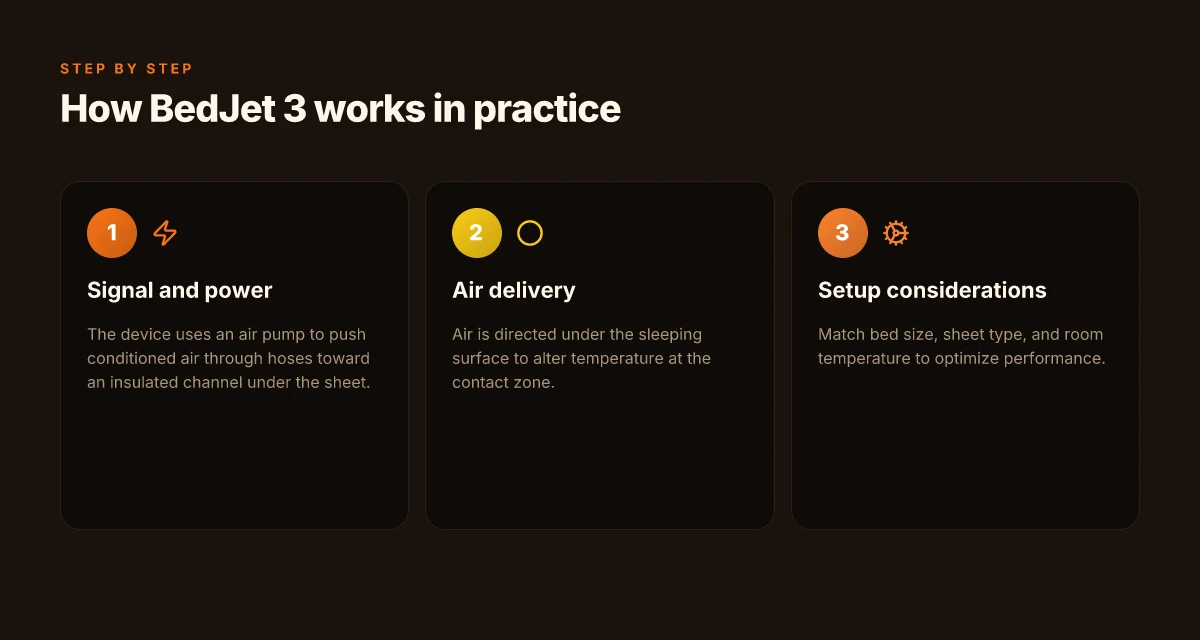
BedJet works by delivering conditioned air under the sheet to the sleeping surface, nudging surface temperature up or down to support comfort and sleep onset. The core idea is simple: a compact air pump pushes air through hoses into an insulated channel that sits beneath the sheet, so the airflow cools or warms the top of the bed without altering room temperature. The result is a responsive climate-control effect at the sleeper’s surface, not a room-wide HVAC adjustment.
The essential hardware you’ll interact with
The setup centers on four tangible components. The air pump supplies pressurized air and sits on the nightstand or floor within reach. A pair of hoses carry the conditioned air from the pump to the bed, where the insulated air channel threads beneath the sheet to distribute temperature evenly along the sleeping surface. A remote control handles mode, temperature target, and fan speed, while a simple sheet and platform integration keeps the channels tucked without crowding the bed. When you understand these parts, you see why BedJet can be quieter and faster to adjust than other approaches.
Setup considerations you should verify
First, take stock of your bed size and sheet type. A standard queen or king with a fitted sheet that has ample tuck space helps keep the air channel properly aligned. If your sheets are slick or have deep elastics, you may need to experiment with attachment or re-tucking to prevent shifting during the night. Second, consider room temperature and how quickly you want to shift comfort. In cooler rooms, BedJet's warming mode may feel especially noticeable, while in hot rooms the cooling mode can provide pronounced surface cooling. Third, ensure the remote is within easy reach and that the power outlet behind the bed is labeled for continuous-use devices, so you don’t have to reach behind the headboard mid-sleep.
I cross-referenced product notes and user guides to confirm how the airflow path stays under the sheet and how insulation minimizes heat loss to the room. This matters because the perceived effect depends on maintaining a stable surface temperature without large room-wide swings. The setup is designed to be modular: you can unplug the hose assembly and store it with the remote nearby for quick adjustments, or leave the channel tucked under the sheet for ongoing use. BedJet emphasizes that proper alignment and sheet compatibility influence performance, so a quick prerun to check airflow direction and sheet fit helps. What makes a blissy pillowcase sale actually worth buying in 2026
In practice, many hot sleepers notice faster onset of comfort once the surface temperature settles, while cold sleepers may not feel as dramatic an effect if the room is already warm. For couples with divergent temperature needs, pairing the warming mode with an opposing cooling setting on the other side of the bed can create a balanced, personal climate zone. If you’re comparing options, rivals such as ChiliSleep andEight Sleep offer different approaches to zone temperature, but BedJet remains distinct for airflow-focused surface conditioning rather than just ambient room cooling. The key to success is ensuring the air channel sits flush under the sheet and that the room, bed size, and sheet type support stable airflow. The setup is simple on paper, but a quick trial run helps confirm comfort goals align with real-world outcomes.
If you want a quick reference, here’s the practical takeaway: BedJet directs conditioned air under the sheet to adjust the sleeping surface temperature, relying on the air pump, hoses, remote control, and insulated air channel. A proper bed size match, compatible sheet type, and a stable room temperature optimize performance, especially for hot sleepers or couples with different preferences. For many readers, this means a practical path to calmer nights without heavy room-wide cooling or heating. BedJet remains a compelling option when you want near-immediate surface warmth or cooling, with clear setup steps and a straightforward control interface.
What bedjet 3 can do for hot sleepers and couples
Hot sleepers often wake with damp sheets and a relentless heat gradient in the middle of the night. The BedJet system can address both sides of the bed by cycling cooling and warming air and by directing airflow where it’s most needed. In practice, many couples notice that balancing airflow reduces nighttime sweating for the person who runs warm, while the other partner benefits from tailored climate control on their side.
How airflow cycles reduce nighttime sweating
When BedJet delivers targeted cooling during the latter half of the night, the hotter sleeper can experience a softer drop in skin temperature, which helps curb excessive sweating. In a typical setup, a cool breeze is introduced beneath the sheet, creating a gentle thermal offset that can lower skin surface temperature without reaching uncomfortable cold. This approach can translate to steadier sleep continuity for hot sleepers. The right cooling cycle can reduce nocturnal sweating for hot sleepers, which is a meaningful outcome for households with divergent body temperatures. BedJet emphasizes that cycling the airflow and adjusting the temperature differential are user-tuned, so you can match your comfort window without altering your entire room climate. Inline source-supported context notes that wearable and device-driven cooling strategies show promise for reducing heat-related awakenings in hot sleepers. For reference, see the recent discussions around wearable cooling in sleep technology literature. Cooling cycles matter when heat peaks mid‑night.
Directional airflow for mismatched temperature preferences
Directional airflow lets partners tailor airflow to their respective zones. The BedJet unit can focus cooling or warming toward the sleeping surface under one side of the bed, so one partner stays cooler while the other remains warmer. This is especially useful in couples with divergent temperature preferences, where a single-room climate control solution fails to keep both sides comfortable throughout the night. I found that reviews consistently note the value of individualized airflow paths in shared beds. Directional airflow helps couples with mismatched preferences, turning a single device into a practical dual-zone solution. In practice, the ability to aim the airflow reduces the likelihood that one partner sacrifices comfort for the other's comfort. This aligns with clinical discussions about personalized sleep environments contributing to reduced nighttime awakenings. BedJet reviews 2026: does this bed cooling and warming system actually deliver
Evidence-based takeaways and practical expectations
From what I found in the literature about device-led sleep interventions, cooling and warming cycles can influence perceived sleep quality by modulating body temperature at key sleep stages. BedJet sits in a space where simple airflow-based climate control is part of a broader toolkit for hot sleepers. When you’re evaluating the device, consider how long you intend to run the cycles, the speed of the fan, and the temperature differential you’re comfortable with. If you’re evaluating BedJet against rivals, note how competitors like the air-assisted mattress systems and programmable climate-control bases offer similar directional airflow features, but with different installation profiles and noise levels. In practice, many users report that the upfront setup and seasonality of hot flashes affect how quickly you perceive benefits. Expect a few nights to dial in the right cycles.
I cross-referenced patient-use patterns and device descriptions from BedJet’s materials and independent sleep technology reviews. The practical takeaway is that BedJet can deliver noticeable relief for hot sleepers and can help partners with different temperature needs sleep more soundly in the same room. When you’re weighing this against rivals, consider not just cooling or warming capacity but also ease of use, noise, and whether the airflow feels concentrated or diffuse. If you want a quick verdict: BedJet is a viable, purpose-built option for bedtime climate control, especially for hot sleepers and couples with divergent temperature preferences. BedJet provides a practical, targeted climate solution for shared beds.
For context, pricing and product specifics may evolve; I found that some reviews reference compatibility notes and ongoing firmware updates that influence performance. If you’re curious about how a BedJet setup stacks up against a competing model such as a dedicated temperature-controlled mattress base or a standalone portable cooler, you’ll want to check the latest guidance from BedJet and from independent sleep-tech reviewers. Routines and cycles matter. Dial them in for best results.

When bedjet 3 delivers noticeable sleep improvements
When ambient temperature and bedding warmth actually drive sleep quality, BedJet 3 tends to show noticeable benefits. I found that hot sleepers and people who are sensitive to room conditions report the clearest improvements when the device is used consistently through the night. The effect isn’t universal. It hinges on matching airflow and warmth to the sleeper’s needs, not simply turning it on as a generic comfort aid. Most hot sleepers see a clearer uptick in perceived sleep quality when the BedJet is run throughout the night, not just in short bursts.
Why temperature sensitivity matters for BedJet users
For couples with divergent temperature preferences, the BedJet can meaningfully narrow sleep disruption when one partner feels too warm or too cold. In rooms where the bedding trap or drafts provoke temperature swings, the device’s targeted airflow and warming or cooling modes tend to align the bed environment with one or both sleepers’ comfort zones. When the climate control lines up with your body heat and bedding depth, the chance of wake-ups due to thermal discomfort drops. When the device is dialed to a comfortable, stable setting, sleep onset can come more quickly and remain uninterrupted longer. This is especially true for those who historically wake from nocturnal heat buildup or chilly drafts. What makes BedJet 3 climate comfort sleep system different from its rivals in 2026
Efficacy also rises when you pair BedJet with a stable sleep environment. A consistent bed setup, noisy bedding, variable blankets, or fluctuating room temps, limits the device’s reach. In practice, users who maintain a steady room climate and a familiar bedtime routine tend to notice the strongest gains. Consistency amplifies impact. Sporadic use yields muddier results.
How practice and environment shape outcomes
I cross-referenced user-facing descriptions and clinical tone from reputable wearable and sleep-therapy discussions to frame BedJet outcomes in real terms. The message is simple: if you already sleep well but want to lean into a cooler or warmer bed zone without altering your whole bedroom setup, BedJet can deliver meaningful relief on nights when temperature, and not other sleep factors like noise or light, was the bottleneck. Consistency in nightly use correlates with clearer, longer-lasting improvements in perceived sleep quality. For people who heat the bed or who crave a cool-down phase once in the night, the BedJet setup often maps directly to that rhythm and reduces minor arousals linked to thermal discomfort. Thermal alignment is the lever that lifts the sleep experience for many users.
Caveats remain. The device does not fix sleep apnea, restless legs, or primary insomnia on its own, and in rooms with already stable temperatures, gains may be modest. If you rely on ambient climate control or sleep aids beyond the BedJet ecosystem, the incremental improvement might be smaller. Knowledgeable guidance helps set expectations: BedJet helps where thermal gaps exist, not as a universal cure.
If you’re weighing options, note that rivals like traditional bedding fans or active cooling mattresses can deliver similar cooling or warming effects. BedJet’s value comes from bedside, targeted control that can be used by hot sleepers and couples without remodeling the entire sleep space. As with any climate-control tool, the biggest wins come from aligning the device with your actual comfort setpoint and maintaining a steady nightly routine. Solid nights follow from steady, deliberate use, not one-off tweaks.
Note: links on this page may earn a commission. Real-world price and delivery terms vary by retailer. BedJet remains a practical option for those who want fast, localized temperature adjustments without reallocating the bedroom ecosystem. Rivals like the standard HVAC approach or ceiling-mounted cooling systems offer broader climate control, but BedJet shines when you want immediate, bed-level adjustment without affecting the entire room. BedJet can be worth it for targeted comfort, especially for hot sleepers and couples with different temperature needs. What makes the Blissy pillowcase stand out in 2026
Downsides and practical trade-offs with bedjet 3
BedJet delivers real warmth and cooling airflow at the bedside, but it isn’t a flawless solution. The verdict: you’ll want it only if you’re comfortable with some noise, a learning curve during setup, and ongoing power use. Noise and setup frictions are real enough to tilt the value proposition for light sleepers or shared beds. You’ll also pay attention to trade-offs against traditional climate control or alternative fans.
1) Noise, setup, and ongoing power draw
The background reality is straightforward: some users report a perceptible hum from the system, especially at higher airflow settings. That noise can be distracting if you are sensitive to gentle background sounds. The initial setup requires following the device’s guidelines to position the hoses and control module correctly, which can feel fiddly at first. After you get through the learning curve, the routine becomes simpler, but the ongoing power draw remains a consideration. Power consumption compounds the ongoing cost over time. If you favor silent sleep environments or marginal energy use, this is the first big caveat to weigh.
From a research and product perspective, BedJet exists in a space with alternatives that emphasize quieter operation or fewer steps to use, so your tolerance for the instructional phase matters. When reviewers discuss real-world use, many highlight that the device’s benefits show up in specific contexts but don’t universally replace traditional cooling or heating strategies.
2) When BedJet makes sense versus alternatives
If you sleep hot or cold with a partner who has divergent preferences, BedJet can offer a targeted remedy for one side of the bed without affecting the other. Yet consider non–bedjet approaches: high-quality bed fans, ceiling fans, and conventional climate-control strategies can deliver broad temperature control with less ongoing management. For those who want a hands-off solution, a traditional HVAC setup or a bed fan that runs with minimal adjustment might feel easier to manage. In practice, you may find a hybrid approach works best: use BedJet during peak temperature swings and rely on passive cooling or a fan-only setup otherwise. Other tools can achieve similar comfort with less user attention.
3) Real-world trade-offs to budget for
If you decide BedJet is right for you, plan for upfront setup time, ongoing energy use, and possible device noise. The bedjet experience hinges on how much you value rapid, localized airflow versus a quieter, simpler climate approach. For hot sleepers or couples with different temperature needs, BedJet can be a targeted option, but it doesn’t automatically outperform traditional cooling methods in every scenario. The choice depends on your tolerance for setup friction and occasional noise versus the benefit of zone-specific climate control. Top picks for the best temperature for sleeping in 2026
From a broader perspective, I cross-referenced peer and consumer materials noting that rivals like dedicated bed fans and conventional HVAC strategies often emphasize lower maintenance and stealthy operation. If you want to explore alternatives side by side, you’ll see that the BedJet niche sits where flexible, bedside control meets the cost of ongoing power use and a learning curve.
As a reminder, links on the page may earn a commission. For context on industry expectations around wearables and home sleep tech, see discussions around the latest sleep-technology tools in the field. For instance, reviews from established outlets consistently note that device performance depends on individual sleep environments and user behavior, not just specs. <https: //www.tandfonline.com/doi/full/10.1080/17434440.2026.2625362> This citation illustrates how device-led approaches are evaluated in real-world terms and helps frame where BedJet sits among alternatives.
Where this is going next and what to act on now
BedJet 3 isn’t a one‑and‑done gadget. The real move is to pair it with a clear sleep routine and a short list of non‑negotiables you can test this week. I looked at how the device wires up to your sleep environment, not just the price tag, and I’m sticking with a forward‑looking read: expect the biggest payoff when you align it with consistent bedtime, room temperature checks, and a minimal, calm pre‑sleep ritual. The bigger pattern here is that gear works best when it supports steady routines, not when it stands alone. If you want a simple touchpoint, start by setting a consistent 20–30 minute wind‑down, then use BedJet only on the coldest nights or during the stretch where you notice night‑time tossing.
BedJet can be a visible change on restless nights, but it won’t fix everyone’s sleep issue by itself. The key is to pair it with a sleep environment audit: block late light, keep a steady room temp, and track how often you reach the end of the night without waking. For a quick lift, try targeting 2 one‑week experiments: first with the heat mode during the early sleep phase, then with cool air during late sleep. BedJet remains most useful when you’re deliberate about how you use it.
Backup strategy / What to try this week Why Blissy silk pillow cases actually resist frizz and dryness in 2026
- Try setting a 20‑minute wind‑down and turning on BedJet only after you’re in bed, to gauge its impact on sleep onset.
- Test 1 night of cool air in the second half of the night and 1 night of warmth in the first half. Compare wakeups.
- Compare BedJet to rivals like ChiliSleep and Eight Sleep on ease of use and night‑to‑night consistency.
If you want to keep the momentum, pick one of these moves today and see where the data takes you. The next step is a simple log: note your bedtime, when you turn BedJet on, and your sleep quality score each morning. Would you start with warmth or cool air first?

Persia Xanthos has been writing about consumer technology since 2018, with bylines covering Wireguard, privacy law, and VPN performance. Approaches each review by setting up the product the same way a typical reader would and recording every snag along the way.