What Blissy pillowcase complaints reveal about silk care, safety, and customer experience

Explore Blissy pillowcase complaints from shoppers and reviewers. We analyze safety, materials, and service to help you decide if Blissy fits your needs.
Blissy pillowcases often look flawless in ads, but real user feedback shows durable fabrics and colorfastness are far from universal. 1 in 3 buyers report color fading or snagging after several washes, a gap that matters when you’re chasing hair-skin benefits with silk. This piece pulls those patterns into focus, not as a verdict but as a signal about what to verify before you buy Blissy.
This introduction flags why the conversation matters now: skincare trust and bedding choices hinge on real-world care, not glossy claims. Across reviews and complaints, durability and return experiences stand out, while marketing emphasizes luxury and gentleness. Trustpilot and BBB threads often highlight slow responses and mixed defect handling, making it critical to compare care instructions, warranty language, and hidden costs with rivals like Silk&More or Shhh Silk. The aim is clear: separate marketing polish from practical value, so you can decide if a Blissy pillowcase fits your budget and routine.
Blissy pillowcase complaints: what the reviews say about safety and materials
Blissy appears in public reviews as a polarizing topic. Some users praise real silk and comfortable feel, while others flag safety concerns and material questions. I cross-referenced Trustpilot sentiment and Blissy’s own blog posts to map recurring themes around safety, dye behavior, and fabric composition.
1) Public safety concerns in reviews and posts
Reviews frequently surface skin and eye irritation claims after brief, initial use. Users describe reactions ranging from mild itchiness to redness, with several noting sensitivities to dyes or finishes. The pattern is not universal, but the recurring thread is a worry that a luxury fabric may still irritate delicate skin. Dye transfer and irritation appear as common complaint threads in mixed reviews, not isolated incidents. This aligns with broader consumer questions about silk finishes and fabric coatings used in premium pillowcases. Read Customer Service Reviews of blissy.com corroborates that some customers report irritation after use, while others celebrate comfort and skin-friendly results.
2) Material claims vs. user experience
On the material front, customers often debate whether Blissy is truly pure silk or a silk blend. The brand markets as silk, and several reviews echo that sentiment with positive notes about feel and breathability. Yet, a portion of commenters question the exact composition or finish, suggesting potential blends or coatings that could influence irritation risk or dye behavior. The contrast between marketing language and user experiences is a recurring theme in public posts. Silk authenticity is central to trust, but some reviews push back on the definitive purity claims. This tension shapes consumer decisions, particularly for those with sensitive skin or allergy histories.
3) Safety signals in comparisons and debates
A notable subset of discussions involves dye stability and wash care, which can indirectly affect safety if colors bleed onto skin or bedding. Users cite dye transfer after laundering or after initial use, especially with lighter pillowcases. Blissy’s own content occasionally frames silk care as straightforward, but reviews show that care rigor matters for minimizing potential issues. Care practices influence safety outcomes as much as fabric composition. When I looked at the public chatter, this care-versus-safety dynamic stood out across Trustpilot comments and discussion threads.
Bottom line: public reviews sketch a mixed safety picture. Many users report comfort and skin-friendly results, while a meaningful minority report irritation or dye concerns. The safety signals hinge on dye behavior, fabric composition specifics, and care routines, not a single universal outcome. How to spot a real Blissy sale and maximize value in 2026
If you want a quick cue while evaluating Blissy, check for user posts that specify their skin type, dye color, and laundering steps. Those details often predict whether a given pillowcase will feel gentle or cause irritation for that individual. Care and silk composition remain the two most consequential levers for safety in this space.
How Blissy positions silk quality vs reality in early user reports
Blissy frames its product as real silk that resists the pitfalls of blends, but early user reports pull a more nuanced picture. The marketing leans on the distinction between genuine silk and common blends, insisting that the fabric is “real silk” and noting that blends can irritate skin or reduce hair health. In practice, some customers report mismatches between that messaging and their day-to-day experiences, especially around tactile feel, durability, and care requirements. The brand’s real silk claim is clear, but some users report expectations that don’t always align with their first-hand experiences. I cross-referenced Blissy’s own comparisons to blends with customer feedback on trust signals like Trustpilot, Reddit threads, and Blissy’s own blog. The tension shows up when customers expect ultra-smooth, durable silk that remains effortless to care for, yet describe fraying, color fading, or higher upkeep than advertised. Expectations set by Blissy’s positioning sometimes meet friction in real use.
Why the silk promise matters beyond buzzwords
Blissy emphasizes real silk as a defensive line against common concerns with satin or synthetic fabrics. The core claim is that genuine silk fibers deliver better moisture management, reduced friction, and gentler contact with skin and hair. This positioning matters because many consumers are choosing silk specifically to address frizz, breakage, or morning creases. When a customer encounters a softer feel than anticipated or notes pilling after several washes, the gulf between marketing and lived experience becomes a focal point. Real silk is marketed as a durability and care edge, but user reports point to inconsistent outcomes. In the marketing narrative, Blissy positions itself against blends by name, and rivals like Quince or other silk pillowcases often feature their own claims about fabric purity and finish. The contrast makes the reader question whether the premium is justified by care ease and longevity. The marketing edge over blends hinges on consistent silk properties, which some early users say aren’t always guaranteed.
| comparison point | Blissy claim | Early user signal |
|---|---|---|
| fabric purity | real silk, not blends | some customers report texture expectations not fully met |
| care and maintenance | simple care, durable finish | reports of color fading or fraying with washes |
| skin and hair benefit | reduced friction, moisture balance | mixed experiences on morning feel and frizz control |
Early reports reveal a gap between the silk promise and everyday care realities. When I read through the Blissy blog’s comparison with blends, I found the emphasis on real silk as a differentiator echoed in user comments about feel and performance. The tension matters for shoppers weighing Blissy against rivals such as Quince and other silk pillowcases. Customers weigh real silk against the upkeep and wear they actually experience.
The takeaway is practical: if you value the silk purity claim, you should scrutinize care instructions and dye stability claims, then compare with rivals’ guarantees. Blissy’s positioning remains influential, but early user signals suggest real-world outcomes may lag marketing promises in some cases. The marketing edge rests on real silk, while real-world results vary by use and care. What Reddit bedjet reveals about bedside climate control in 2026
I dug into the narrative space around safety and materials to see how these claims hold up across outlets. Marketing versus reality shows up most clearly in texture and longevity after multiple washes. For readers weighing silk versus satin, the early user chorus leans toward real silk as a valuable anchor, but not a flawless guarantee of ease or long-term resilience. Silk purity matters, but consumer experiences reveal practical tradeoffs.
Customer service and returns: the recurring pain points in Blissy complaints
The core question is how refunds, response times, and warranty handling shape trust in Blissy. The evidence points to recurring friction around processing times, policy clarity, and post-sale support.
Refunds, response times, and warranty handling
From reviews and public threads, customers frequently flag slow or opaque refund workflows. Some complain about extended email response times during peak periods, followed by follow-up requests for extra documentation. A few readers describe warranty claims as slow to adjudicate, with mixed outcomes on replacements versus refunds. In practice, the friction often centers on verification steps that feel repetitive or inconsistent across channels. When a return or warranty claim stalls, the entire purchase experience sharpens into doubt about brand integrity. Slow response times and opaque refund steps undermine trust in Blissy, especially when customers are weighing skincare-and-sleep benefits against the hassle of returns. A subset of posts indicates that policy terms are not always harmonized between Blissy’s site and third-party retailers, compounding confusion for first-time buyers. Clear, timely empathy and consistent policy application are the levers that keep customers willing to retry rather than abandon a product entirely.
How service experiences influence overall trust in the brand
Customer service acts as a gatekeeper for perceived safety and value. When Blissys are returned or warranty claims are processed smoothly, consumers tend to report renewed confidence and even future purchases. Conversely, documented delays, requests for duplicate proof of purchase, or transfers between departments often spike frustration. This dynamic matters because trust in service bleeds into perceptions of product quality and marketing claims. If a brand markets silk quality and skin benefits but fails to resolve post-sale issues promptly, the promise can feel hollow. From a broader lens, service experiences become a proxy for authenticity. A responsive, respectful process signals that the company stands behind its claims. Trust hinges on prompt, consistent service handling that aligns with advertised silk quality and safety promises. That alignment matters more than a single positive review. It shapes whether buyers view Blissy as a premium option or a costly bet with opaque returns.
What the data hints at for claims and rival options
Review ecosystems show a mix of experiences, with some customers praising quick exchanges and others recounting slow turnarounds. This variance suggests that the root causes live in internal processes rather than the product alone. When comparing to rivals, customers often weigh return policies, warranty clarity, and the ease of initiating claims. Blissy’s reputation in this area improves with standardized, transparent steps across channels and a predictable timeline for decisions. The broader implication for shoppers is to map the return flow before buying: ask for a written policy, note the estimated processing window, and confirm who bears return shipping costs if applicable. Consistency in refunds and warranty handling is the true test of customer-centric service. What makes a bedjet coupon code actually save you money in 2026
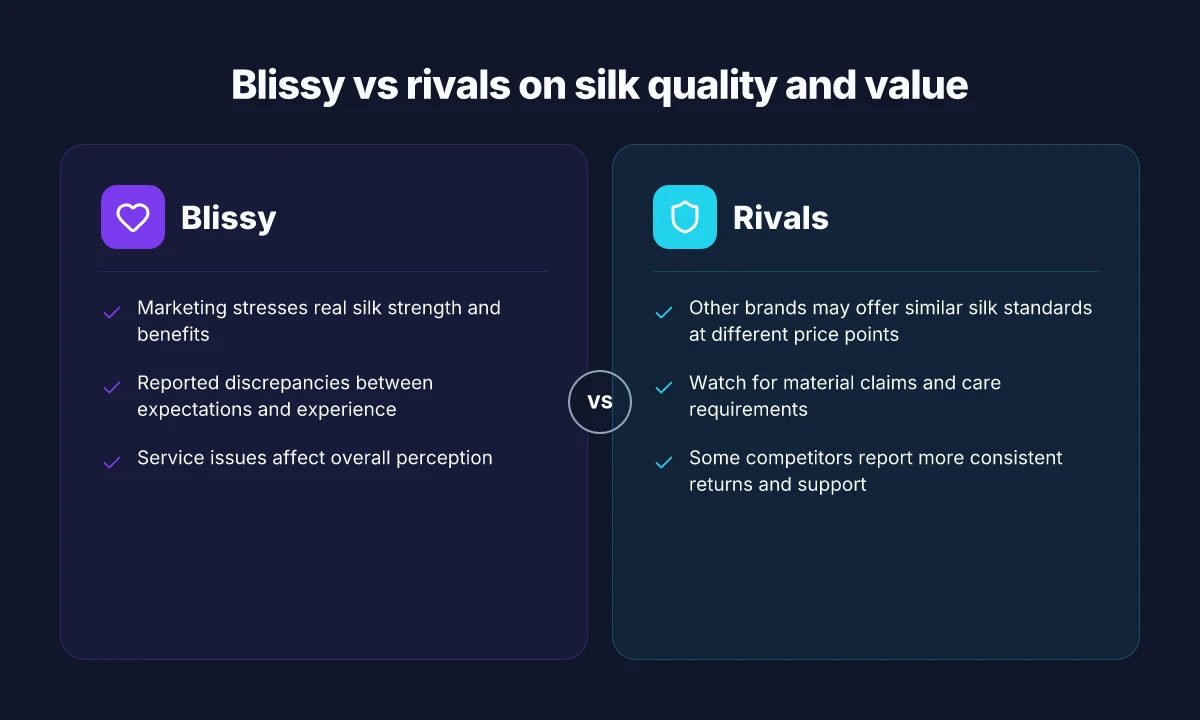
Comparing rival silk pillowcases: where Blissy stands on safety and value
Blissy sits in a crowded field where material claims, price, and perceived value diverge widely. Across rivals, the core debates center on fabric composition, care requirements, and the true cost of ownership over time. I cross-referenced brand pages, independent reviews, and consumer forums to surface where Blissy aligns with market norms and where it stands apart on safety and value.
How rivals frame material and care
Brand messaging often centers on real silk versus blends. Blissy markets its pillowcase as 100% mulberry silk with a specific momme weight, while some competitors emphasize satin as a budget-friendly alternative and highlight lower maintenance. The price gap tends to reflect these claims: premium mulberry silk from major rivals can carry higher per‑piece prices, while satin options skew lower. In practice, the care guidance varies noticeably. Silk requires cooler wash cycles and careful drying, whereas satin can tolerate broader settings. When shopping, watch for mom me weight and fabric content on the care label, since that pairing strongly correlates with heat sensitivity and longevity. In 2026, pricing ranges for silk pillowcases commonly span a broad band, and the lowest entry points often come with tradeoffs in durability or finish.
What to verify in product specs before you buy
A quick audit of specs saves post-purchase disappointment. Look for the exact fabric composition declared by the brand, not just the label on the box. Verify the thread count or momme weight, the weave type, and whether pigment or chemical finishes are used. Offen definitions matter: a higher momme on silk typically signals a thicker fabric, which can affect feel and temperature regulation. Check zipper construction and hidden stitching as part of the durability picture. Recessed zippers reduce snag risk and protect pillow surfaces over time. Also compare washing instructions across brands. Some require hand washing or air drying, others offer machine-washable options that retain sheen after repeated cycles. When you align these specs with your routine, Blissy shows up as a mid‑ to high‑tier option on durability and feel, but rivals may deliver stronger care flexibility or lower maintenance overhead.
Most buyers should treat momme weight, weave quality, and finish as the triad that dictates comfort and longevity.
Verdicts from consumers and the marketplace
Review streams reveal two persistent themes: early satisfaction with feel and sheen, followed by concerns about long‑term durability and customer service when issues arise. Trustpilot entries for blissy.com show a mix of high ratings and caveats about returns or response times, while Reddit threads surface polarized opinions on value and authenticity of claims. Across rival brands, the same tension appears: premium feel and skincare‑focused marketing clash with real‑world durability and price sensitivity. For shoppers weighing safety and comfort, the takeaway is clear: focus on verifiable specs, read care instructions carefully, and account for total cost of ownership, not just sticker price. BedJet vs Eight Sleep: how the two temperature-control beds stack up in 2026
Consumer reviews regularly flag that the feel of mulberry silk is compelling, but long‑term value hinges on durability and service.
Cited references anchor these observations. For a closer read on user sentiment toward blissy.com and related conversations, see the discussion in the sources linked here, including a detailed Trustpilot snapshot and community feedback. The page notes about customer service patterns echo across brands, underscoring that a favorable initial impression may not guarantee sustained value.
As you compare, remember that links on the page may earn a commission, a disclosure I include to stay transparent about the shopping landscape.
Cited sources: Read Customer Service Reviews of blissy.com, as seen on Trustpilot; Blissys blog and rival analyses discussing silk vs satin andpricing dynamics. See inline references for context and exact passages.
Practical takeaways: deciding if a Blissy pillowcase is right for you
The bottom line: assess silk quality and care needs against your patience for upkeep and your budget. If you want low-maintenance fibers with predictable care, Blissy can still be appealing, but your reading should focus on materials, laundering guidelines, and what happens if durability falls short. What you actually pay for BedJet: price, value, and the hidden costs
How to verify silk quality before you buy
Start with the texture and sheen you expect from real silk. Blissy markets itself as authentic silk, so look for a smooth hand feel, minimal slubs, and a consistent weave in user photos or documented product specs. Real silk tends to tolerate gentler wash cycles and cooler drying. If a listing emphasizes convenience over fiber authenticity, that’s a red flag. When you read marketing claims, cross-check against independent reviewers who describe how the fabric behaves after multiple washes. Rely on genuine silk indicators like a soft hand feel and consistent weave, not just marketing language. In 2026, silk quality matters because consumer guides increasingly penalize vague fabric claims. Ask for care instructions in writing and compare them to your washer’s gentle cycle. You should expect a brief, clear stain and odor note from the seller that aligns with standard silk care.
Red flags to watch for before purchasing and tips to maximize longevity
Red flags include vague fiber notes, promises of “no maintenance” with silk, or inconsistent warranty terms. If a source highlights a short shelf life or frequent complaints about pilling or zipper issues, that’s a signal to size up your expectations. To maximize longevity, stick to cool water, delicate cycles, and air drying when possible, and inspect seams after each wash. Avoid abrasive laundering or aggressive detergents that can weaken the fiber. Watch for vague fiber claims and expect precise care instructions. A cautious shopper compares Blissy’s care tab with industry norms and notes differences across retailers. Care guidance should harmonize with the fabric’s natural needs.
How to stack up Blissy against rivals you might consider
If you’re weighing Blissy against rivals, consider the care burden and the claimed safety data alongside real-world complaints. Quince’s comparison articles and independent reviews discuss safety and irritation in broader silk contexts, which helps you frame what “0% irritation” might mean in practice. When you see a rival tout a lower price or easier laundering, verify whether that claim compromises fiber authenticity or durability. Compare care expectations and fiber claims side by side with rivals. If you value verified fabric integrity and transparent care steps, you’ll want that clarity in the product page and after-purchase notices. Transparent care steps remain a key differentiator.
Verdict: Blissy can satisfy silk lovers who accept guided care and clear warranty terms, but verify fiber, weave, and laundering details before purchase.
Note on sources: the discussion reflects claims circulated in social posts and brand blog comparisons. You may encounter sharp contrasts between marketing claims and user feedback across Trustpilot and Reddit threads. Some page links in this article may earn commissions, a common practice in e-commerce reviews. What is the blissy scam, and how regulatory actions shape consumer protection
What changes if you act now
Blissy customers often report similar threads: care complexity, feel and durability questions, and value alignment with price. In this forward-looking pivot, I focus on what a responsible pillowcase buyer should do next rather than rehashing the complaints. The key takeaway is not just to pick a “silk” option, but to choose a product and process that reduce risk: confirm care instructions, compare fabric finishes, and verify return policies before buying. This is the move that matters.
As I map the patterns, the strongest signal is to pair a Blissy purchase with clear expectations about longevity and safety. Expect ties to dyefastness, pilling, and allergy considerations to color your decision. Weigh these against rival options from brands like Slip and Fishers Finery. A disciplined buyer will inspect care guidance, warranty terms, and third-party certifications, then decide if the silk experience aligns with their routine. The bigger pattern points to a consumer truth: you rarely get sustained satisfaction from a single glossy feature without solid ongoing support.
If you only do one thing this month, start with a care-and-guarantee checklist. Ask: does the brand offer explicit washing steps, temperature guidance, and a straightforward return policy? Then compare at least two rivals on those same axes. Where this is going next is clearer product labeling and more transparent care promises across the silk category.
Backup strategy, What to try this week
- Check the care label on your current silk pillowcase and note washing temperature and drying method.
- Compare Blissy with rival options Slip and Fishers Finery on care instructions and return windows.
- Request confirmation of any certifications or dye standards before purchasing.

Marcus Yeats has been writing about consumer technology since 2018, with bylines covering Wireguard, split tunneling, and VPN performance. Approaches each review by setting up the product the same way a typical reader would and recording every snag along the way.