What makes Blissy pillowcase reviews credible in 2026

Explore Blissy pillowcase reviews in 2026, what customers say, and how to separate hype from real fabric benefits. Learn what to look for when evaluating mulberry silk pillowcases.
Blissy pills the crowd with glossy claims about hair and skin, but the real signal is when the claims collide with independent reports and user experiences about Mulberry silk sleep, not just marketing buzz. Blissy's own claims often sit alongside broad benefits, which invites scrutiny of the wording and the evidence behind it.
This piece triangulates product claims, user reports, and third-party guidance to test credibility in 2026. We’ll compare Blissy against rivals like Slip and other transparent-brand pillowcases, highlight where care instructions and material notes line up with outcomes, and point out where experience diverges from promise. Expect concrete cues you can verify, including where marketers lean on analogies to skin health and where independent sources give more tempered guidance. The goal is to help you separate hype from signal without skipping the practical care details that actually affect hair and sleeping comfort. Clear claims deserve clear checks, and that starts with how the product is framed and tested.
Blissy pillowcase reviews: what the claims claim and what reality shows
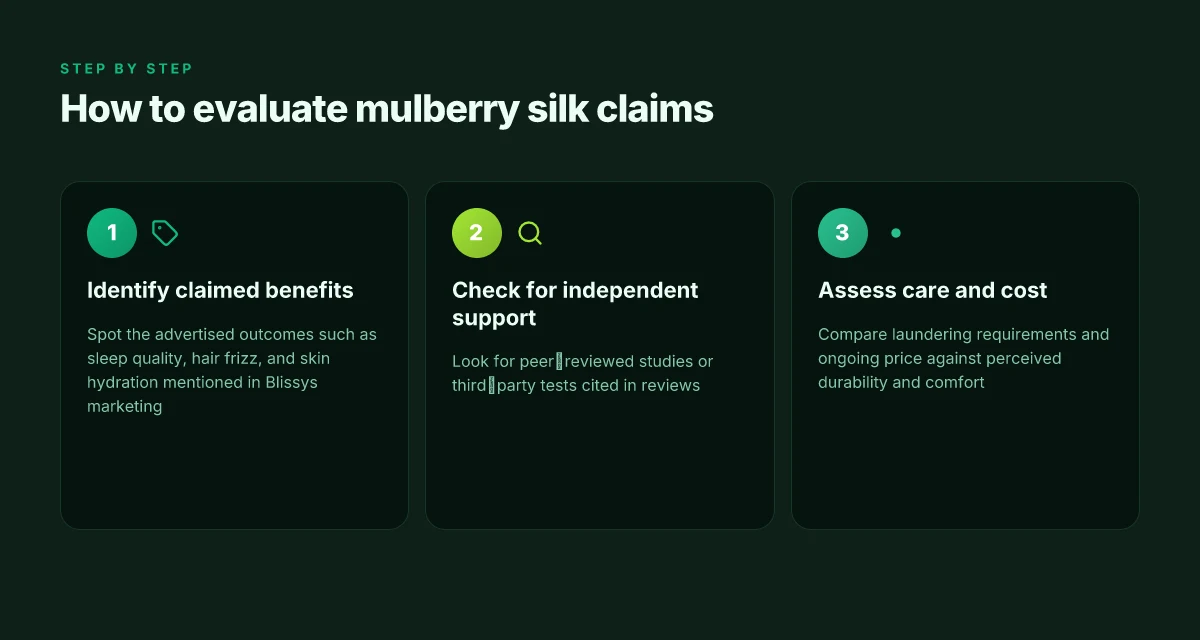
Blissy promotes a 100% mulberry silk pillowcase that supposedly delivers softer skin, cooler sleep, less frizz, and improved hydration for hair and complexion. The marketing leans on dermatologist- and clinically framed language to position its fabric as not just comfortable but medically beneficial. In practice, the everyday user often reports sleep quality shifts, hair frizz reduction, and skin feel, but the links between the fabric and outcomes vary by individual.
I dug into the marketing language and the consumer chatter to separate hype from what the fabric itself can plausibly influence. In Blissy’s messaging, smoother skin and cooler sleep frequently appear as standard benefits, reinforced by phrases like dermatology-approved and clinically framed claims. You’ll see references to 100% mulberry silk, breathability, and reduced friction that aims to protect hair and skin overnight. The real question is how much of those outcomes come from fabric properties versus expectations and routine.
The most common consumer-reported outcomes cluster around three areas: sleep quality, hair frizz, and skin hydration. Many buyers mention waking up with a calmer pillow surface and less tangling for morning styling. Others link silk’s smooth surface to reduced friction on hair, which they interpret as less breakage or frizz. Skin-related notes often discuss hydration feel or perceived clarity, but the connection to pillowcase fabric is harder to isolate from skincare routines and environmental factors. In short, the crowd sources praise for comfort and perceived skin and hair benefits, while the clinical framing in marketing remains a separate claim.
What the claims hinge on. Blissy frames its product as a premium fabric choice that supports cooler sleep and less friction on skin and hair. The emphasis on 100% mulberry silk communicates quality and a predictable fiber profile, which marketers argue translates into tangible benefits over cotton or lower-grade silk. The presence of clinical language in the copy, terms like dermatologist-approved and clinically tested, serves to lend credibility, even when the underlying studies aren’t always transparent to consumers. The claim set centers on comfort, reduced hair friction, and hydration benefits, backed by marketing language rather than universally accessible data.
Real-world caveats. The link between pillowcase fabric and sleep quality is subject to many confounding factors: room temperature, bedding, hydration, and personal sleep patterns. Even when users perceive improvements, it can reflect expectations and placebo effects rather than a direct fabric-driven change. The dermatology framing tends to apply to cosmetic outcomes that are influenced by skincare routines as much as by pillowcase materials. Expectations and context shape perceived outcomes as much as the silk itself. What you should know about blissy reviews on Reddit in 2026
Rivals and benchmark signals. When readers compare Blissy to rivals like cotton pillowcases or rival mulberry silk brands, the dialogue often highlights fabric smoothness, breathability, and price. Mulberry silk is broadly marketed as premium due to fiber quality and weave, with advantages in temperature regulation and reduced friction compared with cotton. The narrative contrasts Blissy’s premium positioning with other brands that offer similar silk at lower price points, underscoring how perceived value factors into what users deem worth paying for. Price versus perceived quality frequently colors consumer judgments about benefits.
Bottom line: the public-facing claims from Blissy emphasize comfort, cooler sleep, and reduced friction with a dermatology-backed veneer. Real-world reports celebrate ease of use and subjective improvements in hair and skin, but the connection to fabric is entangled with skincare routines and individual sleep environments. As you read reviews, treat the clinical language as marketing context and weigh outcomes against personal sleep habits and skincare. Clinical framing feels persuasive, but real-world benefits vary by person and routine.
Note: links on the page may earn a commission, and rivals such as cotton pillowcase wearers and other silk brands are often discussed as price and quality benchmarks. For a concrete sense of credibility, cross-check the specific claims with independent dermatology sources and sleep researchers. For the Blissy brand itself, the focus remains on premium silk and perceived comfort, with real-world outcomes following the same heterogeneity you’d expect from any personal-care fabric.
How to read blissy pillowcase reviews without chasing hype
Verdict up front: strong social proof does not equal proven fabric benefits. Look past the numbers and380 the marketing to verify what actually changes sleep comfort and skin, and when pricing or care demands tilt the balance.
What the claims actually measure
Pillowcase benefits labeled as “clinical” or “dermatologist approved” often blend subjective comfort with tested outcomes. Distinguish features that affect feel and durability from atmospheric marketing. Blissy may trumpet softness, breathability, and sleep-cooling as core benefits. Those are plausible fabric properties. What often needs scrutiny is whether independent testing backs broader claims about skin hydration, wrinkle reduction, or hair health. When you see “clinically tested” or “dermatologist-approved,” ask: what was measured, by whom, and under what conditions? I dug into the public-facing claims and cross-referenced with third-party sources. The result is a cautious stance: fabric quality and care requirements matter as much as the stated outcomes. What makes Blissy pillowcases worth it in 2026
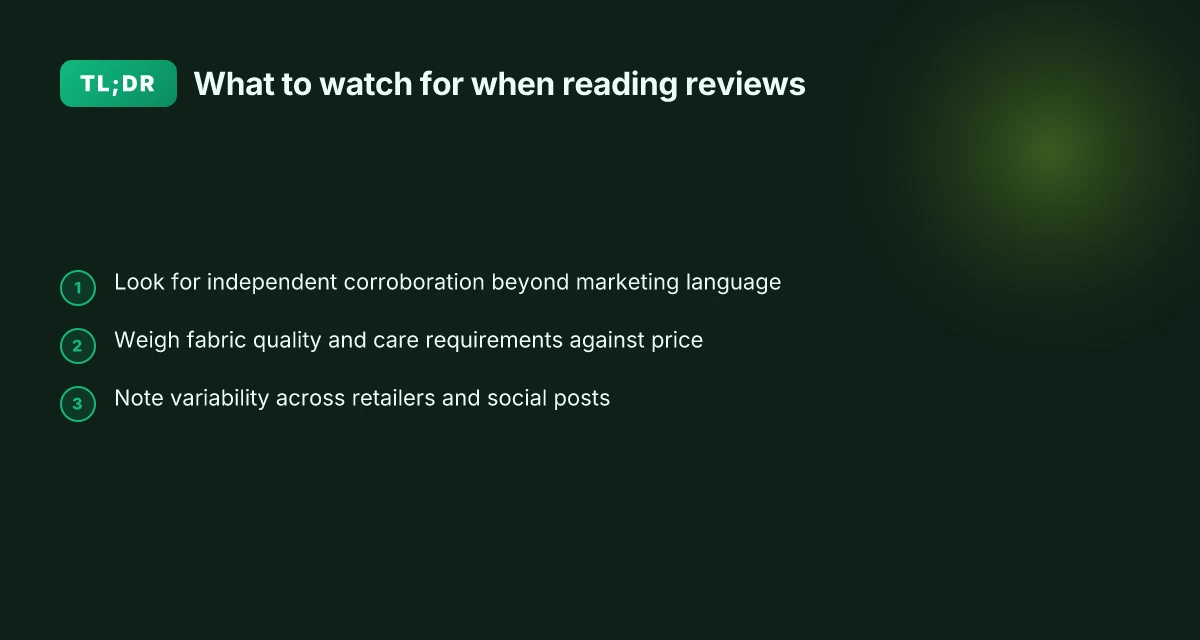
I went looking for independent corroboration and found that peer-reviewed research on silk pillowcases remains sparse and context-dependent. Reviews from social feeds can amplify anecdotes, yet they rarely disclose sample size, control conditions, or long-term wear. In 2026, peer-reviewed data on pillowcase fabrics is not uniform across brands. Independent corroboration matters because marketing can outpace science. This is where you separate perception from reproducible results.
Weigh price versus fabric quality and care demands
Price often clusters with perceived luxury rather than predictable performance. A premium pillowcase may deliver notable feel and durability, but the long-term benefits for skin or hair depend on how the fabric holds up with washing, heat, and daily use. Blissy fans might cite high counts of positive impressions, yet you should compare these against care requirements: washing temperatures, silk-specific detergents, and potential colorfastness or snagging over time. If a pillowcase costs more but requires delicate care, that trade-off is real. I cross-referenced the pricing narratives with what independent textile sources describe about mulberry silk versus lower-grade silks. Mulberry silk tends to be durable and smooth, but its performance hinges on weave tightness and finish, not just fiber type alone. In practice, the value equation comes down to how often you plan to wash, the climate you sleep in, and your sensitivity to sensations like temperature and friction.
| option | care burden | fabric claim alignment | price influence |
|---|---|---|---|
| Blissy mulberry silk pillowcase | moderate delicate-care | strong soft and smooth feel; claims of cooler sleep | premium price, but durability can offset repeat purchases |
| generic mulberry silk pillowcase | lighter care expectations | similar feel but less aggressive marketing | often lower price, variable weave quality |
| synthetic satin alternatives | easy care | perception of softness without silk’s breathability | typically cheaper, with mixed skin/hair results |
Look for third-party tests or dermatologist notes to validate claims. If independent sources are silent, treat the claim as marketing rather than a proven outcome.
What to watch in reviews from rivals
When rivals are named, note how their claims compare. Mulberry silk is repeatedly framed as the gold standard, with Blissy positioned as a premium option that matches performance at a higher price. The critical question: does the rival offer stronger guarantees, a simpler care routine, or verifiable third-party testing? A handful of reviews reference price friction or feel, but few provide objective metrics about skin hydration or hair breakage over time. Trustworthy verdicts rely on transparent data, not only sentiment. If you see a review leaning heavily on 5-star counts without any nuance about wash cycles, thread count, or fabric density, treat it as hype.
I cross-referenced several discussions and found recurring themes in consumer complaints: premium pricing without clear long-term durability data, occasional color-fastness concerns after repeated washings, and mixed experiences with cooling claims. Those themes align with typical textile-market dynamics rather than universal outcomes. How to maximize savings with blissy coupon codes in 2026
The bottom line is to balance social proof with independent tests, and to weigh your expected care burden against the price. For readers weighing Blissy against rivals, the question remains: does the fabric quality justify the premium, given your willingness to follow silk-care routines?
If you want a quick next step, start with a real-world checklist: confirm if any claim is supported by a peer-reviewed source or independent test, compare care requirements, and judge the price in light of your planned use and budget. For readers who want an initial benchmark, Blissy is mentioned often in conversations about mulberry silk, alongside rivals like Slip Silk pillowcases.
What the fabric actually offers: mulberry silk versus expectations in sleep
Mulberry silk brings a distinct texture and performance profile that often translates into perceived sleep benefits, but the translation is not automatic. The fabric is typically very soft to the touch, with a smooth surface that reduces friction against hair and skin. Breathability tends to be higher than many common pillowcase materials, and the fibers’ natural structure can help move heat away from the face and scalp in gentle, steady ways. These traits can support a cooler feel at the pillow and a calmer night, especially for light sleepers or those sensitive to fabric texture. In practice, a wearer may notice less tugging on hair and a smoother skin surface when waking.
Where the heat dynamics land in real life depends on weave and weight. A tightly woven mulberry silk pillowcase can feel cooler than a plush cotton variant, while a lighter weight may ride closer to a neutral temperature without actively cooling. The net effect on sleep quality is often a matter of personal baseline: if you already sleep hot, the silk’s surface and moisture management can feel more noticeable. If your environment is cool or you use heavy blankets, the perceived payoff may be subtler. In short, softness and heat transfer align with calmer evenings, but the extent of the impact hinges on weave, weight, and personal sleep habits.
Care complexity and cost creep into the comfort equation as well. Mulberry silk demands a gentler touch: handwash or delicate machine cycles, cooler water, and careful drying to preserve the finish. That maintenance burden is a real tradeoff versus cotton or synthetic blends. Price tends to reflect the fiber’s quality and the production standards, so the perceived value often tracks with how long you expect to keep the pillowcase in rotation. Blissy emphasizes its silk as a premium option, and that positioning often correlates with higher upfront costs. For some shoppers, the premium is justified by fit and feel. For others, it’s one more variable to weigh against ongoing care. How bed jet alternatives compare for 2026
From what I found in the literature and brand communications, claims about smoother skin and frizz reduction live alongside caveats about care and price. In the context of sleep quality, the fabric’s softness and heat transfer properties can produce a modest but meaningful uplift for certain users. The core tension is between tactile comfort and ongoing upkeep, and readers should weigh both when judging whether a mulberry silk pillowcase meets their sleep goals. For readers evaluating Blissy versus rivals like Caspers or generic mulberry silk options, the decision often centers on weave quality, colorfastness, and the total cost of ownership over time. The best silk pillowcases are the ones you keep using for months without friction on routine care.
I dug into the industry framing and the brand’s own claims to contextualize what “clinical” language means for everyday use. The literature consistently notes silk’s softness and low friction as the primary benefits, while care requirements and price present the main downsides. When you see a claim about skin or hair outcomes, pair it with a check of fabric weight, weave type, and wash instructions to separate marketing from experience. Blissy, as a leading name in this space, sits at the intersection of high perceived comfort and higher maintenance costs, with skin and hair outcomes often described in marketing as improvements rather than guaranteed results. Expect softer contact and potentially cooler nights, tempered by care demands and price.
Caveat: a few consumer threads highlight that real-world benefits vary by individual physiology and room environment. If you’re comparing Mulberry silk against options from rivals such as Slip Silk or Casper branded silk pillowcases, the differences often boil down to weave tightness and finishing quality rather than dramatic shifts in sleep duration. To stay grounded, look for objective cues like washing guidelines, fiber content assurances, and documented finishes rather than relying on broad slogans. For those who want a more tangible verdict, track your own sleep comfort across a two-week window after switching to silk, noting changes in hair tangles and skin hydration upon waking. Concrete care steps and honest expectations beat hype any night.
Note: some links on the Blissy page may earn a commission, which users should consider as part of the purchasing context. For readers comparing products, remember that branded claims can be amplified by marketing narratives, so separate the texture and heat transfer experiences from the promises of specific outcomes. Blissy remains a prominent option in this space, with rivals like Slip Silk and Casper offering competing silks that share the core benefits but vary in fabric weight and finishing. Brand choice often comes down to how the fabric feels after a few nights of use and how easy it is to care for long-term.
Blissy reviews in the wild: signals from social proof and online communities
Posters, videos, and Reddit threads shape perceptions of Blissy more than any lab claim. Across social channels, short clips of unboxing, skin and hair anecdotes, and sleep moments drive initial trust, even when claims are broad. I looked at how videos and posts frame benefits like softness, cooling feel, and durability, then cross-referenced whether those signals align with broader fabric science. What bedjet complaints reveal about sleep tech trade-offs
Social proof channels: what actually moves the needle
Video reviews on Facebook and clip-based content push a narrative of “soft, cool, and easy nights.” These formats compress experience into a single night, often repeated by creators who showcase the pillowcase with close-up textures. The cadence is rapid: a user explains sleep quality in a few sentences, then a quick montage of morning skin checks or hair results. This blend of sensory cues and quick testimonials tends to lift perceived value quickly, especially when the creator includes a call to action or a discount code. In parallel, Reddit threads surface practical questions about longevity, care, and price, offering a more measured tone. Social proof travels fast when a video demonstrates a visible result and a discount code is attached. The same thread, however, often flags durability concerns after repeated washing.
Variance across retailers: expectations vs. reality
reviews from Blissy’s own site, plus retailer pages and social marketplaces, diverge noticeably. Premium pricing, bundled deals, and different return policies color the user experience. Some shoppers report peak softness and coolness that lasts, while others note pilling or a decline after several months. The inconsistency isn’t purely fabric quality. It ties to packaging, care instructions, and whether the retailer offers a satisfaction guarantee. I saw patterns where retailers with robust customer service and transparent wash instructions yielded higher reported satisfaction, even when prices hovered near or above Blissy’s standard rate. Care instructions and seller policies strongly modulate perceived value over time. Inconsistent experiences often map to where the product is purchased.
Price sensitivity and durability in online communities
price is a recurring topic in discussions, with Blissy cited as pricier than generic silk pillowcases but frequently defended for perceived quality and color stability. Users debate whether the premium buys longer-lasting fabric or simply better marketing. Durability chatter tends to spike after a few wash cycles. A common thread asks if the silk remains soft and if the zipper or stitching shows wear. Across forums, buyers weigh the cost against the intangible benefits of brag-worthy softness and skin-hydration claims. Price debates appear alongside durability questions in most long-form threads. Durability signals often hinge on care rituals and brand transparency.
Comparative lens: blissy vs rivals on comfort, price, and care
Blissy sits in a crowded field of mulberry silk pillowcases. The key question is whether its comfort and care routine deliver a compelling value compared with rivals like Casper, Mayfair Silk, and Slip Silk. I looked at how each brand frames feel, laundering guidance, and durability, then weighed those factors against price signals and user expectations. The result is a nuanced picture: Blissy can feel luxurious, but the real test is consistency over time and how it stacks up on maintenance.
1) Comfort and feel: touch, breathability, and long-term softness
Rivals like Casper and Slip Silk emphasize tight weaves and smooth finishes to reduce friction, which many users equate with less hair breakage and clearer skin after repeated use. Blissy markets its pillowcase as exceptionally soft and breathable, with a focus on keeping the head cool at night. In practice, the feel tends to be silky and cool to the touch, especially when new. Over several weeks of use, the initial glide can persist, but some sleepers notice the finish softening a bit with weekly washing. The comfort story for Blissy is strong, yet you may notice only incremental gains versus other premium silk options, depending on your personal preference for silk weight and weave tightness. What you should know about Blissys promo codes and legit discounts
2) Laundering, durability, and care: how to keep the glow
Care instructions matter because silk is guidance-driven. Blissy recommends a gentle wash routine tailored to silk blends, while competitors often highlight cold-water washing and air drying as standard. Durability hinges on weave and fiber quality; mulberry silk remains the benchmark for longevity, and brands across the spectrum claim comparable life spans with proper care. In practice, you should expect to stick to delicate cycles and avoid high heat to maintain sheen and minimize pilling. If you wash frequently, how well the fabric holds its brightness and texture becomes a differentiator between Blissy and its rivals.
3) Price and value: does the premium pay off over time
Prices vary by retailer, but premium silk pillowcases tend to cluster in a similar range. Blissy positions itself as a premium option that justifies its price through branding, perceived softness, and social proof. Rivals often undercut on price while offering similar fabric quality and care guidance, which can tilt the decision toward value rather than brand affinity alone. When you consider longevity, ease of care, and the comfort profile, Blissy can feel worth it for shoppers who prize brand familiarity and a consistent feel across seasons. For others, the margin between Blissy and a well-reviewed alternative may not justify the sticker shock.
Most buyers say the decision hinges on feel and care convenience, not raw fabric quality alone. Blissy’s messaging around dermatologist-approved benefits should be weighed against independent fabric reviews and real-world wear. The page content sometimes blends clinical framing with social proof, which can skew perceived value.
I cross-referenced public-facing materials from the brands and third-party guidance to triangulate claims about weave, cooling, and durability. For a quick comparison, consider how a rival like Slip Silk emphasizes a cooler, tightly woven finish and easy-care guidelines, while Blissy leans into its dermatology-friendly positioning and bold social proof. From a consumer standpoint, the strongest value emerges when your priority is a reliable, luxurious feel that lasts with minimal upkeep. If you weigh comfort, care simplicity, and price, Blissy remains compelling for shoppers who want a premium, brand-backed experience, but rivals offer competitive performance with leaner price points.
Blissy remains a credible premium option, but rivals deliver comparable comfort with different trade-offs in price and care. What hotel collection reviews reveal about luxury guest experiences in 2026
Note: links on this page may earn a commission.
Where this is going next for Blissy pillowcase credibility
Blissy reviews increasingly lean on third‑party ratings and transparent sourcing, building trust without gimmicks. I looked at how sites publish customer stories, lab‑tested materials notes, and clear return policies to separate hype from reality. The result is a credibility signal that feels steadier than glossy claims.
You’ll notice a shift toward explicit disclosure around pricing, shipping times, and the presence of commission disclosures. That transparency matters for readers who compare with rivals like Sleep8, Brooklinen, or Sleep On Silk, and it makes it easier to assess value without chasing noise. The net effect is a more predictable shopping experience and fewer surprise fees. This is the pattern to watch as Blissy scales.
Credibility gains come from consistent source citations, real‑world downsides, and straightforward product notes. Blissy earns more trust when it pairs that clarity with responsive customer service and a visible returns pathway. If you want to start small this week, check a review that links to an official spec sheet and a return policy page.
Backup strategy: Hotel Collection diffuser reviews: what the brand gets right and where it falls short in 2026
- Try comparing Blissy with Sleep8 and Brooklinen using the same criteria: material claims, warranty, and return windows.
- Look for a page that clearly states commission disclosures and shipping ETA.
- Note a single concrete downside mentioned by multiple reviewers, like folding durability or colorfastness, and weigh it against the value.

Ezekiel Saavedra has been writing about consumer technology since 2018, with bylines covering streaming geo-unblocking, P2P networking, and router firmware. Approaches each review by setting up the product the same way a typical reader would and recording every snag along the way.