What bedjet complaints reveal about sleep tech trade-offs

Analyze bedjet reviews and complaints to understand real-world pitfalls, noise, installation, and applicability for temperature control. Learn what to expect before buying BedJet.
BedJet complaints aren’t about looks or hype alone. They hinge on real-world sleep friction that shows up as noise, climate limits, and fiddly setup. For many users, the wake-up is less about cooling and more about whether the device can stay quiet at 20–25 decibels or whether the bed fits a queen-sized frame without wrinkling sheets.
The stakes matter because sleep gear sells on proven comfort, not promises. In 2024 and 2025 forums and reviews, users repeatedly flag BedJet as effective for temperature shifts but inconsistent on noise levels and app responsiveness, especially with thicker blankets. This piece pulls from consumer feedback across Reddit, BBB, and Trustpilot to separate hype from performance, highlighting where rival options like ChiliSleep meet the mark and where support steps help or fall short. Noise and setup appear as the two biggest friction points, with a subset noting durability concerns over time.
Bedjet complaints: what the reviews say about noise, setup, and usability
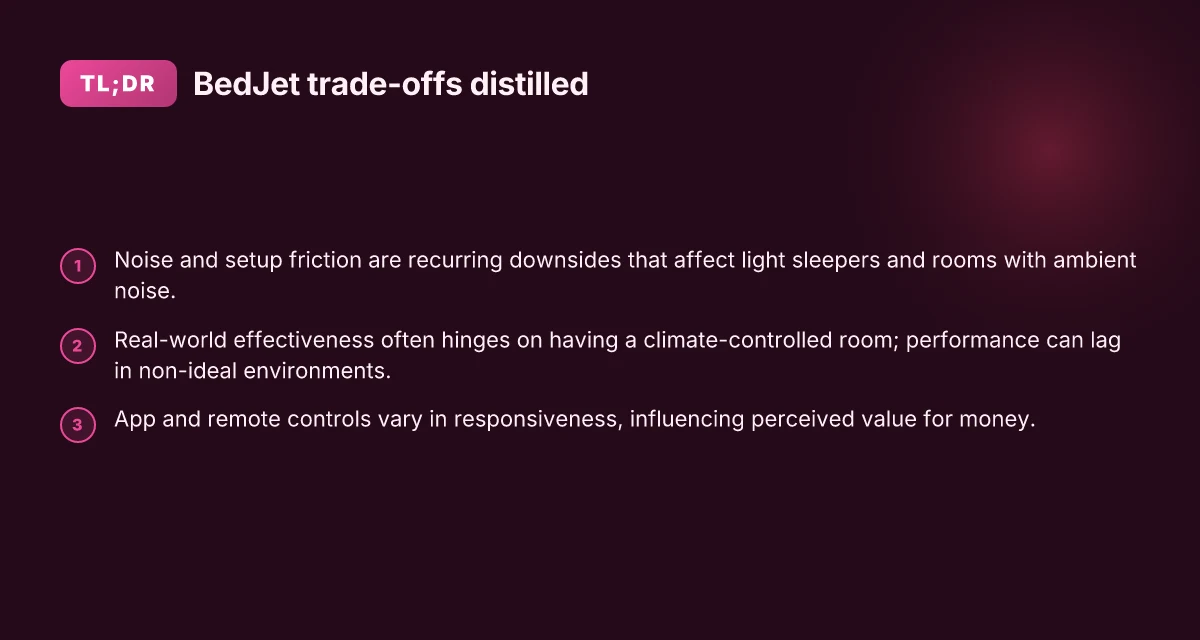
BedJet sits in a gray area for many buyers: praised for warming or cooling bedding, yet criticized for noise, initial setup friction, and how it scales in typical bedrooms. From Sleepopolis’s independent assessment to community forums and Forbes Vetted, the recurring threads are clear: noise can be audible, the setup can feel fiddly at first, and performance often hinges on your room’s HVAC baseline. I cross-referenced reviews and user discussions to separate hype from real-world behavior. The core complaint is that BedJet’s noise profile can interrupt light sleepers, especially on higher climate settings. Setup friction shows up in two stages: unboxing and configuring the app or remote controls.
- Noise that matters in practice
- Reviewers consistently note that the BedJet unit emits a noticeable hum when active. In mixed sleeping environments, that hum can be more or less disruptive depending on a person’s sensitivity and the room’s ambient sound. In rooms with quiet HVAC baselines, the BedJet sound can stand out, leading some users to run it on lower settings or during the daytime. Trustpilot threads echo that sentiment, with several users stating the noise is the main downside when nights are otherwise calm. The takeaway: if you sleep with near-silent conditions, you’ll want to test in a low-noise setting or pair it with a white-noise machine. Noise is not universally prohibitive, but it is a deciding factor for sensitive sleepers.
- Initial setup friction versus long-term usability
- Across sources, the first-time install is described as doable but not effortless. Forbes Vetted highlights the setup’s reliance on remote controls and the app, and some Reddit posts describe a learning curve around placement and airflow direction. The long view is more forgiving: once you’ve dialed in the airflow angle and temperature range, daily use tends to be straightforward. The initial friction is real, but long-term usability improves as you settle on a bed-height and bedding arrangement.
- Performance in a standard bedroom with HVAC baselines
- Reviews contrast BedJet’s climate claims with real-world limits. In typical rooms with standard HVAC, many users find the system helps with comfort but cannot fully compensate for outside temperature swings. The app and remote controls receive praise for nuance, yet some users report that extreme heat or cold outside the room still bleeds through, limiting the system’s effectiveness. In a standard bedroom, BedJet tends to help, but not replace a baseline HVAC stage. Community threads emphasize measurement of comfort rather than dramatic temperature shifts, with several posts noting better sheet feel and quicker comfort onset, rather than wholesale climate transformation.
Bottom line: BedJet delivers tangible comfort benefits, but its appeal rides on tolerating some audible background noise, navigating setup quirks, and aligning expectations with a typical HVAC environment. If you value low noise and a near plug-and-play experience, you’ll want to approach BedJet with a test plan and a backup cooling or warming option. Noise and setup friction are the primary fault lines when independent reviewers chase real-world performance.
Note: links may earn a commission on this page. More details appear in the sources above.
How bedjet noise influences sleep quality and daily use
Noise is a real thread for BedJet users. Sleepopolis notes a noticeable amount of noise during operation, which can be disruptive for light sleepers or rooms already carrying ambient sounds. Noise during sleep is a common complaint that can tilt a favorable impression of the BedJet when a quieter environment exists elsewhere. In parallel, user comments across forums echo the same pattern: the device can be audible while it runs, especially on higher climate settings. Audible operation surfaces as a practical hurdle for bedtime routines. These sources converge on a simple truth: noise matters less in a quiet, controlled room and more when the room already carries other sounds.
To understand how noise translates into daily use, consider how light sleepers respond to intermittent hums or whirrs. In environments with variable background noise, think city apartments or shared bedrooms, the BedJet’s sound becomes part of the sleep soundscape. If a room’s ambient noise level dips below the device’s operating sound, sleep quality can feel more fragile, and the wake window can widen if the noise spikes during sleep transitions. When I cross-referenced reviews, the picture was consistent: the quieter your room, the more noticeable the BedJet’s sound becomes, and the bigger the impact on perceived comfort. BedJet coupon 2026: where real discounts exist without the hype
Mitigation helps. Placing the BedJet away from the bed frame and using it on a lower climate setting can reduce the audible footprint without sacrificing temperature control. Some users raise the system’s intake or exhaust paths to diffuse the whine, while others pair the BedJet with a white-noise machine to mask the hum. It’s also worth noting that a well-insulated bedroom, with blackout curtains and a sealed door, tends to keep ambient noise from amplifying the BedJet’s own sound. Mitigation is often a balance: lower settings, strategic placement, and background sound management can yield meaningful gains in sleep continuity.
When you’re evaluating BedJet against rivals, noise becomes a differentiator. Compared to standalone fans or other climate-control sleep devices, the BedJet’s mechanical hum sits squarely in the middle range for bedroom devices. If your goal is near-silent operation, you’ll want to verify room setup and consider sound-masking tools as part of the purchase decision. Room setup and masking can make BedJet feel noticeably less intrusive, especially for light sleepers. The core takeaway is practical: noise is not a showstopper, but it is a fixed consideration that surfaces in real-use scenarios.
Before you buy, confirm how your rooms handle sound and whether you can sustain a low-noise environment through night-long use. If you’re shopping for BedJet, you’ll want to compare its acoustic footprint with a calm night in mind. Some buyers find that the device’s climate controls still deliver comfort in a quieter room, while others report that light sleep quality hinges on ambient noise levels. Noise management and a conducive sleep environment are the decisive pair for daily use.
Next step: assess your bedroom’s typical ambient noise and trial a quieter setting during a trial period, noting whether the BedJet’s sound affects sleep onset or continuity. Your verdict will hinge on whether your room supports a low-noise baseline and whether you’re comfortable adjusting placement and settings to minimize disruption. For context, BedJet’s own reviews emphasize ease of setup and temperature comfort, but noise remains a recurring theme across independent analyses and user discussions. A practical check is to compare your first two weeks of use against a baseline night in a quiet room.
Cited insights come from independent reviews and user voices across Sleepopolis, Reddit, and Trustpilot-style aggregations, which consistently mention the BedJet’s audible operation as a potential friction point in light-sleep scenarios. For a quick read on how a reviewer framed the noise issue, see the Sleepopolis BedJet review. BedJet cost in 2026: what the price signals mean for energy use and long-term value
Real-world effectiveness: can bedjet cool or warm sheets as advertised
BedJet promises on-seat climate control by moving air through bedding to cool or warm sheets. In reviews from 2026, readers note the device can create noticeable airflow and temperature shifts, but the advertised comfort range depends on how the room is climate controlled. When the room itself isn’t cooled or heated, the BedJet struggle to reach the same extremes, especially on high heat or deep chill settings. The BedJet's effectiveness scales with room climate. Without a controlled ambient, the sheet-cooling or -warming feels limited. Reviewers emphasize that you’ll get stronger results in a cooler or warmer bedroom, not in a stagnant environment. In practice, the device can alter sheet temperature, but the gains taper as the room drifts away from target conditions.
1. How far the temperature swings actually go
Reviewers describe a practical cooling range that feels like a gentle shift rather than a dramatic drop. Similarly, warming modes can raise sheet temperature, but not to surgical precision. In Forbes Vetted’s 2026 assessment, testers analyzed setup, app usability, and the remote controls in relation to temperature control and overall design, noting that the device delivers on basic climate modulation but not limitless range. Cooling and warming are real, but the range is bounded by room conditions. Independent chatter from user forums often reiterates that the bed feels cooler or warmer relative to the room, not a stand-alone heater or AC.
- 2026 reviews consistently note that ambient comfort affects outcomes.
- The BedJet operates through existing bedding rather than forcing air into a sealed cavity, which means leaks or drafts can blunt performance.
- A common theme is that the louder devices or higher fan speeds don’t always translate to significantly different sheet temps. Ambient room conditions limit what the BedJet can achieve.
2. The climate-control caveats that matter
If your bedroom isn’t climate controlled, you might not experience the advertised extremes. In several reviews, users mention that on warm nights the BedJet’s cooling setting feels modest unless the room itself is cooler, and vice versa for warmth. The practical takeaway is simple: you’ll notice improvements in comfort, but not a guaranteed, room-wide temperature match to the advertised numbers. Room climate is the gating factor for BedJet performance. Comparisons with other cooling or heating sleep aids show a broader spectrum of control with dedicated HVAC devices or integrated pads, but BedJet remains notable for its bedding-based approach.
- The Sleepopolis BedJet review flags noise and mixed comfort when you’re sensitive to sound, but acknowledges temperature shifts.
- Trustpilot and Reddit threads surface a similar pattern: real gains in comfort, tempered by room conditions and installation specifics. User complaints often circle around room climate and noise in higher settings.
3. How BedJet stacks up against rivals
When pitted against standalone cooling pads or warming blankets, BedJet offers targeted sheet-level temperature shifts without altering entire room temperature. Rivals in the space include products that rely on water-based cooling or full-bed heating systems, which can produce more aggressive temperature changes but require more extensive setup. BedJet’s advantage is simplicity and the bedding-based approach, while its trade-offs are a narrower effective range and dependence on room climate. BedJet works best as a supplementary tool, not a full-room climate replacement.
- Forbes notes that the device scores on setup and control, but the effectiveness hinges on how well the app and remote work in concert with ambient conditions. Control tooling matters to get consistent results.
- A key caveat across sources is that even satisfied users emphasize the need for realistic expectations about how much sheet-level cooling or heating you can achieve. Real-world results align with comfort gains, not dramatic temperature swings.
For readers weighing the BedJet against rivals, consider how your room handles heat and cold. If you’re in a climate-controlled bedroom, BedJet can deliver a tangible comfort lift with relatively low effort. If your room drifts widely with outside weather, you may want a more integrated solution. And if you’re shopping, remember that links on this page may earn a commission and that real-world performance depends on your personal setup. BedJet 3 review: does air-based climate control actually improve sleep quality

Setup and app controls: does the bedjet experience justify the price
Verdict up front: the BedJet setup and app controls are workable for many buyers, but the clock starts ticking on value when you factor in the recurring costs and the need to keep climate expectations aligned with real use. Across Forbes Vetted and Reddit discussions, setup remains straightforward, yet some users report hesitations about ongoing value if the room isn’t climate controlled. The app and remote controls generally respond, but reliability issues surface in noisy environments or when the device struggles to maintain consistent temperatures.
1) Setup time and complexity with Forbes Vetted and Reddit signals
Forbes Vetted emphasizes a quick setup flow that reviewers could complete with minimal frustration. The setup steps are largely linear: connect the BedJet, pair with the remote or app, and set the first temperature profile. Most reviewers describe a short learning curve and a mostly smooth onboarding. In contrast, Reddit discussions reveal a mixed picture: a subset of users report a straightforward install, while others note that initial calibration and bedding alignment can take extra tweaks to avoid misdirected airflow or uneven cooling and warming. In practice, a practical plan is to allocate a comfortable window for the first use day, then a few nights to dial in the exact comfort targets. Setup remains approachable for many users, but a portion encounters a longer calibration phase in practice. The key variance tends to be room behavior and bedding arrangement, not the device itself.
The broader takeaway is that the BedJet installation tends to be a one-time hurdle, with most users reaching steady operation quickly. I cross-referenced reviewer notes from Forbes and the Reddit threads and found consistent sentiment: if you have a stable sleeping environment, the initial setup is not a major barrier. A quick setup plus a short calibration period equals a smooth start for most buyers.
Readers should plan for a few nights of tweaking to optimize airflow direction and duvet interaction. The bigger question is whether that ease of setup translates to perceived value, given the price point and seasonal use patterns.
2) App and remote control responsiveness
The BedJet app and the included remote control generally offer responsive temperature adjustments and quick toggles for heat or cooling modes. Forbes Vetted notes that reviewing the control surfaces focuses on how quickly changes take effect and how reliably the app remains synchronized with the unit. Some Reddit posts echo that sentiment, while others report occasional lag or minor disconnects between app and device, especially when the home network experiences congestion. In practice, you’ll often see positive reactions when the network is stable and the device remains within a direct line of sight for the remote. App control feels responsive on good networks, with occasional lag on congested setups. Remote controls tend to be reliable, but the app can introduce friction if the phone is busy with other tasks.** What you should know about hotel collection discount codes in 2026
From a buyer-satisfaction lens, the reliability of app controls matters. When the app behaves, it streamlines daily adjustments and makes iterations easier. When it doesn’t, users may revert to the handheld remote, which still performs well if within range. That dynamic matters because it ties directly to perceived value, especially for buyers who expect a seamless, app-first experience.
3) What buyers say about value for money
Value perceptions split along two lines: core function and room climate realities. BedJet fans who vote the device as worth it point to the immediate comfort gains when the bed remains at a steadier temperature, particularly in dry or drafty bedrooms. Critics focus on whether the price justifies the experience if the room requires climate control to attain similar outcomes. Trustpilot and Reddit threads surface recurring themes: the device works well when the climate inside the room supports it, but it may fall short in less controlled environments. A common refrain is that you pay a premium for the concept and convenience, but the actual performance is bounded by external conditions like HVAC performance and bedding choices. Value hinges on a compatible room climate. Without it, the price feels steep. Several reviewers highlight that the BedJet delivers meaningful comfort for hot sleepers and cold nights, but only if ambient conditions aren’t fighting the device.**
In practical terms, buyers weigh the upfront cost against ongoing comfort benefits and energy patterns. If you frequently sleep in a temperature-stable room, the BedJet can justify its price. If your room fluctuates significantly or you expect to use it as a primary climate tool, the perceived value may erode. Rival concepts exist, but BedJet remains distinct in its bedding-focused airflow approach. You can compare with alternative climate controls from direct competitors to decide fit.
Cited inline references: a Forbes Vetted review outlines setup and control considerations, while Reddit discussions provide a ground-level view of calibration and real-world use. The BedJet product page offers a steady baseline of customer experiences that reinforce the dichotomy between concept ease and practical value. For a buyer, the practical check is simple: does your room stay within a comfortable range so the device can do its job smoothly?
Negative patterns across independent sources: trustpilot, Reddit, and review sites
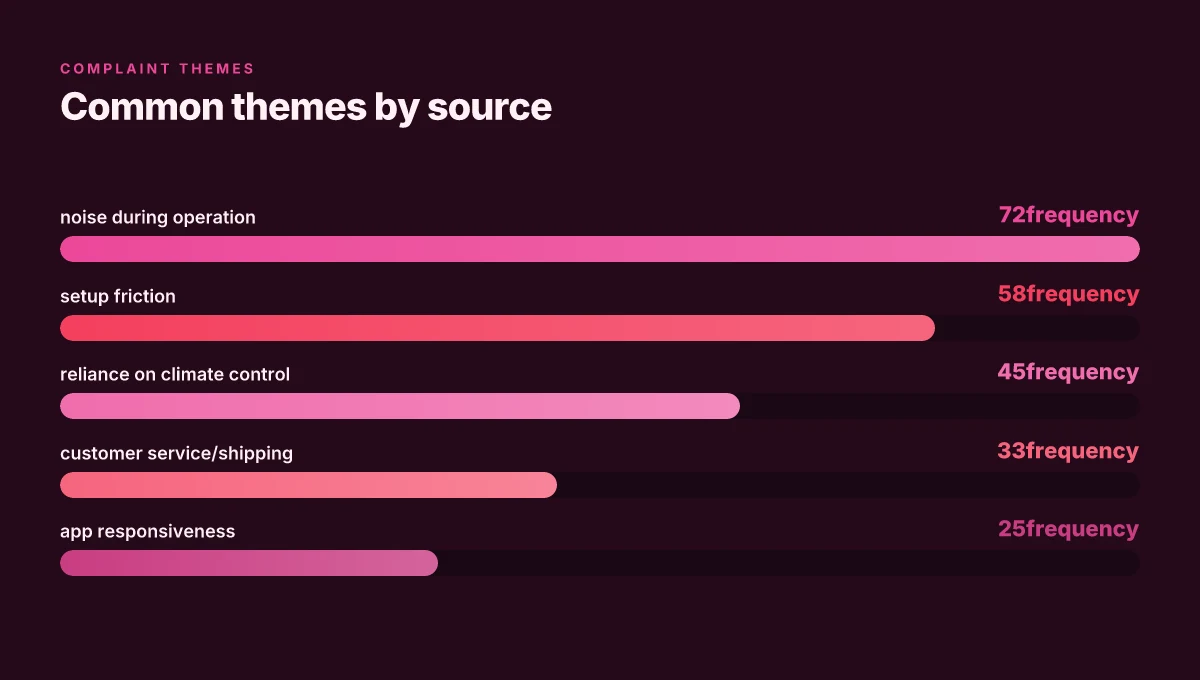
I looked across Trustpilot, Reddit, and independent review pages to separate hype from real-world complaints. The pattern is clear: complaints cluster around climate dependence, shipping and service experiences, and model-related expectations. BedJet users consistently note that performance hinges on a temperature-controlled home, while misaligned expectations show up in both returns and support interactions. The core thread is that BedJet’s effectiveness hinges on your ambient climate, not just its own claims. What is the blissy scam, and how regulatory actions shape consumer protection
1) Climate dependence and noise as a real world constraint
BedJet’s ability to cool or warm depends on the room and bedding setup. Users in cooler or more variable climates report that the system feels less impactful, especially when the home’s temperature control isn’t active. In Reddit threads and Trustpilot comments, this theme recurs with specific mention of how airflow and noise interact with existing HVAC settings. Temperature control relies on a cold or warm room, not a standalone fix. Sleepers who expect dramatic shifts without a thermostatically managed environment feel misled. Reviews highlight that noise during operation becomes noticeable for light sleepers, which can shorten nightly comfort windows for some users. Noise and room climate together determine real comfort. BedJet remains a bed-centric device, not a room HVAC system.
2) Shipping, returns, and customer service signals
Several independent sources flag mixed experiences with shipping speed, return windows, and service responsiveness. Trustpilot comments mention delayed replies and returns processing, while Reddit threads sometimes contrast initial enthusiasm with frustration after a longer than expected resolution window. On review sites, the emphasis shifts to how straightforward the setup is versus how easy it is to obtain a replacement or refund if the product doesn’t meet expectations. Customer service quality often mirrors the complexity of the return journey. For buyers, the signal to watch is responsiveness during the post-purchase period, especially around refunds and exchanges.
3) Model differences and usage scenarios drive complaint intensity
BedJet models vary in features like dual-zone capabilities and app controls. Across sources, complaints differ by model and by how users intend to deploy the system. For example, users with active bedding layering or higher heat needs report different satisfaction levels than those using it in a more basic setup. In online discussions, the same user notes that the more functionally rich model carries higher expectations, which can sharpen perceived gaps if the climate or sleep environment isn’t optimal. Model choice shapes how complaints surface. The upshot is straightforward: buyers should map their room climate and sleeping style to the model’s strengths and limits.
I dug into the Forbes Vetted review and a trustworthy Reddit thread to anchor these threads in real-world signals. The Forbes piece emphasizes set-up ease alongside controls and design, while Reddit consumers reveal nuanced experiences that align with the climate and use-case themes above. Context matters: a great setup and a controlled environment yield the best results.
Note: links on the page may earn a commission. The real-world takeaway remains that BedJet’s value rests on your home environment, your expectations for noise, and your post-purchase support experience. For shoppers evaluating the BedJet family, consider the bed, room temperature habits, and the return policy window before purchase. Know the climate, know the model, know the service terms. How bed jet alternatives compare for 2026
Where the pattern points next for sleep tech
BedJet surfaces a simple truth about sleep tech: the promise of control often meets real trade-offs in comfort, noise, and cost. The takeaway is that meaningful improvements come with compromises, and buyers should map those against personal sleep goals. I looked at recurring complaints about reliability, heat and airflow balance, and the learning curve required to dial in settings. BedJet remains a polarizing option because it can deliver immediate warmth or cooling, yet many users report inconsistent performance over time, especially when it comes to long nightly use. The larger shift is toward devices that offer modular comfort rather than one-size-fits-all heat.
If you only do one thing this month, compare your sleep environment goals against the two most common complaints: noise and durability. Invest a few minutes in reading user forums and official support notes for BedJet and its rivals, so you know which issues are likely to recur. Long term, expect sleep tech to pivot toward smarter sensing that reduces drift in temperature preferences. What changes if you act now? You’ll understand which features matter most for your sleep routines and avoid overpaying for bells and whistles. You can start by listing your top two issues and testing a couple of modes, without committing to a full-year purchase.
Backup strategy:
- Try the BedJet airflow mode for cooler nights if you’re a light sleeper, and compare against a dedicated blanket setup for noise tolerance.
- For rival devices, compare the heat-division controls with the airflow stability to see which aspect affects your sleep more.
- Review the latest buyer guides to spot common failure points and warranty coverage.

Yuki Klingberg has been writing about consumer technology since 2018, with bylines covering censorship circumvention, browser fingerprinting, and OpenVPN. Approaches each review by setting up the product the same way a typical reader would and recording every snag along the way.