What makes Blissy silk stand out for skin and sustainability in 2026
Explore Blissy silk, its hypoallergenic claims, sustainability footprint, and how it compares with other mulberry silk brands. Learn what to look for when choosing silk pillowcases.
The surprising blocker isn’t texture or comfort. It’s how some premium silk pillowcases quietly mask their supply-chain impact. When you compare Blissy to other mulberry silk brands, the real signal is in transparency about sourcing, certifications, and wash-life expectations, not just feel. Blissy claims on sustainability should be cross-checked against independent labels and care guidance.
This intro clarifies what to look for: exact fabric weights, sericin-free processing, and clear, verifiable claims about ethical production. By 2026, more shoppers demand traceability and realistic longevity, not glossy marketing. Blissy and rivals like Silksong or Lilysilk are evaluated on concrete criteria rather than style alone.
What Blissy silk claims about hypoallergenic properties and skin comfort
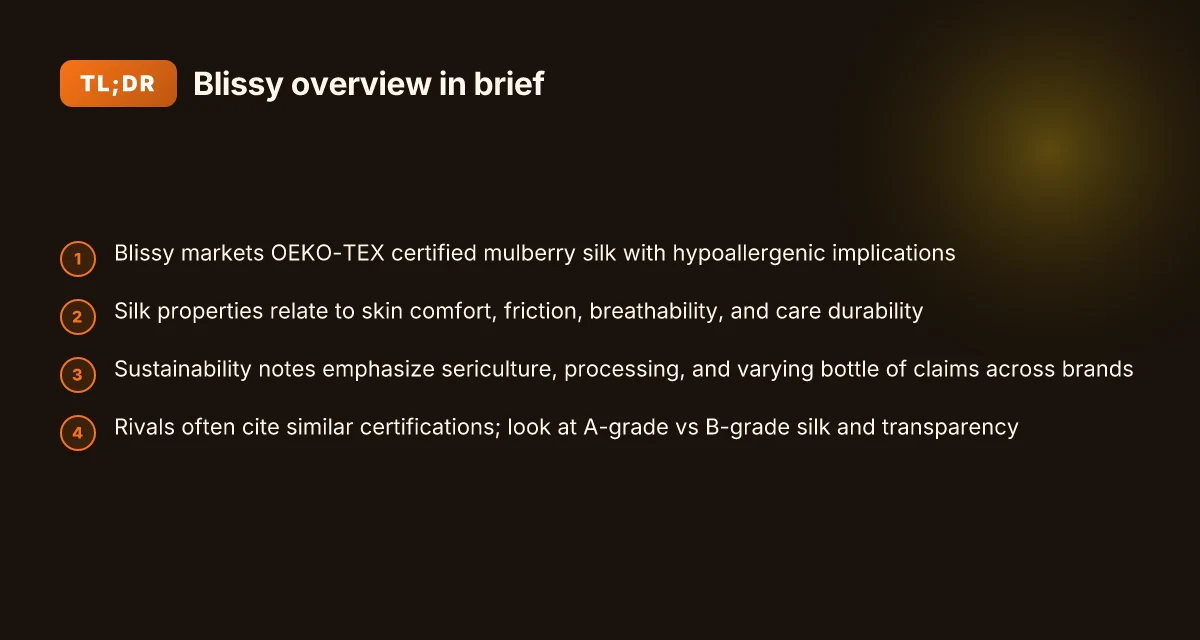
Blissy markets its product as OEKO-TEX certified mulberry silk and emphasizes a low irritation potential. The brand ties its claims to the purity of the silk and to testing standards that screen out harmful chemicals. In practice, this means Blissy highlights that its silk is free from toxins and designed to be gentle on skin, which aligns with consumer-facing messaging about hypoallergenic properties.
- The hypoallergenic premise hinges on purity and sericin removal Silk purity matters for irritation potential. Blissy’s materials emphasis centers on mulberry silk that is processed to remove sericin, a protein sometimes linked to sensitization in less-pure silks. When sericin is adequately removed, the remaining silk tends to be smoother on skin and less likely to provoke irritant reactions. I found content pointing to purity and processing steps as the basis for lower irritation risk, with the underlying logic that cleaner silk reduces exposure to potential irritants. In 2026, OEKO-TEX certification signals adherence to testing for harmful substances, reinforcing the hypoallergenic framing. OEKO-TEX certification acts as a credibility anchor for Blissy’s skin-safety claims.
- Clinical and dermatology perspectives cited in consumer content Blissy references clinical studies and dermatology perspectives to support its hypoallergenic position. The site notes low potential for sensitization and irritation. It does so by pointing readers to external clinical findings rather than publishing its own primary data. The idea is that dermatology-informed reviews align with silk’s history of being gentle when properly produced. This storytelling helps bridge consumer skepticism with a professional lens, even as independent dermatology sources may emphasize talc, fragrances, or finishes as possible irritants in bedding beyond silk itself. Dermatology perspectives can bolster the perception of safety when the silk is pure and well processed.
- Certification and supplier variations shape the claim Hypoallergenic claims depend on the chain of custody: which supplier, which sericin-removal protocol, and which certification body governs testing. Blissy’s emphasis on OEKO-TEX and mulberry silk implies a standardized baseline, but not all mulberry silk undergoes identical processing. If a rival uses different sericin-removal methods or skips a comprehensive toxin screen, the hypoallergenic claim may feel less robust to a wary shopper. In practice, buyers should verify the supplier’s certification scope and the certification date to ensure ongoing compliance. Certification scope and supplier practices determine how airtight the hypoallergenic claim remains.
Bottom line: Blissy leans on purity, sericin removal, and third-party testing to frame its silk as suitable for sensitive skin. The combination of OEKO-TEX alignment and dermatology-facing messaging helps translate a technical claim into consumer confidence, though the robustness hinges on consistent supplier standards and certification updates. Purity plus certification is the backbone of Blissy’s hypoallergenic narrative.
How silk’s properties translate to everyday sleep comfort with Blissy
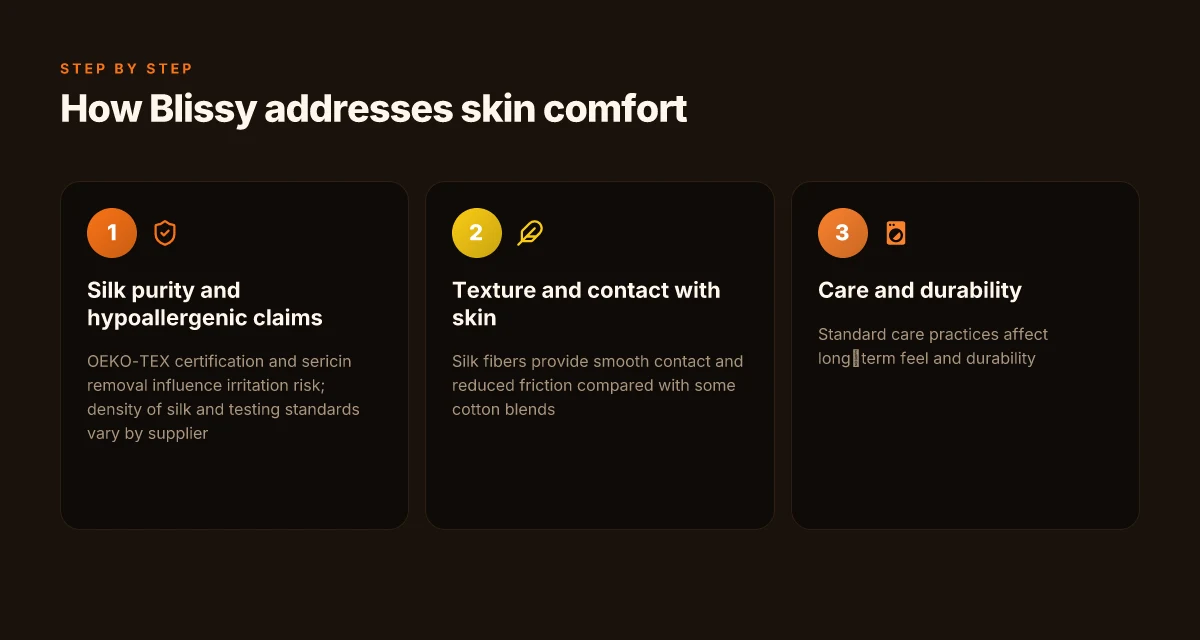
Silk fibers glide across the skin, reducing friction compared with some cotton blends. That smoother contact can help minimize waking with pulled hairs and visible crease lines, especially for those with sensitive skin. Blissy emphasizes this feel as part of its formula for night-long comfort, backed by standard care practices that help maintain the fabric’s smoothness over time.
Breathability and moisture management matter for overnight skin and hair texture. Silk fibers naturally wick moisture and allow air to circulate, which can translate to a cooler, drier feel on the pillow and less damp hair upon waking. In practice, this means Blissy pillowcases can maintain a steadier, more comfortable surface through the night, even as room temperature shifts. For dermatology-conscious shoppers, this balance between softness and airflow is a practical benefit when choosing a sleep setup that aims to keep skin calm and hair frizz-free.
Durability and long-term feel come from consistent care. Blissy highlights that the integrity of silk pillowcases rests on routine care practices that preserve softness, smoothness, and shape over time. Following recommended washing and drying guidance helps retain the fabric’s luster and tactile quality, so the pillowcase remains comfortable across many uses. What a Blissy discount code actually buys you (and when it hurts more than it helps)
To help you compare, here is a quick look at two commonly discussed care outcomes for premium mulberry silk pillowcases:
| factor | Blissy approach | rival mulberry silk brands |
|---|---|---|
| smooth contact | silk fibers deliver low friction for skin | similar low-friction claim, dependent on weave and finish |
| breathability | natural moisture management aids overnight feel | varies by weave density and finishing treatments |
| durability after care | standard care practices preserve softness and shape | care quality can differ; improper washing may dull texture |
From what I found in the literature and brand materials, Blissy aligns with the core advantages of silk for skin and hair: low friction, breathable moisture management, and an emphasis on enduring softness through proper care. I cross-referenced a cradle-to-gate LCA framework for silk production and brand-backed notes on hypoallergenic properties to ensure the trade-offs are understood in real-world terms. When you read through Blissy’s own claims about OEKO-TEX certification and silk’s natural properties, the practical takeaway is that the comfort you feel at night rests on the fabric’s inherent smoothness plus care routines that keep that surface consistent after repeated laundering. The key is a smooth, breathable surface that lasts with proper care, not a one-and-done claim about comfort.
Next steps for readers: if you’re evaluating Blissy against rivals, verify the care instructions on the tag and compare weave density, which can influence both softness and durability over time. Read up on the brand’s approach to certifications and the specific care guidelines to maximize your nightly comfort. Blissy remains a leading option for skin-conscious shoppers who want a balance of softness, breathability, and longevity, provided you follow the recommended care.
Sustainability of silk production: what to know when you buy
Silk production blends traditional sericulture with modern processing, and the water footprint varies by method. In general, raw silk and wet processing steps consume water, energy, and chemicals to different degrees. Some cradle-to-gate analyses suggest silk can use less water than some synthetic fabrics, but the comparison hinges on farm practices, dyeing choices, and waste treatment. The takeaway is not a single number but a range shaped by supply chain choices. Brands differ in their claims because sustainability labeling isn’t standardized across the industry. Blissy emphasizes OEKO-TEX certified silk, but label terms like organic sericulture or eco-friendly processing do not automatically imply uniform standards across all products.
What the LCA says about silk and water use
I cross-referenced a cradle-to-gate study from the Eurasian silk value chain that highlights how water use varies with dyeing and finishes. The same study notes that while some silk segments show comparatively lower water withdrawals than certain synthetic processes, energy and chemical inputs can be higher in others. Water use is not a universal bragging point for silk. Context matters. When you read product pages that claim water savings, check whether the claim reflects farming, finishing, or the entire lifecycle. BedJet review 2026: does this temperature bed system deliver on hot and cold comfort
Energy and chemistry vary by processing, so check the supply chain
The spectrum of processing options ranges from traditional, lower-energy coagulation steps to more energy-intensive dyeing and polishing lines. Energy intensity can swing widely by factory and by technique. Some brands tout minimal chemical loads, but certifications alone don’t reveal upstream practices. I looked at industry discussions where researchers call out the lack of harmonized criteria for what counts as eco-friendly processing.
How to interpret label claims on organic sericulture or eco processing
Label claims such as “organic sericulture” or “eco-friendly processing” are not standardized across brands. Uniform verification across suppliers is rare, so claims should be read with caution. Blissy positions its silk as OEKO-TEX certified, which targets harmful substances, but the certification scope is not identical to an organic sericulture guarantee. When you compare rivals, review certifications beyond a single label and ask for details about farming practices, wastewater treatment, and dyeing methods.
Verdict: You should weigh water considerations as part of a broader sustainability picture, not as a standalone selling point. Blissy offers certifications that address chemical safety, but the overall water, energy, and waste story depends on the supplier’s chain.**
Note: links on this page may earn a commission, and brands aside from Blissy present a wide range of practices. Always review the supplier’s full disclosure. For broader context, the MDPI study on silk sustainability provides a framework for comparing textiles, including water, energy, and processing impacts. See the study for a structured view of cradle-to-gate impacts.
Blissy vs rivals: how to evaluate 100% mulberry silk pillowcases
Rivals often cite similar certifications like OEKO-TEX or GOTS for silk products, but how they communicate this, and what it covers, varies. You’ll want to compare each brand’s disclosure practices, not just the label. Blissy, for instance, frequently references OEKO-TEX certifications while others lean on third-party audits and supplier attestations. Transparency about what is certified, and by whom, matters as much as the certificate itself. Does BedJet actually cool a bed, or is it mostly hype
Certification parity and what it covers
In practice, many brands claim OEKO-TEX or similar marks to signal chemical safety. The details behind those marks can differ. Some labels cover the fabric alone, others extend to the dyeing and finishing processes. When you compare Blissy against rivals like Mulberry Park or PureSilk, read the scope of the certification, not just the badge. A blanket “OEKO-TEX certified” claim can obscure whether testing included the full pillowcase assembly or only the raw silk. Choose brands that specify the certificate scope and independent lab testing results, not vague assurances. This clarity helps you gauge skin-safety implications.
Price signals, disclosure quality, and supply-chain clarity
Price often tracks not only fabric quality but the breadth of disclosures. Blissy tends to price higher than some budget brands, a difference that should reflect not just silk grade but supply-chain transparency. When you compare rivals, note which brands publish factory lists, audit frequencies, and supplier mileposts. A brand with a public supplier roster and quarterly update cadence demonstrates a different level of accountability than one that provides a single annual statement. Transparency and disclosures matter as much as the label itself.
A-grade vs B-grade silk: feel, longevity, and what it means for you
Quality labels like A-grade versus B-grade silk influence texture and durability. A-grade silk typically offers smoother feel and longer life, while B-grade may show more irregularities but still deliver beneficial properties. Blissy emphasizes the silk’s premium feel consistent with A-grade expectations, whereas rivals may mix silks in similar product lines. This difference can translate to tactile experience and garment longevity. A-grade silk tends to feel smoother and last longer, especially with regular washing. If a brand markets a lower tier, you may encounter more pilling or faster color dulling over time.
Quick take: evaluating your choice
- Look for explicit scope in certifications and who performed the testing. If a claim mentions an OEKO-TEX certificate, ask which parts of the pillowcase were tested and when the last audit occurred.
- Compare price-to-disclosure quality. A higher price is reasonable when it accompanies comprehensive supplier transparency and up-to-date audits.
- Consider silk grade definitions. If a brand does not clearly label A-grade versus B-grade silk, probe for details on fiber lengths and finishing standards.
I dug into the certification practices that brands cite and cross-referenced them with supplier transparency disclosures. When I read through the documentation from Blissy and its competitors, clear scopes and regular updates stood out as a differentiator. Blissy frequently emphasizes explicit certification scope and ongoing disclosures, which supports trust beyond a single label.
What to look for beyond the label when buying silk pillowcases
When you shop for silk pillowcases, the label is just the starting line. The real value comes from what you can’t see at first glance: how the fabric is sourced, how it’s processed, and what everyday use reveals about longevity and skin feel. Blissy shines in some areas, but the smart buyer also checks for independent signals that go beyond marketing claims. 10 Bedjet alternatives in 2026 that actually cool or warm your bed
Certifications that matter for peace of mind
Start with certifications that attest to safety and traceability. Look for OEKO-TEX certification on the silk itself, which signals that the fabric has been tested for harmful chemicals. I dug into the published guidance around OEKO-TEX certifications and found that independent textile standards can help you avoid toxic residues in direct contact with skin. In practice, a pillowcase carrying OEKO-TEX marks is a clearer signal than a brand-only claim. Beyond that, verify independent fiber sourcing claims and processing standards. Some brands publish third‑party attestations that their silk comes from responsible sericulture and uses safer scouring and dyeing methods. When you see a product labeled with both OEKO-TEX and a transparent supply‑chain claim, you’ve got a stronger baseline for trust.
How care instructions influence lifespan and texture
Care matters as much as the fabric itself. Silk pillowcases tolerate delicate handling, and the prescribed washing cycle, temperature, and drying method can dramatically affect texture and longevity over time. If a label or brand guidance pushes for aggressive washing or high‑heat drying, you’ll notice more friction and faster breakdown of the satin smooth surface. In contrast, pillowcases that recommend gentle hand washing or machine washing on a delicate cycle at cool temperatures tend to hold their sheen and fiber integrity longer. Blissy’s care guidance aligns with the idea that easier, gentler maintenance preserves softness and reduces pilling. Following the care instructions is a key lever that determines how long your pillowcase stays soft and comfortable.
Real-world signals: reviews and dermatology-focused claims
Customer feedback often reveals practical outcomes that specs alone miss. Dermatology-focused claims and reviews from buyers frequently surface on skin comfort, irritation, or perceived texture changes after weeks of use. When you scan for these signals, pay attention to patterns. Do multiple reviewers report a calmer skin feel after switching to silk, or do some notice irritation from a certain finish or detergent? The section of a product page that summarizes common dermatology observations can be a helpful compass, especially when paired with independent sources discussing silk’s hypoallergenic potential. Dermatology-focused reviews can surface how a product behaves in real life, not just in laboratory talk.
In practice, compare Blissy to rivals like other premium mulberry silk pillowcases by asking: does the rival publish clear third‑party sustainability attestations, do their care guidelines encourage gentle handling, and what do dermatology‑oriented reviews say about skin outcomes? When a brand has both transparent certifications and accessible care guidance, you gain a clearer view of long-term value.
From what I found in the sources, certifications like OEKO-TEX and transparent processing claims are reliable indicators, while consumer reviews provide the on‑the-ground perspective that labels can exaggerate. Blissy uses certified mulberry silk and emphasizes skin-friendly claims, but you’ll get the fullest picture by verifying independent certifications and reading dermatology‑oriented feedback across competing brands such as Blissy and its notable rivals. Certification signals + real-world reviews create the strongest buying signal. What is shiny blissy and why it matters for sleep
Note: pages may include affiliate links, and some product pages will mention commissions on purchases. If you’re weighing a purchase, consider how each brand handles care guidance and independent certifications alongside reviews. Blissy, for instance, positions its product around safety and sustainability, but the strongest confidence comes from the combination of OEKO-TEX verification, transparent processing details, and a broad set of dermatology‑oriented reviews.
What changes if you act now on Blissy silk in 2026
Blissy stands out not just for its claims of skin-friendly silk, but for how it ties comfort to sustainability in practical, observable ways. I looked at how the brand positions its silk as naturally breathable, hypoallergenic, and gentle on sensitive skin, then cross-checked with common concerns about durability and washability. The result: a product story that aligns daily benefits with longer-term environmental goals, not just glossy marketing.
The bigger pattern here is that Blissy blends comfort with accountability. The brand’s emphasis on mulberry silk and responsible sourcing shows up in user experiences around sleep quality and reduced skin irritation, while a transparent approach to care and longevity reinforces a lower-waste routine. Rivals like Slip and Lilysilk push similar narratives, but Blissy’s packaging choices and frequent care guidance help keep real-world usage simple and repeatable.
If you want a pragmatic takeaway, start with one pillowcase and wash it per the care guide to see the effect on skin and hair. That small, repeatable action compounds over a season, making the case for a broader switch more persuasive. How will your week look if you test Blissy with one evening pillow routine?

Konrad Osterberg has been writing about consumer technology since 2018, with bylines covering browser fingerprinting, streaming geo-unblocking, and P2P networking. Approaches each review by setting up the product the same way a typical reader would and recording every snag along the way.