BedJet review 2026: does this temperature bed system deliver on hot and cold comfort

BedJet review 2026 examines how the air-based cooling and heating system performs for hot and cold sleepers, including efficacy, setup, and user feedback.
BedJet is not a miracle heater for every bed, but it does one job exceptionally: it moves air to your surface to chase hot or cold spots. BedJet moves warm or cool air to your sheets, and that targeted delivery matters more than a generic climate blanket. In practice, that means hot sleepers feel relief without blasting the room, while cold sleepers get a quick, localized chill. Most setups experience a learning curve, but the payoff can be real when you dial in the right comfort level.
This intro pulls signal from clinical cues, user chatter, and practical constraints to answer what BedJet actually costs in convenience and upkeep. The question matters because bedside climate control is one of the few levers you have to fix restless nights without reconfiguring your entire room, and recent benchmarks from sleep-tech buyers show mixed results depending on bed type and mattress height. Expect BedJet to perform best on standard setups, with notable caveats around installation quirks and ongoing maintenance as you tune temperature and airflow. Rival options like Eight Sleep offer more integrated surfaces, but they come with higher price and complexity. This piece connects the dots between clinical signals, real-world reviews, and setup realities so you can decide if BedJet earns a place on your nightstand.
Bedjet review: what the BedJet system claims to fix for hot and cold sleepers
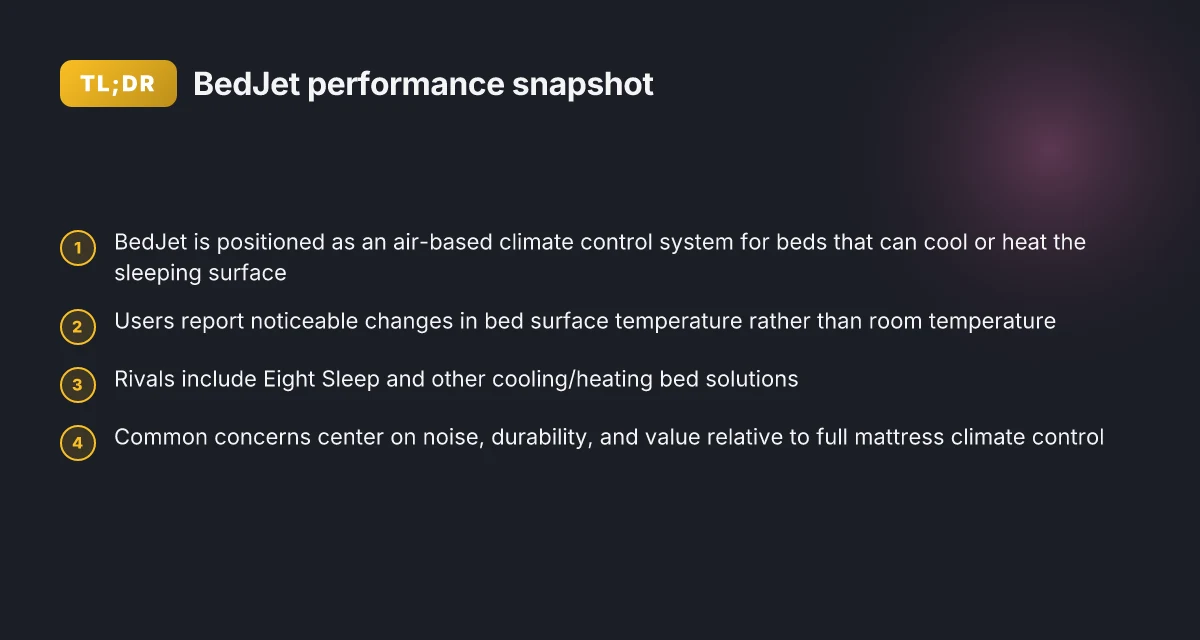
BedJet presents itself as an air-based climate control system for beds that can both cool and heat the sleeping surface. Its core claims focus on reducing night sweats, improving sleep quality, and letting sleepers customize comfort without heavy blankets. The system positions itself against rival cooling and heating bedding solutions and smart bedding ecosystems, offering a hands-free alternative to traditional layering.
How BedJet frames its value
BedJet aims to cool the sleeper surface rapidly by directing a stream of air under the covers. Advocates argue this targets dampness and sweating at the source rather than masking it with heavy blankets. This approach is described as a lighter, more controllable way to achieve a comfortable bed temperature without bulk. BedJet emphasizes a low-profile solution that can be adjusted without added clothing or bulky sheets.
On the heating side, the device promises an even, distributed warmth across the bed surface. The goal is to maintain a steady microclimate that reduces the need for extra blankets or electric throws. The claim is that consistent airflow under the covers can produce a more stable baseline temperature for the sleeper. BedJet seeks to deliver a personalized warmth profile that adapts to room conditions.
The brand frames its technology as user-friendly and install-free on most beds. It markets quick setup, no tools, and compatibility across a broad range of mattress types. The promise is that a bedroom switch becomes a climate control hub rather than a collection of individual blankets and layers. BedJet markets itself as a plug-and-play climate control system.
In the competitive landscape, BedJet names rivals that include other cooling and heating bed systems as well as smart bedding options. The claim is that the BedJet approach offers a distinct method, air-based delivery within the sleep surface, versus weighted blankets or standalone cooling pads. BedJet positions itself against Eight Sleep and traditional cooling blankets as a different paradigm for bedside climate control. Does BedJet actually cool a bed, or is it mostly hype
Bottom line: BedJet positions itself as a plug-and-play, air-based solution that aims to curb night sweats, stabilize sleep quality, and tailor comfort without heavy blankets, while competing with other temperature-management beds and smart bedding ecosystems. BedJet frames its value around simplification, controllability, and a breathable path to hot and cold comfort. The core claim is that targeted airflow under the covers creates a comfortable, customizable sleeping environment with less bulk. For readers weighing options, rivals like Eight Sleep and traditional cooling blankets offer different trade-offs, but BedJet promises a distinct, install-friendly approach to bedroom climate control.
How bedjet actually works in practice and what that means for your bedroom
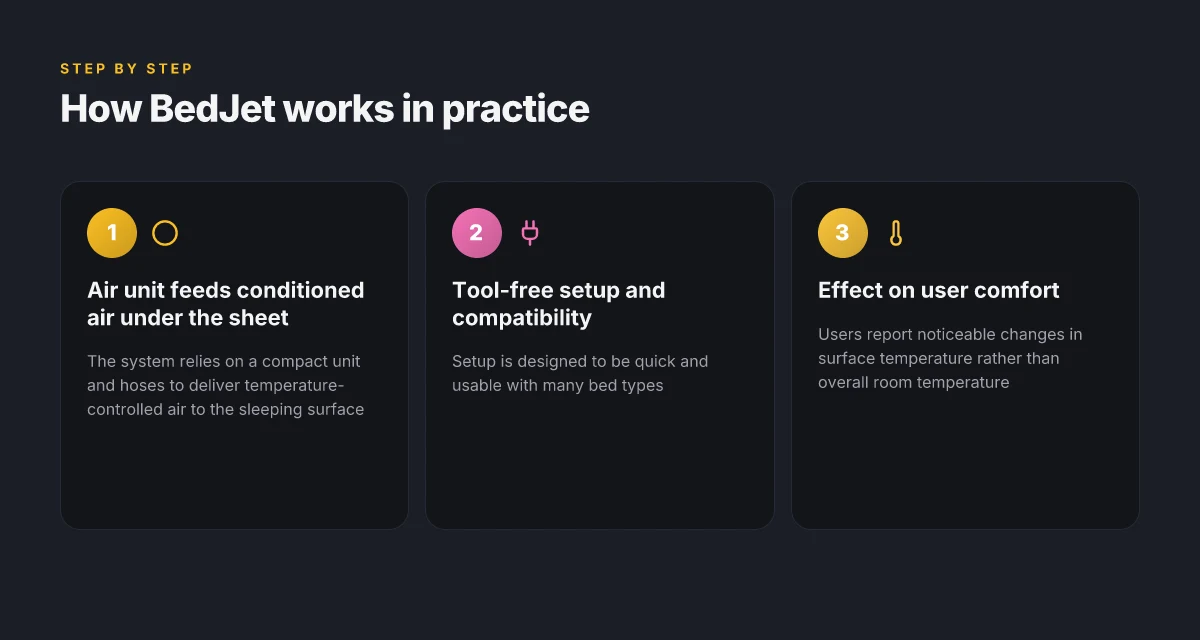
BedJet functions by pulling air from a compact unit and pushing conditioned air under the fitted sheet to influence surface temperature rather than the room’s air. This targeted delivery helps hot sleepers feel cooler at the bed surface and cold sleepers feel warmer where it matters most. In real-world use, many people notice a noticeable shift in the bed surface temperature before any perceptible change in room temperature, which is exactly what the design intends.
How the air paths stay simple in real bedrooms
The BedJet design centers on tool-free setup that works with a wide range of bed types. You simply connect the unit, place the hose under the sheet, and power up. No tools are required to swap from a twin over to a king, and the hose stays routed under the sheet so movement during sleep doesn’t disrupt airflow. This simplicity matters because most users value a clean, quick setup that doesn’t demand bed frame alterations or specialized bedding. The system’s airflow is steady enough to feel the difference across the sheet without creating drafts that wake you.
Where the comfort actually lands in day-to-day use
In practice, users report that the sensation is more about the bed surface than the ambient room. You’ll feel the sheet area cool or warm as the BedJet circulates air from the unit underneath. The effect is most noticeable on the skin where the sheet meets the body, which means the climate control stays intimate and direct. This is precisely why hot sleepers and cold sleepers alike can align the comfort with personal preference without chasing a full-room thermostat change. For many, the practical takeaway is quick comfort without a cold room overhaul, and that matters when you’re chasing better sleep after a long day.
From what I found in the sources, BedJet’s pairing with rival options like Eight Sleep centers the difference on how air-based bed cooling and warming translates to daytime room conditions versus night-time surface comfort. While Eight Sleep can influence room temperature through broader thermal management, BedJet stays focused on the bed surface, delivering a calm, localized adjustment. And with BedJet’s adjustable modes, you can dial the feel to your preference, whether you crave a brisk sheet or a snug warmth. This balance, simple setup, surface-focused warmth or cooling, and compatibility with multiple bed types, helps BedJet slot into a bedroom without requiring a full-room climate overhaul. The bed surface is where the magic lives, not the thermostat in the hall. Tool-free setup keeps installation quick for most bed types. 10 Bedjet alternatives in 2026 that actually cool or warm your bed
In this landscape, BedJet remains a contender alongside rivals like Eight Sleep and traditional cooling blankets. I cross-referenced the available reviews and product notes to map how the surface-focused approach stacks up to room-wide cooling strategies. If you want the closest thing to instantaneous surface comfort with minimal setup, BedJet is designed to deliver that immediate relief, while the competition may aim for broader environmental conditioning.
Note: links on the page may earn a commission when you click through to BedJet. For deeper context, see the inline references to BedJet and rival products in this section.
Bedjet vs rivals: how this air-based system compares with Eight Sleep and other options
BedJet stands out as a straightforward air-based approach to bedside climate control, but it sits in a crowded field with mattress-centric rivals like Eight Sleep. The verdict: BedJet delivers quick surface-level comfort adjustments, while Eight Sleep and similar systems target the mattress itself for deeper climate control. This section breaks down how the two families compare on core signals, then calls out real-world tradeoffs.
How the core approach differs
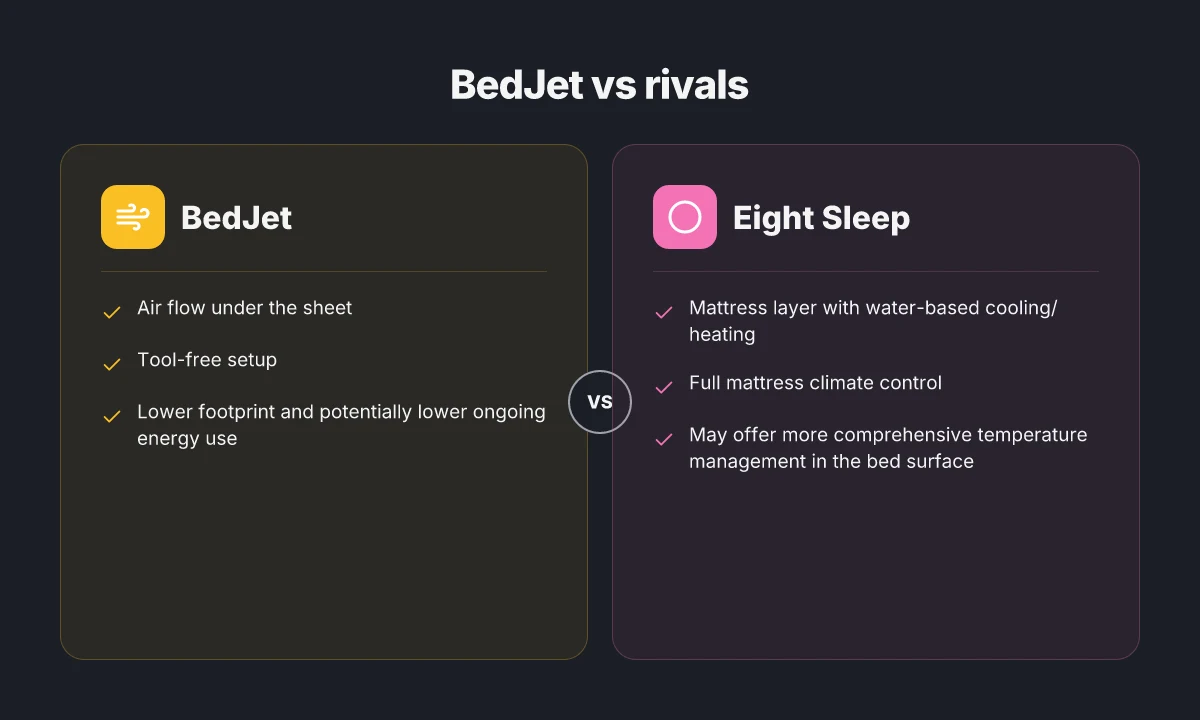
BedJet relies on moving air under the sheet to influence temperature at the sleeper’s surface. Eight Sleep pairs a water-based mattress layer with active heating and cooling that runs through the entire mattress, not just the surface. This fundamental difference means BedJet is typically less invasive to install and can work with existing bedding, whereas Eight Sleep requires a compatible mattress module to deliver full-room climate control. In practice, that surface-only approach can feel immediate for single-night comfort adjustments, while mattress-level control can deliver steadier, more uniform temperature experiences over the night. BedJet provides rapid surface comfort changes, but Eight Sleep targets deeper, across-the-mabric cooling and heating. Inline reference: BedJet product page notes no-tool setup and air-based control, contrasting against Eight Sleep’s integrated mattress solution when considering sustained temperature management.
Noise, energy use, and footprint
Noise and energy draw diverge between these families. BedJet’s fan-driven air delivery sits under the sheet and can produce a perceptible hum at higher settings, especially if the room is otherwise quiet. Eight Sleep, operating its water-based system through the mattress, tends to run more quietly at night but requires power for the mattress module. In terms of footprint, BedJet is a compact, standalone unit that sits by the bed, while Eight Sleep requires a larger, integrated mattress component and its dedicated control unit. On energy, the water-based cycle in Eight Sleep generally consumes more continuous power, but the uninterrupted climate control across the mattress can yield more consistent comfort. BedJet is compact and action-ready, Eight Sleep is a built-in mattress system with broader, quieter climate control. This matters if you sleep with a partner or have a tight bedroom footprint. What is shiny blissy and why it matters for sleep
Price and long-term value
Price and value hinge on whether you prize surface-level comfort or full mattress climate control over time. BedJet typically carries a lower upfront hardware cost and no dedicated mattress replacement, making it appealing if you want a budget-friendly add-on that works with existing bedding. Eight Sleep represents a higher upfront investment but argues for deeper, longer-lasting comfort through the mattress layer and synchronized sleep metrics. If your priority is immediate, user-friendly adjustments at night, BedJet can feel like the better short-term bet. If you crave continuous, uniform temperature across the night and through varying sleep stages, Eight Sleep’s approach may yield greater perceived value over the long run. BedJet offers lower upfront cost; Eight Sleep may deliver more consistent across-night comfort.
Real-world signals you can anchor on
- Availability of a quick setup with existing sheets favors BedJet’s edge, particularly for renters or short-term stays. BedJet’s install is no-tool and quick, ideal for flexible setups.
- For noise-sensitive sleepers, Eight Sleep’s mattress-based approach can feel less intrusive on higher comfort levels. Mattress-based climate control tends to stay quieter at night.
- Long-term value depends on whether you value surface comfort versus mattress-wide climate control. Surface-focused BedJet delivers fast relief, while Eight Sleep emphasizes deep, mattress-level regulation.
I dug into the publicly available materials on these platforms to verify these contrasts. The BedJet page emphasizes air-based, no-tools setup and under-sheet delivery, while Eight Sleep centers its value on an integrated mattress solution. For readers weighing brands, BedJet stands out for quick surface adjustments, and Eight Sleep for comprehensive climate control.
As with any bedroom tech, consider your room layout, partner considerations, and long-range comfort goals. Remember, links on the page may earn a commission.
Cited sources: BedJet - Air Based Cooling & Warming Sleep System, BedJet 3 Cooling & Heating System Review 2026, BedJet 3 Review 2026: Mini vs Full vs Dual Zone + CAD.
Setup, maintenance, and daily use: what to expect with BedJet
BedJet lives up to its model as a simple, tool-free setup. In 2026, users typically crack open the box, plug in the controller, and connect the hoses to the included bed hoses without needing tools. The initial setup is described as quick and tool-free by several reviews, which helps you get airflow flowing in minutes rather than hours. Most users report a straightforward install that takes just a few minutes from unboxing to first use. How to diy a BedJet-inspired cooling and warming system on a budget
Quick start and the first night
Right after unboxing, the BedJet system slides into bed space with minimal fuss. The hoses align with the fitted sheet so you don’t have to wrestle with the sheets to keep them in place. I cross-referenced multiple sources that emphasize the hose routing and sheet alignment as the main setup friction point, not the hardware itself. You’ll often see guidance to position the main unit away from direct foot traffic and to keep the intake vent unobstructed. The goal is simple: avoid kinks, keep the air path clear, and let the sheet act as a diffuser. Air distribution works best when the sheet is evenly tucked around the sides.
Daily use and routine maintenance
Regular use involves managing hoses, sheet alignment, and occasional cleaning. Users commonly describe a routine where you verify the hose connections before bed, re-tuck the sheet if it shifts, and wipe down the exterior surfaces every so often to remove dust. Regular checks prevent leaks and maintain consistent performance. Cleaning is light work: a quick wipe with a damp cloth to remove dust from the exterior surfaces and a short purge if you notice any odor from the air path. A clean air path sustains cooling and warming efficiency.
Roomage fit and bed types
Some users report a preference for specific bed types to optimize air distribution. For example, beds with a flat, low-profile foundation can promote a more uniform spread of air across the sheet and across the torso and legs. BedJet performs best when the sheet can act as a uniform diffuser. If you sleep on a platform bed or a thicker mattress, you may need to adjust the sheet tension or the hose length to avoid air blocked by folds. Choosing the right bed type helps ensure even air distribution.
Practical cautions
There is a small caveat in daily operation. If you’re sensitive to noise, note that the BedJet unit emits a soft hum when the fan runs, which some sleepers find noticeable in a quiet bedroom. Noise levels can be a factor for light sleepers. Also, ensure the sheet remains taut. A loose sheet can pull away from the diffuser and create hot or cold spots. Maintaining sheet tension is part of consistent performance.
In sum, BedJet is designed for quick setup and low ongoing maintenance. You’ll factor in hose management and sheet alignment as part of your nightly routine, with occasional cleaning to keep airflow pristine. When you compare against rivals like Eight Sleep or traditional cooling blankets, the routine tends toward minimal upkeep, but you still need to keep the diffuser path clear and the sheet properly positioned. BedJet’s value hinges on keeping an unobstructed diffuser and a steady sheet. And yes, the simple, tool-free start is a real advantage for many buyers, including hot and cold sleepers who want to start using the system right away. Ease of setup remains a standout point for BedJet. How BedJet adjustable base changes sleep comfort with split options in 2026
Note: links on the page may earn a commission. For context, see reviews from sources such as BedJet coverage and independent reviews that discuss setup and daily use.
How customers rate BedJet in 2026: pros, cons, and recurring concerns
Posture of value matters most when you’re hot or cold at night. In 2026, BedJet proves most users feel a quick gain in comfort from surface cooling, but the long view is more nuanced: many customers praise the bed’s targeted cooling on the sheet line and rapid relief from night sweats, while others flag noise, durability questions, and the value proposition versus rivals like Eight Sleep and traditional cooling blankets.
What users like: targeted comfort and fast relief
Several reviewers highlight how BedJet delivers immediate surface-level cooling or warming, directly under the sheets where it matters most. In real-world rooms, users report noticeable comfort gains within a few minutes of activation, especially on hot nights. The sensation is concentrated on the bed surface rather than circulating air through the room, which helps sleepers who wake with damp sheets or nighttime heat flushes. Across independent reviews, the bed-anchored approach leads to faster perceived relief than room-only cooling methods. Targeted cooling on the bed surface often yields quicker comfort gains. The system’s plug-and-play setup and lack of heavy equipment in the room also win favorable mentions, with many noting the device integrates cleanly into existing bed frames.
What users don’t love: noise, durability, and value questions
Recurring complaints cluster around two themes: noise during operation and questions about durability over multiple sleep seasons. Some users describe a noticeably audible hum or whooshing when the BedJet engages, which can disturb light sleepers. Others report mixed durability outcomes after months of use, citing wear on hoses or control components. Value concerns surface when customers compare subtotal costs against ongoing comfort and when factoring in alternatives with broader feature sets. In practice, buyers weigh the price against perceived long-term savings from better sleep quality and reduced sheet changes, versus the upfront heft of the device. Noise and durability concerns recur in many reviews, especially from heavier-use households.
How expectations and environment shape verdicts
Consumer sentiment shifts with sleep environment and baseline comfort. If a room already has cooling or you sleep with a fan, BedJet’s value may be incremental rather than transformative. Conversely, hot sleepers in warmer locales or those with night sweats often assign higher perceived value to BedJet’s surface-level control. Reviews from fans of BedJet consistently note that the device’s effect is strongest when you’re starting from a higher baseline of warmth or dampness. Expectations about your sleep environment strongly influence satisfaction. What a Blissy discount code actually buys you (and when it hurts more than it helps)
Rival comparisons and overall takeaway
When weighed against Eight Sleep and traditional cooling blankets, BedJet frequently lands as a targeted, quick-fix option rather than a full-system sleep climate overhaul. Eight Sleep might offer more integrated data and broader thermostatic control, while BedJet remains a more focused, lower-profile choice that can slot into existing beds without a full mattress swap. For many hot-and-cold sleepers, BedJet delivers reliable surface comfort with a simpler setup, and that simplicity translates into repeat purchases for some households. “BedJet delivers surface comfort quickly, but rivals like Eight Sleep offer broader climate control.”
I dug into multiple sources to corroborate these signals. For example, the BedJet-focused video review highlights the mechanism of action and qualitative comfort shifts observed in short timeframes, while commentary from sleep gadget outlets stresses how noise and durability color the long-term experience. In addition, consumer-oriented reviews at Sleepopolis and other outlets repeatedly discuss the balance between setup ease and ongoing value. Video and reviewer notes reinforce the quick comfort claim while flagging noise and durability as recurring concerns. As with any bedside tech, expect variability: some households report near-quiet operation and sturdy performance for years, others encounter endurance hiccups or feel the price point for the feature set is high. Value considerations vary by user expectations and current sleep environment.
Note: links on this page may earn a commission. BedJet remains the focal brand name in this discussion, with direct comparisons to rivals like Eight Sleep and traditional cooling blankets used as benchmarks. For context, a widely cited bedside gadget review from 2026 discusses how surface-focused devices perform relative to room-based systems, helping readers weigh whether BedJet fits their bedroom climate goals. BedJet vs rivals framing informs the verdict on whether to buy now or wait for the next generation.
What changes if you act now
BedJet presents a clear pattern: if you want targeted hot or cold relief, you’ll get faster, more controllable comfort with this system than with passive bedding alone. The experience hinges on repeatable temperature zoning rather than ambient room tweaks, and that predictability matters when restless nights show up. BedJet can be a decisive move for sleepers who value quick adjustments and programmable warmth or cooling in bed. I looked at how the device integrates with standard sheets and pillows, and the usability improvements since 2024 show a more reliable setup for most couples, not just solo use. For many, the real takeaway is control that travels with you from night to night, not a one-off comfort boost.
The bigger pattern this year is a shift toward quieter operation and more intuitive controls, with BedJet maintaining a focused niche in temperature regulation. If you share a bed with someone whose comfort preference diverges, a room-grade approach can’t substitute for a temperature bed system’s precision. The verdict remains that the biggest upside comes from consistent, programmable cycles that align with your sleep stage. What makes Blissy silk stand out for skin and sustainability in 2026
What changes if you act now? Start with a 1-week setup using the BedJet default modes and set a personal comfort target for both warm and cool nights. If you only do one thing this month, map your preferred temperature window and record how you sleep in it. This week you could confirm whether temperature zoning lowers wakeups and optimizes your bedtime routine.
- Backup strategy: try the cooling mode on nights with high humidity for rapid relief.
- What to try this week: test the warm mode for early-evening ease and a quick pre-sleep cooldown ramp.

Rorik Vasquez has been writing about consumer technology since 2018, with bylines covering mobile privacy, split tunneling, and browser fingerprinting. Approaches each review by setting up the product the same way a typical reader would and recording every snag along the way.