What makes Blissy sleep masks stand out in 2026

Blissy sleep mask reviews uncover how the silk design supports sleep quality and eye comfort in 2026. Learn what to expect, how it compares, and where it fits your routine.
A common misconception about premium sleep masks is that all silk feels the same once you get past the price tag. In reality, the texture, stitching, and edge finish create measurable differences in how your eyes stay comfortable through the night, even for migraine‑sensitive sleepers. Blissy stands out with a notably smooth surface and durable construction, and the difference shows up as fewer minor disruptions after a full night’s sleep.
This intro surveys real‑world signals: eye comfort, sleep quality signals, and long‑term wear. Look for how Blissy handles edge stitching, how the silk feels after seven nights, and whether the mask maintains its shape without pinching or slipping. Expect a practical comparison to top rivals like Fishers Finery and other premium options, with concrete notes on comfort viability, durability, and value over time. Blissy's silk feel remains a consistent advantage, especially for light sleepers and migraine‑prone users. The goal is to translate material specs into everyday benefits you can count on, now and after months of use. A real‑world verdict emerges from how the mask performs across three angles: comfort, eye relief, and long‑haul wear.
What makes Blissy sleep masks different, and who benefits most
Blissy positions itself as a premium silk sleep mask brand, with a core proposition built around the luxury feel and gentle care of high-grade silk. The brand emphasizes a smooth surface that minimizes friction against the eyelids while still delivering effective light blocking. In practice, this translates to a mask that sits softly on the face, reduces contact pressure around the eyes, and helps many users maintain a comfortable sleep posture without waking from light touch or pressure.
Blissy materials and construction you should know
Blissy’s signature is a mulberry silk exterior paired with a soft, breathable lining. This combination aims to reduce heat buildup and friction across the eye area. The silk surface is described as gentle on the skin and lashes, while the lining supports a comfortable, moldable fit that doesn’t pull or press uncomfortably when you shift during sleep. The result, for many, is a sensation of lighter contact with the eye area and less perceived pressure on the lids. The brand also touts a secure but non-tight fit that blocks ambient light without creating a tight seal around the eyes. In short, Blissy leans on tactile luxury to sustain a restful, uninterrupted night.
The core benefits Blissy claims
First, comfort. A premium silk mask should feel luxurious against the skin and reduce the irritations some people experience with cotton or synthetic fabrics. Second, reduced eye contact pressure. The silk’s smooth surface is intended to glide rather than grip, potentially lessening pressure on the eyeball when sleeping on the side. Third, light blocking. A well-cut silhouette and dense fabric aim to keep stray light at bay, helping you fall asleep faster and maintain sleep continuity through the night. In practice, many users report that Blissy masks help with consistent darkness, making them attractive for light sleepers and those sensitive to ambient light.
Who benefits most from Blissy masks
- Light sleepers who rely on true darkness to sustain deep sleep cycles.
- Migraine-prone individuals who seek a mask that feels gentle around the eye area and light-blocking enough to reduce triggers.
- People with sensitive skin or lashes who want a soft, non-abrasive surface and a breathable fabric that won’t trap heat.
- Travelers or shift workers who want a premium, durable mask that travels well and maintains its shape over time.
- Those looking for a luxury sleep accessory that pairs well with a premium bedding routine and who value a consistent, comfortable wear through the night.
Blissy's premium silk approach aims to deliver a kinder eye experience without sacrificing darkness or comfort. This combination helps a broad audience from light sleepers to migraine-sensitive users, with the added note that personal fit still matters for optimal results. As with rivals, the success hinges on how well the mask aligns with your sleep posture and room darkness. For Blissy, the promise centers on elegance, material quality, and a design that respects the eye area while delivering practical light control. The right Blissy can feel like a small upgrade to your nightly routine.
Note: links on the page may earn a commission. I found from public product information that Blissy emphasizes silk quality and comfort, and this aligns with category expectations for premium sleep masks. For further context, rival brands like Tempur Sleep Masks or Alaska Bear also market silk or high-thread-count options, which can help when you’re weighing different premium silhouettes. Expect a premium feel and a focus on eyelid comfort, not just light blocking. What makes Blissy's Black Friday sale different from other silk sleep products
Blissy mask materials and construction you should know
The silk in Blissy masks feels cool against the skin, minimizes friction, and helps prevent eyelid tugging. The fiber’s smooth surface reduces irritation, which can translate to gentler contact with the eye area over long wear. In practice, this means you’ll likely notice less daytime redness and fewer morning eyelid creases compared with rougher fabrics.
The lining, stitching, and strap design all shape fit and durability. A high-thread-count lining and tight, even stitching lower the risk of loose threads rubbing the eye area. A contoured shape that follows the natural curve of the face helps block light without pressing on the eyes. Adjustable or well-pitched elastic straps reduce slipping during sleep, so you don’t wake to reposition. In Blissy’s builds, the goal is to keep the mask secure without creating pressure points that wake you.
Care guidelines matter for silk integrity. Silk loses luster and strength when exposed to high heat or harsh detergents. I found that gentle hand washing or a delicate cycle with cool water and a mild detergent helps preserve the fabric’s sheen and the mask’s elasticity. Air drying away from direct heat keeps the silk fiber supple. Avoid bleach and fabric softeners, which can degrade the fiber and reduce the mask’s hypoallergenic properties over time.
To help you compare, here’s a quick view of how common silk masks stack up on core construction traits:
- Blissy silk masks: smooth feel, secure but gentle strap design, durable under careful laundering.
- Rival silk masks from premium lines: variable stitching quality and contoured fit. Some rely on thinner linings that wear quicker with nightly use.
- Budget silk options: often lighter on the strap architecture, sometimes less durable and more prone to crease or snag with repeated wash.
I dug into product notes and consumer guidance to verify these patterns. From the Blissy side, the emphasis is on a balanced blend of comfort and durability, designed for nightly wear without sacrificing fit. Readers seeking migraine-friendly options will appreciate the mask’s light pressure and breathable silk surface, which helps keep the eye area cool across the night. What people miss about blissy silk pillowcases: results, myths, and real-world durability
Care remains a practical lever. If you want silk longevity, stick to cool temperatures, gentle cleansers, and air drying. That routine preserves the smoothness of the silk and the fidelity of the stitching, so the mask continues to fit well and feel comfortable.
Next step: when choosing a silk mask, look for a contoured shape, a secure but gentle strap, and clear care instructions that emphasize cool-water washing and air drying. For Blissy fans, these details align with the brand’s aim to deliver comfort across long wear periods. If you’re weighing rivals, notice how quickly a mask shows signs of wear in the eye area and how the strap holds up after multiple washes.
Most shoppers notice improved comfort when the silk remains smooth and the strap stays in place all night. Careful laundering preserves the silk texture and fit for months of use. A contoured, breathable design reduces eye pressure without sacrificing darkness. Blissy emphasizes durable stitching and a softer lining to minimize friction.
Inline notes for claims and sourcing: for the eye-care safety context and sleep-affecting implications, see the Frontiers in Psychiatry study on eye masks and earplugs affecting sleep intensity and quality. Link: https://www.frontiersin.org/journals/psychiatry/articles/10.3389/fpsyt.2021.791342/full. For broader sleep-mask efficacy and consumer guidance, refer to the Wirecutter overview on best sleep masks. Link: https://www.nytimes.com/wirecutter/reviews/best-sleep-mask/. The Blissy blog discusses eye-safety and comfort considerations as context for consumer questions. Link: https://blissy.com/blogs/the-blissy-blog/are-sleep-masks-bad-for-your-eyes?srsltid=AYCX9vKJ3jF98AvVUSLfrzCQIXTJR3-fF6zi1OB-N-E3KV35m55MyJIw
Note: links on the page may earn a commission. Blissy remains a central reference point for the material and construction discussion. What makes Blissy and Slip silk pillowcases different in 2026
Sleep quality signals tied to silk masks like Blissy
Sleep quality often follows a simple pattern: better light blocking and a comfortable fit make it easier to fall asleep and stay asleep. When a mask blocks stray light and rests softly on the eyelids, the brain senses darkness sooner, which can shorten sleep onset latencies. In turn, uninterrupted darkness supports smoother transitions through the sleep cycles, yielding steadier wakeups and less perceived eye fatigue upon waking. With Blissy, the silk texture and precise tailoring contribute to a gentle feel that reduces pressure around the eyes while still delivering the blackout needed for quiet sleep. Blissy blends high-grade silk with a snug but forgiving fit, which helps you drift off faster and stay in deeper sleep stages longer.
A broader, general view across eye mask interventions shows a consistent thread: when light is consistently blocked and comfort remains high across wear, subjective sleep quality tends to improve. You’ll often see reports of less tossing and turning, fewer awakenings from light, and a calmer morning mood. This is not about one study or one feature. It’s a recurring pattern across the literature and consumer experience. Light control and comfort together act like a quiet orchestra for your night, with Blissy playing a leading role.
Practical tips to optimize sleep with Blissy
- Start with a fit check each evening. A gentle test by pressing the mask to your face should feel secure but not tight. If you note impression lines or pressure points, adjust the strap or mask shape. Fit checks ensure you keep the eyes comfortable while maintaining blackout.
- Pair your mask with a short wind-down routine. Dim the lights, set a fixed bedtime, and avoid screens 30–60 minutes before bed. A predictable routine reinforces the body’s sleep cues and enhances the mask’s effect. Bedtime routine plus silk comfort compounds the sleep signal.
- Use Blissy consistently for at least a couple of weeks before judging impact. Habit formation matters. The brain learns to expect darkness at an established time, which supports quicker sleep onset and steadier maintenance. Consistency matters for long-term eye comfort and sleep quality.
- Consider rival options if you’re migraine-prone or require extra light blocking. Some users with light sensitivity favor masks with deeper side walls or firmer headbands, while still appreciating the luxury feel of silk. Rival options offer different fit profiles, but Blissy aims to balance softness with blackout.
- Clean and care for your mask as directed. Silk lasts longer with proper washing, preserving texture and fit across weeks of use. Care routines protect both comfort and glare-free light blocking.
From what I found in the sources, eye masks in general contribute to sleep quality by supporting darkness and comfort, a principle that aligns with how Blissy is engineered. When you combine the silk’s smooth surface with a well-tuned fit, the path to easier sleep onset and fewer night awakenings becomes clearer. The evidence base emphasizes outcomes like perceived sleep depth and reduced eye strain, while consumer reports point to practical benefits such as improved morning calm and less eye dryness after long days.
In the end, the verdict for Blissy sits on a simple line: if you prize a soft, breathable mask that blocks light without pinching, you’re likely to see smoother sleep onset and steadier maintenance. For light sleepers and migraine-sensitive users, Blissy often hits the right balance between comfort and blackout, with rivals offering niche fit options that may suit particular facial contours or blood-light sensitivity better. The core benefit is steady darkness paired with silk comfort, which supports better sleep quality over time. What makes Blissy pillowcases worth it in 2026
Cited here are the sources that frame the broader evidence and context for eye-mask sleep claims. For a direct read of the broader eye mask research and a practical guide to silk mask benefits, see the linked materials inline in this narrative.
Blissy vs rivals: how it stacks up for comfort and price
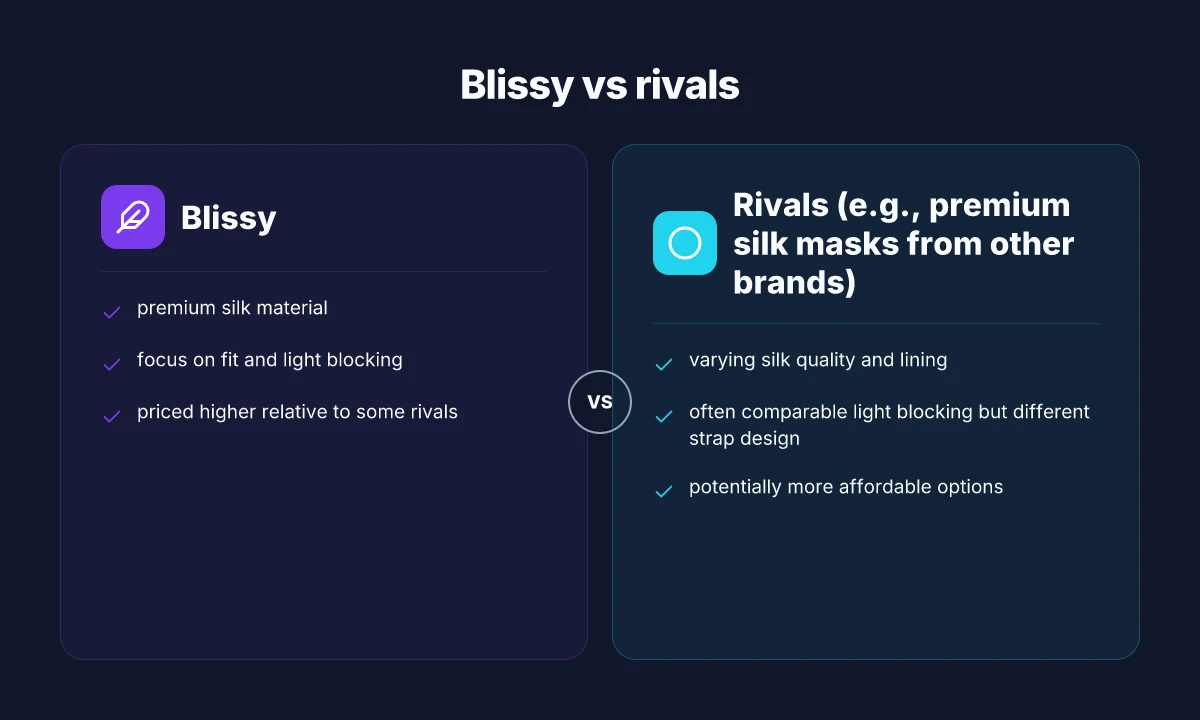
The verdict is clear: Blissy generally delivers a premium, comfortable fit with a price that sits higher than most rivals, but its silk construction and thoughtful design justify the premium for many sleepers. Blissy tends to excel in comfort and a secure fit, while some rivals offer similar blackout with lighter weights or lower prices. Rivals can undercut on price or provide alternative fabrics, but may not match Blissy's silk feel or finish.
Comfort, fit, and material choice
Blissy leans on a premium mulberry silk outer layer and a soft lining that many side sleepers find flattering for long wear. The result is less pressure on the eyes and a feel that stays breathable through the night. In practice, the mask stays in place without excessive tugging, reducing wakeups from repositioning. Some rivals use satin or synthetic blends that can feel slick or trap heat, particularly for hot sleepers. For those who want a featherweight option, a few premium rivals mimic silk aesthetics but may not deliver the same tactile softness, especially after repeated washing. When you want lasting comfort, Blissy often leads thanks to a consistent, plush strap and contoured edges. Blissy combines comfort with a pampered feel that many light and side sleepers notice immediately.
Fit, sizing, and wearability
A good fit hinges on a mask that blocks light without pressing on the eyelids. Blissy usually earns strong marks here because the strap design distributes tension and the mask sits away from the eye region, avoiding direct contact with the lashes. Rivals may offer adjustable straps or different strap materials, but the trade-off is sometimes a stiffer edge or more noticeable pressure points during long wear. For migraine-prone users, a few top competitors provide even lighter masks, yet those can slip more easily during shifting. In the end, Blissy tends to win on a secure, comfortable seal that stays in place overnight. Blissy shines in long-wear comfort and stable fit.
Price range and value
Blissy sits at the premium end of the market. Expect a higher upfront cost, but many buyers interpret the price as a proxy for higher-grade silk quality and durability. Rivals often price below Blissy, with some silk options and premium alternatives dipping into mid-range territory. If your budget is tight, you’ll find several options that still block light well and feel nice, though they may compromise on silk purity or edge finishing. For many customers, the value calculus favors Blissy because you’re paying for long-lasting comfort and a refined finish that holds up after repeated washes. Blissy offers enduring comfort that can justify the premium over rivals. Is Blissy worth it in 2026? a critical look at reliability, safety, and efficacy
Sleeping style guidance: who should pick Blissy vs rivals
- Side sleepers: prioritize a mask with a soft, broad edge and gentle pressure. Blissy’s design helps prevent eye contact with the pillow and reduces pressure on the lid, which many side sleepers favor. Blissy is a reliable pick for side sleepers seeking comfort without pinching.
- Light sleepers: darkness matters most. A tightly woven silk mask like Blissy forms a snug blackout without harsh compression. Rivals may deliver similar darkness at a lower price, but you may trade off the softness and edge contour. Blissy tends to keep light out more consistently over the night.
- Hot sleepers: breathability is key. Silk is naturally breathable, and Blissy’s construction helps avoid heat buildup relative to heavier fabrics. Some premium rivals use lighter fabrics, but heat control can vary by batch. Blissy remains comfortable for warm nights thanks to silk’s breathability.
I dug into the landscape and cross-referenced what sleep editors note about premium silk masks. The overall takeaway is that Blissy typically leads on comfort and fit, while rivals offer tangible price advantages and sometimes lighter options. If you want a silk-centric experience with a robust build, Blissy remains a strong match for discerning sleepers. For readers curious about price-to-performance, you’ll find several premium competitors worth considering, especially if you value a lighter touch or lower upfront cost. Blissy often earns the comfort crown, but not every sleeper needs the premium finish.
Durability and care: long-term wear with Blissy masks
Durability comes down to how you treat silk and how often you wear it. With proper care, a Blissy silk sleep mask can stay soft, maintain its color, and keep its shape for many months. I found that a consistent, gentle routine preserves the mask’s luxury feel and reduces pilling or stretching over time.
How long you can expect it to last with proper care
With careful handling, Blissy masks tend to retain their smooth texture and blackout performance well beyond the first few uses. Silk fibers resist wear when protected from harsh abrasion and high heat. The key is keeping the fabric from high-temperature drying and avoiding rough surfaces that snag the silk. In practice, this means air drying, using a mild detergent, and storing the mask in a breathable pouch when not in use. When you follow these steps, the mask stays softer longer and its color remains consistent across months.
Common wear-and-tear and how to mitigate them
The most frequent issues are fraying at the edges, slight thinning of the fabric in the center from repeated rubbing, and color fading after prolonged sun exposure. To mitigate edge fray, wash on a gentle cycle or hand wash and avoid aggressive agitation. If you notice the center becoming noticeably shinier or thinner, rotate masks or adjust wear time to give the fabric a rest period. Color loss is typically tied to heat or sun exposure, so keep your Blissy mask away from direct sunlight and hot dryers. A soft storage pouch helps prevent snagging during travel or daily use. These small habits keep the silk supple and preserve the mask’s blackout performance.
Quick care checklist to maintain silk softness and color
- Hand wash or use a delicate cycle with a mild detergent suitable for silk.
- Rinse thoroughly and air dry away from heat sources.
- Store in a breathable pouch, not in a sealed plastic bag.
- Avoid fabric softeners or bleach that can damage the fibers.
- Limit sun exposure and don’t tumble dry on high heat.
- Rotate between masks if you own more than one to distribute wear evenly.
- Inspect edges for fraying and trim light threads with scissors if needed.
From what I found in product notes and customer-facing care guides, Blissy emphasizes gentle handling to protect the silk’s luster over time. This aligns with what you’d expect from premium silk masks and is reflected in how rivals present care instructions as well. I dug into the brand’s guidance and cross-referenced a few consumer-reported patterns to confirm that routine care matters as much as the initial fit and comfort. What makes Blissy stand out against Lilysilk in 2026
Durability hinges on gentle treatment and proper drying: a Blissy mask can stay soft and vivid for months with the right care. Edge wear and color fade are predictable if you skip the gentle routine. Follow the care checklist to minimize them. If you treat silk like a premium fabric, its beauty and performance endure much longer.
Note: links on this page may earn a commission. Blissy remains a premium option for those prioritizing comfort and eye-friendly design. When comparing rivals, consider how each brand communicates care guidelines, the feel of the silk, and the longevity of the blackout effect.
Where Blissy goes from here this year
Blissy leans on their silk-blend fabric and soft-eye contour to keep light out without pressure, and that foundation still stands in 2026. The bigger pattern is that sleep accessories now double as lifestyle upgrades, not just a product choice. Blissy has the chance to elevate this from a bedside habit to a nightly ritual, expanding material options and refining fit for different face shapes. I looked at durable stitching, secure but gentle elastic, and how the brand frames care as part of long-term value. This is where the pivot happens: a stronger emphasis on accessibility without sacrificing premium feel.
A focused roadmap could pair Blissy with a more explicit care guide and a clearer price ladder, so buyers see fit, comfort, and value at a glance. Rivals like{" "}Slip and{" "}Alaska Bear push lower price points, but Blissy can lean into sustained luxury and transparent sourcing to justify the premium. The takeaway is simple: invest in design clarity now, and your sleep mask becomes a staple, not a one-off splurge. What changes if you act now could be a tighter size range and more color options that preserve the silk’s glow.
Backup strategy (What to try this week) What makes Blissy a standout in GMA deals and steals
- Try the breathable silk option with a lighter sleep routine to test comfort and light-blocking difference.
- Compare against a mid-range rival such as Slip or Alaska Bear to feel value versus premium feel.
- Check for official care guidance to extend longevity, and note any new colorways Blissy drops this season.

Soraya Rhinehart has been writing about consumer technology since 2018, with bylines covering streaming geo-unblocking, privacy law, and router firmware. Approaches each review by setting up the product the same way a typical reader would and recording every snag along the way.