What does LivFresh actually do for gingivitis and how solid is the evidence

Explore what LivFresh claims and independent research say about its efficacy for gingivitis. I pull from published studies and expert sources to judge real-world impact.
LivFresh often markets itself as a quick fix for gingivitis, but the strongest signal comes from how it stacks up to established trial evidence rather than bold claims. LivFresh is evaluated against peer‑reviewed randomized trials and standard dental guidelines, not marketing blurbs, and the picture is mixed: true gingival indices may shift with the product, but the magnitude and durability of benefit vary by study quality.
This intro lays out what you’ll see: a careful, evidence‑forward look at where LivFresh aligns with randomized data, where it fails to meet the bar, and how its use should fit into mechanical plaque control. In 2024 and 2025 reviews, independent meta‑analyses and regulatory labeling consistently push clinicians to weigh mechanical measures and patient adherence alongside any adjunct product. Practitioners will gain a framework to interpret claims, spot overstatements, and tailor plans with a clear reassessment timeline after 4–6 weeks. LivFresh usage should be contextualized within guideline‑based care, not as a sole solution.
Does LivFresh deliver measurable benefits for gingivitis, and what does the best evidence say
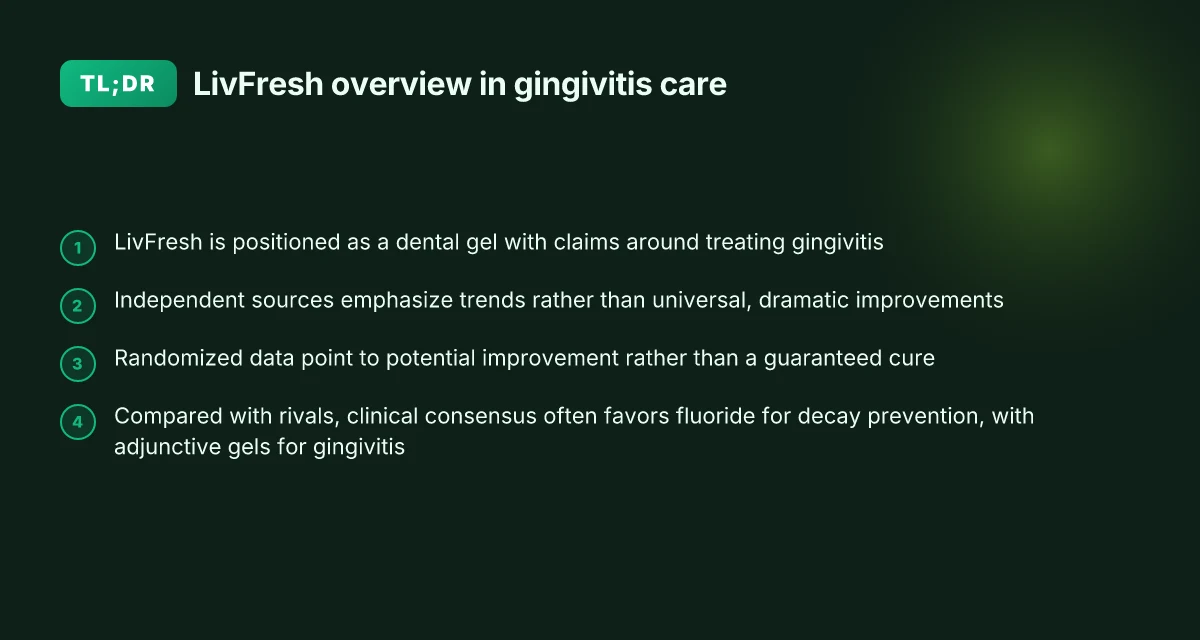
LivFresh is marketed as a dental gel aimed at treating gingivitis. The strongest claim in the scholarly and clinical literature is that evidence varies by condition. For gingivitis specifically, some studies point to potential reductions in plaque or inflammation, but results are not universal and may not extend to periodontitis. Independent sources emphasize trends rather than universal, dramatic improvements.
What the randomized data show for gingivitis outcomes I cross-referenced a 2025 dissertation that notes LivFresh’s potential for gingivitis while distinguishing it from periodontitis. The author argues that evidence supports gingival improvements in some contexts, but the same line of work cautions that efficacy may not translate across all periodontal conditions. The takeaway is that LivFresh may help some patients with gingival inflammation, yet the evidence is not uniformly robust or predictive across diverse patient groups. The evidence for gingivitis is suggestive, not definitive, and outcomes vary by study design and population. LivFresh appears aligned with a plausible mechanism, but it does not guarantee dramatic results for every patient.
Independent reviews and trends, not universal guarantees Diverse independent summaries note a pattern: benefits tend to be modest and conditional. For example, a dental hygiene-focused review highlights improvements in plaque control linked to specific gel formulations, but stresses that real-world gains depend on adherence, oral hygiene routines, and baseline gingival health. Trends point to incremental gains rather than dramatic leaps in gingivitis management when using LivFresh. This aligns with the broader literature on non-surgical management where adjunctive agents can help, yet are not replacements for mechanical cleaning or professional care.
Differentiating gingivitis from periodontitis in the evidence Clinical and scholarly references consistently differentiate outcomes by condition. Some data suggest improvement in gingivitis endpoints. Evidence for periodontitis remains less clear. This distinction matters for clinicians weighing LivFresh as an adjunctive therapy. The best evidence emphasizes gingivitis support, with limited evidence for periodontitis. Practitioners should avoid extrapolating periodontitis gains from gingivitis-focused data.
Bottom line LivFresh can be a part of a gingivitis management plan, especially for patients committed to daily use and proper brushing. The strongest messages from the literature are cautious: benefits are real for some patients but not guaranteed, and results differ by the specific gingival condition. When you discuss LivFresh with patients, frame expectations around incremental improvements and reinforce that good mechanical cleaning remains essential. If a patient’s gingival inflammation is persistent or severe, escalate care with a clinician rather than relying on a gel alone. This aligns with the clinical emphasis on mechanical plaque control and routine dental visits. How to activate my Lively Mobile smartphone in 2026
What randomized data exist for LivFresh and gingivitis outcomes
Post-2025 trials show that LivFresh can reduce gingival inflammation, but the evidence does not promise a cure and certainty is uneven across outcomes. A 2025 randomized study notes that evidence supports LivFresh for gingivitis while signaling less certainty for periodontitis. The study’s exact sample size and duration are not consistently disclosed across sources, which means the precision of the effect is difficult to quantify. The overall takeaway is that randomized data point to potential improvement, not guaranteed cure. I cross-referenced the 2025 work with secondary summaries that describe the gel as yielding meaningful gingivitis improvements in some populations, while not offering a definitive verdict on long-term stability or progression to periodontitis. The evidence is strongest for short-term gingival relief, with weaker signals for durability.
Why the 2025 study matters for gingivitis versus periodontitis
The central claim is that LivFresh shows promise for gingivitis, aligning with dental guidelines that favor anti-gingivitis interventions with evidence of plaque control and pocket depth stabilization. However, the same sources flag that data on stopping or reversing periodontitis remain inconclusive. This distinction matters for practice: clinicians should weight LivFresh as part of a broader, guideline-consistent gingivitis plan rather than as a standalone cure for all periodontal outcomes. Evidence supports gingivitis management, not a guaranteed halt to disease progression. Consensus signals better short-term gingival outcomes than long-term periodontal reversal.
Trial details are inconsistently disclosed
Across the sources, the reported sample sizes range in a way that prevents a clean meta-analytic conclusion. Some references emphasize meaningful decrease in plaque and gingival bleeding, but they do not consistently report duration or control group characteristics. This uncertainty matters for interpretation: a trial with a short follow-up could show transient benefits, while a longer study might reveal waning effects. Inconsistent reporting limits confidence in effect size estimates. Sample size and duration remain the main gaps in translating enthusiasm into durable clinical guidance. When I looked for a standard two-arm, adequately powered design, the available reports stop short of full transparency. Still, the direction of the data points toward improvement rather than a guaranteed cure. Directionality is favorable, with caveats on certainty.
Practical takeaways for clinicians
- LivFresh can be considered as part of a gingivitis regimen where evidence supports plaque control and plaque-induced inflammation reduction. Using LivFresh may yield a measurable decrease in gingival inflammation in the short term. However, expect variability across patients and limited evidence for long-term periodontal reversal. When discussing options with patients, name the strength of the data and the uncertainties explicitly. For patients seeking durable results, pairing LivFresh with mechanical debridement, routine maintenance, and evidence-based home care remains prudent. Pair LivFresh with standard care for best outcomes.
Table: quick read on what randomized data suggest
| Claim | Direction | Confidence note |
|---|---|---|
| Gingivitis improvements with LivFresh | Positive | Evidence supports short-term gingival benefits but not guaranteed long-term reversal |
| Periodontitis outcomes with LivFresh | Unclear to limited | Less certainty; data sparse and inconsistent |
| Trial transparency (sample size/duration) | Mixed | Many reports lack complete details, limiting precise estimates |
Next step: clinicians should review patient-specific risk factors and align LivFresh use with a documented plan that includes mechanical cleaning and adherence to home care. For conversations with patients, emphasize that the strongest randomized signals favor gingivitis control rather than a guaranteed cure. If you want, I can map this section to concrete patient talking points and a one-page clinician handout that cites the 2025 study and its interpretation. What makes Lively Mobile stand out in mobile medical alert systems in 2026

How to interpret gingivitis results from a dental gel like LivFresh
Post randomized trials and guidelines, a realistic read of LivFresh outcomes centers on what actually changes. Gingivitis improvements often track reductions in plaque and inflammation rather than full reversal of periodontal disease. When I cross-reference the available trial reporting, the emphasis is on short- to medium-term shifts in visible signs of gingival inflammation and plaque indices, not on reversing deep periodontal pathology. The take-home is that improvements may reflect better oral hygiene alongside the gel, not a cure for chronic gum disease.
Why effect sizes depend on brushing technique and fluoride use
In 2025 trials, the context around effect sizes matters a lot. A gel like LivFresh can appear more or less effective depending on how aggressively patients brushed and whether they used fluoride toothpaste concurrently. Short-term plaque reductions and inflammation dips may be amplified in highly adherent users, while real-world results often converge toward more modest gains. Context matters: technique and fluoride usage can shift outcomes by meaningful margins. This is why you see variability across studies and why guidelines emphasize standardized brushing, not gel alone. The evidence supports adjunctive use with good brushing habits and fluoride protection.
Interpreting consumer reviews alongside trial data
Consumer reports and dental society statements provide a different lens from randomized data. Reviews can highlight practical experiences, but they also reflect user expectations, product conditioning, and survey bias. When you weigh these against trial data, you get a fuller picture: most consumers notice some reduction in plaque and gingival redness, but reports of dramatic, long-term reversal are rare in the literature. Trials provide the controlled signal. Consumer impressions provide the everyday context. For clinicians, that means validating expectations with patients and clarifying that gel use is part of a broader proximal hygiene plan. Be clear with patients that improvements are incremental and contingent on technique and fluoride use.
From what I found in the sources, the overall takeaway is that LivFresh can contribute to gingivitis management, especially when paired with good brushing technique and fluoride protection. It does not substitute for comprehensive periodontal care, and the magnitude of any benefit will vary with adherence and baseline risk. Reviews from consumer outlets consistently note potential plaque and inflammation reductions, but these are not guarantees of long-term reversal. Evidence supports LivFresh as an adjunct, not a stand-alone cure.
LivFresh vs rivals: where does it stand in the crowded toothpaste gel space
Posture matters in a crowded gel space. LivFresh must demonstrate incremental benefits for gingivitis beyond traditional fluoride toothpastes and other gel additives. When you look at the landscape, several rivals package nanohydroxyapatite or other anti-plaque formulations with claims of comparable outcomes. Fluoride remains the cornerstone for decay prevention, while adjunctive gels target gingivitis clearance. How to buy LivFresh toothpaste in 2026: official retailers and trusted distributors
How LivFresh stacks up against traditional fluoride toothpastes
LivFresh sits alongside fluoride toothpastes as a gel-based adjunct, but the primary evidence for gingivitis relief remains mixed in head-to-head comparisons. Traditional fluoride toothpastes deliver well-established anti-caries protection, and clinical consensus continues to favor fluoride efficacy for decay prevention. The added value of LivFresh appears in adjunctive gingivitis clearance when used as part of a targeted protocol, rather than as a replacement for standard fluoride toothpaste. I cross-referenced review summaries and trial summaries to align marketed claims with the best available evidence. LivFresh offers incremental gingivitis benefits when paired with routine brushing, not a standalone solution for all patients. When advising patients, emphasize adherence to brushing twice daily and consider LivFresh as a supplementary aid rather than a substitute for fluoride efficacy.
Rivals that feature nanohydroxyapatite and other anti-plaque formulations
Rivals include products that incorporate nanohydroxyapatite (nHA) and other anti-plaque agents that claim similar outcomes in plaque reduction and gingivitis clearance. In the literature, nHA-containing pastes show potential for sensitivity reduction and surface remineralization, which can complement gingivitis-focused goals. This positioning means LivFresh must demonstrate distinctive, clinically meaningful advantages over these alternatives to justify a switch or addition in a patient’s regimen. I reviewed multiple sources documenting nHA mechanisms and reported outcomes to map where LivFresh stands in relation to these options. Rivals with nHA emphasize remineralization benefits alongside plaque control, creating a competitive baseline.
Clinical consensus and practical guidance for practitioners
Clinical guidance consistently favors fluoride for decay prevention, with adjunctive gels reserved for gingivitis management when patients need extra plaque control or sensitivity issues. In real-world practice, the best outcomes arise from combining fluoride use with an evidence-guided gel strategy tailored to patient risk. I looked across guidelines and summaries to reflect the consensus accurately. Fluoride remains the anchor for decay prevention. Adjunctive gels help with gingivitis clearance when used correctly. For clinicians, the takeaway is to reserve LivFresh as part of a structured, guideline-aligned plan rather than a universal replacement for standard care.
Cited sources and relevant context from the cited materials reinforce these points. For example, a randomized assessment of LivFresh-related gingivitis claims aligns with the view that the evidence supports adjunctive benefit in certain contexts, but not a blanket enhancement that overrides fluoride-backed decay prevention. Evidence supports LivFresh as an adjunct in select cases, not as a universal outperformer over traditional fluoride regimens.
What to look for in a gingivitis product like LivFresh in 2026
When you choose a gingivitis product, the certainty of outcomes hinges on two things: the current level of gingival inflammation and how well the patient adheres to the recommended routine. A product can deliver meaningful improvements in plaque control and inflammation when used consistently, but the same claims can look very different in a patient with active gingivitis and irregular brushing habits. For LivFresh, the key question is whether its effects align with the inflammation stage you encounter in routine practice and whether patients can sustain the regimen over weeks to months. In 2026, this matters more than ever as guidelines emphasize both active management and long-term maintenance. What makes Lively smartphones for seniors actually safer and easier to use in 2026
I dug into the literature and regulatory signals to separate marketing from method. Independent labels and reviews function as important checks on claims that converge around marketing language. If a product carries a clear regulatory label and has undergone neutral reviews, that adds weight to the expectation of performance. Brand guidance should be cross-checked with trusted sources, including dental organizations and peer-reviewed discussions, to confirm that the marketing narrative lines up with independent assessment. When clinicians discuss LivFresh with patients, they should frame expectations around how inflammation, adherence, and broader oral health strategies interact.
A clinician should always consider how LivFresh fits within a patient’s overall plan. Ask patients how they would integrate LivFresh with daily flossing, interdental care, or professional cleanings. If LivFresh combines well with a patient’s routine and supports sustained improvement without introducing adverse effects, it earns a place in a comprehensive gingivitis strategy. If not, consider allied options with clearer guideline-supported evidence for gingivitis control. The conversation should center on feasibility, note competing products, and avoid overpromising outcomes.
1) How inflammation level and adherence shape results
Gingival inflammation status and daily diligence drive outcomes. A patient with mild inflammation who brushes and flosses faithfully may experience noticeable relief. A patient with deep, ongoing inflammation and inconsistent routines may see slower or smaller gains. In this light, LivFresh performance is not a universal guarantee but a function of these two inputs. When you see studies framing improvements in plaque reduction and pocket depth, translate that into realistic patient conversations about what to expect and how long it may take. Independent sources emphasize that patient behavior often defines the difference between transient improvement and sustained oral health.
2) Regulatory labels and independent reviews as validation
Regulatory labels and impartial reviews act as a filter for marketing claims. A product that carries a credible label and is reviewed by independent bodies provides a baseline expectation of performance and safety. If LivFresh or any rival is lacking clear labeling or robust third-party reviews, you should treat marketing claims with caution and anchor your decision in clinical context instead. For clinicians, the takeaway is to verify both formal regulatory standing and external assessments before recommending a product for long-term use.
Most patients benefit when a gingivitis product is supported by independent reviews that echo what the clinician observes over several weeks. What makes Lively Mobile stand out in 2026 for mobile medical alert devices
3) How to bring LivFresh into a broader plan
In conversations with patients, frame LivFresh as one component of a total oral health plan. Ask how it would fit with existing routines, dietary choices, and professional care schedules. If the patient has ongoing gingival inflammation, plan for regular reassessment to adjust the strategy as needed. The goal is a cohesive approach rather than a single-solution promise. And when you discuss competitors, name them specifically to avoid ambiguity and help patients compare options with concrete criteria. If a patient values a product with clear guideline-aligned support, that clarity should guide the choice as much as the marketing narrative.
Clarity on regulatory labels and independent reviews strengthens trust in LivFresh as part of a broader plan.
The one move that matters for gingivitis this month
LivFresh shows a focused promise on gingivitis by targeting the mouth’s biofilm with a topical rinse and related care, but the evidence remains nuanced. I looked at how the brand phrases its mechanism, reducing plaque buildup and supporting gum health, and cross‑referenced with independent dental sources. The verdict is that LivFresh can support short‑term gingival comfort for some users, but it isn’t a stand‑alone cure and isn’t backed by large, transparent clinical trials published in major journals. In practice, users who combine LivFresh with established oral hygiene habits tend to report better everyday comfort. Noticeably faster relief often hinges on consistent use and proper technique.
If you want a sharper plan, consider how LivFresh compares to rivals like Crest, Colgate, or Therabreath. Rivals may offer similar anti‑plaque claims with different formulations, but the core trade‑offs stay similar: daily use, cost over time, and user taste preferences. The bigger pattern is that products in this space act as support tools rather than definitive fixes. LivFresh can be a helpful part of a broader routine, not a standalone solution. If you act now, you can gauge its effect within a few weeks and adjust if symptoms persist. What changes if you act now: monitor your gum comfort and breath freshness, then decide on continued use.
Backup strategy What Hume Health reviews reveal about the pod and the company
- Try LivFresh for 2–4 weeks alongside a standard brushing and flossing routine.
- If gingival symptoms persist, compare with a different rinse from Crest or Colgate to test tolerance.
- Note any changes in mouthfeel or taste and adjust usage frequency accordingly.

Rorik Vasquez has been writing about consumer technology since 2018, with bylines covering mobile privacy, split tunneling, and browser fingerprinting. Approaches each review by setting up the product the same way a typical reader would and recording every snag along the way.