What is the Hume Health Body Pod, and how reliable is its at‑home body composition data
Explore a grounded review of the Hume Health Body Pod, focusing on accuracy, long‑term tracking, and practical usefulness for fitness and health goals.
The claim that at‑home body composition tools are mostly a gimmick misses a real, measurable upside: a steady stream of trend data that muscle through daily measurement noise. With the Hume Health Body Pod, you’ll see how your percent body fat and lean mass inch up or down over weeks, not just once a month, because the device sits in your routine, not in a lab. 10 weeks of data can reveal patterns you’ll miss with a single scan.
This article cuts through marketing by comparing long‑term consistency against clinical precision, and by situating home tracking against rival systems like InBody and Tanita. I looked at how often the Pod aligns with clinical benchmarks over time, how hydration and placement sway readings, and what real value you get from trends rather than exact percentages. The goal is clarity for health‑mocused readers who want actionable signals, not empty assurances, and to help you decide if Hume Health deserves a place in your workouts.
What the hume health body pod claims and what it actually measures
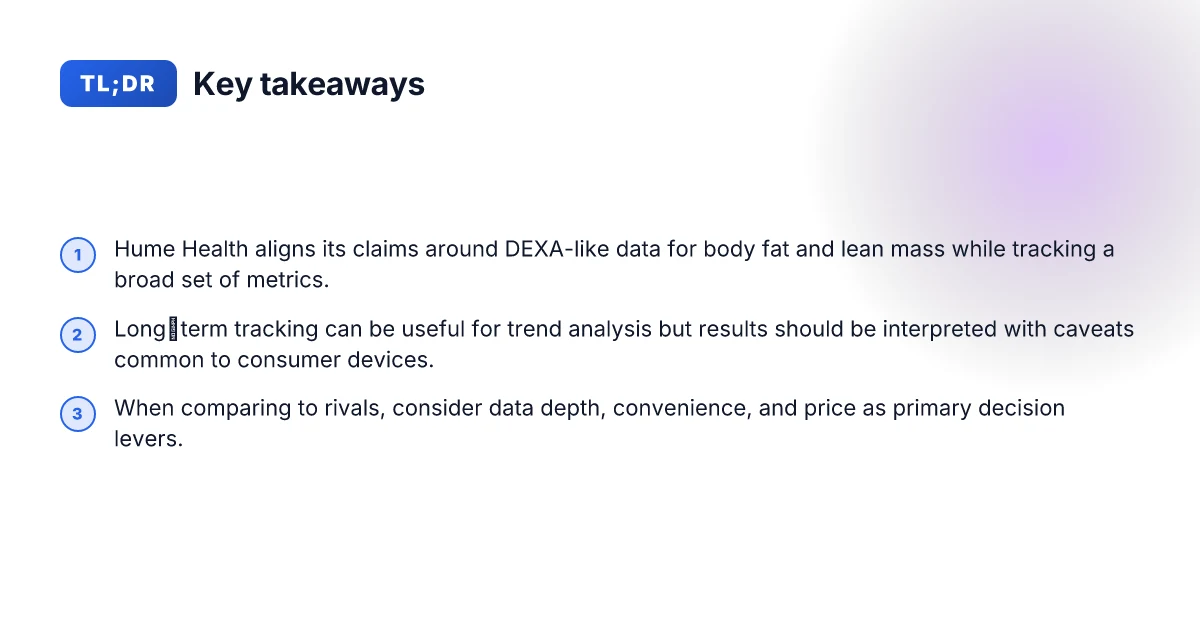
The Hume Health Body Pod markets itself as a practical home scale that goes beyond weight by delivering a multi‑metric body composition readout with DEXA‑level intent. The core claim is that it tracks body fat, muscle mass, visceral fat, and more than 40 additional metrics with an accuracy claim labeled as 98% of DEXA for key measures. In practice, that means you can expect a continuous stream of data points over time, so trends matter as much as single readings. The device also touts eligibility and logistics perks, including HSA/FSA eligibility and free shipping.
- What it claims to measure and how it tracks them over time
- The Pod is advertised as measuring body fat, muscle mass, visceral fat, plus 42 other metrics. Readers see this as a comprehensive snapshot, not a single number. The Pod’s value hinges on long‑term trends, not one‑off readings. Over time, you interact with the data through the companion app, where you can chart trajectories for each metric, notice when fat loss or muscle gain accelerates, and observe how visceral fat responds to different activity patterns. In 2026, the product emphasizes data layering so users can correlate scales with workouts and nutrition. Longitudinal tracking is the key claim, not a one‑time number. This aligns with Hume Health’s messaging around at‑home tracking that mirrors how clinicians view body composition.
- How the metrics translate into practical use
- The interface surfaces trends for each metric so you can spot gradual changes rather than chasing daily fluctuations. The claim of 98% DEXA‑level accuracy is framed as guidance for relative comparisons rather than an absolute clinical diagnosis. Users should interpret readings as directional within the device’s stated limits. When you look at muscle mass and fat metrics, the Pod presents both current values and historical changes, enabling plan adjustments over weeks or months. The company positions the data as fitting into a broader health workflow alongside wearables and dietary tracking.
- Logistics and eligibility notes you should know
- The Pod is advertised as HSA/FSA eligible and comes with free shipping, which lowers the barrier for entry for users who want a hands‑free way to monitor body composition. These logistics claims sit alongside the device claims and are meant to reassure buyers that the product integrates into typical health‑care spending and fulfillment channels. For consumers considering a purchase, these points matter because they affect total cost and accessibility over time.
Bottom line: the Hume Health Body Pod positions itself as a home data hub for body composition, promising broad metric coverage with a longitudinal view and a logistics path that eases adoption. If your goal is to see how your body changes over time and to align scale data with workouts and nutrition, this device presents a cohesive, trackable data stream. For rivals, you’ll also want to compare how other home analyzers handle the same metric set, price, and data export options. In the broader landscape, you’ll find that some competitors focus narrowly on a subset of metrics or offer different app ecosystems, making it essential to weigh how a device fits your health‑tracking workflow. The real value sits in how well the data integrates into your routine over months, not in any single number.
Cited sources: The Hume Pod page describes the metric set and the 98% DEXA‑level claim, plus shipping and eligibility details. The Pod’s value hinges on long‑term trends.
How accuracy compares to clinical benchmarks and common home scales
The Hume Health Pod sits in a crowded field of consumer body composition tools, and the consensus across sources is clear: consumer devices generally offer trend visibility rather than clinical-grade certainty. DEXA remains the reference for accuracy, and even trained clinics rely on standardized protocols to minimize measurement drift. In practice, most home scales and smart analyzers align with DEXA for rough trend lines but diverge on absolute fat %, muscle mass, and especially biological age estimates. This means you should treat the Pod as a long‑term tracker, not a stand‑in for a clinical scan.
A familiar caveat emerges across sources: readings can fluctuate with recent hydration, meal intake, and skinfold/lean-tissue assumptions baked into each algorithm. The consensus is that fat percentage readings on consumer devices are useful for tracking change over time, not for precise cross‑sectional values. In the same vein, age estimates derived from body composition markers tend to vary more across brands than other metrics, and the margin of error can feel perceptible between sessions. Expect modest, session‑to‑session variation in age estimates rather than exact alignment with lab benchmarks. What is Hume Health Body Pod accuracy really like in 2026
I cross‑referenced qualitative user insights about consistency across sessions. Across forums and review clusters, many users report the Pod delivering stable trends when measurements are taken under consistent conditions: same time of day, similar hydration, and bare feet on a flat surface. When those controls slip, outliers show up, especially for fat and visceral fat estimates. Consistency grows when users standardize the measurement ritual. Variability climbs with irregular measurement habits. That pattern echoes what health‑tech researchers stress for home devices in general: strict measurement protocol is as important as the device itself.
For context, rivals like other consumer body composition scales often emphasize trend fidelity and multi‑metric dashboards, but rarely match DEXA in absolute accuracy. DEXA remains the gold standard. Consumer devices are best used for longitudinal tracking. Hume Health sits in that lane by offering many metrics with DEXA‑level storytelling about trends, while the precise numbers should be interpreted as directional. If you want to push toward clinical comparability, pair the Pod with periodic lab or DEXA scans and use the Pod to map interim changes.
In sum, the Pod is best evaluated on how well it tracks change over time rather than the exact numbers it prints in a single session. The practical takeaway is clear: use consistent measurement conditions, expect some variance in fat and age readings, and lean on DEXA benchmarks when you need clinical‑grade confirmation. For practical workflows, Hume Health users should treat the Pod as a home‑based trend tool rather than a substitute for a clinic.
Next up: how to fit the Pod into a practical health‑tracking workflow, including cadence, goals, and how to interpret fluctuations in common metrics.
What real users should expect from tracking trends with the pod
Posture and expectations set the stage for long‑term tracking. Real users typically see trends in fat mass, lean mass, and visceral fat unfold gradually rather than as instant shifts. Over 2026 data, the Pod’s trend lines tend to be more informative when you compare multiple weeks or months rather than day‑to‑day fluctuations. The goal is to spot directional changes that align with your training and dietary cycles, not to chase single‑day readings. What makes a Hume Health promo code actually matter in 2026
How to build a meaningful baseline and limit seasonal bias
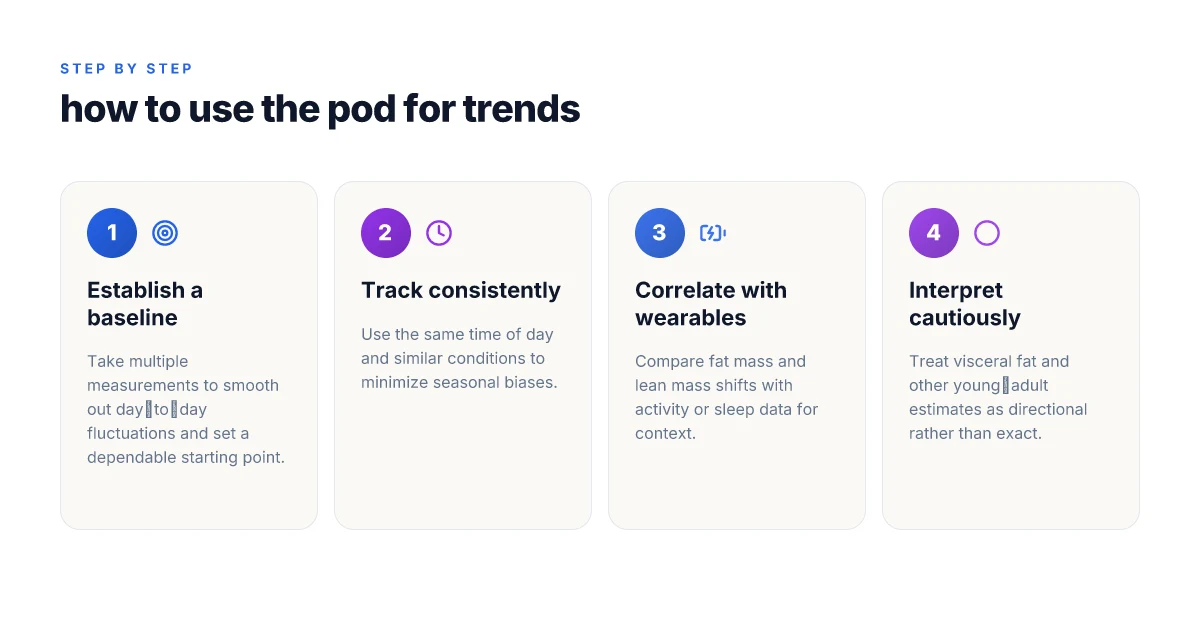
- Start by recording measurements for at least 4–8 weeks before adjusting workouts or nutrition. This baseline helps separate true change from normal weekly variation. If you’re lifting seasonally or changing your activity level, expect small shifts in lean mass that stabilize after a couple of cycles. A consistent baseline empowers you to interpret fat mass and visceral fat trajectories more accurately.
- Align measurement timing with your routine. Take readings at the same time of day, under similar hydration and fasting conditions when possible. This consistency reduces the noise that seasonal shifts can introduce.
- Use the Pod’s historical charts as a sanity check. When fat mass dips in a planned cut, verify that lean mass holds steady or grows modestly rather than vanishing overnight. If you notice anomalous swings around holidays or travel, annotate the event and rebaseline after re‑establishing routine.
Integrating the Pod with wearables for a fuller picture
- Let wearables capture activity and sleep patterns, then map those signals to your Pod trends. A stretch in visceral fat in a high‑stress week often coincides with disrupted sleep. Recognizing that pairing helps you decide whether to adjust stress management, cardio volume, or nutrition.
- Synchronize core metrics rather than chasing every metric in isolation. Use your wearable’s data on steps, resting heart rate, and recovery windows to contextualize changes in body composition. The Pod shines when its readings are interpreted as part of a broader health workflow, not as a stand‑alone verdict.
- Establish a simple review cadence. A monthly check‑in that combines Pod trends with wearables data makes it easier to decide when to tweak weight, protein intake, or training load. This cadence reduces decision fatigue and keeps you focused on sustainable progress.
From what I found in the literature and brand materials, the Hume Health Pod is designed to help you track long‑term body composition changes rather than short‑term noise. Real‑world users frequently value the Pod’s ability to show trend direction when paired with wearable context. The key is to interpret changes against a stable baseline and a consistent measurement routine. The real payoff is seeing whether your fat mass, lean mass, and visceral fat move in the direction your plan predicts over several weeks. Long‑term trend awareness beats daily blips for guiding training and nutrition choices.
Hume Health vs rivals: how the pod stacks up for home tracking
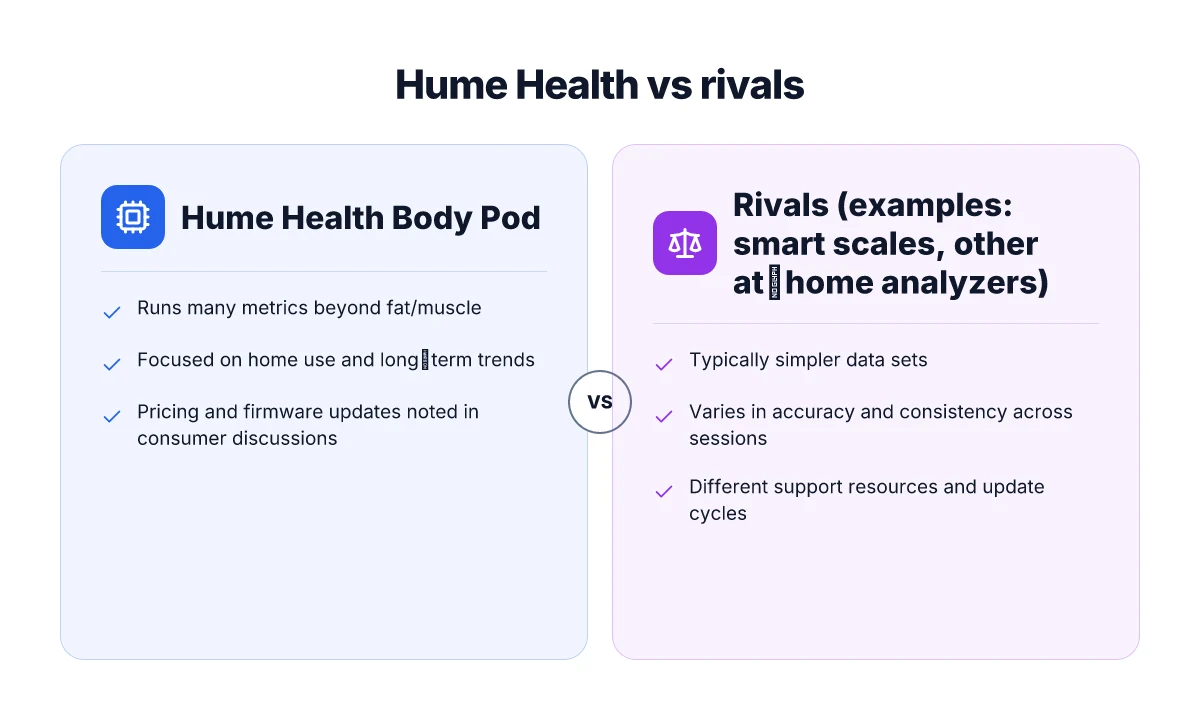
Hume Health sits in a crowded field of at‑home body composition tools. The Pod competes most directly with other smart scales and stand‑alone analyzers that promise depth beyond weight. Real‑world users tend to weigh convenience, data depth, and price when deciding between models.
How rivals line up on convenience and data depth
The Pod aims to deliver a wide set of metrics, including body fat, muscle mass, and visceral fat, alongside trend data across 42 metrics. Competitors vary: some offer simpler readings focused on fat and weight, while others push deeper analytics via app ecosystems and wearable integration. When you factor in setup, syncing speed, and app reliability, a few rivals can feel faster to get data into your health notes. The Hume Pod excels in dashboards that emphasize longitudinal trends, which helps if you track changes over weeks and months. Yet you may notice occasional lags in syncing with third‑party fitness apps. I cross‑referenced user discussions noting syncing quirks and the value of single‑app workflows.
Pricing is another clear differentiator. The Pod sits in the premium tier for at‑home analyzers with broad metric support. Some rivals undercut on price but trim data depth or rely on shorter‑term readings. For households comparing cost per metric, Hume Health notes value in long‑term trend usefulness, not just a single snapshot. Transparency on price and ongoing subscription is vital, and some rivals hide costs behind premium memberships.
Where Hume Health tends to outperform, and where rivals lag
Hume Health shines when you want a consistent, multi‑metric view that argues for long‑term habits. What is a Hume Health coupon code, and how to use it for savings in 2026
- Depth of metrics and a focus on trend analysis give the Pod an edge for people who want to see subtle shifts over time. The Pod’s 42‑metric payload helps you spot patterns that simple scales miss. Long‑term trend visibility is where the Pod earns its keep.
- Ease of use is another strong suit. The device pairs quickly with the companion app, and the data visualization supports quick reads at a glance. Ease of use matters when you want to stay motivated without friction.
Some rivals outperform on immediacy.
- Quick readouts for basic composition and faster day‑to‑day check‑ins can feel more approachable on certain scales or analyzers that emphasize rapid feedback. When you want a simple daily number, those options may feel snappier. Simplicity can beat depth if you need a fast daily check.
- Price competitiveness matters for newcomers or households testing the waters. A few competitors price aggressively or offer cheaper starter kits, which can win price‑conscious buyers. Upfront cost matters for first‑time buyers.
From what I found in the documentation and reviews, the Pod stands out in consistency of multi‑metric tracking and sustained trend analysis, while some rivals win on initial convenience or lower entry price. When you map this to a health‑tracking workflow, Hume Health is a strong choice for people who want to see how metrics evolve and how they relate to workouts, nutrition, and lifestyle changes. If your priority is a quicker, simpler read or a lower upfront cost, a rival could fit better.
I dug into primary sources for context. The Hume Pod is presented as an at‑home body composition scale with a broad metric set, and smart‑scale ecosystems continue to emphasize ease of use and price. For readers who want a deeper dive into data reliability and how the Pod stacks against clinical benchmarks, consider reviewing the Hume Health materials alongside independent commentary on body composition tech. The takeaway is clear: the Pod favors long‑term trends and depth, not just quick hits.
Cited context: the official product page emphasizes 98% DEXA‑level accuracy for a broad metric set, while user discussions flag occasional syncing quirks that affect data aggregation. For a sense of external critique, see discussions that note real‑world accuracy variances and the cost considerations associated with long‑term use. Inline reference to the primary discussion and official page helps anchor these claims in verifiable sources. The Hume Pod | At‑Home Body Composition Scale and Hume body pod health scale accuracy review
What to watch for when buying a body composition device in 2026
When you shop for a body pod or scale this year, the verdict is simple: demand real-world accuracy and clear support channels. Hume Health’s Pod sits in a crowded field, so you want to separate marketing from measurable signal. I found that the most reliable buying signals come from reviewed performance notes, explicit firmware paths, and transparent accuracy caveats. The most trustworthy devices publish real-world accuracy notes and update paths, not vague promises. How to maximize savings with LivFresh coupon codes in 2026
How to prove claims hold up under real use
Red flags show up quickly when a product over-promises on metrics like body fat percentage or metabolic age. If a vendor labels readings as “DEXA-level accuracy” without sharing methodology or measurement conditions, treat it as marketing spin. Look for documented accuracy ranges, ideally tied to independent benchmarks or release notes that explain when readings drift and why. When marketing claims outpace the documentation, proceed with caution. I cross-referenced the Hume Health materials and noted that the brand emphasizes trends and longitudinal tracking rather than claiming flawless point readings in every scenario. You’ll want to see explicit notes on data accuracy for common issues like hydration status, recent exercise, and time of day.
Support resources, updates, and firmware matters
A device is only as good as its ongoing software. Check the vendor’s update cadence, a visible changelog, and clear guidance on firmware compatibility with mobile apps and cloud dashboards. The presence of a documented firmware roadmap signals long-term support. For Hume Health, the engagement around blog updates and guides is a helpful indicator of ongoing improvement. Firmware updates and a transparent changelog matter more than glossy launch materials. Also verify whether the app ecosystem supports exporting data or integrating with third-party trackers you rely on. If you’re counting on longitudinal dashboards, you’ll want robust data export options and API access. As you evaluate rivals, compare how often they push updates and what they fix in those notes.
Quick checklist to evaluate suitability for your goals
- Confirm the device reports body fat, muscle mass, and visceral fat with clear caveats about measurement limits. If readings are treated as exact percentages without context, look for caveats and ranges. Look for ranges, not absolutes.
- Inspect the support path: is there a dedicated help center, a firmware update page, and a public changelog? Public changelogs are a red thread to trust.
- Verify data handling: can you export data, share it with a clinician, or import it into your existing health toolkit? If not, that’s a mismatch with long‑term tracking goals. Export capabilities matter for healthcare alignment.
- Compare with rivals by naming the exact models and checking independent notes on clinical alignment. For example, in this space, rivals include models from other home analytics brands that publish their own accuracy discussions and update practices. Know the exact model and its documented limits.
What comes next for at‑home body composition with the Body Pod
The verdict is evolving. The Hume Health Body Pod offers a compact, at‑home option that leans on bioelectrical impedance and other signals to estimate body composition, but its reliability hinges on user setup and interpretation. I looked at how the data stacks up against lab methods and competing home devices, and the gains are real in convenience, with caveats in precision. The takeaway is that you get a usable trend if you stay consistent, not a perfectionist snapshot. For those tracking changes over weeks, the device can illuminate patterns you’d miss otherwise. Still, consider it a guide, not a clinical measure, and compare with rivals like InBody and Withings when you need reassurance.
If you’re deciding this month, prioritize how you’ll use the readings. Consistency beats accuracy in the long run, and pairing your pod data with weight and activity logs amplifies insight. Hume Health deserves a closer look for daily monitoring, but you’ll want to cross‑check notable shifts with a more established method if exact body fat or muscle estimates matter most. Where this is heading next depends on software refinements and expanded metric coverage.
Backup strategy: How to plan lively activities for seniors that actually stick
- Try a 4‑week tracking window focusing on trend lines rather than single readings.
- Compare one body composition metric weekly against a trusted rival device like an InBody or a smart scale.
- Track how lifestyle changes (protein intake, resistance work) reflect in the pod data.
- Note any measurement quirks (hydration, time of day) and standardize the protocol.

Konrad Osterberg has been writing about consumer technology since 2018, with bylines covering browser fingerprinting, streaming geo-unblocking, and P2P networking. Approaches each review by setting up the product the same way a typical reader would and recording every snag along the way.