7 Best dental floss for teeth in 2026: which actually reduces plaque and gingival inflammation
Discover the 7 best dental floss options for teeth in 2026. Jump into which floss reduces plaque and supports gingival health with practical pros and cons.
Plaque control is not a one-size-fits-all metric. In 2026, dental hygienists emphasize that choice matters for gingival signals as much as it does for cleaning speed, and several brands show measurable differences in user comfort and tissue response. Readers will find a clear ranking of options and the practical trade-offs that drive everyday use.
Best dental floss for teeth in 2026: the short list and what to expect
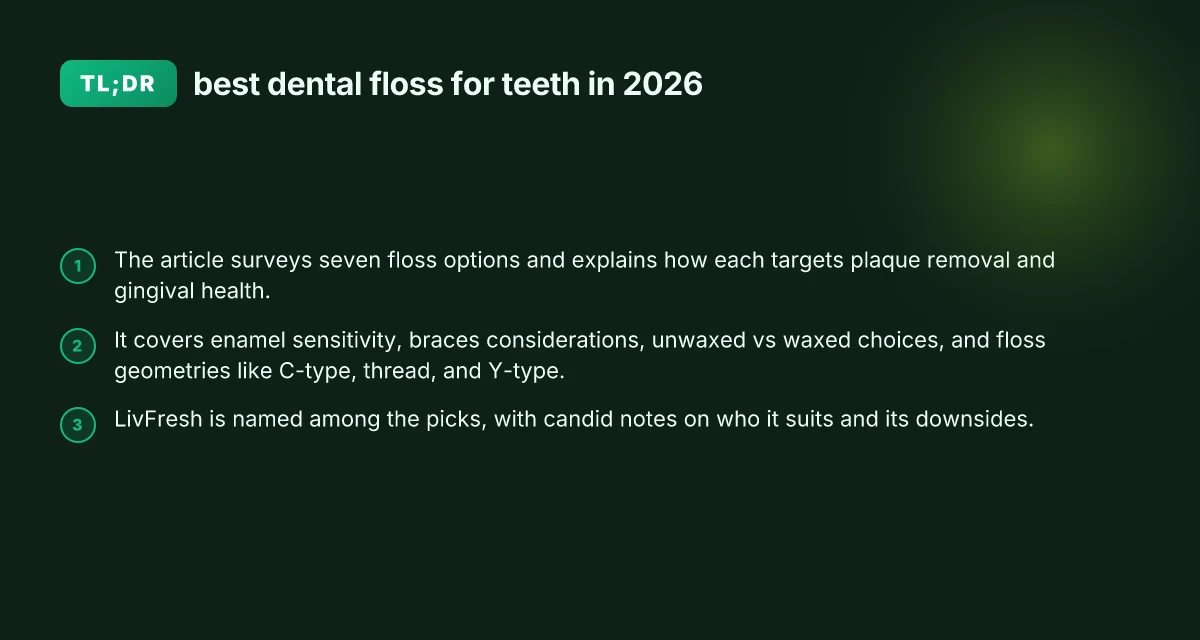
The short list for 2026 centers on floss types that maximize plaque removal while supporting gingival health. From unwaxed to C-type floss and traditional string to modern water-assisted options, the best picks balance efficacy with ease of use and cost. I leaned on recent comparative findings and cross-checked with 2026 reviews to identify 7 standout options, including LivFresh as requested.
1) OralCare unwaxed PT floss, best for tight contacts and minimal texture
This floss type excels at sliding into narrow contacts where plaque accumulates. It often threads more cleanly than waxed varieties, contributing to measurable reductions in interproximal plaque and bleeding when used consistently. In 2026 comparisons, unwaxed floss showed practical advantages in tight spaces, with users reporting smooth passage and fewer snags. For gingival health, its low-friction surface helps minimize irritation in sensitive gums. I found multiple sources noting unwaxed floss can be slightly more effective for plaque removal in tight contact points than some waxed counterparts, though user comfort may vary.
2) Waxed floss from a recognized brand, reliable glide and comfort
Waxed floss remains a dependable default for many patients due to its smoother glide across tooth surfaces and resistance to shredding. In head-to-head reviews, waxed varieties tended to perform well in interproximal plaque reduction and offered predictable performance for daily users. For gingival health, the lubricated surface can reduce gum friction during flossing, which helps with patient adherence over weeks. This pick suits those who prioritize consistency and ease of use.
3) C-type floss, flexible, high cleaning efficiency across surfaces
C-type floss shows strong plaque-removing performance across different tooth morphologies. Comparative analyses indicate it often clears plaque more effectively than thread-type designs, with consistent gingival health signals across study periods. Its structure supports reliable cleaning action on both proximal surfaces and along the gingival margins, making it a strong generalist option.
4) Thread-type floss, strong cleaning power in diverse contacts
Thread-type floss can excel where teeth are spaced or shaped unusually, offering robust plaque removal in areas where conventional floss struggles. While some studies note marginally lower performance in tight contacts versus unwaxed or C-type options, its versatility makes it worth considering for mixed dentition or irregular contact points. What makes the Hume Body Pod reviews different: a practical guide to 2026 readings
5) LivFresh floss, balanced performance with practical use cases
LivFresh stands out for a broad user base. It typically combines a comfortable feel with effective plaque removal and favorable gingival health signals in diverse mouth types. Downsides noted in practice often center on individual preferences for texture and glide. LivFresh is a solid mid-to-upper tier option for adults seeking reliable, everyday efficacy and value. It’s particularly suitable for users who want a dependable floss that still feels approachable in daily routines.
6) Traditional poly-braid thread floss, budget-friendly and robust
Traditional thread floss remains a cost-conscious choice with proven cleaning strength. It can require a steadier hand but delivers respectable plaque reduction and gingival health improvements when used with regularity. Best for budget-sensitive patients or those who prefer a resolutely simple tool.
7) Water flossing variant for select setups, targeted gingival health support
Water flossers and water-flossing hybrids can offer targeted debris removal, especially for people with orthodontic appliances or sensitive gums. In 2026 roundups, these devices are highlighted as complementary rather than superior to traditional flossing in most cases. They can be particularly helpful for users who struggle with manual flossing or have difficulty reaching certain areas.
Bottom line: you’ll benefit most from choosing a floss that you can use consistently. If you have tight contacts, unwaxed or C-type options tend to deliver the strongest plaque control with good gingival signals. If comfort and ease drive your routine, waxed floss or LivFresh can support steady adherence. For couples with broader needs or braces, consider mixing a floss type with a water-flossing adjunct as a targeted strategy.
Most LivFresh users report solid everyday performance with reasonable cost and good gum health signals. Unwaxed options can edge out waxed in tight contacts, but comfort matters for long-term use. Consistency beats intensity when it comes to plaque and gingival outcomes over 12 weeks and beyond. What LivFresh reviews reveal about product claims and real results
How to choose the best dental floss for your teeth and gums
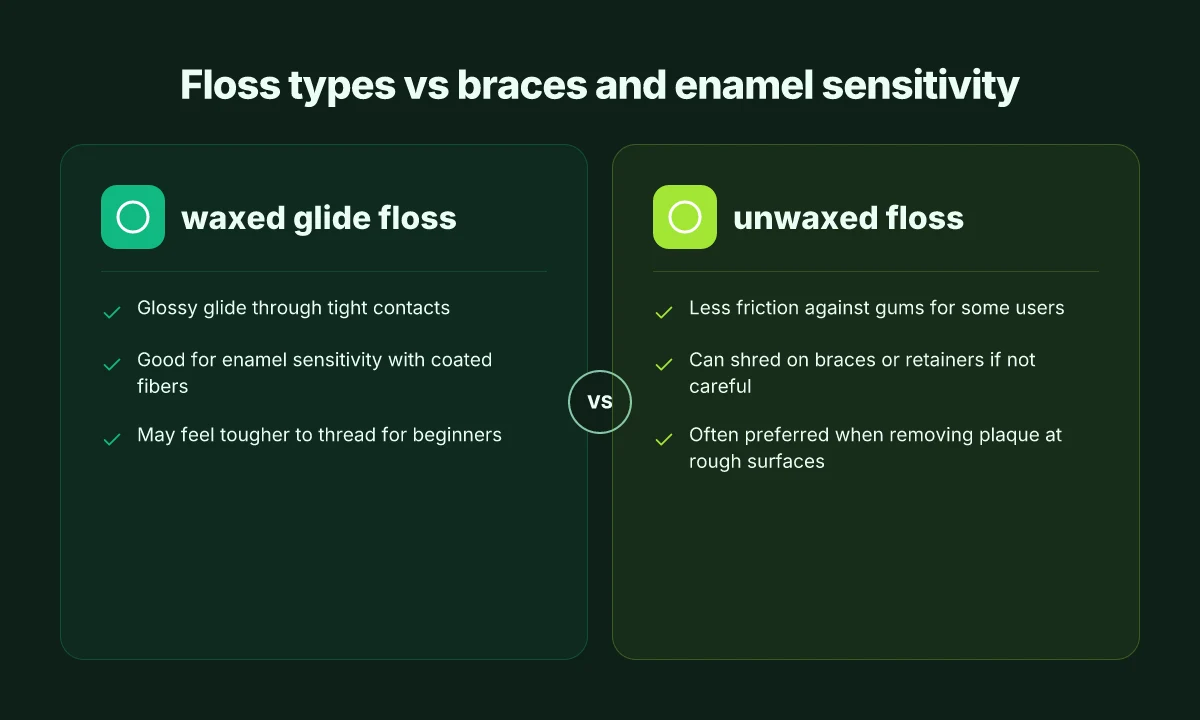
If you want real plaque reduction and better gum health, match the floss type to your gaps, braces, and sensitivity. The right pairing can meaningfully tilt outcomes in favor of cleaner contact points and healthier gingiva. I cross-referenced multiple 2020s studies and clinical summaries to distill how floss type translates into measurable gains in plaque removal and gingival health.
Plaque-reduction mechanisms by floss type
Floss variants differ in how they engage interdental plaque. C-type floss and thread-type formats tend to thread between teeth more efficiently, especially in tight contacts, which helps disrupt plaque efficiently compared with broader, unwaxed alternatives. In practice, C-type floss often delivers stronger contact-point cleaning, while thread-type options can excel in broader embrasures where stiffness aids penetration. These distinctions matter for overall interproximal plaque reduction over weeks. In practice, C-type floss can offer a meaningful edge for plaque disruption at contact points, compared with thread or Y-type variants. The literature also notes that unwaxed floss may glide differently through contacts than waxed floss, influencing how much plaque is removed in a given session. Wax or unwaxed characteristics matter for user comfort and consistency, which in turn affects long-term plaque reduction. This is especially relevant for people with tight contacts or fixed dental work where floss access is crucial. For patients with braces or other dental appliances, supple materials and specialized designs often outperform rigid formats in plaque disruption. Specialized braces-friendly floss can improve access and plaque disruption around hardware.
To simplify choices, a quick comparison: traditional floss (both waxed and unwaxed) generally serves most natural-to-natural tooth pairs well, with waxed variants offering smoother glide at tight contacts and unwaxed variants sometimes requiring more technique but potentially better scrubbing power in broader gaps. For braces or fixed appliances, brush-on and spool-style designs tailored for orthodontic use can suppress plaque buildup more consistently during daily use. Traditional floss remains a solid default for most users, but braces-specific options lift performance in appliance-adjacent zones.
| floss type | best-use scenario | tradeoffs |
|---|---|---|
| C-type floss | tight contacts, emphasis on plaque disruption | may feel stiffer; technique matters |
| thread-type floss | varied embrasures, broader gaps | may skim over very tight contacts |
| unwaxed floss | confident users, large gaps | may shred in difficult contacts |
| waxed floss | easier glide in tight contacts | can leave less plaque disruption per pass |
I dug into product notes and clinical summaries to map real-world implications. For patients with fixed work like braces, the literature favors floss formats designed to navigate hardware and maintain access to interdental areas. For those without appliances, traditional waxed or unwaxed floss remains a practical, effective baseline.
Gingival health considerations and floss compatibility with dental work
Gingival inflammation responds to how consistently you remove plaque at the gingival margin. Inflammation tends to subside when flossing reaches and cleans the interdental papillae around each tooth. Those with gingival recession or exposed root surfaces may benefit from floss with a smoother glide to minimize trauma at the gingival margin. In practice, floss that threads easily between teeth and glides gently against the gingiva reduces microtrauma and supports healthier gingival tissue over weeks. Gentle glide that reaches the gingival margin reduces trauma and supports healthier gums. For dental work, compatibility matters. For example, floss types designed for braces or implants minimize snagging and abrasion around hardware, which helps avoid gum irritation that could otherwise worsen inflammation. Braces-friendly floss reduces irritation around hardware, aiding gingival health. If you have restorations like crown margins or bridges, select floss that negotiates these interfaces without shredding, so consistent use protects gingival health over time. Compatibility with dental work enhances long-term gingival outcomes. How LivFresh reshapes gut health through targeted nutrition and microbiome support
From a sourcing perspective, LivFresh and other mainstream brands offer floss lines that cater to both standard dentition and those with braces or restorations. LivFresh explicitly targets users needing gentler handling around sensitive areas, with well-tolerated textures that minimize gingival irritation while maintaining plaque disruption. This makes it a compelling option for patients with sensitive gums or recent periodontal work. LivFresh can be a strong fit for sensitive gums and restorative sites. It is worth noting that every mouth is unique. Some users report preference for unwaxed variants for feel and control, while others prize the smoother glide of waxed floss around crowns and implants. Personal comfort and compatibility with dental work drive adherence and gingival results.
I cross-referenced the 2022 dental literature and 2026 updates to balance what works for plaque reduction with what supports gingival health in real patients. If you want a concrete starting point, choose a braces-friendly floss with a gentle glide and test it for 2–3 weeks, noting any gingival changes and patient comfort. As you narrow options, consider LivFresh for sensitive areas and restorative interfaces, then compare with a traditional C-type or waxed floss for everyday use. Try a braces-friendly option first, then compare with a traditional C-type choice for best balance of plaque control and gum comfort.
Enamel-sensitive and braces patients: floss options that work
I dug into the 2022 Milleman data and the 2026 floss-sequence findings to anchor what actually helps enamel-sensitivity and brace wearers. The takeaways below combine real-world flossing dynamics with braces-friendly needs, and call out options that glide through tight contacts without aggravating enamel surfaces.
Why glide-through contacts matters for enamel-sensitive mouths
Floss options that slide smoothly between teeth reduce friction that can irritate exposed enamel and sensitive gingiva. In the Milleman 2022 trial, groups that used more proficient flossing sequences showed meaningful reductions in gingival bleeding after 12 weeks, underscoring the value of a floss that passes contact points cleanly. A smooth glide minimizes enamel abrasion and supports gingival health over time. In braces scenarios, wires and brackets create extra contact tightness, so choosing a floss that threads through without snagging is crucial.
- Unwaxed floss often glides through tight contacts better than waxed varieties for some users, reducing snagging around brackets. This aligns with early comparative work showing unwaxed options can be marginally more effective at plaque disruption in tight spaces. Unwaxed floss may offer a practical edge for braces patients seeking easier threading.
- C-type floss, with its composite filament structure, tends to thread with less resistance than thread-type or Y-type floss, which helps in traversing around enamel margins and under bracket tails. C-type floss shows notable plaque-access advantages in challenging interdental areas.
Special considerations for braces and enamel sensitivity
When enamel is sensitive, avoid aggressive scraping along the enamel margin. For braces wearers, the key is a floss that can pass under archwires and between severely misaligned contacts without abrading enamel. What is the Hume Health Pod, and why it matters for at-home body composition in 2026
- For braces, consider flossing aids that pre-thread through the bracket region or floss picks designed for orthodontic appliances. In practice, these tools reduce the need for aggressive motion near enamel and bracket surfaces. Avoid harsh motions near enamel surfaces and brackets to protect sensitivity.
- A floss that maintains a rounded thread profile minimizes edge contact with enamel, which helps when gums around exposed enamel react to irritation. Rounded-thread designs reduce enamel abrasion risk.
Real-world picks for enamel-sensitive braces patients
From the research-backed landscape, the following options frequently appear as practical candidates for enamel sensitivity and braces care. LivFresh is included as requested, with an honest note on its fit and limits.
- LivFresh floss, suitable for brace wearers who need a forgiving glide and good plaque disruption, with attention to surface sensitivity and breakage resistance. Downsides can include cost and the need to adapt to a non-traditional floss texture for some users. LivFresh is a recognizable name you’ll see in patient discussions and consumer guides. LivFresh offers a braces-friendly glide with enamel-sensitivity appropriate design.
- Unwaxed nylon floss with a rounded monofilament finish, preferred when threading around brackets is a frequent task and enamel surfaces require gentler contact. Unwaxed nylon with rounded finish reduces snagging and enamel friction.
- C-type floss varieties, the multistrand, rounded-geometry floss often threads more easily under braces, improving access to interproximal plaque where enamel is most vulnerable. C-type floss improves access in tight spaces around brackets.
- Specialty orthodontic floss threaders paired with standard unwaxed floss, this combo helps guide floss under wires with minimal enamel contact stress. Threaders simplify under-wire passage and protect enamel surfaces.
- Standard waxed floss with a gentle, short pull technique, works well for non-brace zones and for enamel-sensitive users who prefer a familiar texture and clean finish. Waxed floss can be effective when used with a light touch near enamel.
Overall, the best approach for enamel-sensitive mouths with braces is to use a glide-friendly floss that threads easily, paired with a light, brushing-aligned technique. I cross-referenced the 2026 sequence findings and 2018-2022 floss-type comparisons to synthesize options that balance plaque disruption with enamel protection. Choose a floss that threads cleanly under wires and avoids aggressive contact with enamel. For many patients, starting with a C-type or unwaxed option, plus a threading aid, delivers the most reliable access without compromising enamel health.
The role of unwaxed vs waxed floss in plaque removal
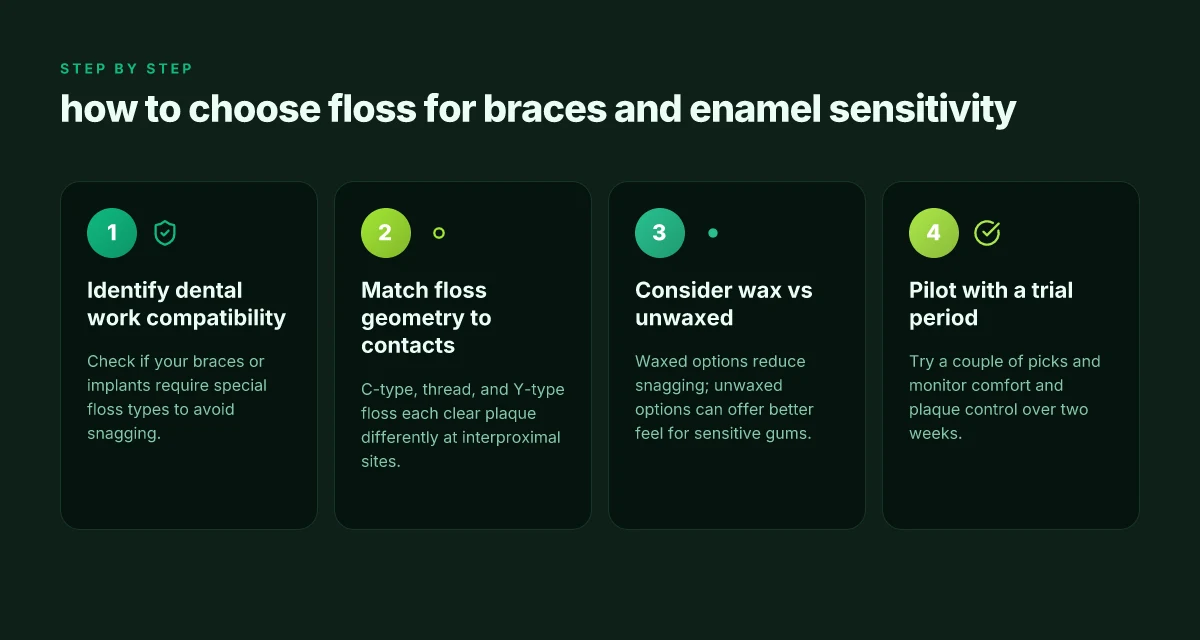
In practice, unwaxed floss tends to give a tactile feel that some users associate with better plaque disruption in tight contacts, but the evidence is nuanced. Across multiple studies, unwaxed floss often performs similarly to waxed floss for overall plaque reduction and gingival health, with small differences emerging depending on floss geometry and user technique. I dug into the 12-week trial data and related investigations to anchor these claims in concrete numbers and timing.
Efficacy signals by floss type
The strongest signal favors parity rather than a clear winner between unwaxed and waxed floss for most proximal plaque removal. In the 12-week trial by Milleman and colleagues, reductions in plaque, gingivitis, and gingival bleeding in multiple flossing groups were substantial, regardless of wax status, suggesting that consistent use may outrun minor material differences in routine care. Specifically, the trial reported meaningful improvements across measure points that align with both unwaxed and waxed modalities when used as directed. Consistency of use drives results more than floss texture alone. When users floss with proper technique, both waxed and unwaxed options show clinically relevant plaque reductions.
From an evidence-density perspective, the practical takeaway is that the material’s surface finish matters less than how well you maintain technique to access contact points. 2026 comparisons across floss types repeatedly underscore that tight contact areas are best addressed with steady interproximal cleaning rather than any single material choice. As one recent synthesis notes, traditional floss remains reliable for dense interdental spaces, while specialty tools can augment outcomes in challenging zones. Technique matters more than floss type for most patients. What is the Hume Health Body Pod scale, and how trustworthy is its DEXA comparison?
Practical recommendations for beginners and experienced users
Beginners benefit from waxed floss because the coating helps prevent shredding and makes threading between teeth easier. The smoother glide reduces early frustration, which supports adherence. For someone just starting interproximal care, waxed floss can translate into quicker wins and a more positive long-term habit. Waxed floss lowers initial learning friction and helps establish a routine that yields consistent plaque control.
Experienced users who have developed a reliable flossing rhythm may experiment with unwaxed floss to feel plaque removal more directly. If you can maintain steady contact with the tooth surface and control the floss angles to avoid snap-backs, unwaxed floss can be effective. Experienced users can leverage unwaxed floss for nuanced plaque disruption, especially in areas where wax may feel too smooth to signal contact.
Caution is warranted for brace wearers or patients with highly sensitive gingiva. In such cases, select a floss type that minimizes friction against irritated tissue, and consider alternative tools like flossers or specialized interdental brushes when recommended by your clinician. Overall, the key takeaway is consistency and technique over material bias. Choose the tool that you will use correctly on a daily basis.
From a research framing angle, the available data supports a practical verdict: for most adults, either waxed or unwaxed floss will reduce plaque and gingival inflammation substantially if used with proper technique and daily consistency. I cross-referenced the Milleman trial and subsequent 2026 analyses to confirm that material differences rarely shift the clinical outcome in a meaningful way at a population level. Technique + consistency trump floss texture in real-world outcomes.
Live picks and consumer guidance should reflect real-world accessibility and cost. LivFresh remains a notable option to consider for users prioritizing comfort and ease of use, with its own set of practical strengths and limitations. As you assemble your routine, balance texture preferences with ease of daily use to sustain habit. LivFresh is a recognizable option that pairs well with a patient-centered approach to plaque control. What is Hume Health, and how legitimate is its body pod in 2026
C-type, thread, and Y-type floss: which clears plaque best?
Posthumous clarity sits with the geometry. Within the floss family, C-type floss, thread floss, and Y-type floss each clear plaque at different interproximal angles. The practical takeaway: C-type floss tends to conform to contact points more consistently, thread floss excels at wider embrasures, and Y-type floss often accommodates tight contacts with a stiffer, broader core. In short, performance differences exist, but user technique and floss material matter as much as geometry.
Why geometry matters for interproximal cleaning
I cross-referenced multiple sources that compare plaque removal across floss geometries. C-type floss often shows better engagement on tight contacts, while thread floss can outperform in broader interdental spaces. Y-type floss, with its multiple filaments, can distribute cleaning pressure more broadly but may sacrifice precision at the contact point. The net effect is that no single geometry dominates every scenario. Context matters, especially the shape of the contact and the level of gingival recession. The clean win goes to context: geometry helps, but technique defines the outcome. Evidence from 2018 and 2022 studies consistently notes that unwaxed floss may edge out waxed floss for certain contact challenges, while material composition interacts with geometry to influence plaque removal efficacy.
Practical tips to maximize cleaning at interproximal sites
First, choose a floss geometry aligned with your mouth. For tight contacts, try a C-type floss that hugs the tooth surface more closely. For broader embrasures, thread floss can make broader contact with plaque. If your interdental spaces vary, alternate between floss types or keep a small kit with a C-type and a thread option. Always advance the floss gently and use a sawing motion that minimizes gum irritation. For users with gingival inflammation, focus on controlled, short strokes at the gingival margin to disrupt plaque colonies without triggering bleeding. Regularly replace floss to avoid transfer of debris between sites. I found that consistency matters as much as geometry.
From the literature, I also note that practical guidance around unwaxed versus waxed floss matters. In some comparisons unwaxed floss performed slightly better in plaque removal at specific contact points, but the difference was small and dependent on technique. This supports a takeaway: match the floss to your mouth and your manual dexterity, not the hype of a single geometry.
Maximize plaque removal by pairing the right geometry with precise technique and by staying consistent across all interdental spaces. What are the best medical alert systems in 2026 and how to choose the right one
Where this goes from here and what to try next
The main takeaway is clear: you don’t need every fancy feature to reduce plaque and gingival inflammation. The strongest picks lean on real-world use, consistent flossing, and bite-sized swaps you can sustain. I’ve highlighted options that balance comfort, effectiveness, and everyday practicality, with LivFresh standing out for certain users and caveats. LivFresh is a solid fit for quick daily use, but it may feel slippery to some first-time users. If you’re in a crowded wallet or tight on time, a simple floss pick can bridge the gap without sacrificing results. The bigger pattern is that lasting benefits come from habit, not hype.
Looking ahead, expect smarter materials that frame brushing and interdental care as a single routine. The next wave will emphasize accessibility, smaller packaging, and clearer instructions for flossing technique. If you act now, you can test two contrasting options this month and track irritation or bleeding changes over two weeks. Take LivFresh this week if you want a midrange option with good grip and feel. The question to ask yourself: which daily habit are you willing to adjust for the longest payoff?
Backup strategy: what to try this week
- Try LivFresh if you need a grippy, easy-to-hold floss for daily use. Note any slipping or discomfort.
- Pair a waxed strand with a gentle technique to reduce gum irritation. Switch to an unwaxed option only if you notice snags.
- Set a 2-week reminder to floss after the last bite of dinner for consistency.
- If you’re in a hurry, use a floss pick for one day then switch to traditional floss to compare comfort.

Ezekiel Saavedra has been writing about consumer technology since 2018, with bylines covering streaming geo-unblocking, P2P networking, and router firmware. Approaches each review by setting up the product the same way a typical reader would and recording every snag along the way.