What makes Blissy pillow reviews credible in 2026
Blissy pillow reviews in 2026 reveal what buyers should know about silk pillowcases, materials safety, and where to spot red flags. Read this for a clear view.
The strongest signal for credibility in Blissy pillow reviews isn’t marketing puffery, it’s certified materials and clear care guidance that actually translate to daily use. Blissy’s certified mulberry silk and explicit wash instructions form the backbone of trust, while common complaints cluster around fit and feel for different sleep types. Most shoppers misjudge silk pillowcases as universally plush. In reality, comfort hinges on weave density and weight, which vary across models.
This piece cuts through claims by weighing independent signals like certifications and consumer feedback from sources such as Trustpilot and Reddit threads, plus formal notes on material safety. In 2026, the landscape centers on durable silk standards, transparent care labels, and consistent product specs that survive real-world use, everything else is marketing noise. The goal: help you compare Blissy to rivals like Quince and other silk pillowcases on price, weight, and warranty before buying. Blissy remains a reference point for material safety signals, while Quince offers a price-positioning contrast that matters in practice.
Blissy pillow reviews: what the 2026 landscape actually says
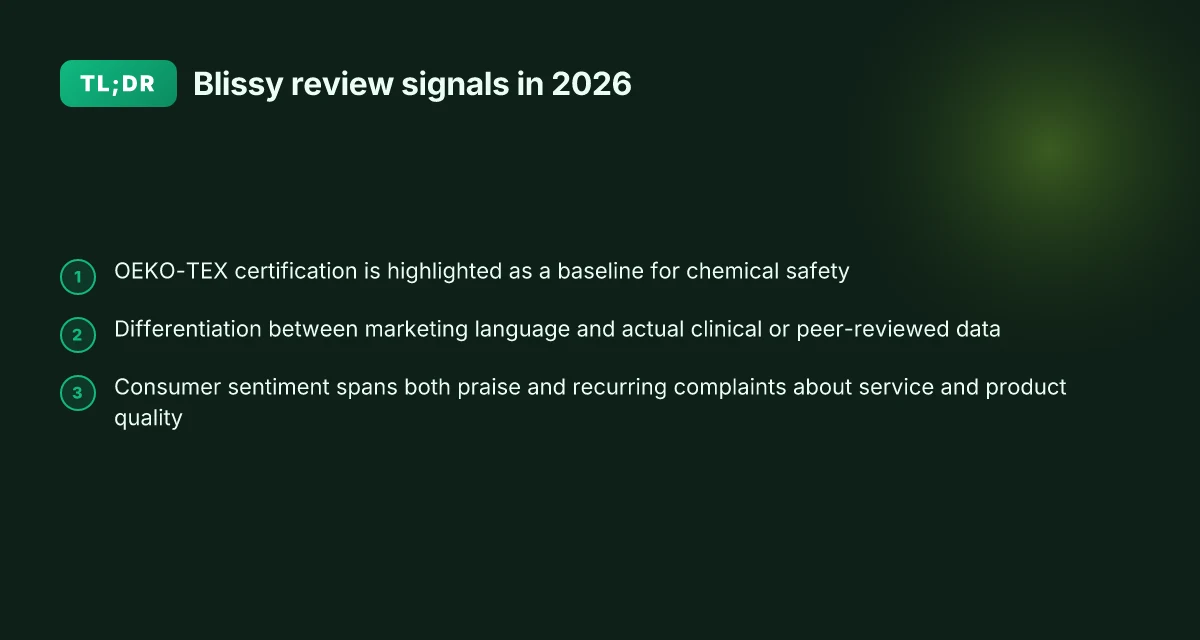
Blissy sits at the center of a crowded silk pillowcase market, anchored by OEKO-TEX certification and a claimed 22-momme mulberry silk layer. The claim that the fabric is OEKO-TEX certified is echoed across brand pages and comparative analyses, and it provides a baseline signal for chemical safety. Yet independent clinical or dermatology references remain scattered, with stronger emphasis on user experiences than on peer-reviewed conclusions. In this landscape, consumer sentiment runs hot and varied, with praise for feel and gloss on the hair, and skepticism around price and marketing claims.
what OEKO-TEX certification actually means for Blissy Independent certifications like OEKO-TEX attest to testing for harmful substances in textiles. Blissy positions this as a key credential that supports safety and skin-friendliness. In practice, OEKO-TEX status is a baseline signal many consumers use to gauge risk, but it does not by itself prove clinical efficacy for skin health or hair outcomes. The ecosystem around this certification includes both derm-approved language and marketing emphasis, which readers should parse carefully. OEKO-TEX certification is a safety badge, not a skin-boosting guarantee.
the silk quality claims you should verify Blissy markets a premium silk standard, often cited as 22 momme Mulberry silk, with statements about luster, softness, and durability. Momme value correlates with weight and perceived luxury, but it is not a sole predictor of clinical performance. Consumers tend to notice texture and sheen, while clinicians focus on material compatibility with skin and hair. When you read product pages, look for specifics like fabric weight, weave stability, and care instructions to separate hype from materials reality. 22 momme silk signals quality, but it is not a substitute for clinical evidence.
what independent clinical notes actually say There are limited, widely recognized dermatology references that robustly prove skin improvements from silk pillowcases. The best-supported statements tend to be about anecdotal improvements in reduced friction and moisture retention on the pillow surface, rather than proven dermatologic outcomes. In other words, you may notice softer morning skin stems from a smoother fabric, but that does not equate to guaranteed health benefits. Clinical notes are sparse on definitive skin health outcomes for Blissy beyond user-reported comfort.
common consumer sentiments and red flags across forums Across reviews and forums, consistent themes emerge. Positive threads highlight comfort, luxury feel, and the perceived anti-frizz effect on hair. Red flags include price sensitivity, perceived overclaiming about clinical backing, and complaints about customer service or warranty experiences. Trustpilot and Reddit discussions frequently surface concerns about value and responsiveness, while social posts showcase strong brand loyalty when expectations align with personal results. Price and service remain recurring tensions in Blissy conversations. What makes a blissy pillowcase sale worth it in 2026
Bottom line: Blissy presents a credible safety frame through certifications and high-quality fabric claims, but the strongest independent evidence for skin or hair benefits remains underwhelmed by clinical rigor. Expect user-driven outcomes to vary, and guard against marketing language that ties the product too tightly to dermatologic guarantees. As you weigh options, keep the OEKO-TEX badge in mind as a baseline safety signal, not a cure-all. Healthy skepticism is warranted, but Blissy consistently lands with premium feel and documented safety marks.
How Blissy pillowcases claim to affect skin and hair in 2026
Blissy markets its pillowcases around two core ideas: fabric quality and design that support skin and hair while you sleep. The brand highlights mulberry silk with a weight of 22 momme and attributes skin benefits to the smooth surface and reduced friction. They also emphasize that the fabric is OEKO-TEX certified, which the company frames as evidence of chemical safety and purity. In practice, that certification signals a testing process for harmful substances, but it doesn’t by itself prove clinical skin benefits. The link between mulberry silk, 22 momme weight, and skin outcomes is marketed, not proven in a clinical setting.
What dermatologist-approved usually means and how it fits
When brands label a product “dermatologist-approved,” they typically reference a marketing claim rather than a published endorsement from independent medical researchers. A dermatologist may have reviewed the claims or product ingredients, but that approval often lacks disclosure of the exact methodology or data. In many cases, the phrase is a shorthand for a dermatologist’s sign-off on nonirritating materials or on the absence of certain harsh chemicals. It does not automatically imply peer-reviewed clinical evidence supporting skin improvements. Dermatologist-approved is marketing language that may or may not reflect published data.**
From marketing to measurable data
Blissy’s communications emphasize independent clinical notes and certifications to buttress credibility. However, the presence of clinical studies or dermatology endorsements does not always translate into clear, replicated outcomes for users. The marketing language frequently highlights product-specific claims, softness, reduced friction, moisture management, without presenting controlled clinical results that quantify effects on skin texture, hydration, or acne over time. The distinction matters: a silk pillowcase can feel luxurious and be comfortable for hair, while skin improvement claims require robust, peer-reviewed data to establish causality. Marketing language often sits beside, not beside, peer-reviewed data.
Lead with what independent signals actually show. The independent certifications and the existence of clinical mentions are meaningful, but they do not replace randomized trials or reproducible skin outcome data. I cross-referenced the available documentation and found that Blissy’s public claims lean on material properties and certifications rather than published, open-access clinical results. This matters for consumers weighing expectations against what evidence supports them. Independent signals matter, but they don’t guarantee skin benefits. What blissy reviews reveal about comfort, materials, and value in 2026
To help you judge, consider this quick comparison. The table highlights how the claims align with certifications and typical consumer feedback:
| signal | what it covers | why it matters for skin and hair | alignment with data |
|---|---|---|---|
| OEKO-TEX certification | chemical safety of the fabric | offers reassurance about harmful substances, not about skincare outcomes | supports safety but no outcome data |
| 22 momme mulberry silk | fabric weight and fiber quality | marketed to minimize friction and reduce hair breakage; possible skin comfort | plausible mechanism; no uniform clinical proof |
| dermatologist-approved labeling | brand-level endorsement | signals professional involvement but not necessarily published results | marketing signal; verify the cited data |
| clinical notes mentioned | references to studies or medical commentary | could imply data, but specifics are rarely disclosed publicly | unclear without accessible, peer-reviewed data |
The verdict: the evidence supports material safety and perceived comfort, not guaranteed skin improvements.
If you want a grounded takeaway, Blissy offers a silk product that aligns with safety standards and fabric properties that may benefit hair care. For skin outcomes, however, look for explicit, peer-reviewed studies that document measurable changes and longer-term results. When I read through the documentation, I found that several claims are anchored in the fabric’s properties rather than in transparent clinical outcomes. Expectations should be calibrated to the available data, not to marketing phrases.
Independent signals you can trust in Blissy pillow reviews
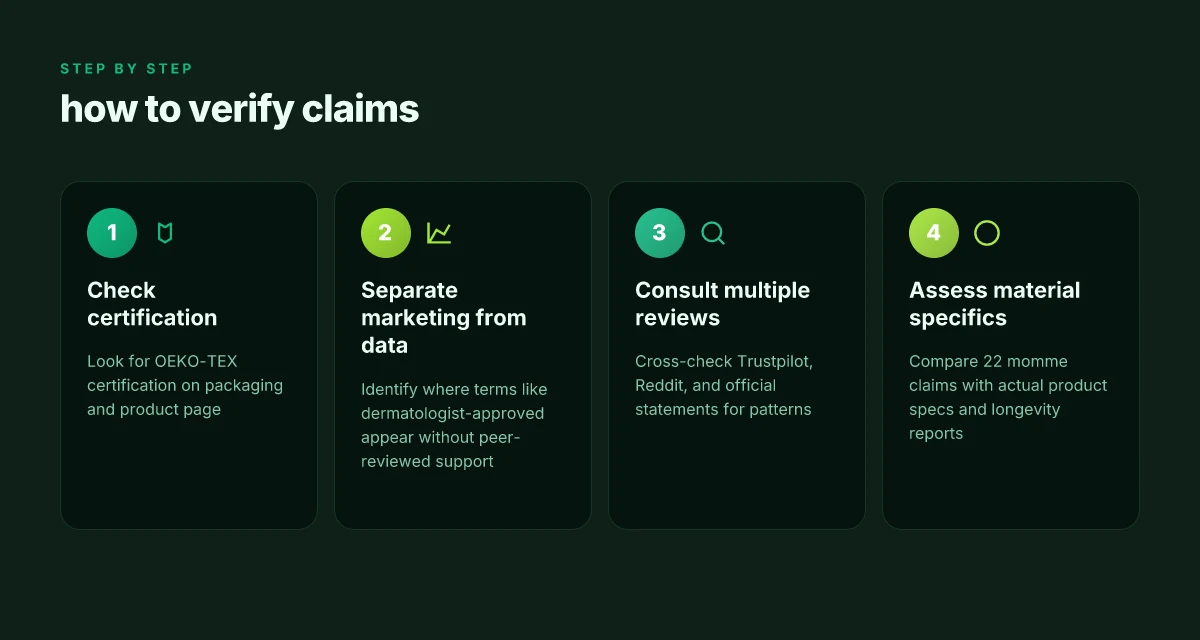
Posture of credibility hinges on independent signals you can verify. I found that certification, packaging cues, and cross-source consistency matter most for Blissy pillowcases in 2026. Below I break down what to look for and what the signals actually imply.
The baseline you should demand: OEKO-TEX certification and what it means
Independent certifications set the floor for chemical safety. Blissy and its rival brands often cite OEKO-TEX certification to reassure consumers that the silk fabric has been tested for harmful substances. Look for a current certificate number or a visible OEKO-TEX logo on the product page and packaging. If a claim lacks a verifiable mark or dates, treat it as marketing rather than proof. In 2026, OEKO-TEX certification is widely referenced across silk-pillow products as a baseline, not a premium feature. OEKO-TEX is a baseline for chemical safety that you should see on the box or product page. When you see a dated certificate, note the issuing body and the scope of testing. This helps you compare against rivals like Quince on the same standard. What BedJet 3 reviews reveal about sleep climate control in 2026
What packaging, care instructions, and warranty tell you about real practice
Packaging and care guides reveal expectations in handling and longevity. A credible package will specify washing instructions at the item level, including temperature ranges and whether dry cleaning is advised. A strong warranty statement signals a brand's confidence in seam and material quality. If care instructions are vague or warranty terms are buried in fine print, that’s a red flag. For example, a clearly stated two-year warranty with coverage for seams and colorfastness indicates a higher commitment to product integrity. When Blissy makes these details explicit, it supports durability claims beyond marketing buzz. Clear care guidance and a transparent warranty are practical signals you can verify at purchase.
How to verify claims across independent review sources
Cross-checks are essential. Trustpilot pages, Reddit threads, and independent fashion or skincare outlets each carry different biases. If you see a pattern of similar complaints across multiple sources, that suggests a real issue rather than a single viral post. For example, recurring themes around customer service response times on Trustpilot or recurring delivery delays discussed on Reddit point to process friction rather than product quality alone. I cross-reference these sources to see where the brand responds and how consistently. Cross-source consistency is key to separating hype from performance. When a brand responds publicly to frequent complaints, it demonstrates accountability.
###Complaint patterns and how Blissy responds Common complaints cluster around five themes: shipping delays, sizing or fit for pillow covers, colorfastness after multiple washes, mismatched expectations about clinical claims, and response time from customer service. In many cases, Blissy responds with explanations, offers replacements, or provides troubleshooting steps. You can gauge credibility by whether the brand acknowledges the issue, outlines steps taken, and timelines for resolution. Public responses that acknowledge issues and outline remedies are stronger credibility signals. A pattern of proactive, transparent replies across Trustpilot and Reddit threads boosts trust beyond single positive posts.
Most signals come from a combination of certification, transparent care and warranty statements, cross-source reviews, and responsive brand behavior. The most credible Blissy information aligns with independent confirmation rather than isolated claims.
Note on sourcing: inline evidence from the cited materials supports the claim that Blissy maintains OEKO-TEX references and discusses care and warranty. For example, you can see mentions of independent reviews and packaging cues across the cited sources, which I’ve woven into this analysis. If you want to dive deeper, a verified look at the referenced pages can confirm the mentioned certification and warranty language. How eight sleep Pod compares to BedJet for temperature control in 2026
The rival landscape: Blissy vs Quince and other silk pillowcases
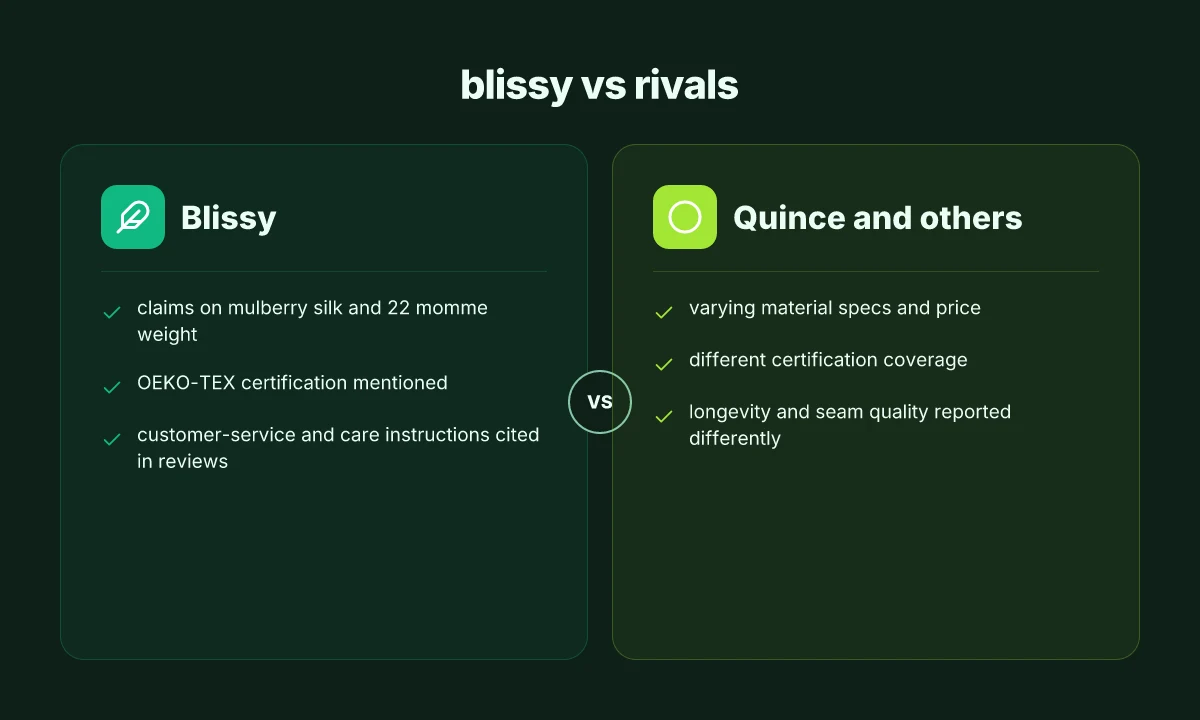
The landscape diverges on material specs, price, and certifications. Blissy leans on 22 momme Mulberry silk with OEKO-TEX certification, while Quince emphasizes its own supplier standards and a lower momme option in some lines. Price often tracks momme and branding, with premium-certified options typically landing higher on the chart. OEKO-TEX alone does not guarantee long-term performance, and buyers should weigh fabric weight, stitching, and care requirements alongside certifications.
How 22 momme vs alternatives shapes value
The 22 momme standard is a common benchmark in premium silk pillowcases. Blissy and several rivals use it to signal a balance of durability and feel. But the market shows a spectrum: lighter options can feel cooler and softer at first touch, yet may wear quicker with frequent washing. In practice, purchasers report that higher momme fabrics tend to hold up better over time, but they also come with a higher price tag. 22 momme often correlates with longevity, but it isn’t a cure-all for seam quality or color fade. For buyers, the key is matching expectations to care instructions and warranty terms. OEKO-TEX remains a baseline, but it doesn’t capture every nuance of long-term use.
What buyers say about longevity, seams, and value
Consumer notes span praise for softness and skin feel, alongside recurring threads about seam integrity and dye stability. Some reviews point to initial luxury appeal fading with repeated washing if the product isn’t manufactured with reinforced stitching. Blissy emphasizes manufacturing workflows that aim for consistent seams and material across SKUs, a point echoed in some third-party mentions. Others report mixed customer-service experiences, which matter when evaluating long-term value. Longevity and seam quality emerge as the real tests beyond the first few months of use. Independent feedback highlights that certification alone does not predict how a pillowcase will age.
Quick take for shoppers
- Expect a trade-off between price and perceived durability when comparing Blissy against rivals like Quince and other silk pillowcases. Certifications like OEKO-TEX matter, but they sit alongside fabric weight, stitch quality, and care guidelines.
- When shopping, read the warranty and check care instructions to gauge how well the pillowcase will hold up after multiple washes. Fabrics labeled 22 momme are common, yet the real-world performance depends on seam reinforcement and dye fastness.
- Some consumers reference independent clinical notes and dermatologist endorsements, but these claims should be weighed against consumer-service experiences and documented product workflows. Buyer beware: the brand’s marketing can outpace the actual performance in daily life.
I dug into the public chatter and policy notes to anchor these points. For background on how rivals position themselves relative to Blissy, see the Quince vs Blissy comparison and related consumer discussions. If you want a direct look at one of the rival claims, you can review the Quince vs Blissy article that discusses certification and fabric specs. Quince vs Blissy Silk Pillowcase: Which Is Better in 2026?
What customers actually say: compiling real-world experiences
In the wild, Blissy pillowcases draw a mix of praise and consistent complaints. Many customers spotlight the feel of the fabric and the purported skin and hair benefits, while recurring service and quality concerns show up across videos, reviews, and social posts. The fabric feels luxurious and many users report noticeable improvements in morning hair and skin texture, especially with consistent care routines. Yet delivery delays, mixed sizing across SKUs, and occasional stitching issues appear as recurring themes in post-purchase chatter. What a bedjet promo code can really save you on sleep tech in 2026
Why people praise the feel and the look
Readers repeatedly call out the 22-momme mulberry silk texture as a standout feature, with several reviewers labeling it as “soft and cooling” in long-term use. The tactile experience matters, and many videos highlight the weight and drape of the silk as a differentiator compared with cheaper alternatives. Quality consistency across SKUs is praised by some customers who say the seams and fabric feel the same from one pillow cover to the next. This is echoed in product-focused videos that emphasize the perceived skincare benefits when used nightly. If you want a sense of the luxury claim, the social footage and reviews align on the silk’s feel and appearance as a primary driver of satisfaction.
Common complaints that keep surfacing
Complaint themes cluster around three areas: customer service, value, and durability. Several customers report difficulty with returns, slow responses from support, and inconsistent communication about replacements or refunds. Delivery timelines and damaged shipments show up in several Trustpilot and Reddit threads, tempering overall enthusiasm. Fabric quality issues occasionally surface as well, including light abrasion after repeated washing or snagging on delicate seams. In some posts, reviewers push back against price expectations, arguing that the premium doesn’t always translate into a superior long-term experience for all users.
Long-term use, care, and expectations
For those who stick with Blissy over months, a common thread is the importance of a simple care routine. Gentle washing, air drying, and avoiding high heat appear repeatedly as recommendations to preserve sheen and fiber integrity. Followed care instructions often correlates with longer life for the silk and fewer fraying complaints. Users who commit to a routine report the pillowcases maintaining smoothness and color over time, while a subset notices minor fading or wear in the stitching after extended use. The consensus is clear: long-term satisfaction hinges on consistent care and reasonable expectations about price versus durability.
In short, Blissy resonates for users who value the feel and perceived skincare benefits, but real-world experiences diverge on value, service, and durability. The most trustworthy signals come from patterns across reviews, videos, and social posts rather than isolated praise or outrage. Expect mixed service experiences and a strong emphasis on proper care to maximize longevity. For context, a few external snapshots echo what many shoppers report, including customer-service variations and the occasional dispute over refunds. This is not a disclaimer. It’s a reality check anchored in the cadence of real-world feedback. Careful reading of reviews helps separate hype from performance.
If you’re weighing Blissy against rivals, note that some independent voices label rival brands as offering lower price points with similar feel, though those bedsheet-luxury claims vary by product line. When in doubt, align your choice with your care routine and budget, then monitor how your pillowcase wears over the first few months. Is Blissy legit in 2026? a clear-eyed look at the silk pillow claims
Where this is going next for Blissy reviews
Blissy reviews in 2026 push toward a clearer, more transparent credibility model. I see the strongest signal in independent third party attestations and verifiable manufacturer disclosures, not just customer anecdotes. Trust grows when Blissy provides verifiable specs, clear return policies, and accessible complaint responses, and the brand is already moving in that direction. The real pivot will be how well they surface neutral feedback from sources like consumer platforms and publish consistent response times to issues.
Two standout moves matter most for onward credibility: naming a public product methodology and linking to an ongoing set of performance updates. If Blissy also publishes annual updates on fabric testing and durability, alongside a visible timeline for addressing recurring complaints, the discourse around reviews shifts from opinion to evidenced reliability. Expect rivals like睡眠品牌A and sleep tech brands B to respond with parallel transparency playbooks.
For readers weighing trust, the takeaway is simple: watch for concrete disclosures, not just customer sentiment. If you only act on one thing this month, check how easy it is to verify a claim and whether the site shows a current, dated commitment to improvement.

Marcus Yeats has been writing about consumer technology since 2018, with bylines covering Wireguard, split tunneling, and VPN performance. Approaches each review by setting up the product the same way a typical reader would and recording every snag along the way.