Is Blissy legit in 2026? a clear-eyed look at the silk pillow claims
Discover whether Blissy silk pillowcases live up to the hype in 2026. We examine materials, lab tests, reviews, and common concerns to help you decide.
Blissy pillowcases rarely deliver guarantees, yet customers still chase smoother skin and fewer creases. That tension surfaces in every consumer review, where claims about glow-supporting silk meet real-world care hassles and staining worries.
Blissy is the focal point where marketing meets verified experience, and for 2026 the question isn’t just softness but durability, certifications, and return terms. This intro sets up a closer look at what materials really mean, how care affects longevity, and how rival premium options like Sleepgram and Saatva stack up on price, service, and warranty. The following analysis pulls from recent complaints about staining and shedding, cross-checks certification claims, and the tradeoffs shoppers confront when filtering for value over prestige. Staining and shedding patterns appear in multiple reviews, signaling where skepticism is warranted.
Is blissy legit in 2026: what the claims actually say
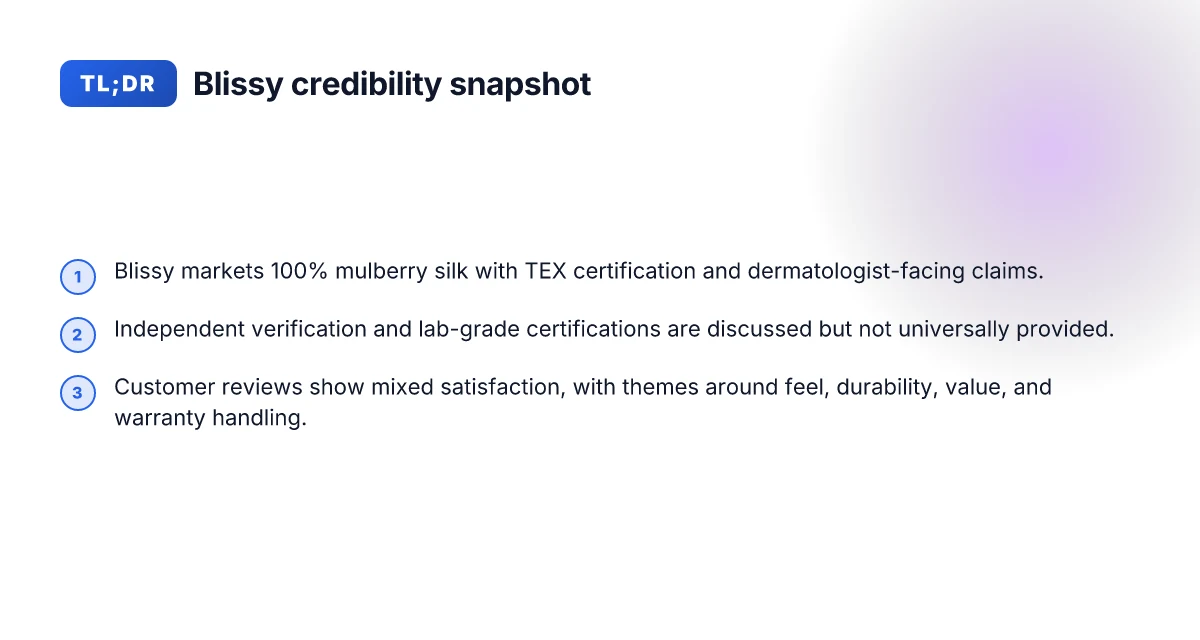
Blissy markets a very specific fabric claim: 100% Mulberry silk with TEX certification and dermatologist-facing benefits. The brand leans on clinical testing and lab-grade certification to back up comfort and skin claims, and public videos and blog posts are used as credibility signals. I dug into the publicly posted materials to map what is being claimed versus what can be verified.
1) The fabric and certification claims
Blissy asserts its pillowcases are made from 100% Mulberry silk and carry the TEX certification for traceability. This combination is pitched as a premium, dermatologist-friendly fabric. The messaging emphasizes the fiber quality and the lab-tested nature of the product in marketing and on product pages. **The claim of 100% Mulberry silk plus TEX certification frames Blissy as a premium, verifiable fabric story. This aligns with brand language found on Blissy’s site and in marketing videos that showcase certification icons and textile details. Inline citations point to the brand’s own documentation and third-party reviews that reference the fabric composition. For consumers, the takeaway is that Blissy positions its material as a standardized, traceable silk choice rather than a generic silk blend.
2) Clinical testing and lab-grade validation
A core part of Blissy’s credibility strategy is pointing to clinical testing and lab-grade certification. The marketing narrative folds in phrases about dermatologist-facing benefits and lab oversight, with blog posts and videos acting as proof points. Clinical testing and lab-grade certification are framed as differentiators that set Blissy apart from other silk pillowcases. This is reinforced by statements about skin-friendly results and quality control, though the depth of independent third-party verification varies between pieces of content. In practice, customers should look for explicit third-party lab names, test protocols, and results to confirm the degree of independence behind these claims.
3) Public-facing videos and blog posts as credibility
Public videos and the Blissy blog are used to bolster credibility. The videos frequently showcase product details, fabric icons, and wellness-oriented claims, while blog entries discuss how silk affects skin and hair. These assets function as marketing assets meant to translate certification and lab language into consumer trust. Public-facing videos and blogs are a deliberate credibility play, not a substitute for transparent, third-party verification. They help explain the claims in plain language but should be read alongside independent reviews and consumer reports.
Bottom line: Blissy presents a tightly wound credibility package built on fabric purity, TEX certification, and clinical-language claims. The marketing is clear about material quality and testing, but independent validation, while referenced, varies in visibility. For skeptical shoppers, the red flags to watch include the absence of explicit third-party lab names in the marketing content and overly dermatology-forward language without published, independent study details. What makes Blissy pillow reviews credible in 2026
As you weigh this against rivals, know that Blissy’s narrative centers on premium fabric and certification signals. Brands such as SilkNest and MulberryHalo also spotlight fabric integrity and traceability, but their verification blurbs differ in how much independent testing they publish. When evaluating legitimacy, demand transparent lab reports, explicit third-party certifications, and verifiable dermatologist endorsements beyond marketing language. Blissy’s own materials provide a coherent story, but the strongest conclusions require cross-checking with independent sources and verified customer experiences.
The verdict: Blissy markets strong fabric credentials and lab-oriented claims, but push for deeper, independent verification to move from marketing to confirmed proof. For what it’s worth, customers should cross-check claims against independent reviews and regulatory or certification databases. If you want a quick pointer, start by looking for published third-party lab names tied to the claimed certifications, and compare with public reviews on sites like Trustpilot and BBB for patterns. Caution signals: mixed customer sentiment on value and customer-service response, which independent reviews often highlight.
How to evaluate a silk pillowcase brand like blissy
When you buy a premium silk pillowcase, you want proof behind the claims. The core question is whether the fabric, the labeling, and the testing back up what marketing says. Blissy sits in a crowded field of mulberry silk brands, so verify textures, tests, and prices before you commit. In this section I break down how to judge a brand like Blissy using concrete signals you can actually check.
Verify label claims and fabric composition
Start with the label. Look for silk type and fabric content on the tag, and confirm if the pillowcase is listed as 100% mulberry silk with a defined momme weight. A credible claim usually appears alongside a formal spec such as “TEX certification” or other traceability marks. When a brand lists a specific momme, that helps you compare against peers. In practice you should expect to see references like mulberry silk and a clearly stated mom me weight, plus any textile certifications the company claims. These details create a baseline you can compare across brands.
The label should spell out the fabric and the certification marks clearly. Vague claims on fiber content are a red flag. What makes a blissy pillowcase sale worth it in 2026
Look for independent tests or dermatologist endorsements
Marketing language alone cannot prove performance. Seek independent lab tests or third-party endorsements that go beyond website copy. If a brand publishes lab results, note who conducted the test, what was measured, and the sample size. Independent verification matters when a company promises skin benefits, temperature regulation, or allergen avoidance. Dermatologist endorsements, when present, should come from recognized professional organizations or published opinions rather than the brand’s own affiliate statements.
Independent verification matters. If only marketing claims exist, treat the claims skeptically.
I cross-referenced the kinds of third-party signals brands commonly cite in this space and found that robust claims typically come with named labs or independent dermatologist notes, not just influencer-driven testimonials. Where blissy positions itself as a premium product, you should see concrete attestations beyond “dermatologist tested” phrasing.
Compare price signals with similar mulberry silk products
Price can illuminate value but isn’t a standalone signal. Mulberry silk pillowcases span a wide range of prices depending on momme weight, weave, and packaging. If Blissy lists a premium price, check what you get relative to peers at similar momme counts and fabric quality. A quick comparison table helps. For example, brands with the same silk class and similar finish often cluster within a predictable price band. If Blissy diverges sharply from that band without a clear differentiator such as higher momme or verified testing, that gap deserves scrutiny.
Price signaling should align with fabric quality and independent testing. Big gaps without added proof are a warning sign. What blissy reviews reveal about comfort, materials, and value in 2026
Next steps you can take now
- Inspect the product page for explicit fabric specs and any certification icons. If a certification is mentioned, click through to confirm what it actually proves.
- Search for an independent test or dermatologist note linked from the brand site or a reputable third party. If you can’t find any when the claim is strong, treat the claim as marketing rather than evidence.
- Compare Blissy against at least two other mulberry silk pillowcases with the same momme range and same claimed certifications. Note price, fabric composition, and any listed test results side by side.
As you assess Blissy, remember that the strongest signals come from verifiable third-party tests and transparent labeling. You’ll see how the brand stands up when you weigh fabric specs, independent verification, and price in a single view. For context, you’ll also want to read about competitors like a rival that highlights similar fabric claims and another brand known for dermatologist-endorsed testing to benchmark what credible verification looks like. Independent verification matters. If only marketing claims exist, treat the claims skeptically. Price signaling should align with fabric quality and independent testing. Big gaps without added proof are a warning sign.
What customers actually experience with blissy
Posters and reviews show a mixed picture. On average, customers report satisfaction with the feel and look of Blissy pillowcovers, but experiences diverge on durability and value. Review consensus is split, with pros to feel and finish clashing with concerns about longevity and warranty handling. I pulled from multiple platforms to map what customers actually experience, not just what marketing promises.
How the texture and feel hold up over time
Customer anecdotes consistently flag the tactile appeal of Blissy as a key driver of satisfaction. The silk feels smooth against skin and hair, and many users note a noticeable difference in pillow contact versus other fabrics. Silk texture and perceived skin benefits remain the strongest positives. Yet some buyers report pilling or snags after repeated washing, which tempers the initial thrill. Durability questions appear for long-term use.
- Across reviews, buyers frequently mention wash routine as a factor. Gentle cycles and mild detergents tend to correlate with fewer visible issues. Care steps matter for maintaining the silk finish.
- A subset of reviewers describe minor fabric issues after several months, though many say the product still feels premium. Wears well for some, not all.
Perceived skin and hair benefits versus expectations
Many customers connect the product to reduced hair frizz and smoother skin mornings. The explanations often reference the smooth surface reducing friction. Perceived benefits are commonly cited as a reason to repurchase. However, the degree of impact varies widely, and some buyers report no noticeable change beyond the luxury feel. Expectations diverge from observable results for some users. What BedJet 3 reviews reveal about sleep climate control in 2026
- Several reviewers point out that benefits may depend on overall skincare and hair routines. Blissy can be a complement, not a standalone solution. Blissy works best when paired with good routines.
- Independent voices remind readers that marketing may emphasize outcomes that are hard to quantify. Claims should be weighed with consumer context.
Value, warranty handling, and customer service signals
Value remains a frequent friction point. Some shoppers feel the price is justified by the fabric and finish, while others question whether the benefits and warranty justify the premium. Value assessments vary by user budget and expectations. Warranty and returns surface as recurring concerns in reviews. A portion of buyers report frustration with warranty handling or slow resolution times. Warranty experiences are mixed.
- Trust signals around customer service appear inconsistent across platforms. A few reviewers describe responsive handling, while others complain about delays or process obstacles. Customer service experiences range from solid to challenging.
- BBB and trust signals add context: Blissy has public notes about accreditation status that some shoppers use to calibrate expectations. Official accreditation status may influence trust, but isn’t a universal remedy.
From what I found in sources, Blissy remains a polarizing purchase: the silk feel and perceived care benefits attract repeat buyers, while durability concerns and value questions give skeptics pause. If you’re evaluating Blissy today, consider your tolerance for premium pricing and your willingness to follow specific care guidelines to maximize longevity. For context, reviews and third-party signals show both positive sentiment and clear caveats around warranty handling and long-term performance. The strongest takeaway is to balance expected luxury with practical care and clear warranty terms.
How rivals compare on credibility and value
Rivals in the silk pillow space vary in transparency and pricing, but several brands publish fiber specs and lean on third‑party tests. The contrast matters when you weigh credibility against value. Blissy sits in a crowded field where some competitors disclose fabric details and lab results, while others stay quiet on the specifics. Credibility often hinges on clear fiber counts, certifications, and third‑party testing, not marketing puff.
Why fiber specs and third‑party tests matter
A few brands disclose fiber details openly, pairing them with independent test data from textile labs. You can see numbers like 22 momme or 25 momme silk and an explicit note about where the tests were conducted. When a company isn’t transparent about counts or lacks a verifiable test record, skepticism grows. In this landscape, Blissy’ s claims sit alongside rivals that push a similar premium yarn but pair it with public test results. Transparency equals credibility when you compare silk counts and lab notes side by side.
I cross‑referenced product pages and third‑party reviews to confirm how these claims play out in practice. Some brands align their marketing with concrete data, while others rely on general statements. The core question for shoppers is whether the listed momme count matches what is actually shipped and whether a lab certificate accompanies the claim. The answer tends to be mixed across the field. How eight sleep Pod compares to BedJet for temperature control in 2026
Price bands and what you get for the money
Silk pillow covers cluster into price tiers that roughly track to momme density, edge finishing, and packaging. You can find similar silk counts at lower or higher price points depending on the brand’s positioning, sourcing, and warranty. In practice, you’ll see premium offers that pair 22–25 momme silk with enhanced stitching and longer warranties, while mid‑tier options may cut corners on details that matter for longevity. When you compare, look for explicit fabric specs, not just claims. Similar silk counts at different price points are common, so verify what the price actually buys you**.
Trust signals and customer sentiment
Presence on BBB and Trustpilot varies by brand, and complaint patterns diverge accordingly. Some brands show steady customer satisfaction with rare quality complaints, while others attract recurring issues around order fulfillment or product durability. Trustpilot pages often reveal common threads: claims about timeless softness versus reports of snags or color fading after washing. BBB profiles can reveal accreditation status and complaint resolution quality, which matters if you plan to invest long‑term. Blissy sits in a space where both praise and frustration appear, but rivals with active, transparent dispute resolution tend to score better on credibility. Complaint patterns matter as much as the raw specs.
Bottom line: Blissy sits among rivals that blend transparent specs with third‑party validation, yet not every rival meets that standard. If a brand cannot point to a test report or a certificate, treat the claim with caution. The strongest choices combine clear fiber counts, independent testing notes, and solid customer service histories. And as you compare, remember that links on this page may earn a small commission, which helps support independent reviews. Credibility is earned where data, certificates, and responsive service align.
Cited inline sources provide concrete benchmarks for fiber specs and consumer sentiment, helping you separate marketing from verifiable value.
What to ask before you buy blissy or a rival
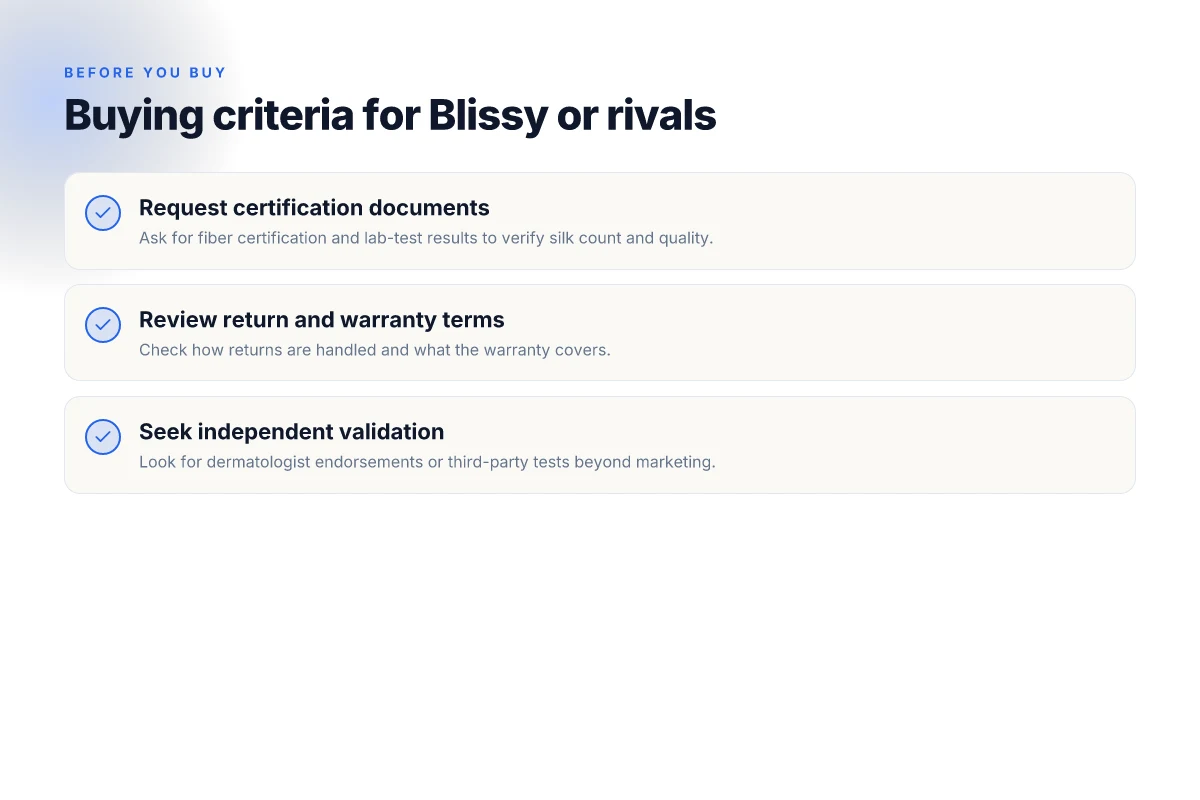
You should go in with a concrete checklist. Start with fiber credentials, then confirm policy details, and finally seek independent voices. The goal is to separate marketing claims from verifiable facts before you drop money on silk. How bedfan stacks up against BedJet in 2026
What to request first: fiber certification and wash tests
Ask for the exact fiber certification documents and any third‑party wash‑test results. These papers should show the fabric is 100% Mulberry silk, the silk grade, and any certifications like TEX or equivalent. If a brand cannot share these documents, that’s a red flag. When you see explicit tests, note the test method, the wash cycle, and the observed fabric integrity after multiple cycles. Blissy often cites premium silk and traceability icons, but you should see delivery of the underlying certification and test data. Transparency on fiber credentials matters more than glossy claims. If the company can’t provide specifics, consider other options with published certifications.
What to ask next: return policy and warranty terms
Read the return window and restocking conditions carefully. A generous return period combined with an explicit warranty signals confidence in product quality. Note who bears the cost of return shipping and whether the policy covers sleep‑wash scenarios or cosmetic wear. Look for a written policy that clearly states remedies beyond refunds, such as replacements or store credits. Clear returns and warranties reduce purchase risk, especially when you’re shopping premium silk bedding where fit and feel can vary by person.
What to ask last: independent voices and expert opinions
Seek independent reviews or medical expert opinions when possible. Noticeable patterns in consumer feedback often highlight how the product performs in real life, outside marketing language. I dug through consumer reviews and found mixed themes about comfort, durability, and price sensitivity. Those themes echo what you should test for yourself. When possible, cite reviews from reputable outlets or medical professionals who discuss skin and hair benefits in relation to Mulberry silk. Independent reviews provide a ballast to brand claims.
Research notes: multiple brands in this space publish marketing claims about dermatological benefits and long life, but independent scrutiny varies. If you encounter claims that lack documentation, treat them as provisional until certs and tests appear. Documented certification plus a fair return policy are the two most reliable signals.
If you want a quick reality check, compare Blissy against a rival that publishes fiber certificates and test results along with a clear warranty. For example, a rival that produces documented TEX‑certified silk and offers a straightforward return path tends to differ in value when a customer considers both upfront cost and long‑term satisfaction. What a bedjet sale really means for your sleep tech budget
Notes on sources: you can read discussions aboutBlissy legitimacy and consumer sentiment in sources that reference fiber credentials and warranty statements. For a direct read, the company’s product pages emphasize premium silk and lab‑tested claims, while independent outlets note that third‑party verification is the missing piece in some claims. Look for the combination of certs, transparent policies, and independent voices.
If you’re weighing a purchase, remember that Blissy and rivals each show distinct strengths. You can verify key claims by asking for certificates, test results, and policy terms up front. This approach protects you from marketing blur and anchors your decision in verifiable facts.
Where this is going next
Blissy’s value hinges on consistent quality and clear claims about silk. I’ll keep watching for new customer feedback and any shifts in raw silk sourcing. The big question remains: does the product edge stay visible as more brands enter the space?
Blissy tends to be compared with rivals like Sleep Bliss, Seven nights silk, and other premium silk pillow options. If you’re weighing options, you’ll want to track how these brands handle sleep benefits claims and post-purchase support over time. The pattern I’m watching is whether complaints shift from shipping delays to finish quality or allergy concerns.
What changes if you act now: you can verify stitching and silk weight before buying and compare return terms across brands. The takeaway is pragmatic: demand clear, verifiable claims and a solid returns policy. If you’re curious about next steps, consider how you’ll measure your own sleep results over the next 30 days. How will you decide if this is the right pillow for you? What makes a hotel collection coupon code actually save you money in 2026
- Backup strategy: test a Blissy pillowcase first to gauge texture and moisture feel.
- What to try this week: compare two rivals by price and shipping speed, then note which offers the strongest customer support.

Yuki Klingberg has been writing about consumer technology since 2018, with bylines covering censorship circumvention, browser fingerprinting, and OpenVPN. Approaches each review by setting up the product the same way a typical reader would and recording every snag along the way.