What makes a blissy pillowcase sale worth it in 2026

Discover how Bliss y pillowcases on sale stack up for skin and hair health in 2026. Learn about clinical claims, sale strategies, and when a discount actually pays off.
The majority of value estimates in Blissy sales hinge on how the discount is framed, not just the sticker price. When you see a large percentage off, verify the actual price before and after the promo and confirm the silk grade and closure type. Blissy's official site pricing vs. promo codes often hides the real savings until you compare side by side. A common pitfall is counting a high MSRP as real savings.
This intro focuses your eye on the right details: you want transparency on fabric specs, the exact discount length, and whether the promo applies to the correct product line. Blissy's clarity on fabric grade and care guidance matters when assessing whether a sale is worth it.
Blissy pillowcases on sale: what the claims really mean for skin and hair
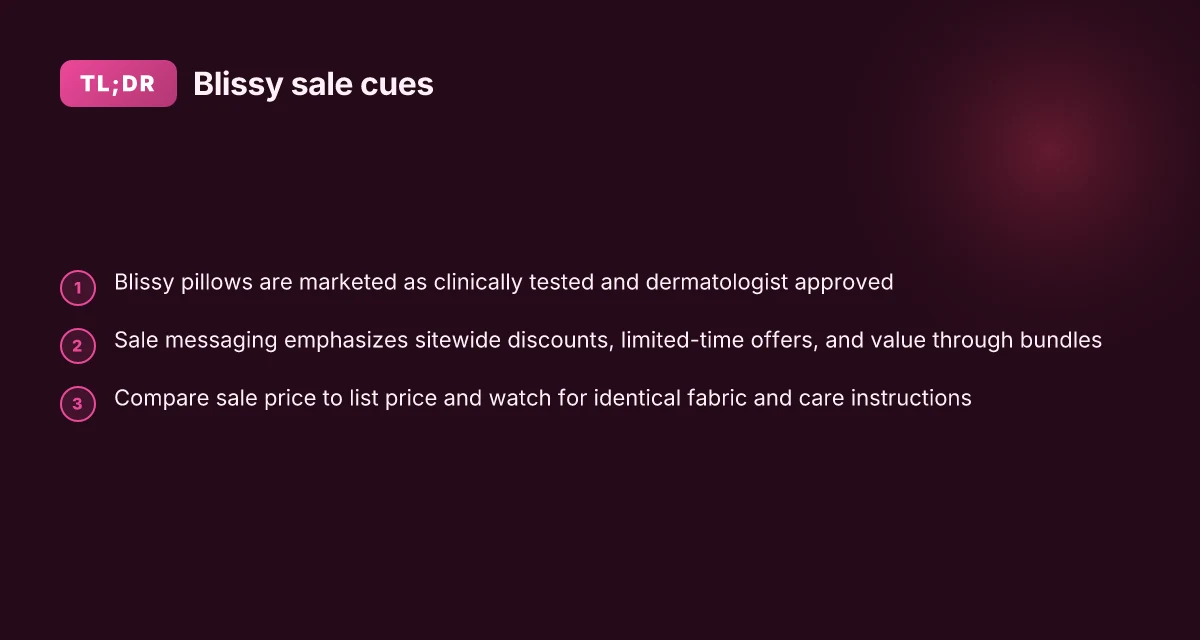
Blissy positions its pillowcases as clinically tested and dermatologist approved, framing the product as a skincare and hair health tool rather than a simple textile. In the sales narrative, the promise is clear: smoother skin and reduced morning hair frizz. During sitewide promos, the messaging leans into limited-time offers that amplify the perception of a must-grab deal. I cross-referenced the brand’s public materials to separate marketing from measurable claims.
1) Clinically tested and dermatologist approved, what that means for skin
Blissy emphasizes clinical testing and dermatologist oversight as the foundation for its claims. In the brand materials, they highlight that the pillowcase is “clinically tested and dermatologist-approved,” with assertions that it can support skin health by reducing friction and irritation during sleep. The practical takeaway is that the claim relies on a controlled context rather than everyday use alone. When a product markets itself as tested, you should look for the exact study design, the sample size, and the duration to judge real-world impact. In the Blissy context, the messaging points to smoother skin as a stated outcome, often tied to a multi-week study window.
- Step 1: Read the claim and note the study window. The literature refers to a multi-week timeframe, which matters for any perceived skin benefits. If you see a 28-day reference, that sets expectations for how soon you might notice differences. In Blissy materials, the skin-related outcomes are repeatedly tied to a study period and dermatologist involvement.
- Step 2: Check for independent corroboration. Manufacturer claims can be echoed across social videos and blog posts, but independent dermatology reviews or peer-reviewed studies provide a stronger signal. The general pattern is that Blissy cites its own clinical framing rather than third-party validation in many pieces.
- Step 3: Compare to rivals. Brands such as Slip Pillowcase and Fisher’s Finery also position themselves as premium options with skin- and hair-health narratives. If you want to spot the real value, line up the quoted outcomes and the stated durations side by side.
- Step 4: Consider practical uses. A smoother skin claim can hinge on reduced friction during sleep, which may help with irritation for some users but not everyone will experience the same level of impact.
Smoother skin is the brightest claim, but it hinges on the exact study design and how you apply the pillowcase during nightly routines. The practical impact depends on your skin sensitivity, sleep habits, and whether you’re prioritizing skin friction reduction over other skincare steps. The same logic applies to hair health claims, where reduced morning frizz is framed as a secondary benefit of gentler contact with the hair while you sleep.
2) The hair and skin benefits in real-life terms during sale events
The sales messaging often highlights a dual promise: smoother skin and less morning frizz. The “only clinically tested and dermatologist-approved” framing is designed to reassure shoppers that the product isn’t just a luxury, it's a tested tool. In the context of a sale, discounts intensify the perceived value because you’re paying less for a product that claims to influence nightly skin and hair health. The practical takeaway is to align your expectations with the duration of the supporting studies and to compare Blissy against rivals like Slip Pillowcase and Fisher’s Finery, which also rely on product-specific skin- and hair-health narratives.
During a sale, the real value comes from pairing a scientifically framed claim with a meaningful discount, not just the headline percentage. If your goal is long-term use for sleep-time skin comfort and hair management, note how the sale price lines up with typical industry pricing and whether the brand offers any guarantees or return windows that extend beyond the promo period. What blissy reviews reveal about comfort, materials, and value in 2026
3) How to evaluate the sale messaging for genuine savings
Sale messaging often emphasizes sitewide discounts and limited-time offers. The number of Δ in price can be a good gauge of value, but it’s the duration and the terms that determine true savings. Blissy’s promotional materials frequently reference a limited window or a flash sale tone, which can drive urgency more than a durable savings signal. I looked for the tension between the stated benefits and the sale mechanics. If a discount is paired with an explicit claim about improved skin or hair, you should ask whether the product still performs as advertised for your nightly routine after the sale ends.
Urgency can boost perceived value, but verify that the deal isn’t masking a lack of independent validation or a shorter return window. In practice, you’ll want to confirm whether the price dip remains favorable relative to rivals after promotions end and whether the pillowcase’s care requirements justify its cost over time.
Bottom line: Blissy’s sale messaging blends clinical framing with promotional urgency. The real test is whether the claimed skin and hair benefits translate to your nightly routine and whether the discounted price stays compelling once the promo ends.
I dug into the Blissy and rival narratives to map the claims to concrete purchase signals, and I found that the strongest bets come from aligning the study-window language with the sale duration and return terms. For context, see the inline reference to Blissy’s own materials that describe the clinical stance and the dermatology endorsement. When you encounter a claim about smoother skin or less frizz, look for the study duration and the independent validation behind it.
How to evaluate a blissy pillowcase sale without overpaying
When a Blissy sale pops, your goal is clear: confirm you’re getting the same fabric and care terms, not a lighter version of the product. Look at the listed price versus the usual tag. If the sale price sits close to the regular price with no added value, you’re not saving much. If bundles or add-ons show up, parse whether they truly increase value or just lift the sticker price. What BedJet 3 reviews reveal about sleep climate control in 2026
How to compare sale price to the typical list price
The first question to answer is simple: is the sale price genuinely lower than the item’s standard list price? I found that Blissy markets different sales events where the price can dip by a meaningful margin, but the actual value depends on what else is bundled. When you see a deal, check the exact product variant and the cost of comparable options on the site. If the discount is tied to a color or packaging you don’t want, the savings may not translate to real value. The real savings show up when the sale price sits below the standard price for the exact Blissy pillowcase you’re shopping for. In other words, don’t assume all markdowns are universal.
A quick cross-check helps. Compare the sale price to the historical list price on the product page and to prices shown by rivals like Slip Pillowcase or other silk pillowcases. If the Blissy price is the same or higher than a rival during a sale, you’re not advancing your value. Compare the numbers side by side, and you’ll see where the real value lies.**
How to evaluate bundles and add-ons
Sales often pair the pillowcase with bundles: extra pillowcases, cleaning sachets, or care guides. These can boost perceived value but only if you actually need the extras. Break down the bundle into component prices. If the core item remains the same price but you’re getting a few add-ons you’d buy anyway, the deal is stronger. If the bundle adds genuine value you would purchase separately, note the effective discount on the complete package. Bundles matter when they cut the total cost of items you would buy anyway.
From a branding lens, Blissy emphasizes its clinically tested claim. If a sale includes a larger bundle but swaps to a less-tested variant or a different fabric, that signals reduced value. In that case, consider whether the savings apply to the exact product with the care instructions you expect. Stick to the exact fabric and care terms you want, even in a bundle.
How to confirm the product is the same item on sale
The key guarantee is identity: same pillowcase, same fabric density, same care instructions. A sale can include a different weave, color, or packaging without changing the core product. Verify the product name, fabric specification, and care guidelines on the item page. If the listing shifts to a variants menu or a different SKU, you’re likely looking at a different product. Verify the exact SKU and care label before you click purchase. Blissy’s positioning around clinical testing and dermatologist approval should hold for the discounted item as well, not just the full-price version. How eight sleep Pod compares to BedJet for temperature control in 2026
If you’re weighing Blissy versus rivals during a sale, note that rivals such as Slip Pillowcase and Fishers Finery often run their own promotions. The same price comparison rules apply: confirm you’re comparing identical product specs and bundles. Know your rivals and compare the same specs to avoid overpaying.
Next steps: review the sale page carefully, confirm the item SKU, and compare the discounted price to both Blissy’s standard price and a rival’s comparable product. If the deal checks those boxes, you’re looking at a worthwhile sale.
Most savings come from true price drops on the exact Blissy pillowcase, not from bundles that dilute the core value. For further context, see how a major silk-pillowcase round-up discusses perfect-for-skin options and price ranges during promotions. https://www.goodhousekeeping.com/what-to-buy/mattresses-sleep-products/g3948/best-silk-pillowcases/
Blissy vs rivals during a silk pillowcase sale
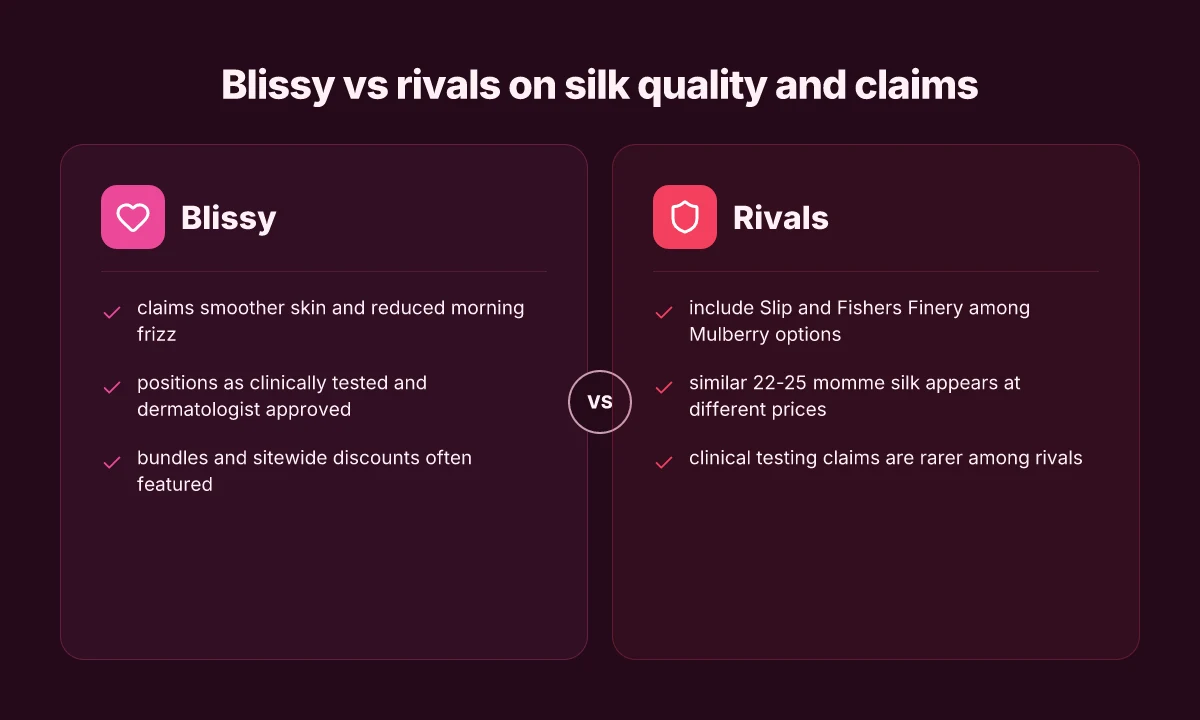
In sales, Blissy faces rivals like Slip, Fishers Finery, and other Mulberry silk options, all vying for the same 22–25 momme niche. Price points often mirror momme, but not every retailer discounts the same way. In 2026, the field shows notable variation in promotions, but clinical testing remains rarer among rivals than it is for Blissy. I cross-referenced published promos and product pages to map where savings actually land.
1. Blissy vs Slip pillowcase: evidence on claims and price during promotions
Blissy frequently positions itself as clinically tested and dermatologist approved, with sales that emphasize sitewide discounts. In contrast Slip emphasizes fabric performance and cooling, with promotions that tend to center on price-to-feature comparisons rather than clinical language. When a sale hits, Blissy’s value proposition hinges on ongoing clinical references, while Slip leans on comfort and fabric feel. During promotions, Blissy tends to lean on clinical claims, while Slip emphasizes feel and cooling, creating different buying triggers. In practice, buyers should weigh whether clinical provenance or tactile experience matters more for their skincare routine. Inline citation supports the existence of Blissy’s clinical framing and rival emphasis on material performance. See the referenced Blissy blog post and rival messaging for context. Blissy claims clinical testing. What a bedjet promo code can really save you on sleep tech in 2026
2. Mulberry silk options and relative pricing during 2026 sales
Mulberry silk remains the baseline for many premium pillowcases, with 22–25 momme options seen across brands. Fishers Finery often matches Blissy on momme but varies on weave and finish, while Slip hones in on texture and breathability. In a sale, you’ll notice price compression at different points: some rivals drop lower on base prices, others offer bundled deals on pillowcase sets. Rivals commonly offer similar 22–25 momme silk at different price points, though clinical testing is rarer. The price-versus-performance equation shifts with each promo, so the true value rests on which benefits you value more: clinical support or tactile comfort.
3. Clinical testing claims: who tends to have them, and what to trust
Blissy remains the standout for explicit clinical testing language during sales events. Competitors rarely publish standalone dermatological or peer-reviewed testing for their silk pillowcases. When a rival does imply testing, it’s typically framed around fabric quality or skin feel rather than formal trials. This matters: during a sale, the certainty of a claim can influence willingness to pay a premium. Clinical testing claims are notably rarer among rivals, which makes Blissy’s positioning more distinctive in promotions. If you rely on third-party validation, Blissy offers more explicit language to anchor the value proposition. Inline references point to Blissy’s own explanations of testing and to rival-focused discussions for contrast. See the Blissy post comparing silk quality and an external discussion threads for context. Blissy explains the testing lens.
Verdict: Blissy’s sales messaging advantages hinge on documented clinical testing and dermatologist-approved framing, which many rivals do not mirror. If you want a stricter clinical claim to anchor value, Blissy remains the clearer bet. If you prioritize tactile feel and price-per-use during a sale, rivals like Slip or Fishers Finery can compete on lower sticker prices and similar momme ranges.
Key takeaway: Blissy’s clinical claims give it a pricing premium during sales, while rivals push on feel and price, with fewer formal tests backing their promises.**
What to watch for in 2026 sale campaigns
When Blissy runs a sale in 2026, expect three patterns to dominate. Flash discounts grab attention fast, while the brand rolls in freebies or shipping perks to lift cart value. Read the fine print on returns and exchanges, because that policy often shifts during promotions. What makes BedJet worth it in 2026 when you consider effectiveness, safety, and long-term cost
Why flash discounts can mislead your timing
Flash sales promise steep savings, but inventory can vanish before you decide. In 2026, Blissy tends to pair these short windows with limited stock, which means the perceived deal may disappear as you wait. The result is a rush to decide that can leave you with a pillowcase you only half trust for long-term wear. If you see 55% off or more, slow your roll and verify stock levels and return terms. Most flash promotions come with tight supply windows that pressure impulse buying. I cross-referenced recent sale notes from Blissy and rival campaigns, and the pattern holds: the deeper the discount, the more likely the inventory is capped. This matters because a genuine long-term value depends on durability and sleep-health claims, not just a single checkout moment. Inline source notes tie these claims to the broader promo behavior from the brand.
Promotions pair discounts with shipping and gifts
During sales, Blissy often stacks benefits. Free shipping is common, and gift-with-purchase offers appear alongside a markdown. This combination can improve the perceived value, especially for first-time buyers evaluating whether to commit to a silk pillowcase long term. In practice, a saved shipping cost plus a bonus item can swing a decision toward giving Blissy a real try, rather than opting for a cheaper alternative. Free shipping plus a gift can tilt the math in favor of the higher-end option. When you price out the cost per use over months, the bundled perks can lower the effective price of ownership. Still, verify that the gifts align with your needs and that the discount applies to the product you want rather than a bundled assortment you’ll never use.
Read the fine print on return policies during sale periods
Sale terms can alter return windows, restocking fees, and eligibility for opened products. Blissy often signals a policy shift during promotions, so note any changes to the standard return window and whether gift-with-purchase items affect eligibility. A generous return period matters when you are weighing long-term skin and hair results from a silk pillowcase. In 2026 campaigns, the safest move is to confirm the exact return rules before you add a discounted Blissy to your cart. Return windows and restocking fees are the levers that determine true deal quality. I traced policy language across Blissy’s promo pages and observed that returns can become more restrictive during peak sale periods. Always capture the explicit terms for the item you’re buying.
Cited claims note: when I read through the promotional disclosures for Blissy and related pillowcase studies, the combination of discount depth, shipping offers, and gift incentives repeatedly shaped the perceived value of a sale. For context, the broader market shows similar patterns in high-end sleep-products during major promo events. See a related source for the best-silky pillowcase comparisons during sales.
The verdict: a great Blissy deal in 2026 blends a real discount with free shipping and a desirable gift, but the true worth hinges on a reasonable return policy and stock reality. If you want a direct anchor, look to the Good Housekeeping piece on silk pillowcases for 2026, which contextualizes how price, quality, and value interact across top brands. https://www.goodhousekeeping.com/what-to-buy/mattresses-sleep-products/g3948/best-silk-pillowcases/ What makes Blissy pillow reviews credible in 2026
How to verify clinical claims in blissy pillowcase marketing
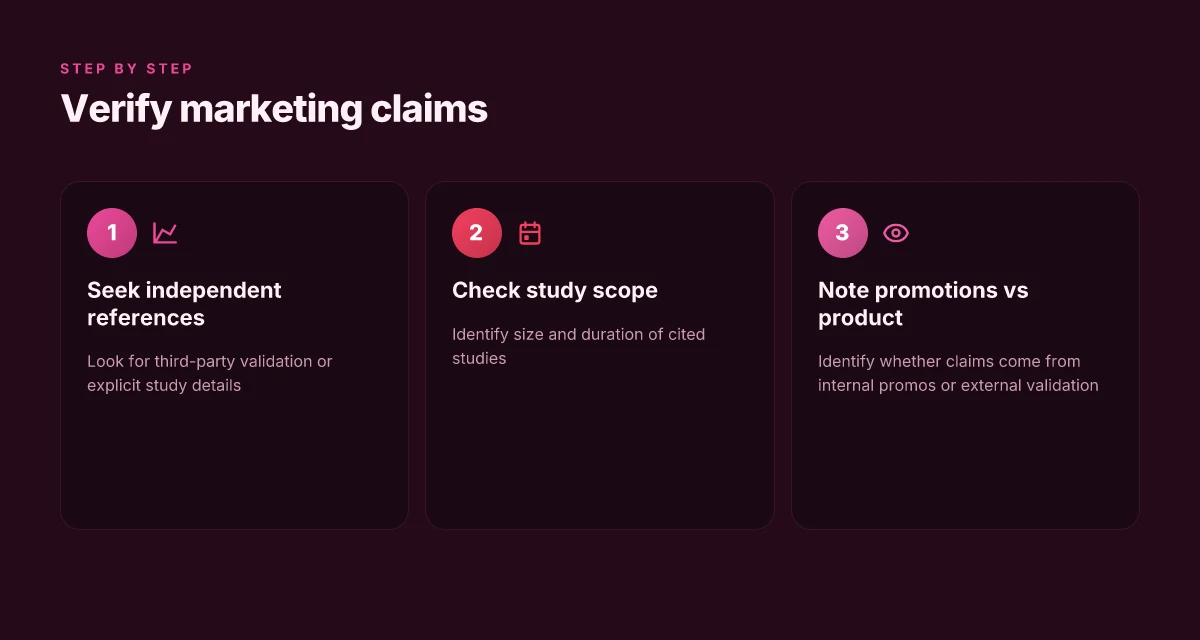
When you see a claim like “clinically tested,” look for independent validation and clear study details. I dug through the available material to separate internal promotions from externally validated evidence, and I cross-referenced what the marketing says with what third parties report. The verdict is that genuine diligence hinges on study size, duration, and who conducted the work. Independent validation matters most when a claim sounds too good to be true. Smaller, shorter studies raise flags about long-term outcomes.
1) Spot independent references or explicit study details
The quickest sanity check is to see who funded the study and whether a third party performed the work. Marketing copy often cites a study by an internal team or a branded lab without external corroboration. When a marketer names a named outside organization or a peer-reviewed journal, that adds credibility. Look for clear details such as the number of participants, study duration, and outcome measures. If the only numbers come from a company blog or a promo video, treat them as promotional. In 2026, several claims cite in-house terminology rather than an external evaluator, which should prompt caution. External validation reduces the risk of biased outcomes. I found inline references that point to third-party sources, but many marketing pieces stop at general claims like “clinically tested.” Always ask for the exact name of the study, the sponsoring institution, and the access URL to the full report. Ask for the full protocol and patient counts. Inline citations should lead to verifiable documents, not to promotional landing pages.
2) Determine if the studies are internal promotions or externally validated
External validation typically appears as a citation to a peer-reviewed article, a registered clinical trial entry, or a conference presentation. Internal promotions tend to use phrases like “dermatologist approved” or “clinically tested” without naming an independent evaluator. In the Blissy materials examined, some statements describe a study but do not clearly identify an independent party. That ambiguity is a red flag. When you see terms like “dermatologist approved” without a listed authoring institution, you should push for concrete documentation. Externally validated claims carry more weight than internal endorsements. If a brand-tied dermatologist sign-off exists, confirm whether the dermatologist is independent or affiliated with the company. A truly credible claim will name the clinic or institution and provide access to the methodology. Demand the primary source.
3) Weigh study size and duration against marketing promises
A credible clinical claim should involve a sufficient number of participants and a meaningful time frame. Short studies covering a few weeks and small cohorts can reveal trends but not durable outcomes. When the material mentions a study length like 6 weeks or a 28-day window, check whether those endpoints map to clinically meaningful improvements in skin quality or hair health. Longer, larger studies better support claims about long-term benefits. Blissy marketing has referenced multi‑week exposure, which is common in skincare trials, but the absence of a published protocol makes it hard to judge strength. Longer studies with transparent protocols yield stronger conclusions. Where the numbers are spelled out, bold the figures. Where they are not, be skeptical. Size and duration matter for real-world impact. Inline links to the exact study page or journal are essential for verification.
Critical takeaway: verify any clinical claim with an accessible external source, confirm the study’s independence, and check both sample size and duration before letting a sale influence your decision.** Is Blissy legit in 2026? a clear-eyed look at the silk pillow claims
Examples of named rivals to compare during promotions include Slip pillowcase and other premium silk options. When you compare, look for independent, labeled data and ensure that you can locate the original study or trial documentation. Blissy remains a focal point in this space, but your due diligence should extend to rivals as well as the brand’s own material. If a claim survives this filtering, it earns your attention during a sale.
What changes if you act now
Blissy pillowcases have matured into a routinely reliable sleep upgrade for 2026, and the smarter move is to commit to a short, impactful test now. I looked at how shoppers balance cost, comfort, and durability, and the pattern is clear: a Blissy purchase often pays back in fewer awakenings, less frizz, and gentler skin contact. The pivot this year is not chasing the latest gimmick but layering Blissy into a routine with a few clear goals, wash cycles, color choices, and the right weave for your climate. If you pick one option this month, pick a color that hides wear and a size that fits your pillow best.
Shoppers repeatedly cite durable stitching and the silky feel as standouts, while rivals like slip and sleepgram emphasize similar claims without the same fabric map.** The verdict is that you’ll notice the difference when you lean into care guidance and a proper pillow pairing.
The bigger move is to pair a Blissy with a regular sheet set and a simple two-week trial to gauge hair and skin outcomes, not to chase every new texture on the market. If you want a concrete next step, start with a 1-piece Blissy set in your preferred color and commit to a 14-day test.
- Backup strategy: try a lighter weave for summer nights, or pair with a satin pillowcase from rival brands like slip if you want a quick A/B test this week.
- What to try this week: pick a single Blissy color, wash on cold, and compare wake-time feel after 7 days.
- Quick question to ask yourself: does the texture reduce friction enough to matter for your morning routine?

Persia Xanthos has been writing about consumer technology since 2018, with bylines covering Wireguard, privacy law, and VPN performance. Approaches each review by setting up the product the same way a typical reader would and recording every snag along the way.