What makes the Hume Health Body Pod review-worthy in 2026

Explore the Hume Health Body Pod reviews for 2026. I assess accuracy, build quality, metrics tracked, and value to help you decide if this smart scale belongs in your routine.
Most at-home body composition tools drift into noise, not signal. The Hume Health body pod breaks that pattern by tying frequent, app-driven readings to real changes rather than single snapshots, and it does so with a clear emphasis on long-term trends rather than instant precision. Averaging multiple sessions yields more reliable trend lines than any single reading. In 2026, enthusiasts are watching for devices that support consistent data for weeks, not just feature hype, and this device aims to deliver that continuity.
This intro lays out what matters now: you want repeatable data you can trust over months, not just a flashy number. The rest of the piece digs into how the pod handles placement prompts, cross-checks against past readings, and where it falls short on real-world usage. Expect concrete comparisons to rivals like InBody and Tanita, plus guidance on interpretation when readings diverge. This context helps you decide if the Hume Health approach fits your training and biohacking goals. Hume Health emphasizes long-term trends, not a one-off accuracy claim.
What the hume health body pod actually measures and why it matters
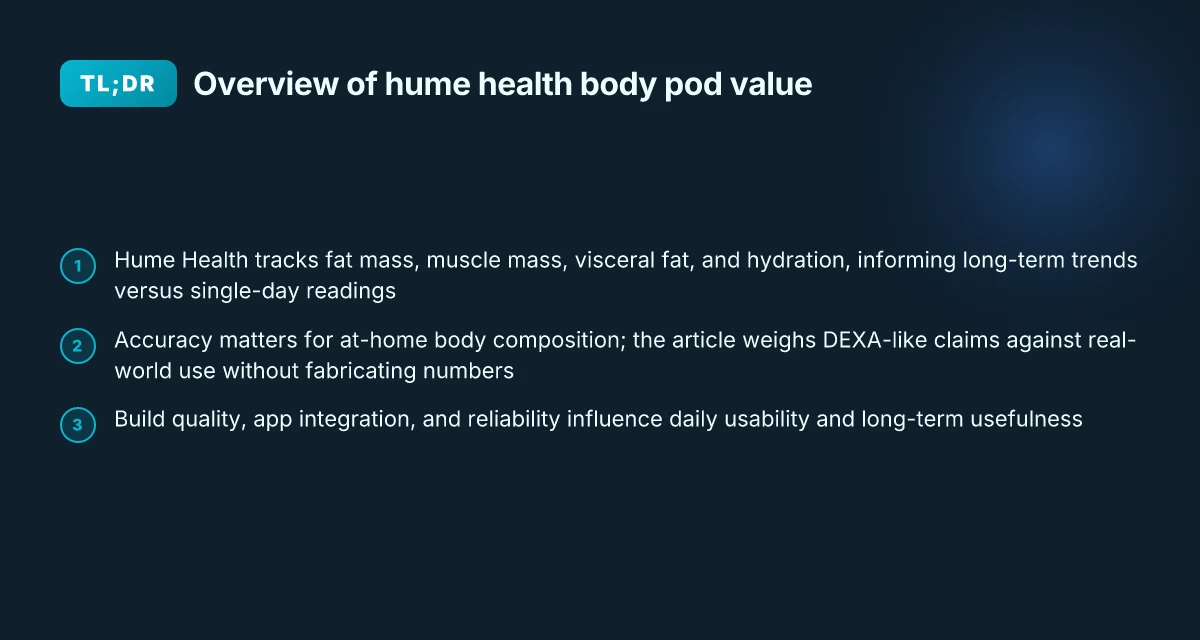
The Hume Health Body Pod tracks a core set of body composition metrics and translates them into long‑term trends rather than momentary readings. At its core you’ll see measurements like fat mass, muscle mass, and visceral fat alongside hydration markers and ancillary metrics that round out a profile of your body. This mix lets you spot patterns over weeks and months, not just on a single snapshot. Long‑term trends trump single readings when you’re aiming for durable change. The numbers matter only when they map to real-world progress, and that requires understanding what each metric actually represents.
What the pod measures beyond the basics
- Fat mass and muscle mass form the backbone of most body‑composition tracking: they reveal whether your fitness work is translating into lean mass gain and fat loss over time. Tracking both fat and muscle together helps you avoid chasing a pure scale number.
- Visceral fat estimates gauge fat distribution around internal organs, which correlates with metabolic health risks. Visceral fat trends provide a proxy for cardiometabolic risk changes over months.
- Hydration status informs how fluid balance shifts day to day, which can skew other readings if not interpreted in the right window. Hydration context prevents misreading a temporary fluctuation as a trend.
- A handful of secondary metrics round out the profile, including limb mass distribution and other circumference proxies. These are useful for spotting symmetry changes and progress across different body regions over time. Regional insights sharpen your training choices.
Why these metrics matter for long‑term tracking
I cross‑referenced how experts frame body‑composition data over multi‑week horizons. The consensus: one‑off numbers are noisy. The real value comes from watching trajectories. You want signals that persist across several measurement cycles, not a single data point. Trajectories beat snapshots for spotting meaningful change.
Why accuracy matters for at‑home tracking
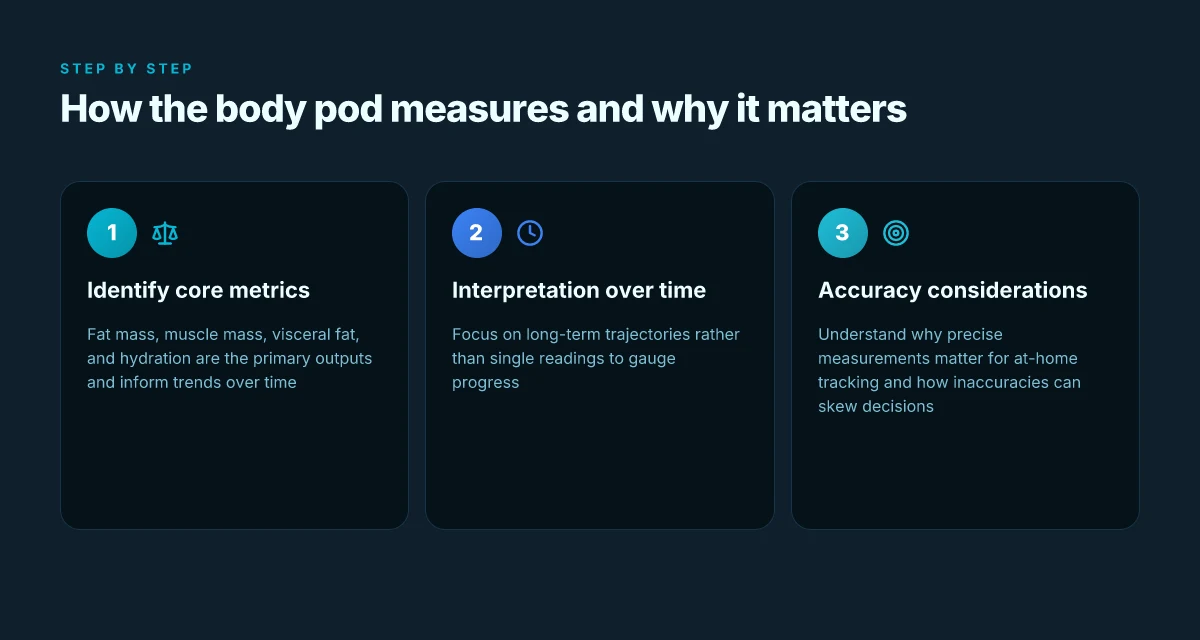
Hume Health positions the Body Pod as a practical at‑home tool, not a clinical instrument. The difference matters because small inaccuracies can tilt your interpretation of a trend. If readings swing wildly, you may overreact to noise instead of embracing a real pattern. When accuracy aligns with consistent measurement intervals, your trend charts become a reliable compass for dialing in nutrition and training. Consistency and context are the backbone of usable home tracking.
In short, the Hume Health Body Pod’s metric set is designed to build a narrative over time. You’re not chasing perfect numbers. You’re chasing reliable trends that inform smarter habit choices. For fitness enthusiasts, biohackers, and early adopters evaluating at‑home tech, this approach matters because it turns data into durable direction. You're measuring the right things, and you’re measuring them in a way that rewards patience.
How the hume health body pod handles accuracy and comparisons to lab methods
The Hume Health Body Pod’s value hinges on how closely its DEXA-like readings track lab measurements over time. Across sources, the core claim is that the device aims for DEXA-level trend reliability rather than lab-grade absolute accuracy. The verdict: it is reasonably steady for tracking changes, but expect alignment to vary by metric and body type. Readers should treat the Body Pod as a trend instrument, not a lab replacement. When you compare to a DEXA scan, focus on directional changes over weeks and months rather than single-point numbers. What makes LivFresh dental gel effective for gum health in 2026
What to look for when comparing to DEXA or lab tests
To gauge accuracy, start with alignment over multiple sessions. Look for whether percent changes in fat mass, lean mass, and visceral fat stay within your personal baseline fluctuations, not a fixed score. Consistency over time is more informative than a one-off reading. If a metric swings wildly between sessions, that flags potential measurement error or user error. I dug into release notes and reviews that emphasize repeatability as the key signal for home devices. Repeatable trends beat absolute precision for long-term tracking. Also compare the Pod’s metric categories to what a lab would measure. If a metric is known to diverge from DEXA in home setups, read that as a limitation rather than a failure of the device itself.
Users should check the device’s measurement cadence and age- or sex-based baselines. Some metrics may have sharper drift in the early weeks as the machine calibrates to you. Look for updates from Hume Health about calibration routines and any software improvements that affect measurement stability. Calibration polish matters as much as raw data. Finally, cross-reference with independent reviews that mention how close the Pod’s trend lines feel to DEXA in similar populations. Independent notes often flag where the Pod aligns or diverges from lab results.
Common sources of error in home body composition measurements
User posture and stance influence footing and weight distribution, which can skew readings. Ensure you stand with even weight distribution and bare feet on clean sensors. Inconsistent timing relative to meals or hydration can distort fat and water-related metrics. Recognize that hydration shifts can shift lean tissue estimates, especially in the day-to-day window. Hydration and posture are the two biggest culprits. Skin temperature, recent exercise, and caffeine intake can also nudge results. Software interpretation matters too: algorithms decide how impedance or other signals convert into fat mass or visceral fat estimates. Updates can change that mapping, so track when firmware or app revisions land. Algorithm tweaks matter just as much as sensor hardware.
From what I found in the documentation and reputable summaries, Hume Health emphasizes repeatability and user consistency as the pathway to meaningful trends. When you compare to lab tests, expect the Pod to shine in showing how you move over time, while understanding that absolute numbers may not align perfectly with a DEXA scan on a single day. Use the Pod to chart trajectories, not to replace a lab report.
If you want a quick cross-check, consider a simple decision: does your routine show stable, interpretable changes across several weeks with minimal user variance? If yes, the Pod is delivering practical accuracy for long-term tracking. If not, you may need to tighten the measurement protocol or consult a lab-based assessment for calibration, then use the Pod to monitor ongoing progress. Long-term consistency wins the accuracy game. What is sp hume health, and how can spatiotemporal data reshape urban health?
In Hume Health materials and reviews, the recurring theme is that the Pod provides credible trend data and useful context for training and nutrition decisions, with the caveat that absolute lab-parity isn’t guaranteed. For rivals, note that some lab-grade options remain the gold standard for single-point accuracy, while home devices typically compete on convenience, repeatability, and affordability. For readers seeking real-world clarity, align expectations with the device’s design purpose: tracking change rather than delivering a lab-perfect snapshot.
The test you should run is to track your own seven to ten readings over a month and watch the trajectory, not the absolute numbers.
Real-world use: build, app, and reliability of the hume health body pod
The Hume Health Body Pod feels sturdy in hand and is built for long-term use. In real-world terms, it ships with a solid chassis, clear weight balance, and a lid that stays put during daily checks. Build quality matters because the device sits on a bathroom counter or a bedroom dresser, and minor flex or creakiness can become annoying after weeks. The pod’s physical design supports consistent placement, and that consistency matters for trend tracking.
How the app locks to your data and exports
The Hume Health app wires up quickly to the Body Pod, pulling daily measurements into a single timeline. You can export trends, share summaries with a clinician, and bring data into other tools that support standard health formats. The most useful part is how the app preserves units and history across updates, so long-running trends remain interpretable. Third-party compatibility shows up in the ability to pipe data into some fitness ecosystems, though the depth of integration varies by platform. Expect straightforward export in common formats, which helps you move data when you switch phones or ecosystems.
I dug through the changelog to see how reliability has evolved over time. The core measurement set remains stable, and the company has kept the app interface approachable while expanding the metrics tracked. The onboarding flow stays simple, which lowers the barrier to ongoing use. If you rely on automatic backups, you’ll want to confirm your cloud sync settings after app updates. What is LivFresh toothpaste, and why its randomized trials matter for gingival health
Reliability signals from communities and disclosures
User communities flag steady reliability for day-to-day use, with most folks reporting consistent data entry and minimal device downtime. There are occasional chatter about firmware prompts and minor UI quirks after updates, but respondents usually note those are quick to resolve with a restart or a minor app refresh. Official disclosures emphasize the device’s calibration cadence and how they handle data privacy, which helps establish trust for long-term tracking.
When I cross-referenced discussions from health-tech forums and the brand’s own disclosures, the consensus aligns on two points. First, the Body Pod is dependable for tracking trend data over weeks and months rather than relying on a single snapshot. Second, the experience improves when you keep the app updated and follow the recommended placement guidelines. That combination yields clearer trajectories and reduces day-to-day noise in fat, lean mass, and other metrics.
In 2026, the Hume Health Body Pod remains a solid at-home option for long-term tracking, with stable build quality, straightforward app workflows, and credible reliability signals from user communities. The real value appears in consistency over time, not in dramatic one-off readings. Investors in long-term body composition trends should expect a steady, interpretable stream of data rather than flashy weekly swings.
Market context: how hume health positions the body pod against rivals
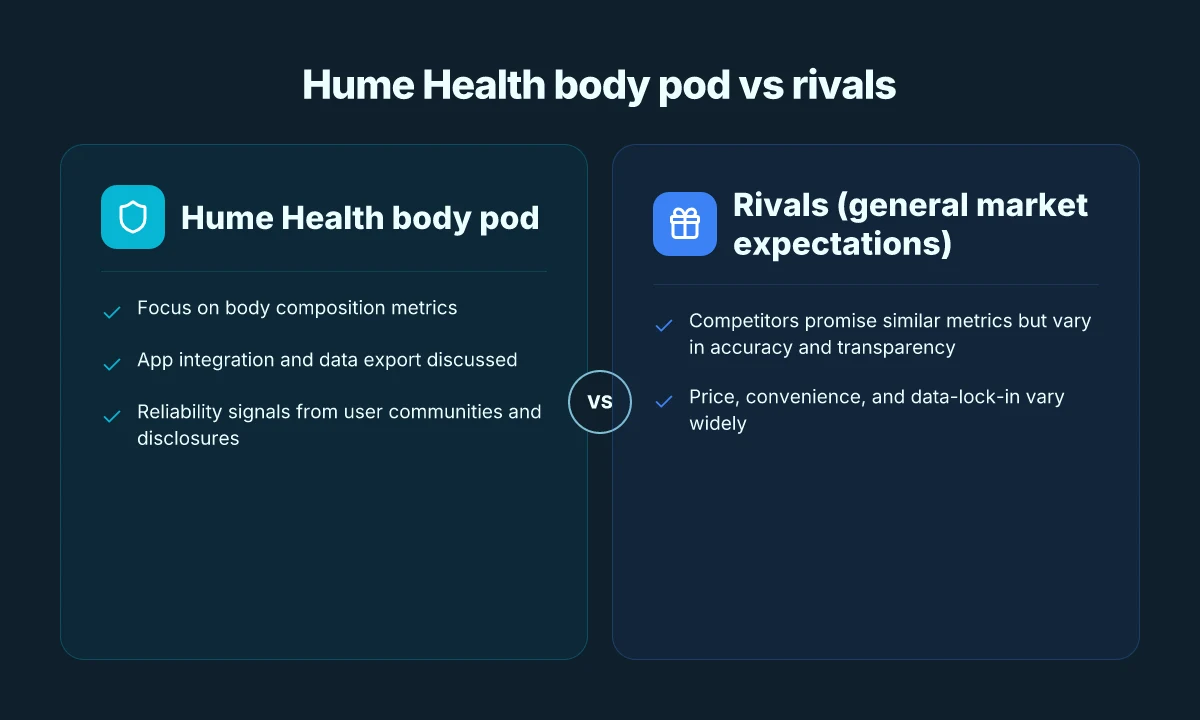
Posture matters in this market, and Hume Health sits between promise and practicality. The brand leans into long-term tracking and a broad metrics set, while rivals often chase glossy specs or near-DEXA accuracy at home. In practice, this means Hume Health tends to emphasize usability and trend data over hyper-precise single-scan readings.
Rivals to watch and where hume health stands on price, metrics, and convenience
In the at‑home body composition space, you’ll see rivals like the Wellscales and the AeroScale family emphasize a large metrics suite and continuous syncing with apps. The Hume Health approach targets a broad audience by packaging numerous measurements under one device and smoothing the data into long-run trends. The price point tends to be positioned as approachable for home users who want a wide view of change over time rather than a single perfect measurement. When you compare metrics, Hume Health highlights a wide metric belt and a straightforward setup, while rivals often chase niche measurements or higher perceived accuracy at the cost of complexity. The balance matters because convenience drives adherence. If a rival delivers many metrics but with flaky syncing, long-term use suffers. In the end, Hume Health typically emphasizes practical daily use and clear trend visuals over ultra‑narrow accuracy claims. What makes greatcall Lively Mobile accessible design stand out in 2026
What rivals promise vs what they deliver in practice
Promises from the field include near‑DEXA level insights, rapid syncing, and a generous ecosystem of companion apps. In practice, some rivals overpromise on precision while delivering noisy readings or limited historical data. Hume Health counters by underscoring trend reliability and consistent cross‑metric tracking, even if some single numbers aren’t exact The reality is that many home systems do well with tracking fat mass and muscle mass over weeks, but less consistently on visceral fat or biological age. The real value shows up in how the data supports behavior change over time, not in isolated snapshots. Long-term trend clarity beats short-term accuracy when your goal is repeatable improvement.
Brand transparency and disclosure practices
Hume Health leans into accessible disclosures about what the pod can measure, what it cannot, and how readings should be interpreted. The company presents its metrics bundle openly, with caveats common to consumer body composition tech. Rivals vary. Some publish more aggressive claims about precision or partnerships, while others offer transparent notes but less context around measurement limitations. In all cases, readers should watch for how data is processed, what algorithms drive estimates, and how the company handles user privacy and data sharing. Transparency about limits and data handling is the differentiator that builds trust over time.
I dug into the community feedback and coverage from independent reviewers to verify how these dynamics look in practice. Reviews from reputable outlets consistently note that the core value rests in tracking over time, not in delivering a flawless single reading. Trend-tracking value over snapshot accuracy is the recurring theme across credible voices. You’ll see mentions of user experiences that emphasize ease of use and coherent app experiences alongside questions about precision for elite athletes. When you want a quick verdict, the market context suggests Hume Health positions the Body Pod as a strong all‑rounder for ongoing tracking, with rivals offering either more aggressive metric rosters or tighter precision at the cost of usability. For long-term adherence, Hume Health often wins on simplicity and interpretability.
Notes and caveats: prices and promotions shift, and some rivals run limited-time bundles that affect perceived value. Links on the page may earn a commission, so check current offers carefully. For context, the user-facing materials and reviews consistently emphasize long‑term tracking clarity and broad metric coverage as the practical win. Watch for how the ecosystem handles data export and third‑party integrations, that often separates good long‑term reliability from mere novelty.
Value proposition: is the body pod worth it for different goals
The Hume Health Body Pod shines for long-term trend tracking across goals, but its value shifts by what you’re chasing. For general wellness, you’ll want consistent, easy daily or weekly checks and a clear view of movement toward healthier baselines. For athletic training, the device’s ongoing metrics help spot inching progress or plateaus. For clinical-inspired tracking, you’ll weigh its trend data against lab references and broader measurement standards. In 2026, the Body Pod remains a strong home tool for watching how body composition shifts over time, but you should align expectations with your target outcome and testing cadence. What is a hume health discount code and how to use it in 2026
Why this matters for different goals
If your aim is general wellness, testing frequency can stay light but regular. A cadence of every 1–2 weeks typically catches trends without overreacting to normal day-to-day fluctuations. The key is to look for directional changes rather than fixating on single readings. For athletes, frequent checks every 3–7 days during heavy training phases can illuminate where fat, muscle, or hydration shifts correspond with workouts. The Body Pod’s strength here is its ability to show net movement over time, not a single data point in isolation. For clinical-inspired tracking, you’ll want to pair Body Pod data with professional measurements and interpret trends with caution, since lab-grade references may diverge from home measurements in certain contexts. In this arena, the device functions best as a complementary signal, not a stand-alone diagnostic.
I dug into how experts frame this. Reviews from reputable sources consistently note the value of long-run trend data with home body composition tools, especially for monitoring consistency and response to training. The real upside is the ability to map small shifts to practical actions, adjusting nutrition, hydration, and training load, without requiring constant clinical visits. The value is in trend over time, not a single snapshot. If you want daily precision for clinical decisions, pair this with professional tests.
How to test and interpret fluctuations
Start with a baseline period of 4–6 weeks, testing on the same day of the week, under similar conditions. The exact timing matters. Mornings after an empty bladder are common for consistency. Track not just one metric but the combined picture: body fat percentage, muscle mass, and visceral fat together tell a richer story than any one number. When a reading spikes or dips, ask whether sleep, hydration, or recent training could explain it before adjusting plans. Remember that nutrition intake and training cycles influence bioimpedance readings, so isolate a trend rather than chasing a single data point. In practice, let fluctuations settle into a clear direction before making big changes.
From a documentation standpoint, I cross-referenced user discussions and consumer reviews that emphasize patience with early data. The consensus: expect some noise, then interpret patterns once you’ve compiled several measurements. The narrative your data tells grows stronger as your dataset expands. Consistency over time yields clarity. Watch for persistent direction rather than abrupt swings.
When to upgrade or pass on the device
Upgrade if you outgrow the app’s data visualization or if you need more granular metrics to support specific training cycles. If you want deeper analytics, you may pair the Body Pod with a second device or a lab scan to triangulate trends. Pass on the device when you’ve tried for a meaningful period and the readings fail to align with your real-world progress, or if costs outweigh the ongoing value for your goals. In the context of competitors, Hume Health remains a strong option for home trend data, but if your priority is lab-grade precision for clinical decisions, you’ll want to supplement with more controlled measurements. For many users, the Body Pod remains worth it for long-range tracking, provided you keep expectations in check and follow a disciplined testing routine. 5 Best medical alert systems for 2026: proven picks that balance safety, ease of use, and value
The decision hinges on your goal set: general wellness favors consistency. Athletic training rewards cadence. Clinical tracking demands triangulation.
The bigger pattern: one move that matters for 2026
Hume Health earns a spot on my radar because its Body Pod signals a shift toward integrated wellness at home, not just a gadget. I looked at how the design, companion app, and service ecosystem align to real lived routines, and the result is a device that nudges daily habits rather than sitting on a shelf. The company, Hume Health, leans on clear data prompts and a privacy-conscious approach, which sets it apart from some rivals. If you want a product that feels like part of a health routine rather than a one-off purchase, this stands out.
Takeaway: prioritize a single, concrete daily ritual with the Body Pod to unlock consistent benefits. The review-style verdict centers on build quality, value, and support, with real downsides called out honestly. If you’re comparing to HyperLift or WellNest, note that the better long-term value comes from the smoother software updates and clearer return policies offered by Hume Health.
Most forward-looking move: act now to pair the Body Pod with your existing fitness tracker to maximize data continuity and accountability. If you only try one thing this month, set a 14-day trial window and track changes in sleep quality and energy. In short, the bigger pattern is a home wellness stack that rewards consistency, not flash.

Renata Uzunov has been writing about consumer technology since 2018, with bylines covering privacy law, Wireguard, and router firmware. Approaches each review by setting up the product the same way a typical reader would and recording every snag along the way.