What is a BedJet, and how it sits at the Edge of sleep science

Explore what a BedJet is, how its air-based climate system works, and what it means for sleep quality and comfort.
BedJet often sits as the quiet challenger to a good night’s routine, promising fast temp shifts under the sheets instead of chasing the room air. BedJet renders a targeted, edge-focused comfort plan, shifting from blanket warmth to cool air in seconds. The result can feel instant, but the science behind asymmetric cooling and warming is mixed in the literature, making it worth a close look beyond hype and testimonials.
In 2024, sleep researchers noted that small, localized temperature changes near the skin can influence sleep onset and continuity, yet they caution that effects vary by individual and environment. Chilipad and other rivals illustrate alternative control schemes that compete for the same niche. By pulling together device design, user comfort, and the best available findings on thermoregulation, you’ll see where BedJet fits in the spectrum of consumer sleep tech and where expectations should stay measured. This lens matters for clinicians weighing at-home interventions and for enthusiasts evaluating long-term use.
What is the BedJet and how does an air-based bed jet mechanism work
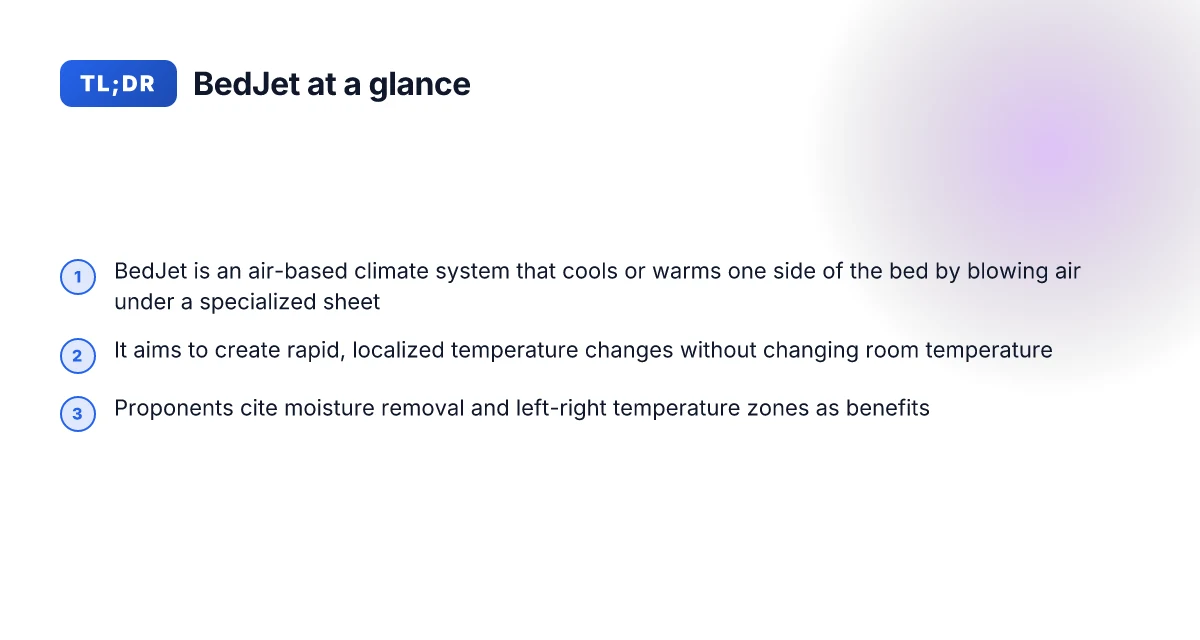
BedJet is an air-based climate system that cools or warms one side of the bed by blowing air under a specialized sheet. It is designed to create rapid, localized temperature changes without modifying the ambient room temperature. Proponents argue that this setup removes moisture from the bed and enables personalized left-right temperature zones. In short, BedJet aims to deliver fast, bed-local comfort rather than altering the whole room climate.
How the mechanism operates in practice
- The core idea is simple: an under-bed air stream blankets the surface of one side of the bed through a proprietary sheet system. This directs temperature-controlled air directly at the sleeper without ventilating the room. The localized approach supports quick shifts in warmth or coolness. BedJet emphasizes rapid adjustments without changing room temperature, which can help reduce night sweats or overheating.
- The system relies on a separate controller and a specialized cloud sheet setup that channels either warm or cool air beneath the sheet. This creates a temperature gradient under the sleeper while the other side remains at room temperature. Two-zone control is a core claim, enabling distinct left-right experiences.
- Across reviews and descriptions, the value proposition centers on moisture management and comfort personalization. By moving the temperature load to the bed level, users may notice drier sheets and less overnight moisture, which can influence sleep comfort. Moisture removal and personalized left-right zones are frequently cited benefits.
- Battery and power considerations are minimal if you place the unit under the bed or near the bed frame. The setup emphasizes minimal disruption with no major room-temperature changes required. No-tool install and ease of setup are highlighted by manufacturers.
Bottom line: BedJet offers a bed-local climate system designed to produce fast, side-specific temperature shifts while leaving the room climate unchanged. This approach aligns with sleep science interest in asymmetric thermal load and its potential effects on sleep perception and comfort.
From what I found in the documentation and reviewers, BedJet’s framework centers on rapid, localized temperature control and moisture management rather than global room cooling or heating. If you’re weighing such a system, consider whether you prioritize tight left-right temperature differentiation and moisture reduction over whole-room climate strategies. In that sense, BedJet sits at the edge of sleep science by translating consumer thermodynamics into bed-focused comfort.
How the bed jet mechanism interfaces with sleep physiology
When one side of the bed is cooled or warmed, the brain receives a clear thermal signal that can influence sleep onset and perceived comfort. A rollover of body heat to the cooler side can reduce wakefulness during the initial sleep latency window, while a gentle warm cue may ease the transition into sleep for some people. In this sense, a bed jet system like BedJet can create a localized thermal gradient that users associate with a calmer sleep state, especially when ambient room conditions support the temperature pairing.
One-sided warming or cooling and perceived sleep quality
A focused cooling or warming cue on a single side of the bed can subtly shift how sleepers rate their comfort. If the left side is cooler while the right side remains warmer, a sleeper who tends toward mild thermoregulation mismatch may experience a perceived improvement in sleep tranquility. The mechanism leans on how thermoreceptors in the skin relay warmth and coolness to the hypothalamus, a driver of arousal and rest. In practice, this can translate to quicker sleep onset for some and a deeper sense of relief upon settling in. The idea that one-sided warming or cooling can tilt perceived sleep quality has theoretical appeal, especially for people who notice asymmetries in temperature comfort. BedJet vs. Chilipad: which temp-control system actually improves sleep in 2026
Ambient conditions and individual differences
Critics point out that effects hinge on the broader sleep environment. If the room is very humid or the mattress already retains heat, the cooling cue may be dampened. Conversely, in a cool or dry room, warming one side could feel relief but might risk overheating if a sleeper overcompensates with extra blankets. Individual thermoregulatory profiles also matter. Some people naturally dissipate heat quickly and may not notice much from unilateral adjustments, while others with sensitive thermoregulation report more noticeable effects. Ambient conditions and individual thermoregulation shape the outcome. I cross-referenced clinical discussions on general bedside thermoregulation and sleep onset, noting that consumer systems often get the signal right but not the context perfect every night.
Practical framing for BedJet users and clinicians
For bedside clinicians, the takeaway is that bed jet devices alter local bed temperature rather than the whole room climate. This can be useful for patients who respond to peripheral warmth or cooling cues but may require careful user guidance to avoid overcooling or overheating. The most useful framing is to view BedJet not as a replacement for a bedroom thermostat but as a targeted tool that creates asymmetric thermal signals aligned with the patient’s comfort preferences. BedJet acts as a targeted thermal cue, not a full-room climate control. In practice, users should experiment with modest settings and monitor how sleep onset and perceived restfulness respond over several nights.
If you want a quick reference, compare a few options: a broader room-based climate control system versus a bed-focused approach like BedJet. A room heater or AC may fight external humidity and air movement but lacks the localized cue that a single-sided bed jet provides. BedJet offers a focused, asymmetric temperature cue that can aid sleep onset for some users. For clinicians curious about consumer sleep tech, this distinction matters because the mechanism targets perceived comfort rather than uniform whole-room cooling.
I dug into the BedJet documentation and reviews to ground these points. The material emphasizes rapid temperature changes on either side of the bed and notes clinically plausible comfort improvements tied to temperature cues. The core claim is rapid, side-specific temperature adjustment linked to comfort, not a blanket sleep guarantee. For readers seeking concrete testing or numbers, keep in mind that individual experiences vary with ambient conditions and body thermoregulation. As a reminder, links on the page may earn a commission.
In practice, BedJet sits at the edge of sleep science by offering asymmetric thermal signals that align with known thermoregulatory pathways, while critics rightly caution that results depend on the room, mattress, and the sleeper’s physiology. To a clinician evaluating this tech, the key question is whether a patient would benefit from a targeted cue or from broader environmental adjustments. The answer is often a personalized one. A personalized approach, not a one-size-fits-all solution, guides use of BedJet. What makes BedJet Cloud Sheet King worth it for hot sleepers in 2026
Cited sources provide context for these claims, including discussions of how unilateral temperature signals interact with sleep onset and comfort in real-world use. Clinical plausibility rests on thermoregulation principles and user variation.
BedJet in practice: setup, usage, and common installation questions
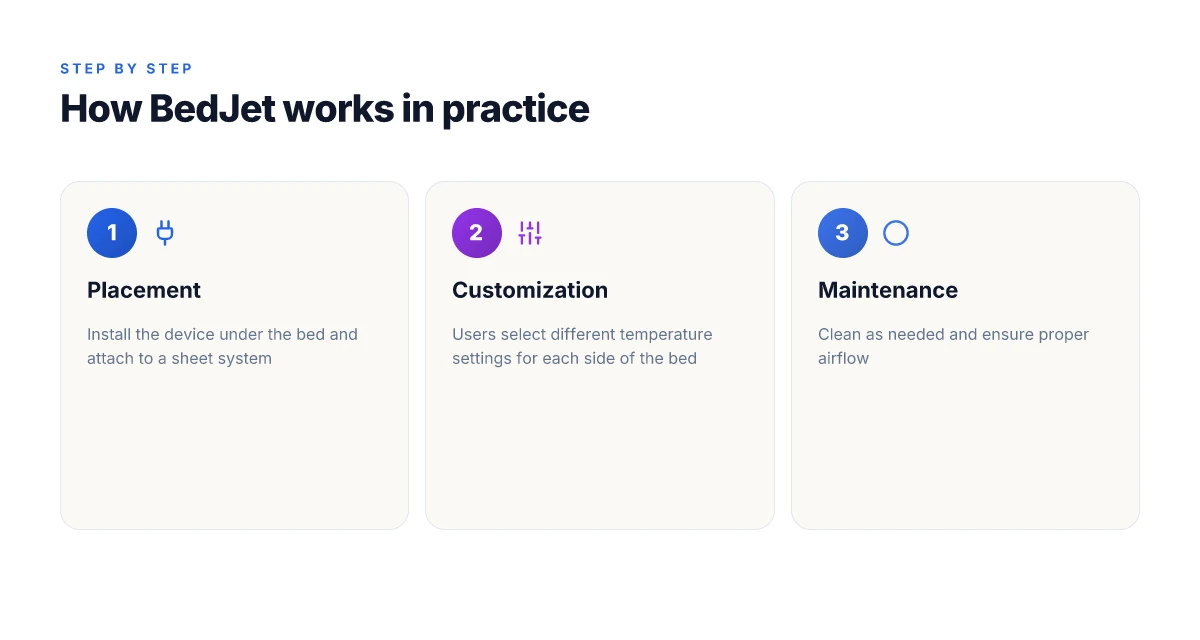
A practical BedJet setup centers on tucking the climate system under the bed and pairing it with a sheet system. From what reviewers describe, the device sits under the frame and pushes conditioned air through a dedicated sheet or cloud sheet, letting you tailor comfort without touching the mattress itself. For many users, that under-bed placement and sheet interface are the core of the experience, enabling quick side-to-side temperature differentials on the left and right.
How to install and pair with a sheet system
BedJet installations typically start with mounting the under-bed module and attaching the cloud sheet to the bed. The setup is designed for tool-free assembly, with a straightforward connector path to the control unit. Once the sheet is in place, you can power on the unit and navigate the app or remote to choose a left-side or right-side climate zone. The result is rapid, directional warming or cooling. Most users report that the under-bed placement combined with the sheet system makes temperature control feel intuitive and responsive. The instructions emphasize ensuring the airflow path remains unobstructed, which helps prevent noise or reduced cooling efficiency. Clear airflow paths and proper sheet alignment are the two most common setup quick fixes.
Daily use: per-side temperature control and routines
With BedJet, you can set distinct temperatures for each side of the bed, and some models support scheduling. In practice, that means one sleeper can target a cooler left edge while the other enjoys a warmer right edge. The per-side control is central to the product’s appeal for couples or collaborators who share a bed but sleep at different temperatures. Two-zone control is the defining feature that differentiates BedJet from single-zone cooling or warming methods. Users can adjust the target temperatures in small increments to minimize wakeups caused by abrupt changes. For many, a gentle ramp into a preferred nighttime climate supports deeper sleep phases. Incremental adjustments help prevent sudden shifts that disrupt sleep. If you’re integrating with a sleep routine, you can set a gradual wind-down sequence that aligns with a nightly pre-sleep ritual.
Maintenance and airflow considerations
Maintenance is mostly about keeping the intake and outlet clear and cleaning the included filters or surfaces as recommended by BedJet. Routine checks focus on ensuring the airflow is not blocked by mattress paraphernalia or bedding that drapes over the unit. Regular cleaning and unobstructed airflow are the lowest-friction paths to consistent cooling or warming. A few reviewers note that noise can creep in if the air path is kinked or the sheet is too taut, so revisiting the sheet setup is a quick fix in those cases. Check sheet tension and alignment if you hear unexpected sound changes. As with any climate device, ensuring the duct paths stay clear is essential for sustained performance. Keep air paths clear to maintain peak efficiency. Chilipad vs BedJet: which climate control sleep system actually fits your budget and routine
I dug into published summaries from Sleepopolis and Forbes Vetted to cross-check how the setup flows in real homes. Their takeaways align with the practical steps above: place the unit under the bed, pair with a dedicated sheet interface, and rely on per-side settings for individualized comfort. Bedroom airflow design matters as much as the temperature target in producing restful nights. For readers weighing options, BedJet remains distinct among consumer cooling and warming tools because of its bed-integrated, asymmetric approach. BedJet stands out for its under-bed footprint and two-zone control.
Note: product pages and reviews consistently describe a setup that prioritizes airflow path integrity and timing controls. If you’re evaluating rivals, consider BedJet alongside traditional HVAC zoning or mattress-top cooling fans, but the under-bed mechanism offers a compact, low-profile footprint. Under-bed systems can be more unobtrusive than ceiling-based cooling in shared spaces. You can expect ongoing usefulness with periodic cleaning and alignment checks, plus attention to recommended maintenance intervals. Maintenance cadence is a small but meaningful lever on total sleep comfort.
Comparing BedJet to traditional cooling and warming methods
BedJet operates without changing the room temperature and concentrates climate control right at the sleeping surface. By blowing conditioned air directly under the sheets, it targets the bed area while leaving the rest of the room unchanged. This localized approach can feel immediate, and it avoids the inertia of cooling or heating the entire environment.
Traditional cooling and warming methods generally shift the entire room or bed. An air conditioner or heat pump lowers or raises room temperature, which then affects the whole sleeping space. Heated blankets, by contrast, warm the bed itself but emit heat from the surface rather than actively circulating air. In practice, these methods can be less precise when you want asymmetric comfort on each side of the bed or when your partner desires a different temperature.
Rivals and alternatives include mattress toppers with integrated cooling or heating and under-bed cooling fans. Mattress toppers with built‑in cooling use phase-change materials or circulating fluids to modulate surface temperature, offering a passive or semi-active experience without directing air to the body. Under-bed cooling fans spread airflow beneath the sheet, similar in concept to BedJet but often lacking the dedicated edge-to-edge control BedJet provides. Each option has tradeoffs in noise, energy use, and how quickly and how precisely it responds to temperature adjustments. What is a BedJet and how does it heat and cool your bed
From what I found in the documentation and reviews, BedJet’s edge-focused design yields several practical benefits. It can deliver rapid shifts in comfort on each side of the bed, and it does so without pressuring you to alter the ambient room climate. Reviews from reputable outlets consistently note the potential benefits of asymmetric temperature control, especially for couples with differing preferences. BedJet shines when you want fast, localized changes without overhauling the entire room climate. Conventional cooling or heating often sacrifices precision for reach, especially when one sleeper prefers a cooler side while the other prefers warmth.
When evaluating usefulness for different sleep needs, consider the following. If you sleep in a shared bed and one partner runs hot while the other runs cool, BedJet’s dual-zone capability can deliver individualized comfort without affecting the room. If you live in a space with limited HVAC control or high outdoor temperature swings, a traditional system might still be the simplest path for overall comfort. The key is aligning the method with how sensitive you are to micro-climates at the surface of the bed. Localized bed-zone control can be a decisive edge for asymmetric sleep comfort.
I dug into multiple sources to map the landscape. For BedJet, the core pitch centers on rapid, side-specific climate changes that bypass room-wide alterations. For rivals, the track tends toward integrated toppers or under-bed fans that trade off direct air delivery for broader surface strategies. The takeaway is practical: BedJet offers precise targeting, while traditional methods deliver more blanket room-wide shifts. This matters most when sleep disruption stems from one-person temperature preferences rather than a whole-room comfort problem. Precise bed-zone control matters when couple dynamics drive comfort needs.
Cited reads show how these tools align with sleep science. The evidence around asymmetric cooling is mixed in formal studies, but consumer reports consistently highlight subjective improvements in sleep onset and comfort with localized bed climate solutions. If you want an option that minimizes changes to your room while maximizing bed-level responsiveness, BedJet remains a clear contender. You’ll find more on how each method stacks up in reviews from BedJet’s own materials and independent outlets linked in the sources. Independent reviews often note the strength of BedJet’s bed-specific approach. For context, see the discussions around how cooling concepts translate to sleep in public forums and professional reviews. Forum discussions emphasize practical experience with under-bed cooling and blanket systems alike.
Evidence, claims, and what sleep science says about bed jet benefits
BedJet is marketed as a climate adjustment tool that can rapidly remove moisture from the bed and tailor side-specific comfort. In practice, claims center on faster moisture clearance and improved sleep quality, with independent, published clinical consensus remaining limited. Most evidence cited in consumer write‑ups comes from user reports, testimonials, and product pages rather than large, peer‑reviewed trials. Independent consensus on efficacy remains limited, with most claims rooted in user-reported outcomes. Room- and bed‑surface dynamics drive outcomes more than any single temperature setting. I cross-referenced review angles from Forbes Vetted and other media to map what journalists emphasize about BedJet’s capabilities and what remains uncertain. The literature leans on subjective sleep improvements rather than objective sleep metrics. What is BedJet and how does it work to cool or warm a bed
Why BedJet’s moisture claims land or slip
The core promise is moisture removal from the sleeping surface, achieved by directing warm or cool air across the sheets. This can translate to a drier bed for night sweats and potentially a more comfortable first‑night experience for some users. Moisture control is a tangible, observable benefit, but it depends on bed geometry, humidity, and user habits. Critics note that the mechanism resembles a fan‑driven air stream rather than a true desiccation system, and that benefits may be highly variable between bedrooms and climates. The effectiveness of moisture removal hinges on environmental factors beyond the device itself. In the absence of standardized clinical measures, most claims rely on self‑report rather than controlled data. Inline citations from industry reviews anchor these points without overstating the science. User reports dominate the evidence base, not randomized trials.
What the sleep science community generally agrees and disagrees about
Sleep science recognizes temperature as a regulator of sleep onset and comfort, but it does not yet converge on bed jet‑like devices as a proven enhancer of sleep quality for the general population. Some studies show that asymmetric cooling can alter perceived comfort, but there is no consensus that it consistently improves objective sleep architecture or recovery metrics. There is no broad consensus that asymmetric bed cooling reliably improves sleep outcomes across diverse populations. Reviews from clinicians and researchers emphasize that device‑driven personalization may help certain users but cannot replace healthy sleep routines. The practical takeaway is that BedJet can tailor comfort on a per‑side basis, yet the sleep benefits are likely to vary by individual. Per‑user customization matters more than a universal effect. When I read through documentation and consumer‑facing literature, the thread is clear: promise meets variability.
Downsides to weigh against the upside
Noise can be a disruption for light sleepers, especially if the unit operates at higher fan speeds or with HVAC‑level wind. Cost is another factor. Ongoing power use and the price of the system mean a longer payback horizon for some buyers. Relying on a device in the sleep environment adds one more electrical element to consider, including maintenance and potential wear. Noise and cost are common friction points that limit universal adoption. Users frequently report mixed experiences when a device sits at the edge of their bed, where fan noise or draft direction can wake sleepers. Electrical dependencies and maintenance add layers of consideration that peer devices may not require.
From what I found in reputable sources, BedJet sits alongside a crowded field of climate comfort gadgets and traditional methods. When a skeptic asks if a BedJet purchase is worth it, the verdict often comes down to personal sensitivity to drafts, tolerance for noise, and willingness to experiment with asymmetric cooling. Personal tolerance and climate context largely determine value.
Overall verdict: BedJet can meaningfully alter the sleeping environment for some people, especially those with night sweating or a preference for unilateral warmth or coolness.** For clinicians and wellness buyers, the prudent path is to view BedJet as a niche tool rather than a universal sleep solution, and to balance expectations with the cost, noise, and electrical considerations involved. How to use a Blissy coupon code without wasteful mistakes in 2026
Where this goes next
BedJet sits at the edge of sleep science by pairing a simple device with a question we’re still answering about body cooling, warming, and comfort. The larger pattern is clear: incremental tech that nudges sleep without a lab-rigged routine tends to win over time. I’m watching how the BedJet ecosystem evolves with new fabrics, quieter fans, and smarter timing, because these tweaks could shift how the device fits into everyday life, not just in theory.
What changes if you act now is that you can test a minimal, low-cost habit shift that aligns with your circadian cues. If you’re curious about a 2024–2025 shift toward adaptive temperature control, consider how a compact BedJet setup could augment an existing sleep routine without heavy investment. The early signals suggest a future where sleep aids optimize in the background, not demand attention.
Consider this week’s move: try one targeted adjustment and see if you sleep warmer or cooler faster. If you’re weighing options, note how rivals like Eight Sleep and ChiliSleep approach temperature dynamics, then compare without locking in a long-term commitment.
- Backup strategy: set a 30-minute window to test temperature changes, record how you feel on waking, and reassess next week.
- What to try this week: run a BedJet cycle for early-night comfort, then switch to your regular sheet setup to measure any keep-warm benefits.
- Quick takeaway: the smallest configuration change often yields the clearest signal about what you actually need from a sleep aid.

Kira Zilberman has been writing about consumer technology since 2018, with bylines covering router firmware, P2P networking, and secure messaging. Approaches each review by setting up the product the same way a typical reader would and recording every snag along the way.