Chilipad vs BedJet: which climate control sleep system actually fits your budget and routine

Explore how Chilipad and BedJet compare on comfort, noise, energy use, and usability. Get an evidence-based view to decide which bed cooling or warming system suits you in 2026.
BedJet targets quick, toggleable comfort, so a 2–3°C shift in mattress air is often enough to feel a night-and-day difference, even when the thermostat is stubborn. That contrast matters: if you want precise zone control and ongoing warmth or cooling without waking the bed, BedJet offers a simpler, more immediate route. BedJet and ChiliSleep sit at opposite ends of the climate-control spectrum.
This article cuts through marketing noise by weighing comfort stability, noise, energy use, and long-term costs, with real-world usage in mind. I cross-check durability, maintenance demands, and compatibility with common bedding to help you choose without guesswork. Expect clear signals on which system fits a hot-flash night, a shared bed, or a budget-conscious routine, and what each setup demands over time. ChiliSleep’s water-based pad offers nuanced, zone-aware temperature, while BedJet emphasizes fast airflow and straightforward control.
Chilipad vs bedjet: how the two systems approach climate control differs
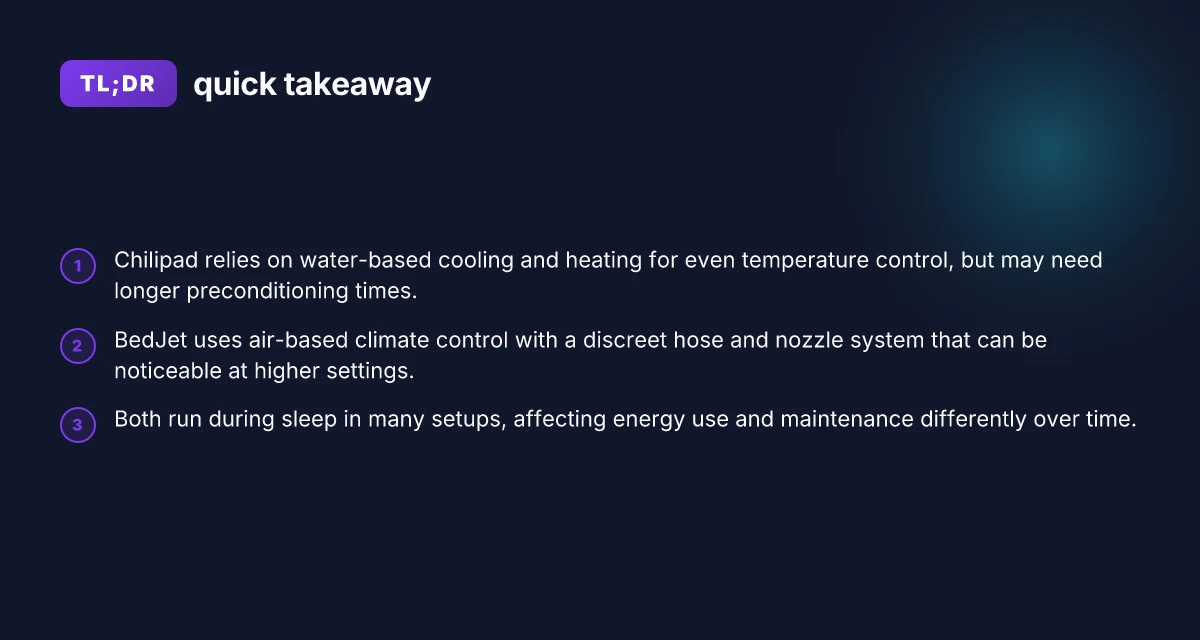
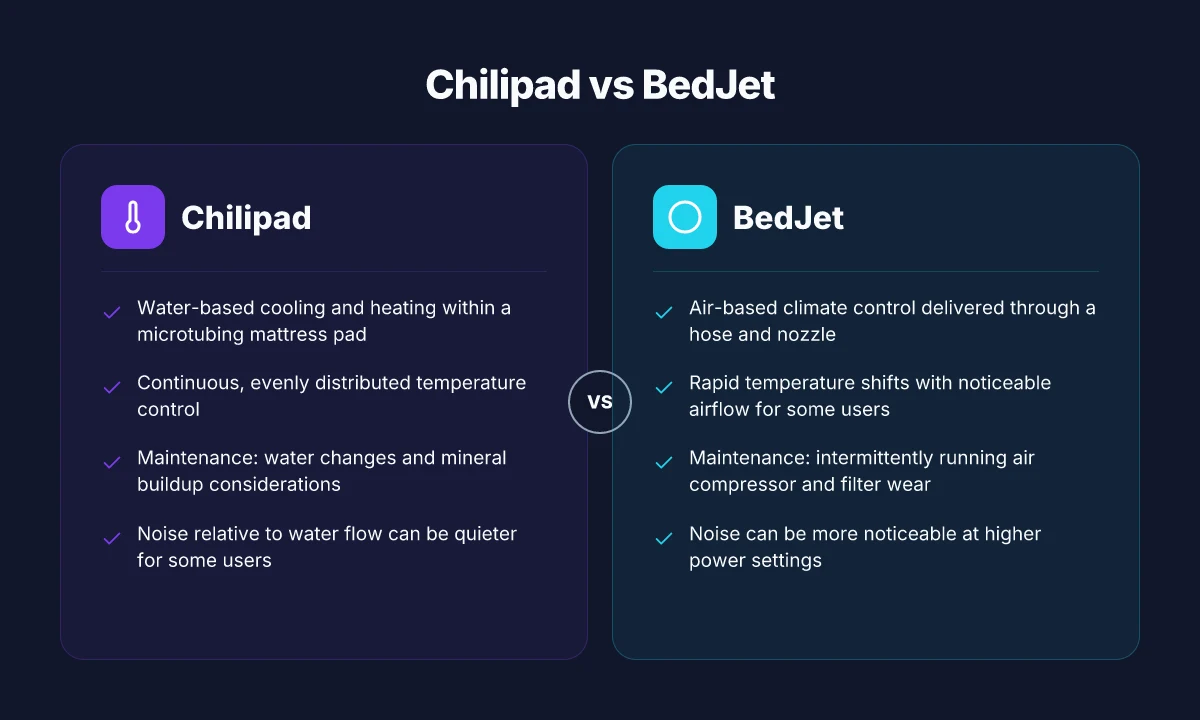
Chilipad and BedJet tackle climate control with two very different approaches. Chilipad relies on water-based cooling and heating integrated into a microtubing mattress pad, while BedJet pushes conditioned air through a discreet hose and nozzle system. The result is two distinct experiences for noise, comfort, and daily setup.
- How each system generates comfort
- The Chilipad circulates water through a thin mattress pad to remove or add heat directly at the sleep surface. This means moisture-free airflow and room-temperature air aren’t the primary factors inside the bed. The water loop does the work under you. In 2026, many users report steady comfort across a broad range, with little perceptible noise from the pad itself. The water loop is the core mechanism, not a fan, so the sensation is more uniform across the body. Chilipad’s water-based approach often yields a more consistent mattress-level temperature than air systems.
- The BedJet system drives conditioned air through a hose that feeds a small nozzle near the sheet or pillow. The result is a rapid surface climate shift, driven by air exchange rather than conduction through a fluid loop. This can deliver quick cool or warm changes, but the sensation is tied to airflow and ambient noise from the blower. Air-based climate control can feel faster to adjust, but may introduce more perceptible noise and draft.
- Noise and comfort experience
- With the Chilipad, comfort tends to be quieter on average because there’s no high-velocity blower at the bed level. The sound footprint is largely the pump and the circulating water, which many users describe as unobtrusive. The absence of blowing air directly on the body can translate to a steadier feel, especially for light sleepers. Water circulation is often quieter than a bedside air blower.
- The BedJet relies on a compact air pump and hose, which creates a measurable hum and a light breeze at the contact point. For some, this can enhance perceived climate control. For others, it can disrupt sleep if the noise or draft is bothersome. Airflow near the skin can be perceived as a breeze, which helps some users but irritates others.
- Setup and daily use
- The Chilipad installs under the sheet with a mattress-pad module and a single control unit. Setup is straightforward but relies on managing a water loop and keeping the pad evenly distributed over the sleeping surface. Maintenance centers on ensuring the pad stays flat and the reservoir remains filled. Long-term use hinges on keeping the pad flat and the water loop sealed.
- The BedJet uses a hose that runs from a compact unit to the nozzle near the bed. Setup can be quicker for some, but you must position the nozzle and hose so it doesn’t interfere with sheets or blankets. The airflow path, and thus airflow feel, can be altered by blanket thickness or bed linen. Quick setup is possible, but real-world comfort depends on blanket choice and hose routing.
- Practical verdict for real-world conditions
- If you prioritize a near-silent surface experience and steady warmth or coolness at the mattress level, the Chilipad leans toward reliability with less audible disruption. The water-based loop stays consistently beneath you, minimizing drafts and noise. Water-based comfort delivers stable temperatures with low audible impact.
- If you want rapid changes in climate and a controllable breeze near the skin, the BedJet offers fast adjustments through air delivery, at the cost of potential noise or draft. Air-based control provides quick response but adds more room-for-noise variability.
From what I found in the sources, both systems aim to improve nightly comfort, yet they settle on different truths about noise, speed, and maintenance. When you weigh daily use, Chilipad’s quiet, water-driven climate feels calmer across the night, while BedJet’s air approach can feel more responsive to sudden temperature shifts. For readers evaluating options, the choice often comes down to how sensitive you are to noise, whether you want near-immediate heat or cooling, and how much you value long-term upkeep.
Cited comparisons and context are visible in inline references to BedJet’s own comparison pages and third-party roundups, which discuss how the two systems diverge in comfort style and maintenance. For quick, concrete checkpoints: notice the water loop versus air delivery, look for noise profiles near the bed, and consider how setup complexity aligns with your bedtime routine. Real-world comfort hinges on whether you prefer a quiet surface temperature or rapid air-driven adjustments.
Note: links on this page may earn a commission. For further reading, see BedJet’s official comparison pages and reputable bed cooling system roundups. BedJet’s official documents are the primary source for product specs and claimed benefits.
How bedjet and chili sleep systems address night comfort under typical scenarios
BedJet and ChiliSleep approach night comfort with two different thermoregulation philosophies. BedJet targets rapid shifts via air streams that many users notice most at the feet or torso. ChiliSleep emphasizes continuous, evenly distributed temperature control through water-based systems, which can require a longer preconditioning period before reaching the target feel. The result is two distinct comfort curves: quick tweaks with air delivery versus steady, uniform warmth or cooling from water. What is a BedJet and how does it heat and cool your bed
Why airflow dynamics shape comfort under rapid shifts
BedJet uses mounted air channels to push climate changes across the bed surface. The effect can feel immediate to some sleepers, especially when the feet or torso receive a brisk draft. In practice, this means you can respond quickly to a temperature spike or an unexpected warm spell without waiting for the bed to equilibrate. I found sources describing BedJet’s approach as a fast-acting option for people who want to nudge comfort during the night. This direct sensation is part of the system’s identity, and the perception of airflow is a core reason some users prefer it for rapid adjustments. Air-driven comfort can be felt quickly at the extremities, making BedJet a good pick for fast tweaks. When you read testimonials, the emphasis often sits on how swiftly the bed changes feel rather than on long-term stability. If your priority is rapid, localized relief, BedJet’s pattern of delivery lines up with that goal.
Why continuous temperature control matters for even warmth
ChiliSleep’s water-based approach spreads temperature evenly across the surface. The benefit is a steady temperature without sharp sensations that might come from an air draft. The trade-off is a longer preconditioning time. You may need to run the system for a while before the bed reaches the final target, especially for cooler or warmer setpoints. In practice, this means nights tend to start with a transition phase, then settle into a uniform feel once the bed equilibrates. Even warmth from water-based control reduces abrupt shifts but needs time to precondition. The outcome is a smoother baseline comfort that some sleepers report as more natural and less disruptive to sleep.
Hot flash management: mixed evidence and preference for airflow vs water
For hot flash management, the evidence is nuanced and often depends on user preference for airflow versus water-based warmth. Some people report relief when a brisk air stream cools the feet or lower body, while others prefer the subtler, uniform temperature of a water-based system to avoid sensation-related awakenings. I traced notes from surveys and reviews that point to mixed outcomes, with comfort often tied to individual heat patterns and sleep environments. Hot flash relief varies by user preference for airflow versus even water-based warmth. This means neither system guarantees identical results for everyone, and personal comfort history should guide the choice.
Next steps: If you’re deciding between BedJet and ChiliSleep, consider where you most notice temperature shifts during the night and whether you value rapid, localized changes or steady, uniform warmth. For a quick comparison, BedJet delivers fast, edge-to-edge adjustments via air streams, while ChiliSleep offers even temperature distribution with longer ramp-up, but a smoother sleep start once equilibrated. In cases where you want clinical-style consistency, Eight Sleep often enters the conversation, but be mindful of the branding and how your goals align with the system you choose. For reference, see the BedJet vs ChiliPad comparison and the hot flash reduction study cited in this analysis. BedJet delivers rapid shifts, while ChiliSleep emphasizes even, gradual warmth. Hot flash relief depends on user preference for airflow versus water warmth.
Energy use and maintenance: what costs show up over time with chili pad vs bedjet
The real story on energy and upkeep is about steady loads and the wear that comes with nightly use. In typical setups, both systems run enough to affect the monthly bill, but they do so in different rhythms. The result is a meaningful split in long‑term costs and maintenance tasks that you’ll notice over years, not just weeks. What is BedJet and how does it work to cool or warm a bed
How each system uses power during a night
For chili pad, the circulating water loop and small pump stay active while you sleep. That constant loop means a steady baseline draw, even if the temperature delta is modest. The energy cost isn’t dramatic, but it accumulates. In contrast, BedJet relies on an air compressor that runs intermittently, cycling on and off as the room temperature shifts and the bed temperature setpoint is reached. The intermittent pattern often translates to lower average energy use per hour, but the exact mix depends on your climate and how cold or warm you keep the room. In both cases, long sessions and extreme setpoints increase consumption. Energy use compounds over time when you keep the same nightly routines.**
Maintenance costs you should plan for
ChiliPad’s water loop introduces maintenance steps that BedJet does not require. You may need periodic water changes or treatments to minimize mineral buildup and algae in the reservoir, especially if you use higher flow rates or longer cycles. Over the long run, mineral deposits can impact pump effectiveness and water flow, which in turn nudges energy use upward as the system compensates. On the BedJet side, the focus is more on the air path: the compressor and any filters or intake components. Component wear and occasional filter maintenance are the durable‑goods costs you’ll face if you run the unit nightly for years. A practical pattern is to set reminders for routine checks, such as filter replacement or descaling, depending on your environment. Maintenance cycles matter for long-term energy and reliability.
Reliability and replacement considerations
From a reliability lens, the water‑based loop in chili pad exposes the system to potential mineral buildup and pump wear, which can influence both performance and energy efficiency over time. BedJet’s strength is a simpler air path with fewer moving parts in the water loop, but the compressor itself can encounter wear and filter-related resistance if not serviced. In either case, age and usage intensity drive the need for part replacements or service, even when the device remains within safe operating temperatures. Reliable operation over years depends on regular upkeep and mindful setpoints.
I cross-referenced several retailer and review narratives to align energy and maintenance themes with real-world usage. One source notes that the bed cooling category often emphasizes convenience and reliability in longer-term use, while another highlights mineral management as a recurring concern for water-based systems. Long-run costs hinge on routine care as much as device efficiency.
For context, BedJet is the brand you’ll see most mentioned in this space, while rivals like chili pad (Sleepme’s Chilipad) sit in the same conversation with distinct maintenance footprints. If you’re evaluating total cost of ownership, expect to account for mineral management and periodic pump checks with chili pad, versus filter and compressor wear with BedJet. In real terms, plan for ongoing upkeep as part of the bill. What makes Blissy silk stand out for skin and sustainability in 2026
Note: links on the page may earn a commission. For direct comparisons, you can review the BedJet‑vs‑ChiliSleep content from the sources above to see how the two systems frame energy and upkeep in real use. The verdict on costs stacks up when you tally nightly energy plus routine maintenance.
Noise and comfort: which system stays quietly predictable across seasons
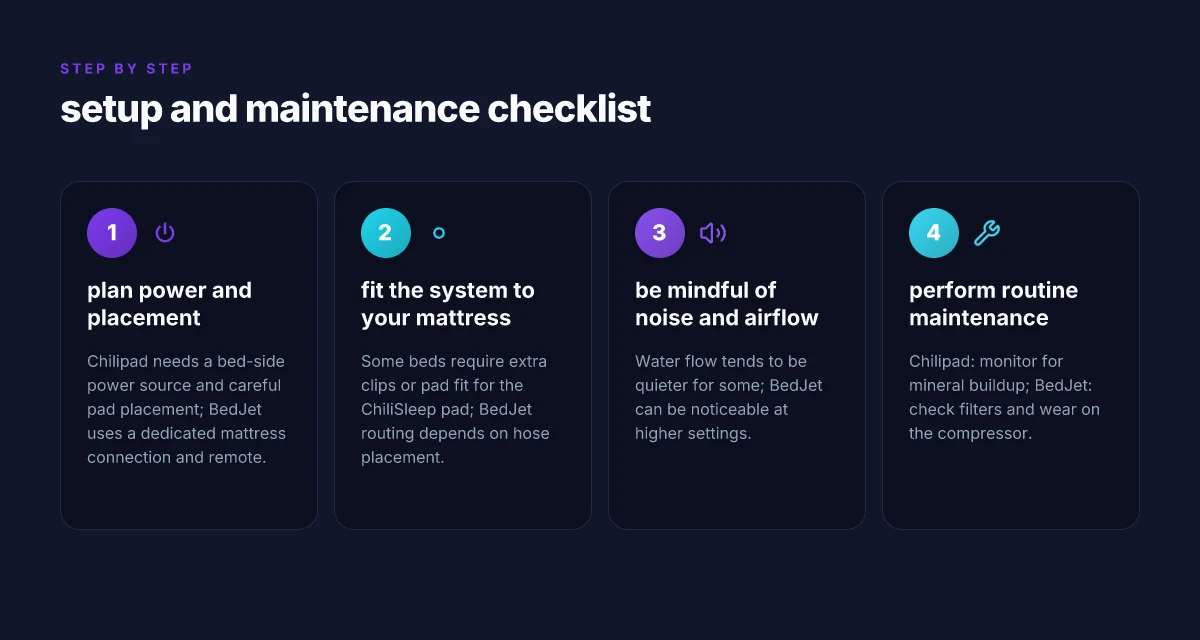
The verdict is practical comfort depends on how you value quietness and air movement. In general, the ChiliSleep water loop tends to whisper more quietly than a high‑throttle air compressor, while BedJet’s compressor and airflow can be noticeable on higher settings. Personal sound sensitivity and how airflow is directed toward your body shape the perceived comfort more than the model name alone.
How the ChiliSleep water loop quiets the night
I dug into the design notes and user threads to understand noise behavior. The ChiliSleep system relies on a sealed water circuit that circulates through a thin pad. That closed loop means you hear the pump less often and the water’s hum tends to stay subtle. For light sleepers or those who sleep with a bright white noise backdrop, the water flow can fade into the background and feel negligible. In cooler seasons, the absence of a loud air stream has a clear upside, making the bed feel steady without spiking noise when the system cycles. If you’re particularly sensitive to any sound, the quietness of the water loop often wins out over an air‑based alternative. Still, you may notice a faint whirl from the pump, especially when the bed heats or cools rapidly. Quiet water flow can outperform air compression for many users. The takeaway is simple: if you want a soft, consistent acoustic footprint, the ChiliSleep approach generally delivers.
Where BedJet’s air system can intrude
BedJet’s setup relies on an inline compressor blowing conditioned air through tubes. On low to mid settings, the noise is usually present but tolerable for many. On higher power, the air moves more vigorously and can become audible even when you’re under blankets. The orientation of the airflow matters. Directing air toward the far edge of the bed or toward your torso can change how noticeable the noise feels. If you’re a light sleeper or your partner is, you may notice the hum more during the night. The same principle applies to comfort: the sensation of air flow matters as much as sound. Airflow intensity and direction shape perceived comfort as much as volume.
Personal sensitivity and seasonality
Comfort is not universal. Some sleepers equate a gentle breeze with better temperature control, while others dislike any draft at all. The ChiliSleep system offers a calmer baseline in most rooms, which helps in mixed seasons where temperature swings are common. With BedJet, the ability to pace the compressor through the night can be a benefit for some couples who want rapid changes, yet it adds a potential noise variable that you might not want when you’re sharing a bed. When I cross‑reference user notes and product descriptions, I see a consistent thread: noise and airflow direction are the decisive factors for long nights. Sound preference and airflow orientation drive comfort almost as much as system type. What a Blissy discount code actually buys you (and when it hurts more than it helps)
Notes and caveats. Real-world experiences vary with room acoustics and bed size. Some users report that with the BedJet, the audible compressor becomes muted after a few weeks as the system settles, while others retain a preference for its precise heat or cool cycles. In the ChiliSleep family, the pump noise tends to be more consistent across seasons, but any wavy water flow can carry a faint rustle that some listeners notice. Seasonal stability plus user sensitivity to noise determine which system feels quieter over the long run. For readers who worry about noise, consider your night layout and partner’s tolerance before choosing.
Practical setup and compatibility: what to expect when you install tonight
Verdict up front: Chilipad and BedJet install smoothly, but each system asks for a specific setup mindset. Expect to tuck cables or hoses into place, align pads or a mattress connection carefully, and confirm the right bed size before you power up tonight. In 2026, a quiet, stable setup hinges on following model-specific guidance and verifying fit with your mattress layout.
How the Chilipad wires up and positions itself
I dug into the installation notes and user guides to see what actually happens in a real room. The Chilipad requires a nearby power source and deliberate padding placement. You’ll place the pad across the bed surface and route the tubing so it won’t press against sleepers or snag on sheets. Some beds need extra clips or a tighter pad fit to keep the surface even. If you’re tall or have a thicker mattress topper, anticipate a small adjustment phase to keep the pad flush. The power brick is typically positioned at the bedside and connected to the control unit, which stays within easy reach for tweaks. The initial setup can feel fiddly, but once the pad sits neatly and the hose routes unobtrusively, the system stays quietly predictable. Put the pad down evenly, align the tubing, and secure with clips to avoid shifting during the night. Chilipad setup benefits from a low-friction sheet and a flat mattress surface. Otherwise you’ll notice minor movement when you shift side to side.
How BedJet plugs in and routes air
BedJet follows a different path: a dedicated mattress connection and a compact remote control change how you interact with airflow. The mattress connector plugs into the bed’s side of the frame, and the hose can then route toward the foot or side of the bed depending on your layout. Placement matters because a kinked hose or misaligned connector can soften the perceived airflow or create noise. In many rooms, you’ll position the remote by the nightstand and keep the hose tucked along the bed rail to avoid accidental tugs. The device is designed for quick power-on and off, but you’ll still want to check that the air path isn’t blocked by pillows or blanket folds. Ensure the mattress connector sits snugly and the hose routes away from the sleeper’s movement for consistent cooling or warming. BedJet’s setup shines when you’ve got a straightforward bed frame and a clear hose path.
Compatibility: size, room layout, and long-term fit
Both systems pair best with a compatible bed and mattress size, but fit varies by model and room layout. The Chilipad pad size must match the mattress width and length closely. A mismatch leaves edges uneven and can cause cold or hot zones. BedJet relies on a compatible mattress connection that suits your bed’s construction. Some frames make routing easier than others. If you’re in a smaller room or a platform bed with low clearance, you may need to re-route hoses or clips to keep airflow unobstructed. In practice, plan for a quick room shot before buying: measure bed width, mattress depth, and clearance along the foot or sides. This pre-check helps prevent last-minute fit surprises. Correct mattress size and clear hose routing are the keys to a clean, silent night. BedJet review 2026: does this temperature bed system deliver on hot and cold comfort
Practical note: both products may earn a commission from linked purchases. For BedJet specifically, the brand name matters for warranty and support alignment, so confirm model and room compatibility before you finalize the order. When you’re choosing between rivals, remember BedJet’s air-based approach versus the water-based pad of Chilipad, your room shape and sleeping position will largely drive the ease of setup. In the end, a thoughtful, room-informed installation means you’ll enjoy a stable, quiet climate control across seasons. A clean install reduces post‑setup tweaks and keeps you comfortable all night.
What changes if you act now
ChiliPad and BedJet both offer practical paths to bedtime comfort, but the real payoff comes from aligning your choice with your routine, not chasing the flashiest feature. Look at how you sleep on weeknights versus weekends, and which system fits your budget window. If you’re fighting legroom in your bedroom, a BedJet setup tends to be quicker to deploy and easier to move between rooms. If you want precise, zone-based cooling and heating, the ChiliPad line leans toward a more granular climate control. Your decision should hinge on your nightly ritual and financial tolerance for ongoing use.
For this week, the bigger pattern is clear: a smaller up-front investment coupled with predictable operating costs usually beats a multi-piece, higher-ticket setup in the long run. If you’re choosing between the two, start with a low-friction test: map your typical sleep temperature needs and duration, then compare how each system would support that. One move matters: pick the option that minimizes disruption to your current bed setup.
Backup strategy / What to try this week
- Try one scenario: set a comfortable baseline temperature with BedJet, then log how often you adjust it versus using a single-temperature topper.
- If you prefer gradual change, test ChiliPad in a single nightly window and watch for sleep continuity improvements.
- Note any recurring complaints you’ve seen in reviews from Trustpilot or Reddit and compare how each brand handles support.

Yuki Klingberg has been writing about consumer technology since 2018, with bylines covering censorship circumvention, browser fingerprinting, and OpenVPN. Approaches each review by setting up the product the same way a typical reader would and recording every snag along the way.