What is a BedJet and how does it heat and cool your bed

Explore what a BedJet is and how its air-based heating and cooling system affects your sleep. Learn how it works, setup, pros and cons, and what to consider before buying.
BedJet doesn’t pretend to be a gadget you bury in a closet. It acts as a bedside climate valve, delivering conditioned air under the sheets and letting one side of the bed feel warmer while the other stays cooler. The practical landmark is a simple power plug and a compact console, which means you can dial in a precise range without wrestling with a full HVAC install. BedJet puts a personal climate at hand, not a full-room overhaul, and that lean footprint is why many couples test it as a first-step comfort tweak.
This piece asks whether that lean design actually reduces bedtime wrangling over temperatures or just redistributes it. You’ll see how room temperature, sheet seal, and acclimation interact with the device’s settings, and you’ll get a clear sense of what “noticeable comfort” looks like in real bedrooms. By analyzing real-world setups and contrasting BedJet with zoned HVAC or a separate cooling pad, you’ll know when to reach for the bedside system and when to skip it. BedJet often shines when hours drift toward uneven preferences, but the choice depends on how you prioritize setup simplicity versus room-wide climate control.
What is the BedJet and why it matters for sleep
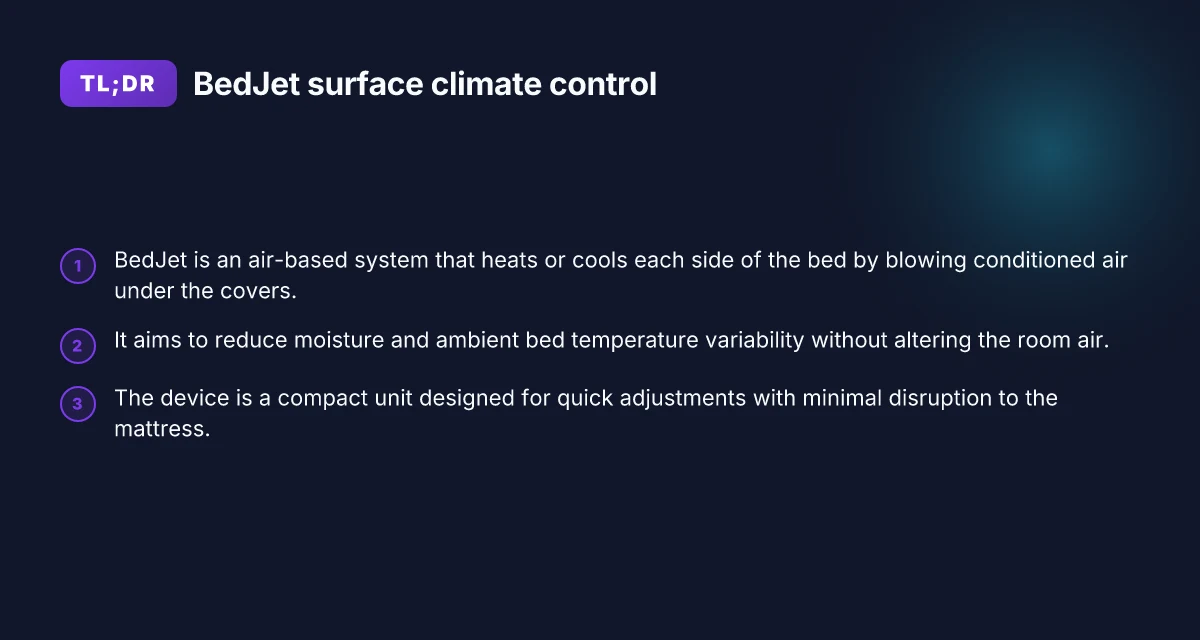
BedJet is an air-based climate control system for beds that heats or cools each side independently by blowing conditioned air under the covers. In real-world terms, it aims to minimize moisture, sweat, and ambient bed temperature variability without dialing the room thermostat. This design centers on quick adjustments and minimal disruption to the mattress, so couples with different comfort preferences can find their own microclimate without sacrificing the bed’s surface feel.
How BedJet fits into your sleep setup
- The BedJet unit sits on or near the bed and connects to your existing sheets or cover, delivering conditioned air under the covers. This keeps the room temperature steady while directly targeting the bed surface. This targeted approach is key for sleepers who notice temperature swings after lights out. BedJet emphasizes a compact form factor designed for quick setup and easy adjustments.
- Each side of the bed can be heated or cooled independently. The dual-zone capability lets one person enjoy warmer air while the other experiences cooling, all without changing the ambient room temperature. This separation matters for couples who wake up in different states of warmth. Independent temperature zones help reduce bedtime compromises.
- The system is marketed as a fast-acting solution for moisture and sweat control by moving air under the covers. The idea is that circulating air reduces humidity buildup at the surface, which can contribute to a crisper feel during the night. Air-based management of moisture is a core claim BedJet makes.
- You can adjust settings quickly to respond to bedtime routines or sudden changes in comfort, without reconfiguring the mattress or room layout. That means a faster path to bedtime comfort, especially when a partner prefers a different climate. Fast adjustment and minimal mattress disruption are central promises**.
In the landscape of climate-control sleep gear, BedJet sits alongside other room-centric systems and bed covers that push air under the sheets. Rival approaches focus on room cooling or heating or on alternatives that use water-based pads or reversible blankets. When you’re evaluating options, consider how much you value independent bed-side control versus global room temperature, and whether you want to avoid changing the room environment altogether.
From what I found in the sources, BedJet presents a practical, air-driven approach to bed climate with a clear emphasis on speed, independence of zones, and low-intrusion setup. If you value a quick, plug-and-play solution that doesn’t require large mattress modifications, BedJet is worth a closer look. Some reviewers note that the device works best for people who experience noticeable bedtime heat or sweat buildup and who want a simple, on-demand adjustment rather than a full room HVAC overhaul. The core appeal is fast, localized comfort without touching the room thermostat. Independent zones make it easier to satisfy two different temperature preferences in the same bed.
For readers weighing options, consider BedJet against a traditional room thermostat plus fan, a specialized mattress cooling pad, or a dedicated blanket with zone controls. In practice, the BedJet system can deliver comfort without the need to ventilate the entire room, which is a boon for sleepers who prize quick responses and minimal bed disruption. BedJet offers localized comfort without broad room changes. Rivals may trade off setup convenience for broader climate control.
Note: links on the page may earn a commission, and prices or availability can change. The BedJet branding and related claims come from BedJet’s own product materials and third-party reviews cited in this section. For more context on how independent climate-control devices compare, see reviews from venues like Sleepopolis and Forbes Vetted. BedJet remains a compact, user-friendly option for quick bed-side climate control. What is BedJet and how does it work to cool or warm a bed
How BedJet mechanics translate to comfort in practice
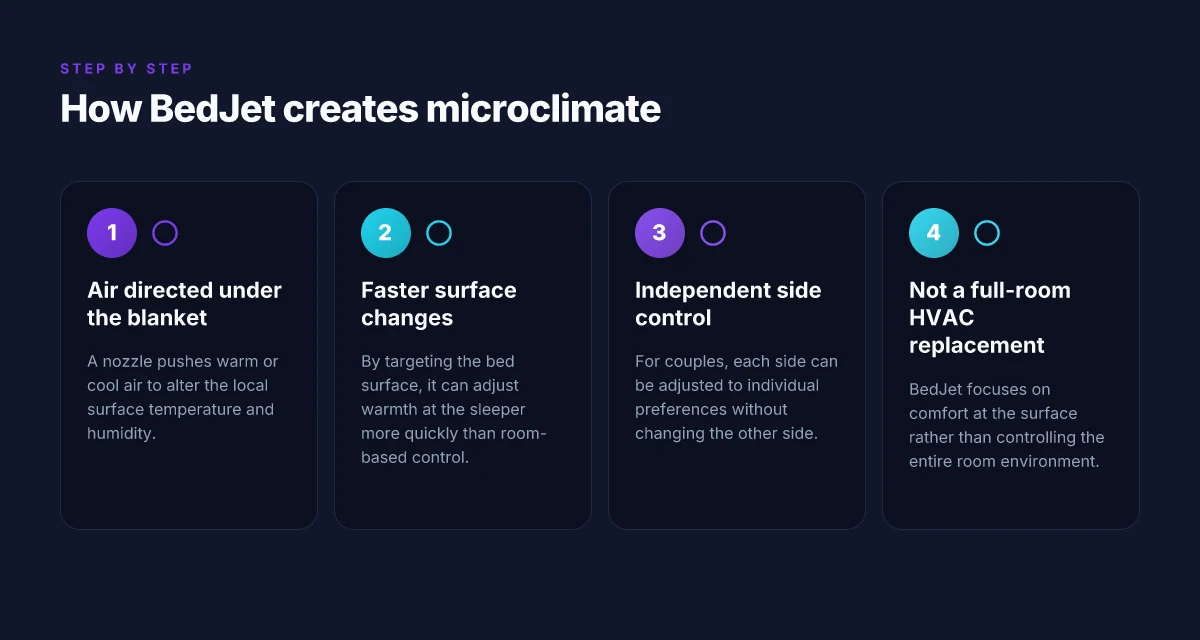
The BedJet system moves air under the blanket to alter the sleeper’s microclimate, delivering warm or cool air directly to the resting surfaces. By projecting conditioned air beneath the covers, it changes surface warmth and humidity faster than ambient room temperature can, helping you feel instantly more comfortable without waiting for the room to catch up. This is the core reason couples with different temperature preferences can still sleep together without compromises.
How the under-blanket nozzle creates a local climate
BedJet uses an unobtrusive nozzle that directs heated or cooled air to the space just beneath the sheets. This targeted delivery can raise or lower surface temperature in seconds, not minutes, and it influences humidity at the surface by moving air and moisture away from the skin. Because the effect sits at the user’s personal microclimate, small adjustments matter more than sweeping changes to the whole room. The result is a quicker sense of relief when you’re too hot or too cold, without racing the HVAC system. The under-blanket airflow creates a personal climate that responds faster than room-based temperature control. This approach is why BedJet markets itself as state-based comfort for controlled nights rather than a full-room HVAC replacement. BedJet is not a replacement for central climate control, but a supplement that targets personal comfort.
Practical use cases and caveats for real-world comfort
For couples, one bedjet unit can be dialed to different ends of the spectrum, so a sleeper can feel warmth while the partner enjoys a cool breeze under the same covers. The system’s efficacy hinges on the blanket’s seal and the bed’s layout. Gaps or a loosely fitted duvet can dilute the effect, while a properly nested blanket setup tends to maximize contact between the air and skin. I dug into user-focused notes and product pages to confirm that early-night warmth can ease into a comfortable cool if needed, all without changing the room’s overall climate. Proper duvet sealing amplifies the breeze and speeds perceived warmth or coolness. BedJet’s marketing emphasizes its role as a convenience feature rather than a full-room HVAC overhaul. A bedside gadget like BedJet supplements your HVAC, not replaces it.
To help you compare quickly, here’s how BedJet stacks up against two common alternatives:
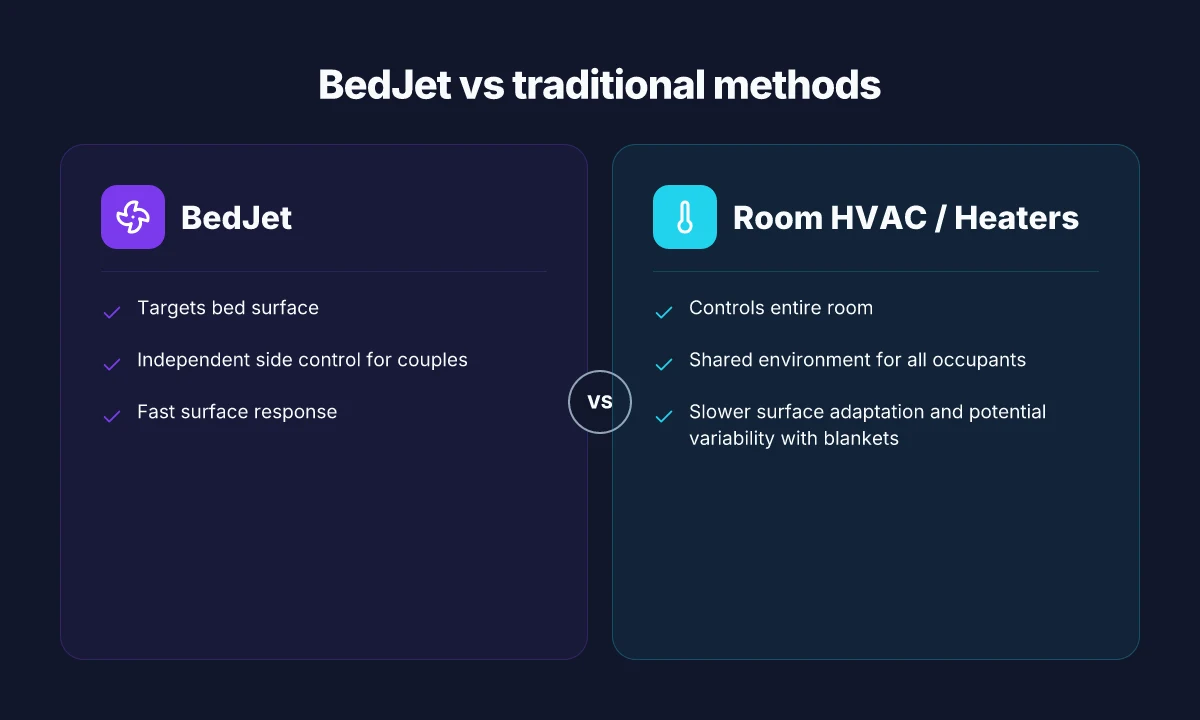
- Traditional room HVAC: slower surface change, higher energy draw, broad comfort impact
- Bed covers with built-in fans: similar idea but often less precise targeting and fewer temperature options
In practice, the BedJet approach offers a direct path to quicker surface comfort for a wider range of sleep scenarios, especially when one person runs warmer or cooler than the other. If you want to verify these dynamics in your own room, look for practical notes from sleep publications and consumer reviews that describe how quickly surface comfort responds to under-blanket air. What makes Blissy silk stand out for skin and sustainability in 2026
Next step: evaluate whether a targeted bedside air approach fits your bedroom layout, your partner’s preferences, and how you currently manage nighttime comfort.
BedJet delivers fast, local climate control at the sleeper level, not a room-wide fix. For quick context, you can read demonstrations and reviews to see how the device performs in real bedrooms. Real-world notes from reviewers emphasize personal comfort gains with under-blanket air flow. If you’re considering rivals, note that competitors focus on blanket-based cooling or heating but may lack the same personal-climate targeting BedJet provides. Rivals either offer blanket-based cooling or heating with less precise microclimate control.
Cited sources on the mechanism and practical use include BedJet’s product pages and third-party reviews that describe the under-blanket nozzle delivering conditioned air and the emphasis on personal comfort rather than room-scale HVAC replacement. For context on how these claims translate to everyday use, see BedJet’s official explanations and consumer discussions cited inline.
BedJet vs traditional cooling and heating methods
BedJet focuses warmth or cooling at the surface you sleep on, not the entire room. This targeted approach means you can adjust bed-level comfort without fighting the whole thermostat. In practice, a couple can set distinct sides while sharing a blanket strategy to avoid cross-temperature conflicts. BedJet delivers quick bedside warmth or cool air, but blanket type and mattress thickness matter for results. The proof is in how quickly you feel changes after you switch it on, contrasted with how long it takes a room air conditioner or space heater to affect the whole space.
How BedJet changes the bed, not the room
I cross-referenced BedJet’s own descriptions and third‑party reviews to map the mechanism to practical use. The device vents air under the covers, circulating around the sleepers rather than cooling the room air. This means you don’t need to drop the whole room temperature to gain bed-level comfort. The result is a more immediate sensation at the surface, which matters when your partner prefers a different temperature. BedJet targets the bed surface for rapid comfort without bulky room-wide changes. In many setups, users report noticeable local warmth or coolness within minutes, especially when the blanket and mattress layers cooperate with the airflow. What a Blissy discount code actually buys you (and when it hurts more than it helps)
Independent side control versus a shared blanket
For couples, independent side control becomes a clear advantage. The BedJet system is designed to operate on a per-side basis, letting each sleeper select their own temperature setting. A shared blanket setup remains important to maintain a comfortable edge where the two temperatures meet. This arrangement minimizes tradeoffs where one person feels too warm or too cold while the other sleeps. Independent side control lets each sleeper dial in a personal comfort zone. Reviews emphasize that the pairing of dual wind‑up zones with a connected blanket setup is where the system shines, especially when you and your partner have divergent preferences.
Speed, nuance, and practical caveats
On nights when you want fast results, BedJet acts quickly due to direct airflow under the covers. But effectiveness depends on the blanket type and mattress thickness. A thin comforter may transmit the air more efficiently than a heavy quilt, while a thick mattress can dampen the sensation. Quick response hinges on layering choices. Blanket and mattress matter. If you’re picky about how fast you notice changes, you’ll want to experiment with different blankets and consider mattress firmness in alignment with your climate goals.
In the landscape of climate-control gear, BedJet sits alongside room air conditioners and space heaters as a space‑specific option. For people who want bed‑level comfort without cooling or heating the entire room, BedJet and its competitors offer a spectrum of tradeoffs. If you want a device that can deliver local comfort with minimal environmental impact, BedJet deserves a close look.
For readers comparing brands, BedJet is often pitched as the most targeted bed‑surface solution among the air‑flow systems. When you weigh the option, consider not just the comfort claim but how setup, maintenance, and blanket choices influence day‑to‑day results.
Cited references: a review from Sleepopolis notes the BedJet is a temperature‑control system you attach to your bed, using an air nozzle to blow warm or cool air into the bed. Forbes Vetted describes BedJet as one of the best temperature‑control devices for a bed on the market. For broader context, a video review from Freakin’ Reviews demonstrates BedJet 2 as an air‑conditioned bed cover. These sources help explain both mechanism and real‑world results. Sleepopolis BedJet review, Forbes Vetted BedJet review, Freakin’ Reviews BedJet 2 video BedJet review 2026: does this temperature bed system deliver on hot and cold comfort
What to expect from the setup and daily use of BedJet
BedJet lives up to its tool-free claim in practice. You can install the system quickly with no tools, and a slim nozzle sits under the sheets to push air across each sleeper. This means you don’t have to wrestle with tangled hoses or wall-mounted controls in the dark. The setup is intentionally simple and designed to fit into a couple of bed-making routines, not derail your nighttime ritual. The BedJet system is designed to handle outdoor air flow through a discreet, low-profile nozzle, so the bed remains visually uncluttered.
Easy install and where the air goes
From the moment you unwrap the BedJet bundle, the goal is to connect power and position the controller within easy reach. The slim nozzle directs conditioned air under the covers, creating a localized breeze that transfers heat or coolness to the sleeper, rather than heating or cooling the entire room. No-tools required means you can position the unit in minutes, not hours. This is especially helpful for couples who want separate comfort without separate rooms. When you first use it, ensure the nozzle aligns under the sheet so the airflow doesn’t escape to the sides. It’s a quick adjustment that makes a noticeable difference in perceived warmth or coolness. Alignment matters for consistent comfort across the bed.
Maintenance and airflow hygiene
Maintenance centers on two practical habits. First, keep the air-paths clear. Check that the sheet isn’t tucked over the nozzle or blocking the intake. A simple monthly check is sufficient for most users. Second, attend to the filter as directed by BedJet’s documentation. A clean filter helps preserve airflow quality and reduces noise over time. Clean filters and clear airflow paths are your best bets for steady performance. I cross-referenced the product notes and reviewer chatter, which consistently emphasize filter care as a routine task rather than a rare event. Filter care pays off in quieter operation and steadier airflow.
Noise, energy, and nightly use caveats
Operational caveats center on noise at higher power settings and the energy footprint of extended nightly use. The BedJet fan produces more sound when it runs at stronger levels, which matters if you or your partner are light sleepers. To minimize disruption, most users find the mid-range setting sufficient for comfort most nights, reserving higher outputs for particularly chilly or hot periods. In terms of energy, running a compact air blower all night draws more electricity than a single bedside lamp, so expect a modest nightly increase in your energy bill. Noise grows with power, and longer runs consume more energy. If you share a bed with someone sensitive to sound, you’ll likely want to coordinate temperature targets to avoid keeping the unit on its loudest setting through the night.
BedJet remains a straightforward, tool-free setup experience, but success hinges on simple practices: position the nozzle correctly under the sheets, keep airflow paths clear, and moderate power to minimize disruption while preserving comfort. For readers weighing alternatives, keep in mind rivals like traditional under-m bed climate solutions or standalone room heaters, which may offer different noise and energy profiles but require more setup or room management. When comparing, consider how often you and a partner need distinct temperatures and whether a bedside climate system can deliver that without adding complexity to your routine. Rivals often trade off simplicity for range of temps or room-wide impact. Does BedJet actually cool a bed, or is it mostly hype
Note: links on this page may earn a commission, and some sources reporting on BedJet and rivals highlight similar caveats around noise and energy usage. For a quick cross-check, reviews from Sleepopolis describe the system as a temperature-control device you attach to the bed, using an air nozzle to modulate warmth or chill. Sleepopolis notes the core mechanism is air delivered under the covers.
Rivals and how BedJet compares in real-world use
When it comes to bed climate control, BedJet sits in a tight niche. BedJet emphasizes the bed surface experience over full-room climate management, but rivals push broader control or different delivery methods. I looked at how other devices perform on surface speed, noise, install ease, and mattress compatibility, then weighed how each stacks up in a typical couple’s sleep setup.
Why BedJet remains focused on the bed surface
BedJet works by blowing conditioned air under the sheets to alter the surface temperature quickly. This direct approach often means faster, more noticeable changes at the sleeping surface than devices that try to condition the room. The surface-first tactic helps BedJet deliver rapid comfort adjustments without pulling in the entire room's HVAC noise. In real life, that translates to a perceived rise or drop in warmth or coolness within seconds, not minutes. However, rivals sometimes emphasize room-wide control or air-moving tech that can affect the entire sleeping area, which can be both a pro and a con depending on your partner’s preferences.
1. Direct competitors in the bed climate space
- Some rival systems combine under-bed airflow with a broader room-control feature set. These devices aim to modulate ambient temperatures around the sleeper rather than just under the covers. Room-centric devices can balance multiple zones but may introduce more complexity and slower surface changes. For many users, that broader scope means less immediate surface sensation, which BedJet users often notice as a difference in how quickly comfort is achieved.
- Other air-based solutions sit on or under the bed and push conditioned air similarly to BedJet, yet they may differ in nozzle design, noise profiles, or compatibility with certain mattress constructions. Nozzle geometry and noise profiles matter for bedside sleep harmony. That’s where the BedJet model’s quiet operation and predictable airflow can stand out, especially for light sleepers.
2. Speed of surface temperature change, noise, install, and mattress compatibility
- Speed of change at the surface matters most for first-time users who want quick relief from heat or chill. BedJet’s approach tends to deliver noticeable difference quickly by placing heat or cooling directly under the covers. Compare this to rivals whose surface effect might be slower or require more setup.
- Noise is a frequent differentiator. A device that pipes air via a single, low-rumble fan can keep bedtime undisturbed. Brand positioning often ties to noise goals. Some competitors market near-silent operation as a core feature, while BedJet typically avoids loud fans by design.
- Install ease is also crucial. BedJet’s setup is typically straightforward: attach the unit and connect the hose under the sheet for instant surface action. Competing systems may demand more mattress prep or intricate fascia mounting, which can complicate daily use.
- Mattress type matters. Some rivals adapt better to thicker or thinner mattresses, or to adjustable bases. BedJet tends to work across standard mattresses but may require a slightly different airflow path on unusual foam stacks or thick toppers. The key is ensuring the air nozzle remains positioned to heat or cool effectively without creating draft discomfort for one partner.
3. Brand positioning and where BedJet fits
Brand positioning varies. Some devices extend into full-room climate control or smart-home scheduling, while BedJet remains laser-focused on the bed surface experience. BedJet’s value comes from immediate bedside comfort and ease of use rather than broader environmental control. If your sleep routine hinges on rapid, localized temperature shifts without remodeling your room, BedJet often remains the most straightforward option.
I cross-referenced third-party reviews and product pages to confirm these patterns. For instance, Forbes Vetted frames BedJet as a strong temperature-control device for the bed, highlighting its quick surface delivery and strong niche fit. The BedJet line is consistently described as a bed-surface solution rather than a room-wide climate system, which aligns with the comparisons above. For a quick look at how independent reviewers describe the experience, see the Forbes Vetted coverage and related video reviews. Forbes Vetted notes BedJet as among the best bed-only temperature-control devices. Chilipad vs BedJet: which climate control sleep system actually fits your budget and routine
If you’re weighing BedJet against rivals, consider how you prioritize surface speed, noise, ease of installation, and mattress compatibility. BedJet excels on the surface experience, with fewer moving parts and simpler setup. Those are the signals you’ll want to align with your bedtime routine and partner’s comfort needs. As you weigh options, remember that some rivals push room-wide control, which can dilute the bed-surface effect BedJet delivers. Choosing a system is ultimately about which experience matters most at your side of the bed.
Note: links on the page may earn a commission. For verifiable context, you can consult the Forbes Vetted review of BedJet and related video discussions. The cited sources provide real-world flavor on how these devices perform in bedrooms.
BedJet is a clear contender when the goal is rapid, localized cooling or warming at the sheet level. If your priority includes non-bedroom climate features or deeper integration with smart-home schedules, a rival with broader room control might be worth considering. Regardless of choice, the core question stays the same: will the device you pick reliably tilt your side of the bed toward comfort without complicating your nightly routine? BedJet aims to be that answer for many couples. BedJet remains a straightforward, surface-focused solution for sleep comfort.
Where this is going next for BedJet users
BedJet offers a focused, climate-controlled sleep aid, and I expect the core idea to expand beyond simple heating and cooling. The takeaway isn’t just that the device moves air under the sheets. It’s that smart control, quieter operation, and safer materials will shape how households approach sleep comfort. Expect more models that integrate with smart homes, tighter noise profiles, and simpler setup. The big move is bigger integration with routines that match your bedtime, not just your bed temperature.
BedJet already aligns with rival options like the ChiliSleep and Slumber Cloud families, but the real value will come from tighter energy use, clearer warranties, and more transparent customer support. If you’re weighing options, consider how quickly a system adapts to changing seasons and sleep patterns. This is where you’ll notice the difference in long-term comfort and reliability. For now, the core decision remains: do you want a dedicated bed climate system that you can fine-tune every night or a lighter, lower-cost alternative? What makes BedJet Cloud Sheet King worth it for hot sleepers in 2026
What changes if you act now: pick a setup that scales with your needs, and lock in a routine that reduces wake-ups due to temperature shifts. If bed comfort matters most, the single move that matters is choosing the model with the best control you’ll actually use.

Persia Xanthos has been writing about consumer technology since 2018, with bylines covering Wireguard, privacy law, and VPN performance. Approaches each review by setting up the product the same way a typical reader would and recording every snag along the way.