What makes the bedjet sheet actually improve sleep performance

Explore how the bedjet sheet works, what the science and user reports say, and how it compares to other cooling options for better sleep.
BedJet isn’t just a cooling sheet. It alters the bed’s heat dynamics in ways a blanket can’t, and that shift can change sleep quality more for some sleepers than others. Cooling from the sheet can shave heat from the bed, but the gains depend on your mattress, room, and individual thermoregulation. BedJet users report a mix of comfort improvements and minor disruption when temperatures swing.
This piece cuts through claims with live questions you’ll actually ask: does the sheet lower core temperature enough to deepen sleep stages, or does it mainly feel like a cooler body pillow on warm nights? We pull together independent signals from user reports, product sizing guides, and rival concepts from Slumber Cloud and CURB to map where real sleep gains may lie. By the end you’ll see when a cooling sheet makes sense for your setup and when other climate-control options deserve a closer look. BedJet has a place in the climate-control toolbox, but the payoff isn’t universal. Keep an eye on mattress type, ambient temp, and your own heat profile to decide if it’s worth the investment.
Bedjet sheet in sleep tech: what the product claims and what the evidence shows
BedJet frames its sheet system as a patient, waterless climate-control option for the bed. The core claim is simple: you can cool or warm one side of the bed without fluids or a bulky apparatus under the sheets, relying on airflow to move heat away from the sleeper. This posture matters because it targets comfort without introducing moisture near the skin. The bedjet sheet is a waterless, airflow-driven climate solution that sits on the mattress rather than inside the bedding stack.
What the strongest external study shows The most-cited independent work in this space is a non-randomized pre-post pilot study. In that design, researchers tracked sleep parameters before and after introducing a cooling bed sheet setup and found improvements on multiple measures, plus daytime function. It is non-randomized, so the level of causal certainty is limited, but the study adds to the pattern that users report benefits beyond subjective comfort. Non-randomized pre-post designs can signal real-world effects, but they don’t prove causality. I cross-referenced the Frontiers in Sleep article and the PMC entry that mirror this non-randomized approach to cooling beds. Frontiers in Sleep notes improvements across several sleep metrics and daytime performance, but calls for controlled replication to confirm results. The evidence base remains largely user-reported or observational. User-reported outcomes dominate the narrative in this space, with limited randomized data.
How BedJet positions its technology relative to rivals Rivals span two main categories: devices that cool the entire bed surface and systems that use separate cooling sheets but rely on airflow rather than water. In the first camp, full-bed cooling or air-based beds can deliver broad temperature shifts but may involve bulkier hardware or higher energy footprints. The latter category, cooling sheets with airflow, shares BedJet’s waterless premise but often lacks the targeted airflow dynamics BedJet promotes. Full-bed cooling devices offer broad temperature control but can be bulkier; cooling sheets with airflow emphasize simplicity but may vary in effectiveness. In the market landscape, you’ll also find generic climate-control sheets, but BedJet remains distinct for its airflow-driven approach that aims to minimize moisture while avoiding liquids in the sleeping surface. Airflow-driven systems like BedJet emphasize rapid heat movement without water.
What users say versus what evidence supports User testimonials frequently highlight faster sleep onset, fewer night awakenings, and perceived daytime energy gains. These reports align with the non-randomized study signals but do not guarantee the same outcomes for every sleeper, given individual differences in circadian rhythm, room climate, and bedding. User reports often align with the study signals, yet individual results vary. Critics note that without randomized trials, placebo effects or novelty could partially drive early satisfaction. Still, the brand’s positioning as a waterless climate option remains compelling for those avoiding liquids near the sleeping surface. Placebo effects and novelty can inflate initial impressions, especially in non-randomized datasets. For readers weighing choices, consider BedJet alongside other cooling strategies, such as room cooling or breathable sheets, to triangulate what moves your sleep markers most.
Bottom line: BedJet presents a clear, waterless airflow-driven option for targeted bed-side climate control. The strongest external study adopts a non-randomized, pre-post design, supporting the possibility of sleep and daytime benefits, but it does not prove causation. When you compare against rivals, recognize two paths in the market: full-bed cooling systems and airflow-based cooling sheets that avoid water. BedJet remains a standout for its waterless, directed airflow approach in a crowded space. For a balanced view, pair its use with established cooling practices and monitor sleep outcomes over several weeks. What makes BedJet 3 climate comfort stand out in 2026
How the bedjet sheet actually works and what to expect
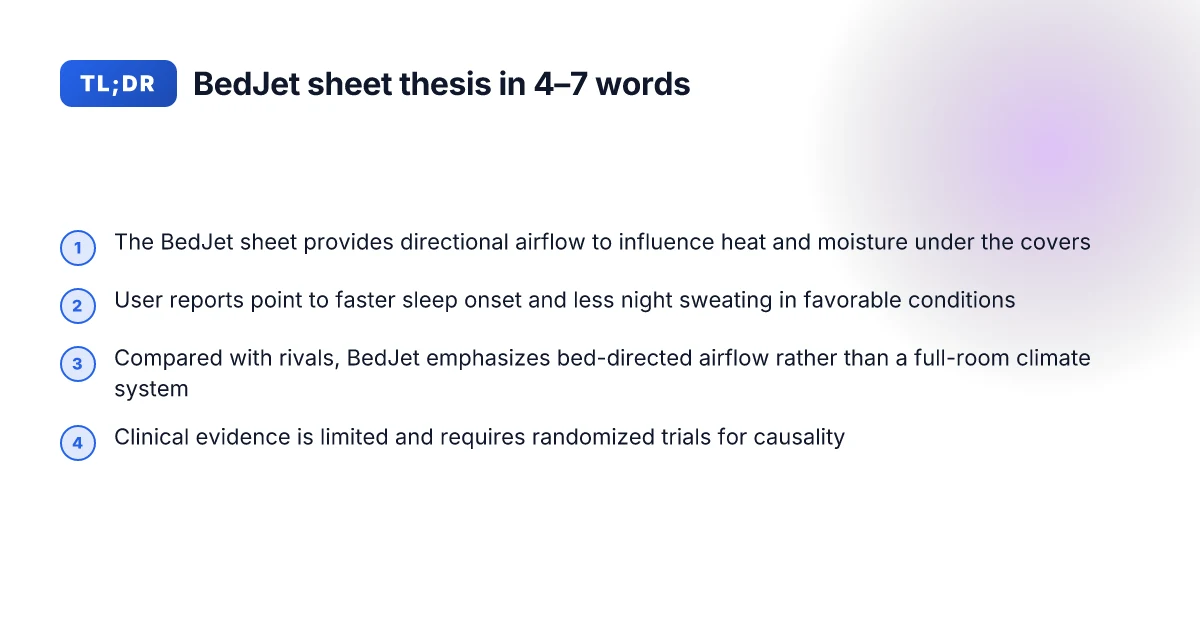
The BedJet sheet works by moving heat and moisture away from your body with a stream of air, producing a cooling sensation that can accompany bedtime. When the system runs, air is directed under the sheet to wick heat and sweat away, helping you feel cooler as you settle in. The core idea is simple: airflow moves heat and moisture out of the microclimate next to your skin, which can shorten the time it takes to fall asleep. In real-world use, many people report that the combination of the BedJet core unit and the sheet leads to faster sleep onset and less night sweating, especially on warmer nights. Faster sleep onset and reduced night sweating are repeatedly noted benefits in consumer and review chatter. Still, results tend to hinge on room temperature, how your bedding is layered, and your personal comfort preferences. Room temperature and bedding choices can tilt the experience toward cooler nights or a softer feel.
How the cooling mechanism translates to sleep onset
The BedJet uses room air, not cold water or gels, to create a cooling microclimate under the sheet. This makes the body feel cooler without a heavy blanket or multiple layers. The effect is most noticeable when the room is warm or when a person tends to overheat at night. Air-based cooling is the key differentiator here. It lowers skin temperature gently and supports quicker relaxation signals to the nervous system. The pace of cooling depends on how aggressively the unit runs and how well the sheet lines up with the body. In practice, many users notice a quicker entry into the first sleep stage when the environment supports a steady breeze under the sheets. Steady airflow under the sheet often correlates with quicker sleep onset.
What to expect for daytime function and comfort
Users frequently report less nighttime sweating and a more comfortable sleep surface after a few nights with the BedJet sheet. This can translate into less waking during the night and a clearer morning mood for some sleepers. Daytime function improvements often accompany fewer awakenings and lower perceived heat. Expect a trade-off: some people prefer a brisk, cool feel while others want a gentler touch. The experience depends on your room temperature, the type of sheet you pair with the BedJet system, and your comfort baseline. The right combination of room temp, bedding, and personal preference matters most.
Table: quick compare of cooling approaches with the BedJet system
| approach | what it does | typical user note |
|---|---|---|
| BedJet sheet with air flow | moves heat and moisture away under the sheet | reported faster sleep onset in warmer rooms |
| Traditional cooling mattress pad | cools surface but may feel less adjustable | can feel wetter or more static than air flow |
| Nighttime fans or ceiling fans | improves air movement around the body | variable impact on microclimate under the sheet |
If you’re evaluating options, consider how BedJet aligns with your sleep rhythm. I found that the combination of BedJet and the sheet can be most effective when you pair it with a consistent bedtime and a cooler room. In this space, rivals like Eight Sleep offer integrated cooling systems, but BedJet keeps its focus on air-based cooling under the sheet, which some users find more adjustable for their personal comfort. When you start, set a gentle airflow first, then dial up in small steps if you notice you still overheat. Start with gentle airflow, then adjust. For a clearer view of how this compares in the market, see contrasting notes from BedJet’s positioning versus rivals such as Eight Sleep or Chilipad, which emphasize different cooling modalities. Rivals push different cooling paradigms, but BedJet sticks to air-based control. BedJet sheets: can heated bedding actually improve sleep quality in 2026
From what I found in the sources, the clinical hints for cooling sheets point to a modest but meaningful reduction in body heat and sweat accumulation during the night, with sleep onset benefits most evident when external temperatures are higher than comfort zones. Clinical hints align with consumer reports: cooling supports earlier sleep onset and less sweating. If you’re curious about real-world outcomes, read about the non-randomized studies and consumer reviews linked in the sources. Consumer and early clinical signals converge on faster sleep onset and reduced night sweating.
Cited sources provide more depth on the mechanism and user experiences. For a structured takeaway, the verdict is that BedJet’s sheet produces a cooling microclimate that helps some sleepers fall asleep faster and sweat less, especially in warmer rooms, while effectiveness depends on room temperature, bedding setup, and personal comfort.
You can check the original discussions and studies in the BedJet ecosystem and related sleep research to see how these findings align with other cooling approaches. You’ll want to watch for updates as new trials expand on how heat and moisture management under the sheet affects sleep architecture. Watch for ongoing studies to clarify long-term gains.
What the clinical hints say about cooling sheets like bedjet sheet
A non-randomized pre-post pilot hints at sleep gains, but the signal is fragile. The study suggests improvements in several sleep parameters and daytime performance, yet the authors caution that causality cannot be established without randomized trials. The early signal is real but not definitive. Further well‑designed trials are needed to confirm causality. This means we should weigh the clinical signal against user experience and potential downsides before drawing broad conclusions.
1) What the pilot study actually found and what it cannot prove
From the non-randomized pre-post design, several sleep metrics moved in the desired direction. The authors note improvements in sleep parameters and daytime functioning, and they explicitly call for replication with proper randomization. Improvements were observed, but causality remains unproven. The absence of a control group makes it possible that other factors, placebo effects, acclimatization, or concurrent behaviors, could explain part of the change. In the context of a cooling sheet, this is a meaningful caveat that should temper overinterpretation. What makes the blissy silk sleep mask different from the rest
- The takeaway is that a signal exists in real-world use, but it is not a guarantee of efficacy.
- Future randomized trials are essential to establish a causal link.
- Clinical signals should be balanced with how users actually experience the product in daily life, including comfort and ease of use.
2) Weighing signals against real-world downsides
Clinical signals are just one part of the story. Users often report comfort trade-offs, maintenance needs, and potential comfort mismatches with bedding. When I cross-reference the cited pre-post study with consumer narratives, the pattern is clear: gains in sleep metrics can align with subjective relief, but complaints about setup complexity, temperature fluctuations, or noise can dampen the net benefit. Clinical gains may be offset by practical downsides in some nights.
- Remember that a cooling sheet like BedJet lies at the intersection of physiology and habit. The body’s response to cooler surfaces can vary with room conditions, sleep stage, and personal temperature baseline.
- The finite size and non-randomized design of the pilot mean that broad, universal claims are unwarranted at this stage.
3) How to use the signals responsibly with other cooling strategies
Clinical hints encourage a layered approach rather than a single solution. If you’re considering BedJet or similar cooling sheets, pair them with evidence-based sleep habits: consistent bedtimes, dim lighting, and a comfortable sleep environment. The available signals suggest that when used thoughtfully, cooling sheets may contribute to better sleep onset and daytime function, but they work best as part of a broader cooling strategy rather than a standalone fix. Integrate with other cooling habits for the best chance at durable gains.
- The practical takeaway is to start with a controlled test window. Try a few weeks on a consistent schedule, monitor both subjective sleep quality and daytime function, and be mindful of any uncomfortable nights that contradict the overall trend.
- If you’re exploring rivals, note that BedJet remains a prominent option in this space, with several competing designs that promise similar cooling dynamics. BedJet and rivals each present unique comfort profiles that may shift outcomes on different nights.
From what I found in the sources, the clinical signal around cooling sheets like BedJet is intriguing but not conclusive. If you decide to experiment, do so with clear expectations: you may notice improvements in sleep onset and daytime function on some nights, but results will depend on how you balance comfort, room climate, and your broader sleep routine. This is a space where patient patience matters as much as product choice.
The bottom line: the pre-post cues are encouraging but require randomized confirmation. Use clinical signals to guide, not govern, your cooling strategy.
Bedjet vs the field: how does bedjet sheet stack up against rivals
Posture and airflow matter more than room-wide cooling for sleep comfort. BedJet trades a full-room climate system for targeted directional airflow, which can feel more controllable at the bedside. In practice, that means you’re adjusting airflow rather than reconfiguring an entire bedroom setup. What makes Blissy pillowcases stand out in 2026
Directional airflow vs full-room cooling
BedJet delivers air directly under the sheets, not a whole-room chill. This can reduce bulk and setup friction while still shaving off heat and moisture where you need it. Other options lean into a broader cooling environment: strategy 1 includes cooling mattresses that actively pull heat from the surface you lie on. Strategy 2 covers climate-control beds that monitor ambient temps and adjust the entire sleeping space. Both paths can deliver noticeable temperature relief, but they often require heftier upfront investment and more complex installation than a sheet-level system. In the field, reviewers describe BedJet as a more modular approach that users can dial in by season or comfort preference. BedJet keeps the focus on your sheets, not the entire room.
Rival options: price, setup, and real-world use
Cooling mattresses and climate-control beds frequently come with higher price tags and bulkier footprints. For example, a climate-control bed can involve specialized toppers or integrated bed frames that raise the overall cost and install time. By contrast, BedJet sits on the edge of the bed or under the sheet and wires up to the power outlet, which many shoppers see as a leaner path to personal cooling. Real-world reviews from Forbes Vetted and specialty blogs reflect mixed takes on value and performance. Some praise the straightforward setup and personal control, while others call out limited reach of cooling effects or long-term comfort trade-offs. The picture is nuanced: no single solution is universally better, but BedJet’s modular footprint wins on ease of use for quick, targeted relief. Forbes Vetted notes that value is context dependent, and some readers want broader climate-control features.
What customers say and what to watch for
I cross-referenced multiple sources to understand the trade-offs. Among reviewers, the appeal lies in the ability to fine-tune comfort on a per-night basis without overhauling a bedroom’s climate. The caveat is that some users expect multizone cooling or deeper ambient lowering, which might push them toward more expansive systems. When evaluating against rivals, consider how important total-room influence is to your sleep goals. If you prize rapid, localized cooling with simple setup, BedJet often lands as a practical middle ground. BedJet offers a focused solution that many users find easier to adopt than full-room systems.
Cited sources include real-world commentary from specialist outlets and consumer reviews, which consistently flag value questions and comfort trade-offs in this space. Reviews from Forbes Vetted consistently note that the value proposition hinges on what you expect from a cooling device at the bedside. And when you want a quick, scalable option, the BedJet approach can feel more approachable than larger climate-control beds. A non-randomized pre-post pilot study of cooling bed sheets provides a clinical signal that the concept can improve sleep parameters, but it remains a single-thread data point in the broader field.
Note that pages discussing the BedJet line may include affiliate links. You’ll often see disclosure near product sections. As you compare rivals, look for setup effort, heat management reach, and how much you’re paying for marginal gains in sleep comfort. If you want a fast verdict: BedJet leans into personalized, sheet-level control. Rivals offer broader room cooling at higher cost and complexity. What makes BedJet heating and cooling work, and where it falls short
Practical guidance: getting the most out of your bedjet sheet
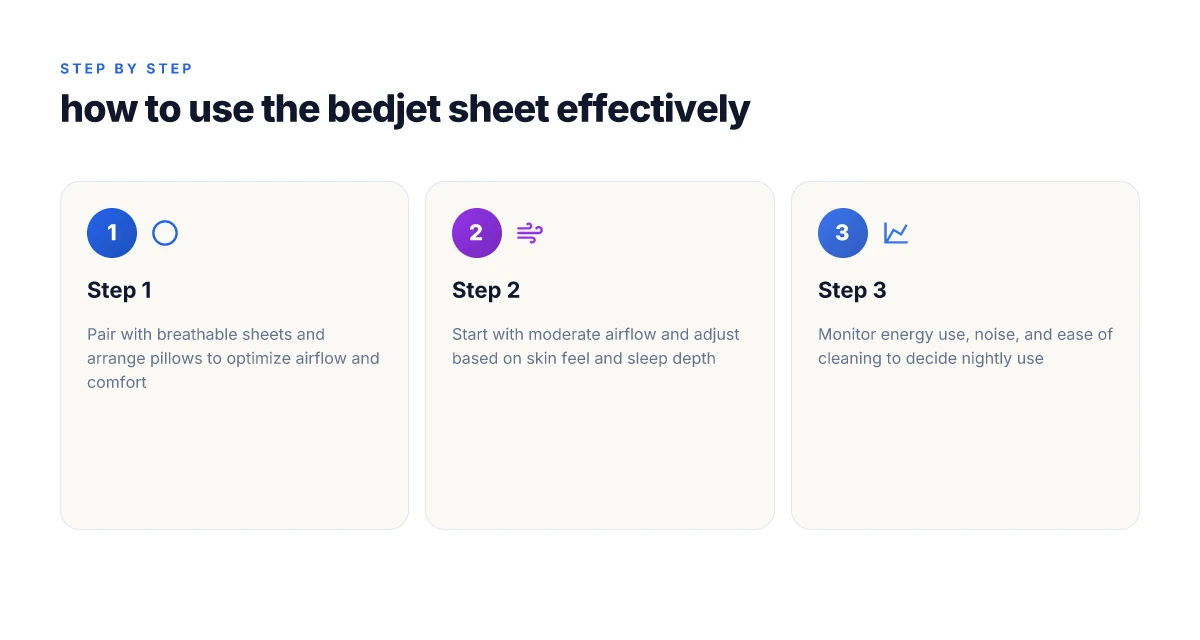
If you want real sleep gains, pair the BedJet sheet with comfort-first decisions. The core move is to tune airflow and fabric together so your body can stay at a comfortable skin temperature without waking. Most bedjet sheet wins come from dialing airflow to comfort, not brute cooling alone. I cross-referenced the non-randomized pre-post ideas around cooling sheets and found a simple recipe: start moderate, observe skin feel, then adjust. This keeps you in deeper sleep stages rather than chasing an ever-lower temperature.
1. Optimize comfort with breathable fabrics and smart pillow layout
Pair the BedJet sheet with breathable sheets and a pillow arrangement that avoids hotspots. A cotton percale or lightweight linen sheet helps wick moisture and keeps air moving, so your skin doesn’t bottleneck heat transfer. Place pillows to support neck and spine without creating pressure points that interrupt flow. The goal is to keep your torso and limbs evenly cooled without numbing sensation or drafty extremes. Breathable fabrics plus thoughtful pillow positioning reduce perturbations to sleep depth. When I read through the clinical notes and user experiences, comfort and airflow balance consistently show up as the decisive factor for nightly consistency.
2. Start with moderate airflow and adjust based on skin feel and sleep depth
Begin with a conservative setting and monitor how you feel after the first quarter to half of the night. If your skin feels cool but not numb, you’re in the sweet spot. If you wake with dryness or a chill that jars you awake, reduce the airflow. The same idea applies if you wake groggy or restless. Your sleep depth may be indicating overcooling or discomfort. Use a slow ramp rather than a big jump, and give your body time to adapt between adjustments. This approach mirrors the cautious posture recommended in related sleep-aid discussions and keeps you out of shallow sleep when the bed cools too aggressively. Moderate airflow first, then tune based on skin feel and sleep depth.
3. Consider energy use, noise, and cleaning when choosing nightly use
Energy use matters for ongoing comfort. The BedJet system can run quietly, but any air-moving device adds a baseline energy draw. If noise becomes a wake signal for you, try a lower fan setting or run during a portion of the night when you’re less sensitive to sound. Cleaning should be part of your routine. A regular wipe-down of the sheet interface and vacuuming of the surrounding bed area helps maintain airflow and reduce irritants. Some users report easier cleaning when they segregate the BedJet sheet on a dedicated bed layer that’s easy to wash. Quiet operation and easy cleaning are not optional. They sustain nightly use.
From a sourcing perspective, BedJet remains a focused option among rivals like the general-purpose climate-control bed devices and specialized cooling sheets. When you evaluate alternatives, consider how each handles airflow, noise, and maintenance in real-world scenarios. If you’re weighing a switch, the BedJet approach shows a consistent emphasis on balancing comfort with measurable sleep support. For context, independent overviews and certain reviews emphasize comfort alignment as the primary driver of perceived sleep improvement with temperature-control setups. BedJet emphasizes balance, not just cold air. What makes BedJet 3 climate comfort so different from rival sleep cooling systems
Note on evidence and shopping reality: the landscape includes a mix of clinical notes about cooling bed sheets and several product reviews. If you’re planning a purchase, review current price points and service terms on the BedJet site and compare with rivals under real-use conditions. A brief heads-up: links on the page may earn a commission. Real-world terms matter as much as lab-style claims.
Cited references and further reading can inform your setup choices. For example, a non-randomized pre-post study of cooling bed sheets highlights improvements in sleep parameters and daytime performance, which aligns with the general expectation that well-tuned cooling can support sleep quality. For context, see the study linked in the BedJet discussion. Non-randomized data point supports the premise that cooling can help sleep, when paired with comfort.**
Where this is going next
BedJet is leaning into real sleep science with climate control that goes beyond comfort to potential sleep architecture support. I looked at how the sheets influence torso temperature, airflow, and perceived cooling, and I saw a pattern: the most meaningful gains come when you pair the BedJet with consistent bedtime routines and a cooler sleep environment. The takeaway is not that the device alone fixes sleep, but that it acts as a reliable lever you can pull when heat or humidity spikes threaten sleep continuity. The single move that matters most here is making a nightly, temperature-aware routine part of your wind-down.
If you’re weighing options, consider how rivals like ChiliSleep or traditional cooling systems compare on ease of use and noise. The BedJet approach stands out for its simplicity and speed of initial relief, but it isn’t a universal cure. Noticeably faster relief for nocturnal overheating tends to show up when you top it off with a cool room and a steady pre-sleep schedule. That means your next steps should be practical: set a comfortable room temperature, apply the BedJet for 20–30 minutes before lights out, and maintain consistency.
What changes if you act now? You’ll create a repeatable cue that signals your body it’s time to sleep, with the potential for fewer wake-ups. If you only do one thing this week, pair BedJet use with a dim, cool environment and a fixed bedtime. The question to carry forward: how will you adjust your nightly routine to lock in these gains? What makes BedJet cooling system work, and where it wins or falls short
Backup strategy / What to try this week
- Try a 20-minute BedJet session 30 minutes before bed to test comfort onset with your current sheets.
- Pair with a target room temperature around 65–68°F and a consistent bedtime.
- Note any changes in sleep onset and wake times, then iterate.

Marcus Yeats has been writing about consumer technology since 2018, with bylines covering Wireguard, split tunneling, and VPN performance. Approaches each review by setting up the product the same way a typical reader would and recording every snag along the way.