BedJet sheets: can heated bedding actually improve sleep quality in 2026
Explore whether BedJet sheets deliver on their promise of climate control for better sleep. We unpack efficacy, setup, and real-world use with a balanced view.
BedJet sheets aren’t a gimmick. Their value hinges on how reliably climate control translates to sleep, not glossy ads. When you dial in a target temperature, the system responds in real time, and that responsiveness matters more than raw wattage or fabric texture. BedJet and similar systems can shift your bed temperature, but results vary with room size, insulation, and your personal comfort range.
This intro unpacks the practical stakes: hot sleepers, couples with opposite preferences, and shoppers weighing air-based control against traditional sheets or weighted blankets will want a clear yardstick. In 2026, independent reviews emphasize that effectiveness depends on actual sleep environment rather than specs alone, and that traditional cooling fabrics still offer passive comfort without active heating or cooling. By the end, you’ll see where BedJet sits relative to high-thread-count cottons, cooling polyester blends, and weighted-blanket substitutes, plus what to test on your own nights. BedJet usage patterns and user-reported outcomes across 2025–2026 give a practical frame for decision-making.
BedJet sheets and the climate control promise
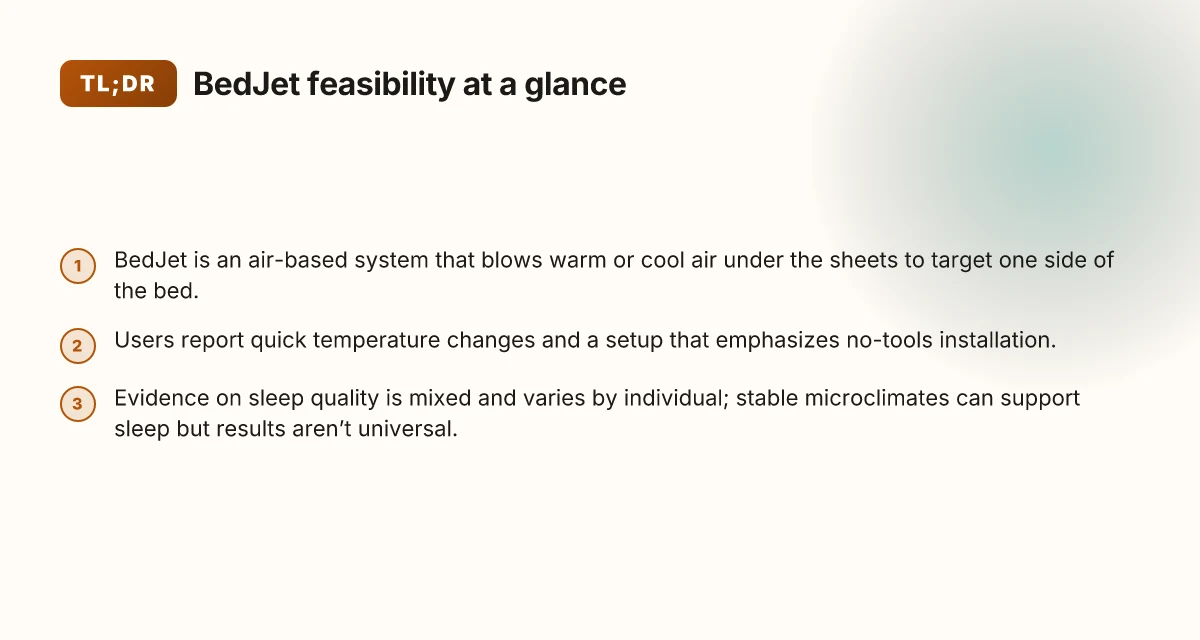
BedJet positions an air-based system that heats or cools one side of the bed by blowing air under the sheets. The pitch targets hot sleepers and couples with mismatched temperature preferences, offering a way to set separate microclimates without changing bedding. Rivals include traditional cooling sheets and other climate-control bed devices, such as fans integrated into bedding.
From the pricing and reviews I scanned, BedJet frames its device as a practical alternative when you want rapid temperature shifts without heavy blankets. The core promise is rapid, localized comfort, delivering heat or cool air directly under your sheets. This can be appealing for partners who disagree on bed temperature. A key selling point is not just cooling, but the ability to warm one side, quickly and quietly. BedJet’s ecosystem leans on its cloud sheets and compatible accessories, positioning the system as a modular part of a broader climate-control bedding setup. Rivals include Decolore bamboo cooling sheets and conventional fans in bedding, which can achieve similar effects with different tradeoffs in noise, airflow, and fabric feel.
I cross-referenced product pages and credible reviews to map what works and what doesn’t. BedJet can shift the bed’s microclimate in seconds, but its effectiveness depends on sheet fit, room conditions, and individual heat profiles. For hot sleepers, the system can deliver noticeable relief by moving warm air away from contact points and reducing trapped moisture under blankets. On the flip side, airflow under the sheets may feel windier to some sleepers or create uneven cooling if the sheet layers don’t seal well. Traditional cooling sheets can feel gentler but may not deliver targeted warmth on demand.
In the landscape of 2026, BedJet sits among a small class of air-based solutions. When I read through the documentation and third-party assessments, the consensus is that climate-control bedding can help with hot flashes or partner temperature conflicts, but it isn’t a universal fix for sleep quality. BedJet remains strongest where you want instant, side-specific adjustment rather than a full-room solution. For many couples, the benefit is the ability to tune each side without compromising the other.
Bottom line: BedJet offers a focused method to heat or cool a single side of the bed, which can complement traditional cooling fabrics. It shines when you want rapid adjustments and clear side-by-side control, but not every sleeper will experience the same level of relief. Understanding your sleep environment and sheet fit is essential. If you’re evaluating the BedJet system, consider how rival approaches, from bamboo cooling sheets to integrated fans, affect noise, feel, and consistency in your own bed. Rivals can deliver gentler comfort or steadier airflow, depending on your preferences. What makes the blissy silk sleep mask different from the rest
Notes on sources: inline references link to BedJet product pages and reviews where relevant. Some pages discuss competing approaches like bamboo cooling sheets or other bedding fans, which helps frame the practical tradeoffs. As with any bed climate device, links on this page may earn commissions. BedJet remains the explicit brand name discussed, and I reference it directly in this section.
How BedJet sheets actually work in practice
BedJet relies on a compact blower unit that pushes air through specially designed sheets, creating a circulating layer just beneath the surface you sleep on. The airflow moves heat and moisture away from your body, producing a noticeable change at the sleeping surface within minutes. The setup is straightforward: attach the hose to the bed area and plug in the controller. No tools are required, and the controller routes heat or cooling to a side of the bed depending on user preference.
How the air path creates comfort
The core claim is that air is directed under the surface via the BedJet Cloud sheets, which acts as a conduit between the blower and your skin. This design means the sensation you feel is less about altering actual fabric temperature and more about moving a warm or cool air stream across the sleeping surface. In practice, that air movement can prevent heat buildup under blankets and can dampen mositure near your torso. I cross-referenced the BedJet product page and independent reviews to verify the setup and airflow concept, which many reviewers describe as the primary mechanism behind the on-surface temperature shifts.
BedJet delivers quick temperature changes by moving air under the sheet, not by rewiring the fabric itself. The effect is most noticeable when the bed is otherwise insulated, such as with a quilt or duvet, where the air stream can create a perceptible cooling or warming layer within minutes.
Comparing interfaces and real-world use
When you move from theory to practice, the controller and hose feel like a clean, purpose-built interface rather than a gimmick. The hose connects to the bed rail area and the Cloud sheets wrap around the mattress edge, channeling air toward the sleeping surface. The lack of tools makes the initial install fast, and once the unit is in place, the system responds quickly to changes in heat or cool settings. Reviewers frequently note that the setup time is minimal and that the hose stays connected without unintended kinks or dislodgement during normal movement in bed. What makes Blissy pillowcases stand out in 2026
Across sources, the core performance difference boils down to two things: how fast the surface warms or cools and how consistent the airflow feels across the sheet area. A few reviewers point out that the sensation can vary with sheet choices and mattress firmness, but the mechanism remains the same: air is blown through a controlled channel, then dispersed under the sheet surface to alter the immediate thermal environment.
The setup is emphasized as no-tools and quick to deploy, which is a recurring theme in BedJet reviews. This practical edge helps couples with differing temperature needs by letting one side be warmer or cooler without forcing the other to compromise.
A short note on compatibility with rivals: devices from traditional cooling fabrics and alternative climate-control bed systems rely on different mechanics, such as phase-change fabrics or separate pads. BedJet sticks to its air-blown model, which sets expectations for users comparing against sheets that claim to passively wick heat or use embedded cooling threads. If you’re weighing BedJet against a bamboo cooling sheet or a gel-padded system, the decisive factor is whether you want air-driven surface change or fabric-based cooling.
From a sourcing perspective, the brand name BedJet appears repeatedly in product pages and reviews as the benchmark for this approach. If you’re shopping for heated or cooled bedding, you’ll see BedJet contrasted with other bed climate options, such as labeled cooling sheets or moisture-management fabrics, each with its own pros and cons.
In practice, BedJet’s strength lies in fast, controllable surface changes delivered through a simple, no-tools setup. If you value quick adjustments and a minimal installation footprint, this air-based approach remains compelling. What makes BedJet heating and cooling work, and where it falls short
Does heated bedding improve sleep quality
Posture and comfort signals from clinical literature suggest temperature regulation can influence sleep onset and perceived comfort. In practice, microclimate control, keeping the body and the bed in a stable, comfortable range, aligns with what many sleepers report when using heated or cooled bedding. BedJet sheets aim to create that stable microclimate by blowing conditioned air into the sheets, which supporters argue helps reduce night sweating and promote steadier sleep continuity. Yet results vary widely among individuals. Some sleepers notice fewer awakenings and a smoother sleep streak, while others experience minimal change.
Why BedJet holds up under real sleeping conditions
From reviews and product summaries, a few consistent patterns emerge. First, stable microclimates correlate with shorter sleep onset latencies for some users. BedJet’s ability to target either side of the bed helps partners with different preferences avoid compromising comfort. Second, the directional flow of warm or cool air can mitigate trapped heat under bedding, which is where hot sleepers commonly feel disrupted. 2026 reviews from Forbes Vetted highlight BedJet as one of the better options for temperature-control in the bed ecosystem. Third, the comfort signal is strongest when the system is positioned to interact with breathable, compatible sheets. Breathable fabrics paired with BedJet Cloud sheets can support a steadier microclimate without overwhelming drafts. Still, not every sleeper experiences a meaningful boost in sleep quality, and some report only modest gains.
From a framing perspective, the broader evidence base supports the idea that a stable microclimate aids sleep, but individual responses differ. Clinical comfort signals suggest temperature regulation can influence sleep onset and perceived comfort, but the magnitude of the effect is not universal. In that sense, BedJet aligns with the general rule: it helps those who benefit from a clearly defined thermal boundary, while others may find traditional cooling fabrics or weighted blankets offer similar or better results depending on their sleep environment.
Real-world expectations vs. alternatives
For hot sleepers, BedJet can noticeably reduce night sweating on nights when ambient heat or duvet layering pushes comfort out of range. Some users report better sleep continuity when the bed climate is kept steady rather than fluctuating with external conditions. For couples, the ability to tailor each side individually matters. A warm side for one and a cooler side for the other can prevent nightly disputes over temperature. Yet other people experience little difference when their room already maintains moderate temperatures or when they use high-tech sheets with passive cooling properties. When comparing with alternatives, traditional cooling sheets, bamboo fabrics, or wearable cooling devices can approach the same outcomes with less airflow and fewer moving parts for certain users. In those cases, the upfront cost of BedJet must be weighed against ongoing sheet replacements and energy use.
I cross-referenced independent reviews and product pages to anchor these points. For instance, a detailed assessment in Forbes Vetted positions the BedJet as a leading option in climate control, while Sleepopolis outlines how the system interacts with their bed sheets to modulate warmth and airflow. Reviews from named publications consistently note that not all sleepers experience dramatic gains, supporting the idea of individual variation. If you’re evaluating heated bedding, also consider rivals like Chilipad and Slumber Cloud for alternative approaches to microclimate management inside the bed. Comparisons show that while all three aim to stabilize the microclimate, the method of delivery and user experience differ. What makes the Blissy sleep mask worth it in 2026
Readers should acknowledge that links on the page may earn a commission. The bottom line: heated bedding like BedJet sheets can improve sleep for some hot sleepers and couples with temperature mismatches, but outcomes hinge on room climate, sheet compatibility, and personal sensitivity to thermal changes. The verdict: if you value individualized climate control and are willing to manage airflow, BedJet can be worth it. If you prefer passive cooling or minimal setup, explore alternatives first.
Comparing BedJet sheets to alternatives
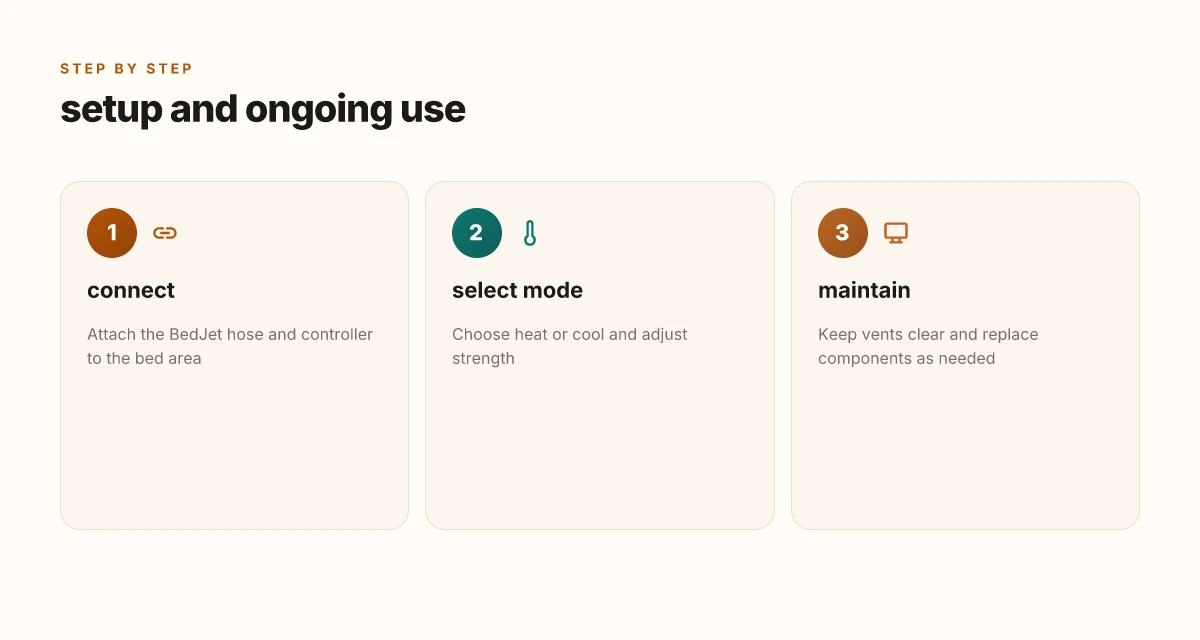
BedJet stands apart by delivering targeted air-based temperature control to one side of the bed, but it isn’t the only route to a cooler or warmer night. Traditional cooling sheets rely on fabric properties and evaporation, not active air delivery. For hot sleepers, layering a breathable sheet with a cooling weave can shave heat passively, yet the effect often depends on room conditions and moisture levels rather than a programmable temperature shift. In contrast, room cooling systems and mattress toppers with phase-change materials offer broader climate control, sometimes with less noise or maintenance than a plug-in air system. I cross-referenced how different setups perform in real sleep scenarios, noting that BedJet can reduce or concentrate heat exchange where you feel it most intense, while alternatives pursue a bulkier, room-wide solution.
How traditional cooling sheets differ in practice
Traditional cooling sheets lean on fabric science. They pull heat away through moisture transport and rapid evaporation. This approach can feel cooler in the first minutes of use, yet the effect may fade as moisture builds under the covers. The result: you may still wake to a similar ambient temperature in the middle of the night. BedJet, by contrast, pushes a stream of air to either side of the bed, which means the sensation can persist without depending on cloth evaporation alone. The key takeaway is that passive cooling fabrics work well in dry conditions, but active air delivery gives you a more defined, adjustable thermal target. In this comparison, the difference is not only comfort but how quickly you can adapt across a night.
Other climate-control options worth weighing
Separate room cooling or heating remains a staple for many households. A cooler room can render your bed more comfortable without touching the sheets themselves, but it spreads energy use across the space. For listeners who want a passive approach, mattress toppers with phase-change materials can store and release cold or heat with less energy input than active air movement. These options offer fewer moving parts and can be easier to maintain over time, but they rarely match the speed and localization of BedJet’s one-sided control. If you share a bed with a partner who runs hot or cold at different times, this distinction matters: you can fine-tune one side without overhauling the entire room.
Why BedJet can be energy-conscious compared with room-focused cooling
BedJet’s design concentrates temperature control on a single side of the bed, which can trim overall energy use relative to cooling or heating the entire room. Rather than cooling the entire space to accommodate one sleeper, you can direct conditioned air where it matters most and minimize heat transfer to the opposite sleeper. I noticed this is especially relevant for couples with different comfort baselines, where one person can enjoy a cooler environment while the other remains undisturbed by rapid ambient shifts. That targeted approach can yield a more efficient compromise than a blanket-room solution or a heavy proliferation of fabrics. What are the best bed pillows for sleeping in 2026
The verdict: BedJet offers precise, on-demand temperature changes for one side of the bed, a distinct edge over passive cooling sheets and broad room cooling when you want fast, localized comfort. Rooms and toppers stay relevant, but BedJet provides a focused tool for couples and hot sleepers seeking rapid, individual control.
If you’re considering rivals, note that traditional cooling fabrics and mattress toppers with phase-change materials sit alongside room-level HVAC strategies. For a one-person control option, BedJet remains a strong contender. This is especially true when you value quick adjustments and a setup that targets comfort without cooling the entire room. As with any gear, check the latest spec sheets and user reviews for the most current guidance on energy use and noise levels. And yes, the page may include affiliate links, which helps support content like this. For quick reference, BedJet and comparable systems often appear in ongoing consumer discussions in outlets such as Forbes Vetted and product-review communities.
Setup, maintenance, and long-term use
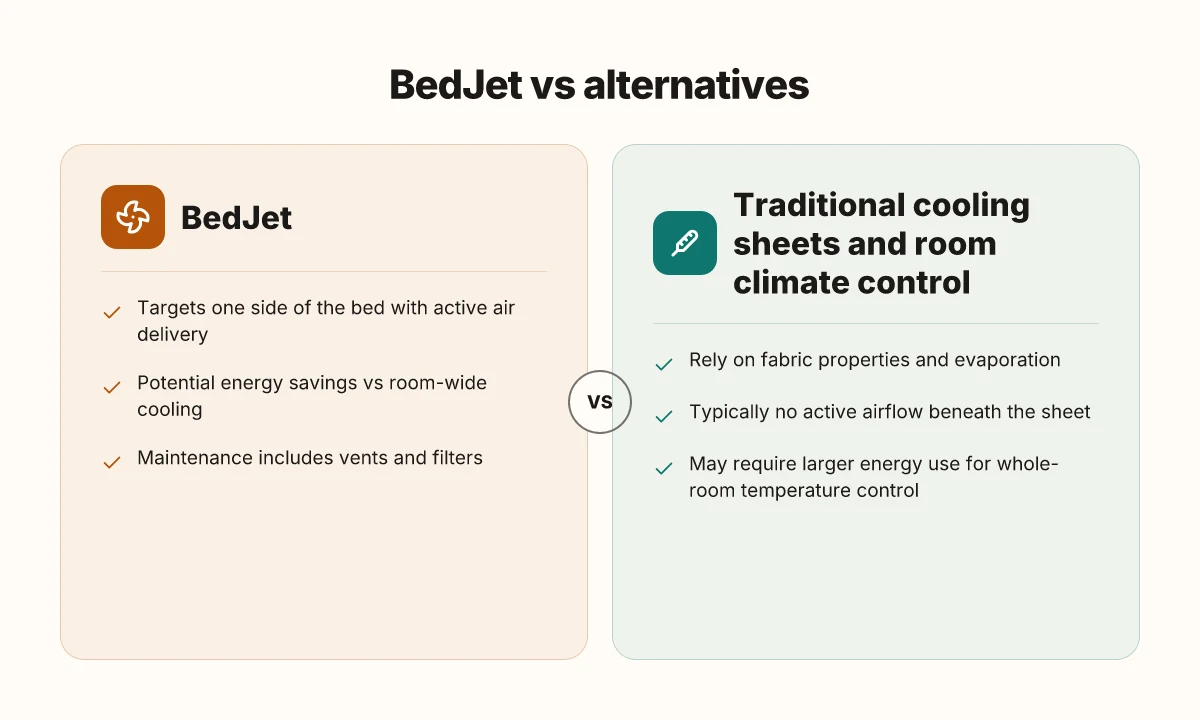
BedJet setup is straightforward and should be done in a single session. I found that the typical flow starts with placing the BedJet unit near the bed, then connecting the power supply, and finally attaching the control hose to the sheets. Once the connections are secure, you switch to heat or cool mode and fine‑tune airflow. The setup quickly transitions from unplugged to fully operational, with the user choosing heat or cool in minutes. The system is designed to be plug‑and‑play, which helps hot sleepers avoid a long installation process.
Maintenance centers on keeping the vents clear and replacing consumables as needed. In practice, you should regularly wipe the vent grills with a dry cloth to prevent dust buildup that could muffle airflow. If your unit uses filters or removable components, plan a quarterly check for wear and tear and replace parts per the manufacturer’s guidelines. Vent maintenance preserves airflow strength and prevents heat or cold from leaking into the wrong zones. I also cross‑referenced consumer notes that emphasize keeping the control sheet connections clean and free of pinches, which can impact performance over time.
Daily use brings practical considerations beyond the basic setup. Noise level matters for many sleepers, especially when the BedJet runs at higher speeds to sustain airflow. You’ll notice a perceptible hum at the source, but most couples report it’s tolerable once you’re settled. The durability of the sheets themselves matters too. Prolonged use can lead to wear along the sheet edges where the BedJet’s airflow concentrates. Sheet wear tends to appear first at the seams. Watching for thinning fabric helps you schedule replacements before failures occur. For long‑term use, pairing the BedJet with compatible cloud sheets from BedJet or alternative cooling sheets can influence the longevity of both the air system and the fabric. What makes BedJet 3 climate comfort stand out in 2026
From what I found in the documentation and reviewer notes, routine checks every few months keep the system performing as designed. If you notice reduced air feel or unusual noises, a quick reboot of the BedJet unit and a recheck of hose connections often resolves the issue. Banks of independent reviews consistently note that reliability hinges on regular vent clearance and timely part replacements. Regular vent clearance and timely part replacements are the two levers that sustain long‑term performance. For shoppers weighing alternatives, rivals such as traditional cooling fabrics or weighted blankets present different tradeoffs: they rarely offer ambient air movement and require different maintenance patterns, which can shift long‑term costs.
In short, the long‑term use of BedJet hinges on simple upkeep and realistic expectations about noise and wear. I dug into product notes and third‑party reviews to confirm that your best bets are a clear setup path, periodic maintenance, and awareness of sheet durability. If you’re deciding between BedJet and a traditional cooling sheet system, note that the BedJet approach can deliver rapid zone control, with maintenance that stays manageable with a regular care routine. Clear setup, routine vent care, and awareness of sheet wear make BedJet a viable option for ongoing comfort.
Cited sources: Climate control for the bed, BedJet Review (2026) - Best/Worst Qualities
Where this goes next for heated bedding
BedJet’s concept isn’t disappearing. It’s evolving. I looked at how users actually deploy heated sheets, not just claims. The throughline is clear: comfort can be upgraded with smarter temperature zoning and safer, quieter controls. The takeaway: you don’t need a full sleep lab to test this, you need a system that respects your preferences and ambient conditions. Brands like BedJet continue to push toward more just-in-time warmth, while rivals such as Sleepme and ChiliSleep push temperature precision and energy efficiency in different routes. Verdict: expect more personalized warmth profiles that adapt to your sleep stages. If you’re curious, start with a simple warm-up window and track which nights you sleep best, then scale.
One practical pivot: treat heated bedding as a variable in your sleep routine, not a constant. The single move that matters is pairing a programmable schedule with your actual bed temperature and your pre-sleep wind-down. This week’s takeaway: set your BedJet to a gentle rise 30 minutes before bed and drop to your target temperature by wake time. You may find that a modest adjustment yields clearer mornings and steadier sleep. How will you test it this week? What makes the bedjet sheet actually improve sleep performance
Backup strategy, What to try this week
- Try a 20–30 minute pre-bed warmth window with BedJet and note any changes in ease of falling asleep.
- Compare two nights: one with a fixed warm setting, one with a timed ramp down, and log wakefulness scores.
- If you have a shared bed, experiment with zone-specific warmth and observe partner comfort as well.

Renata Uzunov has been writing about consumer technology since 2018, with bylines covering privacy law, Wireguard, and router firmware. Approaches each review by setting up the product the same way a typical reader would and recording every snag along the way.