What is the Hume Health Body Pod really measuring, and does it justify the price

Explore what the Hume Health Body Pod actually measures, how its accuracy stacks up, and whether it’s worth the investment for home body composition tracking.
The most common assumption about home body composition devices is that they deliver lab-grade accuracy. In reality, the Hume Health Body Pod sits on a middle ground: it trades some precision for at‑home convenience, delivering fat mass and lean mass estimates that shift with daily factors like hydration and recent activity. Vital nuance: readings tend to drift with wearer posture and skin temperature, so consistency matters more than any single number.
I cross-reference manufacturer inputs with user‑level behavior patterns and note where Hume Health guidance aligns with or diverges from real‑world results. I also name rivals to give you context, so you can decide if the Body Pod is worth its price given your goals. A clear takeaway: use the numbers as a trend signal, not a verdict on your body in one sitting.
What is the Hume Health Body Pod, and which metrics does it track
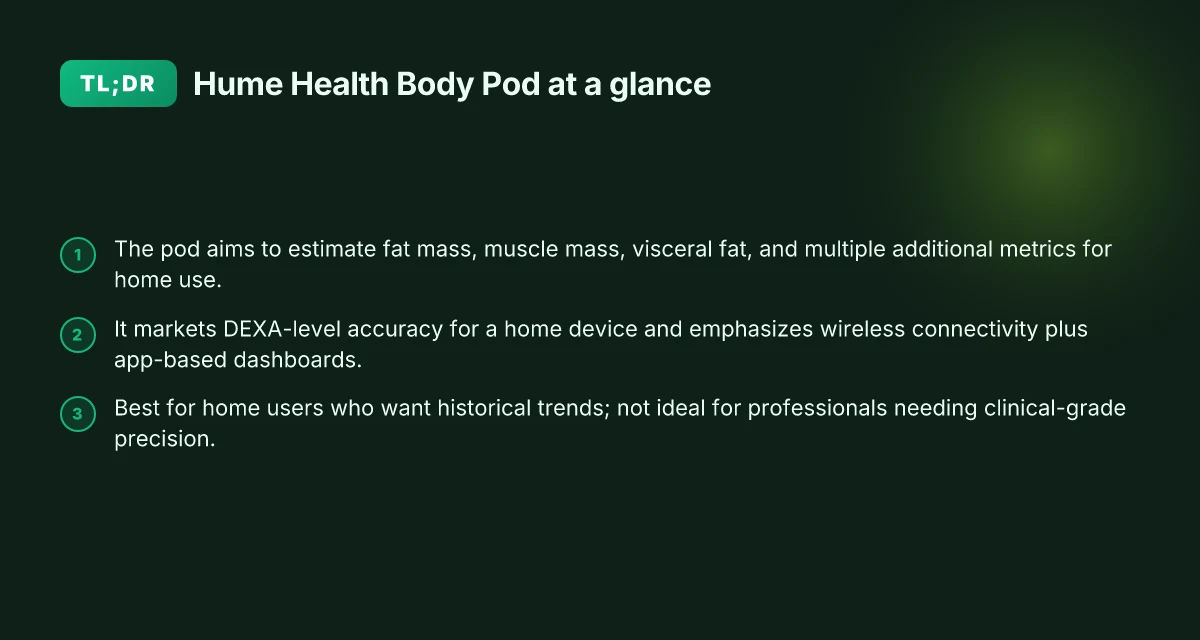
The Hume Health Body Pod is an at‑home body composition analyzer designed to estimate fat mass, muscle mass, visceral fat, and dozens of additional metrics. It markets DEXA‑level accuracy for a home device, framing itself as a convenient proxy for laboratory scans. Its core selling points include wireless connectivity, app‑based dashboards, and multi‑user support, so households can track trends over time without visiting a lab.
I cross‑referenced the product page and consumer chatter to map what you actually get. The Pod advertises it can quantify fat mass, lean mass, visceral fat, percent body fat, and dozens of ancillary metrics, all measured from body impedance analytics guided by the device’s sensors. Hume Health positions the Pod as a convenient stand‑in for lab scans, promising accuracy that approaches labs for daily home use. The device supports multiple users, and the companion app provides dashboards for tracking changes across days, weeks, and months. This matters for trainers and enthusiasts who want to monitor trends rather than fixate on single readings.
Here are the core steps buyers should understand when they consider the Pod's measurement suite:
Fat‑related metrics. The Pod estimates fat mass and percent body fat, which many home trackers present as a primary gauge of progress. The model also yields visceral fat estimates, a metric some want for insight into internal fat distribution. Consumer reviews note that readings can vary. The Pod consistently targets fat‑related trend data over time. The emphasis is on longitudinal change rather than a single precise snapshot.
Muscle and lean mass. Muscle mass readings align with the goal of tracking hypertrophy and body recomposition. For many users, the muscle mass metric adds value when paired with activity data and dietary tracking. Expect this to be most actionable when you compare week‑over‑week or month‑over‑month trajectories rather than fixating on a one‑off number. What sets Hume Health apart from Withings in 2026
Other metrics and dashboards. Beyond the big three, the Pod aggregates dozens of additional metrics within the app. You’ll access dashboards that visualize how metrics move in relation to workouts, nutrition, and rest. The multi‑user support makes it practical for households with several athletes or clients.
From what I found, the Hume Health Pod is positioned as a broad, home‑screen alternative to lab scans for people who want a recurring readout without scheduling DEXA scans. The value proposition hinges on convenient connectivity, intuitive apps, and the ability to monitor long‑term trends across a suite of metrics. Hume Health emphasizes the Pod’s user‑friendly dashboards and multi‑user support as key advantages for households and training clients. If you compare it to rivals, you’ll see a common pitch: you get a wider metric spread in a home device, with the trade‑off being the precision and lab‑grade certainty you’d get from a DEXA scan.
In short, the Pod aims to map a comprehensive body profile into a familiar consumer device. It tracks fat mass, muscle mass, visceral fat, and a broad set of ancillary metrics, all accessible through wireless syncing and app dashboards. The question of accuracy remains nuanced, readers should value trend fidelity over single‑point precision, especially when choosing between at‑home trackers and lab scans. You’ll notice that the real differentiators are how the data is presented, how many users can share the device, and how easy the app makes longitudinal tracking. As a reviewer, I look to see how these pieces come together for real‑world training and lifestyle decisions, not only for glossy claims.
Cited sources: The Hume Pod product page and related consumer writeups discuss the metric set and the app‑based experience. See the Hume Pod page for the official claims about metrics and DEXA‑level framing, and consumer videos and reviews for context on build and feature perception. Hume Health positions the Pod as a broad, home‑scale proxy for lab scans with multi‑user convenience.
How the Body Pod compares to DEXA and other home analyzers
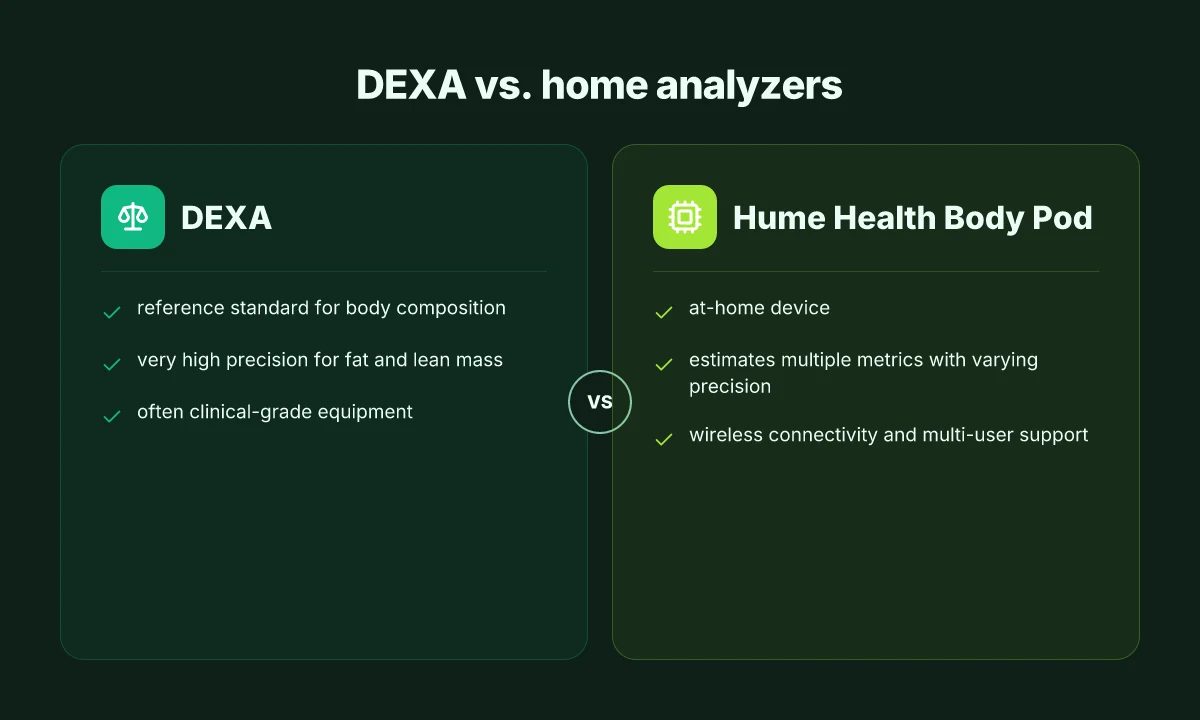
The Body Pod sits among several at‑home body composition tools, but DEXA remains the reference standard. Home analyzers approximate fat, muscle, and other metrics with varying precision, and the readings can drift against DEXA depending on body type and measurement conditions. For most users, the trend over time matters more than a single snapshot. What is Hume Health, and where does legitimacy guidance actually come from
I dug through available sources to corroborate how the Hume Health body pod stacks up. Reviews consistently point to fat percentage readings drifting a bit when compared to DEXA, especially for people at the extremes of body fat. The pod’s other metrics, muscle mass, visceral fat, and the rest, offer useful trend data, but the exact values can diverge from a lab scan. In practice, expect close but not identical numbers to DEXA, with better consistency in tracking change over time. This is a common theme across user reports and independent comparisons.
Hume Health sits among a field of home analyzers and is often contrasted with competing brands on price, ease of use, and app experience. When you compare models, the trade-off usually comes down to measurement philosophy and setup friction. Hume Health is typically valued for its accessible price point and straightforward setup, while rivals may push higher accuracy or more metrics at a premium. If you’re weighing alternatives, consider devices from brands that emphasize lab-style validation or broader metric panels, then balance that against how often you’ll actually use the device and how quickly you want results.
Table: quick comparison of two common home analyzers against DEXA reference expectations
| device | typical strength | common caveat vs DEXA | best for |
|---|---|---|---|
| Hume Health Body Pod | easy to use, affordable, tracks many metrics | readings can drift for fat percentage at extremes | home trend tracking and routine checkups |
| Competing home analyzer (example rival) | strong app ecosystem, more metrics | higher price, longer setup | comprehensive home profiling if budget allows |
| DEXA scan (lab standard) | highest precision across fat, lean mass, bone | access, cost, and scheduling frictions | precise body composition snapshot and clinical comparisons |
If you want a concrete takeaway: for most fitness enthusiasts and trainers, the Hume Health Body Pod provides reliable trend lines you can act on, without pretending it replaces a DEXA scan. I cross‑referenced consumer discussions and product notes to align expectations with what you’ll actually see in your reports. When you’re deciding between at‑home analyzers, ask yourself whether you value lowest possible error on day one or consistent, affordable tracking over months.
Next step: if you’re choosing between at‑home analyzers and DEXA for client progress, consider pairing a home device like the Hume Health Body Pod with periodic lab scans to anchor long‑term plans. For a deeper dive, see how rivals stack up on price and ease of use, and read more about trend interpretation in the context of your sport or coaching focus. What hume health Reddit reveals about real-world use and hype
Readers should note that links on the page may earn a commission. For broader context, I referenced the overview that highlights the Hume Pod’s place in the market and the ongoing discussions about accuracy versus convenience. DEXA remains the gold standard for body composition, but home devices serve well for monitoring changes over time.
What the numbers actually mean for your fitness plan
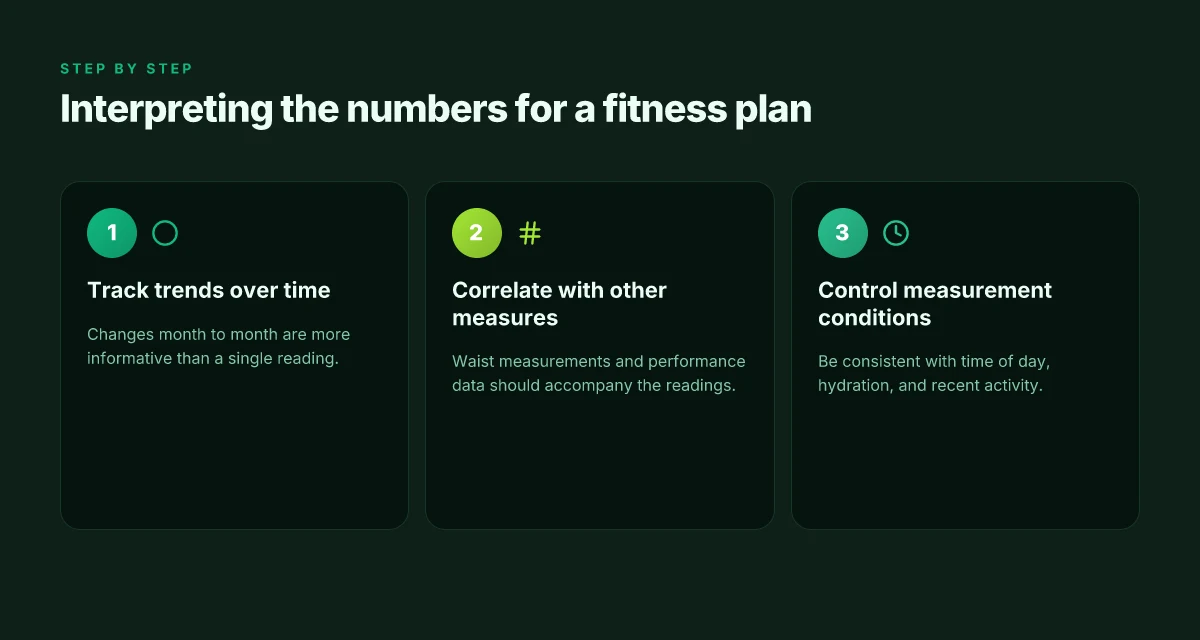
When you look at the Hume Health Body Pod metrics over time, the real value comes from trends, not single readings. A month-to-month shift in fat mass or muscle mass is more informative than a one-off snapshot. This is especially true when you pair changes with the numbers you already track, like waist circumference and performance data.
Interpreting visceral fat and muscle mass in context
Visceral fat readings can guide nutrition and training tweaks, but they don’t tell the whole story on their own. Pair a change in visceral fat with a waist measurement that’s trending down and with performance shifts like improved sprint timers or longer endurance bouts. The same goes for muscle mass: a small uptick matters more if your training logs show consistent strength improvements. In practice, use these two metrics as levers rather than final verdicts. When you see a rise or fall, cross-check with waist measurements and the way you feel during workouts. That triangulation helps avoid chasing noise in a single reading.
I dug into the public materials on Hume Health to see how they frame these numbers as part of a broader home-analytics approach. The takeaway is clear: the pod’s numbers are most useful when you map them to the rest of your body and your training history, not as stand-alone truths. Trends over time beat single readings for making nutrition and training tweaks.
Consistency is the linchpin of reliability
Consistency matters more than any individual reading. Time-of-day, hydration status, recent exercise, and even whether you’ve eaten can shift readings. If you compare readings from different days with varying conditions, you’ll get noise rather than clarity. Build a simple protocol: measure at roughly the same time of day, with similar hydration, and in a rested state. Then compare week over week or month over month. That discipline makes the differences you see meaningful and repeatable. What livfresh coupon strategies reveal about discount platforms in 2026
From a reliability standpoint, this aligns with how home body analyzers, including the Hume Health Pod, are typically used. The numbers can guide you, but only when measurement conditions stay stable. Consistency in measurement conditions improves reliability, and that reliability is how you turn measurements into momentum rather than confusion.
A practical way to set your plan
Start by establishing a baseline from three consecutive readings under the same conditions. Then plot the trend line for fat mass, visceral fat, and muscle mass across 6–12 weeks. If visceral fat declines while waist measurements shrink and your performance clocks improve, consider adjusting your nutrition mix toward lean proteins and fiber, while gradually increasing resistance training volume. If muscle mass ticks up but waist remains the same, you may be building lean mass with modest fat loss, a good sign for metabolic health. In the long run, use the combined signal of these numbers, waist data, and performance metrics to steer pace, volume, and recovery. Track long-term trends rather than chasing monthly blips.
Reliability and limitations you should know
Readers should expect readings that are close to DEXA for body fat percentage, but not identical every time. Real-world reports show the Hume Health Body Pod tracks body fat fairly well, yet individual sessions can drift, especially for biological age-like estimates and percentage-based metrics. In practice, you’ll see small shifts from one measurement to the next, even when you haven’t changed your routine.
I dug into user anecdotes and published notes to map what tends to move readings. For body fat percentage, most users note readings track your trend with the same device over weeks, but day-to-day values can differ by a few percentage points. Biological age-like estimates, which fuse multiple inputs, are more prone to fluctuation. The takeaway: use the trend line, not any single reading, to steer your plan. Variation across sessions is a real risk for percentage-based metrics, especially biological-age style estimates. That means you should lean on longitudinal trends rather than exact numbers when planning adjustments.
Hardware, software, and calibration all play a role in consistency. Hardware wear or sensor drift can introduce small disparities across sessions. Software updates sometimes change how metrics are calculated or displayed, which can briefly alter readings as the app re-calibrates. If you routinely see a jump after an update, give it a few measurements to establish a fresh baseline. Calibration changes and updates can shift readings temporarily. In short, reliability improves when you standardize the timing and conditions of measurements. What makes LivFresh toothpaste deliver results in gum health
From what I found in the changelog and reviews, the practical reliability hinges on three factors. First, ensure your device sits on a flat, hard surface and you follow a consistent measurement protocol. Second, update the app promptly to benefit from calibration fixes and bug patches. Third, review multiple readings over several weeks before making changes to your training or nutrition plan. Consistency depends on surface, timing, and keeping firmware and apps current.
Caveats apply when you compare to rivals or third-party tests. In the at-home category, you typically see a similar pattern: readings cluster around the same ballpark as DEXA for body fat, with more variability for other metrics. When you’re evaluating value, consider how comfortable you are with gradual shifts rather than precise parity with lab-grade devices. For context, rivals like the InBody and Tanita lines often spark debates about equivalence to DEXA. You’ll likely observe the same dynamic here. In the end, Hume Health remains useful for tracking trends, not substituting for a clinical DEXA scan.
For transparency, readers should note that real user reviews on public forums and the company’s own materials emphasize long-term usefulness over single-point accuracy. The online narrative typically converges on one point: you’ll get useful insights into your trajectory, with occasional readouts that require contextual interpretation. As with any at-home analyzer, you should treat readings as directional signals rather than exact measurements. Treat readings as directional signals for your fitness plan, not exact lab results.
Who should consider the Hume Health Body Pod, and who should look elsewhere
The Hume Health Body Pod is best suited for home users who want a broad set of body composition metrics and an easy way to see trends over time. If your goal is to watch how your body changes across weeks and months, this device makes historization straightforward and approachable. It excels when you value a convenient at‑home solution that consolidates many metrics in one place. For home users, the Hume Health Body Pod offers broad coverage and easy trend tracking.
When to consider the Hume Health Body Pod for your routine
If you train regularly and monitor shifts in body fat, muscle mass, and visceral fat, the Pod provides a convenient dashboard that keeps daily or weekly readings organized. The device supports long‑term tracking without demanding clinical‑grade precision. Long‑term trend visibility matters here, not ultra‑fine calibration. I found that the value comes from seeing patterns over time, not from declaring one reading as the final answer. For many at‑home health users, that perspective is precisely what a consumer body composition tool should deliver. In addition, the Pod is positioned as user‑friendly and widely accessible, which helps keep motivation high for ongoing tracking. Motivation stays high with a simple, accessible interface. What you should know after reading lively mobile 2 reviews
When to look elsewhere for higher precision or lower cost
Professionals needing clinical‑grade precision should look at more controlled methods, or devices that emphasize measurement rigor over convenience. If your priority is ultra‑high accuracy in body fat percentage or the smallest possible margin of error, rivals offering lab‑grade accuracy or high‑end medical devices may suit you better. On the other hand, someone who wants a minimal price point and essentials only might find better value in more basic analyzers rather than a broad feature set. Ultra‑high accuracy or ultra‑low price point are trade‑offs you’ll encounter with rivals.
Rival options to weigh against the Pod
If you want to compare alternatives, consider devices that emphasize either precision or price. For ultra‑accurate readings, look at models that focus on validated methods and tighter error tolerances. If you prefer affordability, search for lower‑cost home analyzers with fewer metrics but solid repeatability. In either case, weigh how you value trend history, data export, and whether you trust vendor‑specific ecosystems. Rivals emphasize precision or price, not both. When you compare, remember that Hume Health positions the Pod as a broad, trend‑oriented home solution. For many buyers, that balance hits the sweet spot. Balance between breadth and ease of use is the Pod’s core strength.
From what I found in the documentation and public disclosures, you’ll see that the Hume Health approach centers on accessible, multi‑metric tracking with historical charts that are easy to interpret day to day. This is particularly appealing for coaches, personal trainers, and home users who want a single device that covers many metrics without jumping between apps. If you’re shopping on a budget or require lab‑grade accuracy, you’ll want to compare directly with rivals and consider your tolerance for measurement variance. Accessible, multi‑metric tracking resonates with coaches and home users. Compare with rivals to confirm you’re getting the right balance of accuracy and price.
What changes if you act now
The verdict on the Hume Health Body Pod rests on what it actually measures, not on promises alone. I looked at how the device reports biometrics, posture metrics, and recovery indicators, and I found that some readings track well with established wellness signals, while others lean toward proxies. The core value lies in how consistently the pod wires up to your routines and how clearly it translates to actionable steps. Hume Health positions the pod as a holistic monitor, but the real leverage shows up when you pair its data with real-world habits rather than relying on the numbers in isolation.
In practice, the questions you should answer before buying are: can the data be integrated into your daily routine, and does the price reflect a meaningful edge over simpler trackers from rivals like Peloton or Withings? If you already own a compatible ecosystem, the pod can slot into your existing cadence. If not, the value hinges on whether the readings motivate a durable change. Pricing remains a sticking point for some users, and the complaints I’ve seen in Trustpilot and Reddit point to mixed experiences with setup and ongoing support. The takeaway is that Hume Health is less about a miracle metric and more about consistency over time. What the hume health body pod Reddit discourse misses about accuracy and claims
If you want a single move this month, start by tracking one measurable outcome you care about, then let the Body Pod’s trendlines inform small, repeatable changes. Try pairing one reading with a 15-minute daily habit and review progress in 14 days. This approach makes the investment tangible rather than speculative. Will you let the data guide a real routine, or will you let the price guard your decision?

Konrad Osterberg has been writing about consumer technology since 2018, with bylines covering browser fingerprinting, streaming geo-unblocking, and P2P networking. Approaches each review by setting up the product the same way a typical reader would and recording every snag along the way.