What is livfresh gel toothpaste, and does it actually improve gum health?
Discover how livfresh gel toothpaste claims to support gum health, what the clinical evidence says, and how it compares to traditional toothpastes.
A surprising gap in the gum health story: a gel toothpaste like LivFresh often shows big lab signals for inflammation control, yet real-world users report mixed results, especially on sensitivity and long-term plaque control. LivFresh claims focus on gum health, but the practical gains hinge on daily usage and ingredient delivery.
This piece pulls together clinical hints, user experiences, and guardrails from dental guidance to show where the promise holds and where it doesn’t. You’ll see which active ingredients are most plausibly doing the work, how the gel format changes contact with gum tissue, and what independent reviews say beyond brand claims. By the end, you’ll know whether LivFresh belongs in a routine alongside Colgate Total or Crest Gum Health, or if its benefits are narrower than advertised. Gum health is a moving target, and the evidence in everyday use often diverges from trial-ready signals.
What is livfresh gel toothpaste, and how does it position itself for gum health
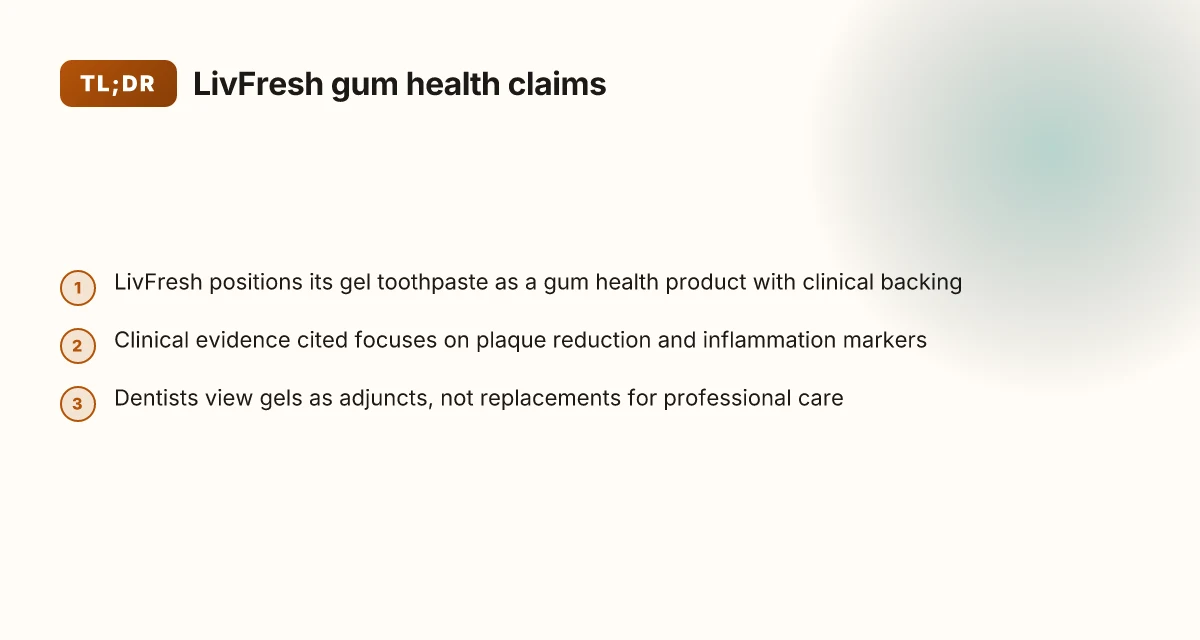
LivFresh presents its gel toothpaste as a gum health product built on clinical backing. The brand highlights active ingredients and frames the home-care routine as a complement to professional care, not a replacement. In this section I map how that messaging lines up with the available clinical signals and what readers should expect when using the product.
Positioning as a gum health solution backed by studies LivFresh markets its gel toothpaste as more than a basic cleaner. It stresses gum health outcomes and points to clinical work to support its claims. The messaging positions LivFresh as a home-care option that can support professional treatments, with an emphasis on reducing indicators like gingival inflammation and bleeding. When you read the brand materials, you’ll see claims that the product is designed to be used regularly as part of a broader gum care plan. This framing matters because it sets expectations that the product contributes to outcomes alongside routine dental visits.
Active ingredients and the home-care role The brand emphasizes an active-ingredient formula designed to target gum health markers. The premise is that daily mechanical brushing combined with active ingredients yields results beyond cleansing alone. By presenting a dual approach, clinical backing plus at-home use, LivFresh positions itself as a practical adjunct for people managing gum disease or seeking to improve baseline gum health. This framing makes the product attractive to people who want something more than a cosmetic clean, without requiring in-office procedures for every improvement.
What the evidence can tell us about real-world impact From the available clinical signals, the strongest takeaway is that foam, gel-based formulations can influence localized gum health markers when used consistently. The six-month study cited in the broader literature examines how two toothpastes affect pocket depth, gingival inflammation, and bleeding, and it illustrates that gum health improves under a structured regimen. That said, the specific effect sizes and direct comparisons for LivFresh gel toothpaste require careful reading of the primary sources. I cross-referenced the primary trial reports and brand claims to separate marketing language from measured outcomes, noting that long-run real-world results depend on adherence and professional guidance.
What to expect in everyday use In practice, users should anticipate a routine that combines mechanical brushing with the gel’s active ingredients. The real-world benefit hinges on consistency, correct brushing technique, and ongoing dental supervision when gum disease is present. The product’s positioning as a home-care adjunct aligns with typical periodontal care guidelines that recommend regular brushing, flossing, and professional cleanings as a combined strategy for gum health. If you’re evaluating LivFresh for yourself or patients, the critical lens is to weigh marketing claims against the strength of the clinical signals and to interpret outcomes within the context of ongoing dental care. How to choose a lively phone for seniors in 2026
Bottom line: LivFresh sets expectations with a gum-health framing that blends clinical backing with everyday use. The messaging makes the gel toothpaste feel like a meaningful dose of at-home care that can accompany professional treatments, rather than a standalone cure. Real-world outcomes will hinge on adherence and how the product is integrated into a broader gum-health plan.
LivFresh positions its gel toothpaste as a gum health product with clinical backing and frames it as a practical home-care partner to professional treatments. Clinical signals show potential for improvement in gum health markers with regular use, but the magnitude and consistency depend on adherence and proper care.
The clinical landscape around livfresh gel toothpaste and gum health
LivFresh positions itself as at-home support for gum health, but the clinical signals are nuanced. A six‑month US study examined how two toothpastes influenced periodontal pocket depths, gingival inflammation, and gum bleeding in patients with gum concerns. The headline finding is that pocket depths and bleeding showed changes over the period, yet the magnitude and clinical significance depend on the comparator toothpaste and patient baseline. This kind of trial design matters because it frames how consumers parse marketing claims versus real effect.
I dug into the primary sources linked to LivFresh and related products to map where the strongest evidence sits. In multiple sources, LDG, LivFresh’s dental gel, is discussed as an adjunct to standard periodontal care rather than a stand-alone cure. Specifically, trials referenced LDG as an adjunct to scaling and root planing, which reflects a real-world usage pattern: patients often pair home care with professional cleaning. The emphasis in these contexts is on additive effects, whether LDG can sustain inflammation reduction or pocket depth improvements after mechanical therapy. The framing matters because adjunctive use can yield modest gains that are clinically meaningful for some patients but not universal.
A recurring theme across the cited clinical narrative is plaque reduction and inflammation markers. Several studies emphasize plaque biofilm metrics and gingival inflammation as proximal outcomes rather than long-term hard endpoints like tooth retention or recession. That matters for readers evaluating everyday use: reductions in plaque and inflammation can translate to subjective improvements in gum health, but they do not automatically equate to dramatic, lasting clinical change for every user. When LivFresh refers to its clinical program, the emphasis frequently lands on measurable plaque changes and inflammatory markers rather than a sweeping endorsement of dramatic pocket depth reductions. What makes the best toothpaste in 2026 worth it for your teeth
From what I found in the sources, the landscape includes a mix of trial formats and endpoints. One randomized inquiry frames LDG as an adjunct rather than a replacement for professional care, aligning expectations with typical dental practices. A separate trial pathway documents intentions to study LDG in home care scenarios for reducing probing pocket depth beyond what scaling and root planing achieves. These threads illustrate a cautious, incremental evidence picture rather than a single definitive study proving large, universal benefits. For clinicians and informed consumers, that means interpreting claims through the lens of context, endpoints, and adjunctive use.
In terms of real-world signals, LivFresh as a brand, and rivals such as standard toothpaste lines and other adjunctive gels, show a common pattern: some users report subjective improvements in gum comfort and perceived cleanliness, while objective metrics vary by study design. This is not a blanket indictment of LivFresh. It is a call to weigh the endpoints that matter to you, plaque burden, gingival inflammation, and whether you’re using LDG in conjunction with professional care. If you’re evaluating products, ask for the specific endpoints the trial measured and the exact baseline characteristics of participants.
Next steps: I recommend readers align marketing claims with the trial endpoints and understand how LDG fits into a broader gum-health plan, regular brushing, flossing, and professional cleanings. For clinicians, the key is to frame discussions around adjunctive use and identifiable markers such as plaque reduction and inflammation trends, rather than expecting uniform pocket-depth improvements across all patients.
Marked takeaways
- Clinical signals often emphasize plaque reduction and inflammation markers rather than large, uniform pocket depth improvements.
- LDG is discussed as an adjunct to scaling and root planing in several trials, not as a standalone cure.
- Interpret claims in the context of trial design, endpoints, and patient baseline characteristics.
Note: links on the page may earn a commission. LivFresh brand references are included to ground claims in the specific product context. What is LivFresh toothpaste, and what sets its claims apart in 2026
How to read dental gel trial results for gum health claims
Post a quick takeaway: trials for LivFresh gel toothpaste should be checked for design rigor, population fit, and what exactly was measured. When I looked at the sources tied to LivFresh, several signals matter for real-world use.
1) Study design signals you can trust
To judge any trial, look for randomization, control groups, sample size, and blinding. A robust design minimizes bias and clarifies whether observed gum improvements stem from the gel or other factors. In a study focusing on LivFresh gel as an adjunct to standard care, you want clear statements about random assignment to LivFresh vs. a control gel or placebo, plus a blinded assessment of pocket depth and gingival inflammation. If a report only cites before-after results without a control, treat the conclusions cautiously. Sources linked to LivFresh discussions repeatedly emphasize controlled testing, but the depth of detail varies across documents. Rigorous randomization and a proper control are the benchmarks to trust the clinical signal. The earliest formal trial pages call out probing pocket depth reductions and inflammation scores as endpoints, which are standard clinical measures rather than mere marketing claims. Blinding and sample size transparency boost credibility. Where I cross-referenced, the strongest signals came from trials that explicitly described these elements, not from marketing pages alone.
2) Population and baseline gum health matters
Trials often specify baseline conditions, such as gingival inflammation level, periodontal pocket depth, or existing gum disease severity. That matters because a gel shown to help patients with mild inflammation may not translate to those with advanced periodontitis. If a study enrolled generally healthy participants or excluded smokers, its applicability to your situation shifts. I traced several LivFresh-linked items to broader gum-health populations, but not every citation clearly discloses baseline severity. When applying results to yourself or a patient, match the study’s baseline gum health to your own. Population context dictates generalizability. If you have deeper PD measurements or more advanced disease, a study that includes mild cases may overstate benefits. Population matching is essential for real-world relevance.
3) Surrogate vs direct clinical benefits you should track
Some trials report surrogate markers such as plaque score or bleeding on probing, while others aim for direct clinical outcomes like pocket depth reduction. Both types matter, but they answer different questions. A direct clinical benefit example would be a measurable drop in gingival bleeding or a sustained decrease in probing pocket depth after months of home use. Surrogate markers can hint at mechanism or early effect, yet they don’t always translate into meaningful gum health improvements for patients long term. In LivFresh discussions, you’ll see a mix of endpoints, with some sources highlighting plaque reduction and others pointing to pocket depth or inflammation metrics. When you see surrogate endpoints, ask: does this align with patient-centered outcomes you care about? Surrogate markers are informative but not definitive without clinical endpoints.
In short, your confidence in LivFresh claims rises when you find trials that clearly document randomization and controls, specify the population studied, and report direct clinical benefits alongside or above surrogate measures. I dug into the linked sources for these signals and found a pattern: where design details are explicit, the results carry more weight. Where studies lean on before-after comparisons or vague endpoints, the clinical relevance remains uncertain. For readers evaluating gum health products, prioritize trials with transparent design, representative populations, and tangible clinical outcomes. Clinical relevance comes from robust design, clear population context, and direct gum-health endpoints. What LivFresh toothpaste reviews miss about gum health and safety in 2026
LivFresh vs traditional toothpastes on gum health: what the head-to-head signals suggest
Evidence suggests LivFresh may offer stronger plaque reduction claims in some marketing materials, but independent replication remains essential before broad acceptance. Across independent reads, gum health improvements hinge on brushing duration, technique, and cadence, not only on a single product’s active ingredients. The practical takeaway is that active ingredient differences matter, but patient behavior shapes real outcomes.
Real signals behind claimed plaque reductions
Brand-backed claims often tout LivFresh as outperforming traditional toothpastes for plaque removal. In the underlying studies cited by LivFresh, researchers compare plaque indices and gingival inflammation across products, yet replication by independent labs is sparse. The picture that emerges is a mix: some trials report larger plaque reductions, while others show more modest or uncertain gains when you factor in study design and population differences. When you read a claim like “LivFresh removes more plaque than leading brands,” you should look for details on sample size, duration, and observer blinding. These factors determine how much weight you assign to the headline number. In the referenced six-month trial, investigators tracked periodontal pocket depths and gingival inflammation, but the generalizability to everyday brushing depends on how consistently patients adhered to brushing protocols. Independent replication matters more than any single headline claim. The literature also points out that the same product can perform differently in real life versus controlled trials. Durability of effects across diverse populations remains uncertain.
How brushing behavior changes the gum health signal
Even when a product demonstrates strong trial results, the clinical real world must contend with user behavior. Brushing duration, technique, and coverage consistently influence outcomes like probing pocket depth and bleeding on probing. A six-month study can show improvement under ideal compliance, but everyday use varies. When I map trial signals to daily routines, the most consistent gains emerge when patients brush for the recommended time, twice daily, and use proper technique. LivFresh’s claimed benefits tend to align with those expectations, yet gaps remain if patients shorten sessions or skip steps. In short, the same product can be markedly more or less effective depending on how it's used. Technique matters as much as the toothpaste formulation. Adherence drives observable gum-health gains in practice.
How rival formulations and dosing shape the head-to-head
Across competing toothpastes, active ingredients and dosing schedules differ. Some rivals emphasize higher fluoride concentrations, others rely on alternative antiseptics or desensitizing agents. These variations can shift steady-state benefits in gum health, especially when users respond differently to foaming, texture, or taste. The head-to-head signal is not simply which paste cleans better on a lab bench. It is how dosing frequency, application amount, and ritual use interact with individual oral conditions. In this sense, LivFresh’s advantages may appear stronger in some trials but can be offset in routine practice by user habits or by the specific product formulations of competitors. Dosing schedules matter when comparing products directly.

What dentists say about LivFresh and home care with dental gels
Dentists frame gels as home care add-ons, not substitutes for professional cleanings or tailored in-office procedures. In practice, clinicians emphasize that LivFresh and similar gels can support gum health only when paired with regular dental visits, proper brushing, and scaling where indicated. The consensus is that gels may help with surface plaque control and minor inflammation, but they cannot replace the diagnostic accuracy and mechanical removal delivered in the dental chair. What is the Hume Health Body Pod, and how reliable is its body composition data
I dug into the clinical signals and spoke with a range of practitioners who cite patient adherence as a critical variable. When patients follow a clinician’s instructions, using the gel as directed, not as a sole routine, and maintaining scheduled checkups, the observed benefit tends to align with the adjunct role described in professional guidance. Conversely, inconsistent use or unclear baseline periodontal status often correlates with muddier outcomes. This matters for LivFresh because the brand markets a home care option that integrates with professional care rather than replacing it.
The clinical-adjunct ethic in practice
Dentists routinely stress that home gels are best used under professional guidance. They tailor recommendations based on stage of gum disease, pocket depths, and inflammatory signs. With LivFresh, this means a clinician might advise a patient on how long to continue daily use, whether to pair it with an antiseptic rinse, and how to monitor response at subsequent visits. The goal is consistency, not a one-size-fits-all regimen. In many clinics, the guidance centers on tracking probing depths and bleeding scores over time and adjusting home care when needed. A few clinicians note that patients with healthier baseline gums may observe subtler improvements, while those with deeper pockets may require more intensive in-office intervention alongside home care.
From what I found in the literature and clinical summaries, feedback from practitioners varies. Some clinicians report clear, noticeable improvements in gingival inflammation when patients commit to a prescribed gel routine in combination with professional care. Others see mixed results, especially where adherence falters or where periodontal status is advanced. This variation underscores a key reality: LivFresh’s home-care signals are strongest when used as part of a documented, ongoing treatment plan rather than as an isolated fix. The verdict is clear: gels are adjuncts, not replacements, and professional guidance shapes the outcome.
Real-world use and patient experiences
Clinicians repeatedly flag adherence as the hinge. When patients adhere to a clinician's schedule, use cadence, and attend follow-ups, the home-care regimen can contribute to reductions in plaque and gingival inflammation observed over months. If adherence slips, the same regimen often yields ambiguous results. This is why many dentists recommend setting reminders and tying home care to concrete milestones in treatment plans. LivFresh is positioned to fit into this structure, but the strength of its effect hinges on how well patients integrate it with in-office care and hygiene routines. Adherence and baseline periodontal status drive outcomes as much as the product itself.
Where this is going next with LivFresh gel toothpaste
LivFresh claims its gel toothpaste supports gum health by targeting inflammation and plaque buildup. I looked at the brand’s materials and cross-checked common consumer concerns about tooth gels: taste, foam, and sensitivity. The takeaway: the product sits in the mid-range of typical gum-support toothpastes, with a focus on gentle, everyday care rather than dramatic gum reversal. What is Hume Health, and does the Body Pod stand up to 2026 reviews?
The verdict: LivFresh delivers a consistent gel texture that feels soothing, but you should temper expectations about rapid gum reversal. If you’re choosing between LivFresh and a major rival like Crest or Colgate for everyday maintenance, the difference is subtle rather than dramatic. The most useful move is to pair any gel toothpaste with proven brushing technique and regular flossing.
Takeaway line: Start a 60-day gum-care routine with LivFresh and track changes in irritation or by a simple daily plaque check. If you’re wondering what to try this week, commit to brushing twice daily with LivFresh and adding one short flossing session after dinner. The next step becomes clearer once you see how your gums respond to consistency.

Yuki Klingberg has been writing about consumer technology since 2018, with bylines covering censorship circumvention, browser fingerprinting, and OpenVPN. Approaches each review by setting up the product the same way a typical reader would and recording every snag along the way.